How Much Does the U.S. Fund the United Nations?
The United States has historically been the single largest donor to the United Nations. However, during his second term, President Trump has reduced U.S. funding, withdrawn from major agencies, and scaled back the country’s involvement in UN initiatives.
By experts and staff
- Updated
- Writer/Editor
- Senior Writer/Editor, Latin America
The United Nations is the world’s principal organization for deliberating matters of peace and security, but its work encompasses far more than peacekeeping and conflict prevention. The UN system includes scores of entities dedicated to a range of areas, including health and humanitarian needs, as well as cultural and economic development. As a founding member of the United Nations and the host to its headquarters, the United States has been a major financial contributor to the organization since its founding in 1945.
Historically, the United States has been the largest donor to the United Nations. In 2026, it was assessed at 22 percent of the UN regular budget, which finances the day-to-day operations of the organization and its primary activities, and approximately 26 percent of the UN peacekeeping budget.
Since the outset of his second term, however, President Trump has made significant cuts to U.S. funding for the United Nations and reduced U.S. engagement in the UN system. The approach aligns with his broader “America First” foreign policy, which the administration says prioritizes U.S. interests, sovereignty, and resources. As part of this approach, the Trump administration has cited what it says is the United Nations’ inability to solve global conflicts, certain agencies’ politically divisive agendas, and the disparity in financial contributions among wealthier countries.
How is the United Nations funded?
All 193 members of the United Nations are required to contribute to the organization’s expenses as a condition of membership, per Article 17 of the UN Charter. The amount each member must pay annually, known as its assessed contribution, varies widely and is determined by a formula that considers factors including gross national income, debt burden, and per capita income. The UN General Assembly sets the scale of assessments every three years based on a country’s relative capacity to pay.
Assessed contributions primarily fund three areas:
- The regular budget, which covers the body’s core administrative and operational costs—including the General Assembly, the Secretariat, and the Security Council—and applies to each calendar year.
- The peacekeeping budget, which finances peacekeeping operations—of which there are eleven active missions—and runs on a fiscal year (FY).
- International tribunals, which are temporary legal bodies created to prosecute individuals accused of serious international crimes.
Specialized UN agencies, such as the World Health Organization (WHO) and the Food and Agriculture Organization, also receive assessed contributions directly from member states under separate funding arrangements.
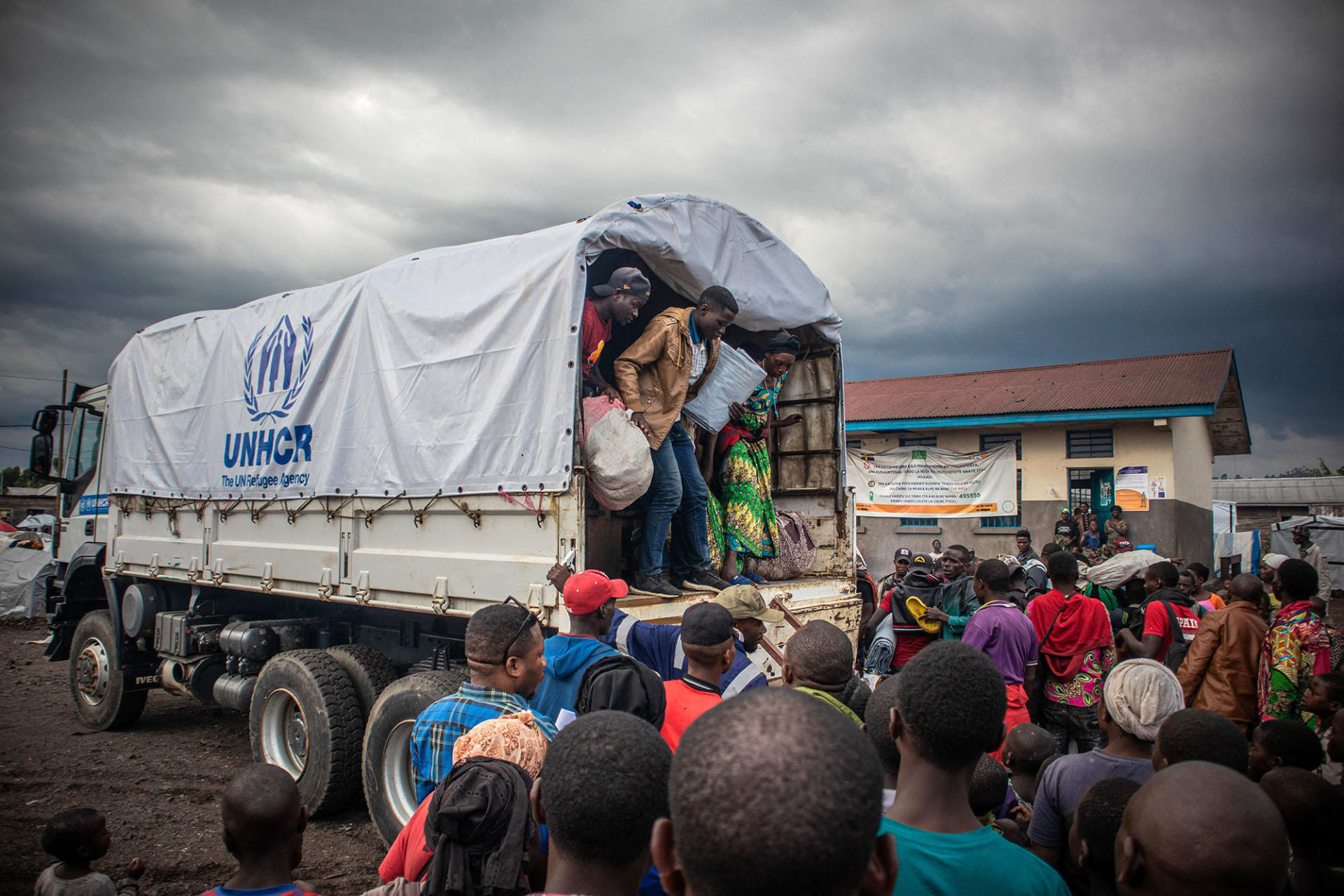
Member states can also make voluntary contributions to UN entities. Certain organizations, such as the UN Children’s Fund (UNICEF), the Office of the UN High Commissioner for Refugees (UNHCR), and the World Food Program (WFP), rely on such contributions.
However, many member states have fallen behind on their payments, forcing the United Nations into a liquidity crisis. As of April 30, 2026, cumulative unpaid assessments to the regular budget totaled nearly $2.8 billion [PDF]. Of that, the United States owes about $2 billion; other major debtors include China ($429 million), Japan ($152 million), and Venezuela ($40 million). (By September, China had paid its regular budget contribution for 2026 in full.)
Yet the peacekeeping budget faces a steeper deficit: approximately $3.5 billion in unpaid assessments, with the United States again the largest debtor (more than $2.3 billion). The five permanent members of the Security Council—the United States, China, France, Russia, and the United Kingdom—are assessed at a higher mandatory rate for the peacekeeping budget than the regular budget.
How much is the United States assessed to pay?
The United States is assessed at 22 percent of the total regular budget, the ceiling set by the organization. This is significantly lower than the U.S. regular budget assessment rate in the early years of the United Nations, when the U.S. contribution was set at nearly 40 percent [PDF]. In 2026, the United States was assessed as owing more than $760 million [PDF] of the approved roughly $3.5 billion budget.
Because the United States is assessed a fixed percentage of the UN regular budget, its contribution will increase when the overall United Nations budget increases. (These figures are net assessed contributions, which factor in credits for countries that do not tax UN staff’s earnings.) After the United States, the next top contributors to the 2026 UN regular budget include China (20 percent), Japan (6.9 percent), and Germany (5.6 percent).
Separately, the United States is assessed at the highest rate of all countries for the UN peacekeeping budget for FY 2026–2027—roughly 26 percent of the overall $5.1 billion budget, which amounts to about $1.3 billion if fully funded. However, in 1994, the U.S. Congress passed the Foreign Relations Authorization Act, which established a 25 percent cap on U.S. financial contributions to UN peacekeeping operations. Because the United States is often assessed at more than 25 percent, the government accumulates arrears each year.
In 2024, the most recent year for which data is available, the United States contributed more than $14 billion to the United Nations in both assessed and voluntary funding, according to the UN System Chief Executives Board for Coordination. Other top funders were Germany ($4.8 billion), the United Kingdom ($3.1 billion), and China ($2.5 billion).
The top recipients of this funding were WFP, UNHCR, and the Department of Peace Operations.
How does the U.S. pay the United Nations?
U.S. funding for the United Nations is authorized through the United Nations Participation Act of 1945 and the Foreign Assistance Act of 1961. However, Congress has historically appropriated funding [PDF] through the annual National Security, Department of State, and Related Programs appropriations bill—formerly the Department of State, Foreign Operations, and Related Programs appropriations bill—which covers U.S. international affairs activities that do not have defensive purposes. (U.S. funding follows a fiscal year from October through September, meaning that it may not align with UN funding figures.)
International organizations, including the United Nations, may be funded through multiple State Department accounts, including:
- Contributions to International Organizations (CIO), which funds U.S. assessed contributions to the UN regular budget, UN specialized agencies, and other international treaty organizations such as NATO.
- Contributions for International Peacekeeping Activities (CIPA), which funds U.S. assessed contributions to most UN peacekeeping operations and international criminal tribunals.
- Peacekeeping operations (PKO), which primarily funds voluntary contributions to “multilateral efforts in conflict resolution,” such as the training of African peacekeepers.
- International Organizations and Programs (IO&P), which funds voluntary contributions to numerous UN agencies, including UNICEF.
For FY 2027, the U.S. government’s budget request [PDF] for the CIO account is approximately $292 million, a 79 percent cut from what was enacted the previous year. Separately, the budget request proposes just $27 million for the PKO account—a 92 percent decrease compared to the FY 2026 enacted level—and no funding for either the IO&P account or the CIPA account, the latter of which is due to “ongoing mission failures and the disproportionately high level of assessments to the United States.”
What UN funding has the second Trump administration cut?
Since returning to office in January 2025, Trump has cut funding and moved to withdraw the United States from several UN organizations. On his first day, Trump ordered the United States to withdraw from the WHO, saying it “continues to demand unfairly onerous payments from the United States.” The order also froze all funding to the agency and recalled U.S. government personnel working with the WHO; the United States notified the WHO that its withdrawal would take effect in January 2026. In January 2025, the administration also announced it was withdrawing for the second time from the Paris Agreement, a landmark deal that aims to reduce global greenhouse gas emissions.
In February 2025, the Trump administration ordered the U.S. withdrawal from the UN Human Rights Council, alleging anti-Israeli sentiment, the protection of human rights abusers, and the body’s overall ineffectiveness. The administration also permanently halted funding for the UN Relief and Works Agency for Palestine Refugees in the Near East (UNRWA), the largest operating health-care provider in Gaza, and terminated dozens of grants totaling roughly $380 million for the UN Population Fund, which provided health care and support in emergency humanitarian settings. Then in July, the United States announced its withdrawal from the UN Educational, Scientific and Cultural Organization (UNESCO), alleging that the agency promotes “woke, divisive” cultural causes; the withdrawal will take effect in December 2026.
Beyond these targeted withdrawals, the Trump administration sharply reduced funding to broader international development programs. In July 2025, Trump signed a $9 billion rescissions package, with the majority of cuts affecting international aid programs administered by the U.S. Agency for International Development and the Department of State, including those focused on humanitarian and development aid. That August, the administration allowed nearly $5 billion in foreign aid spending to lapse after a so-called pocket rescission package did not pass Congress.
In January 2026, Trump further reduced U.S. participation in the United Nations by announcing that he would cease U.S. involvement in sixty-six international organizations—thirty-one of which were UN entities—“that no longer serve American interests.” In the UN system, these include the Department of Economic and Social Affairs, the Peacebuilding Fund, and the UN Democracy Fund.
Despite these cutbacks, the Trump administration has moved to address some of the outstanding U.S. financial obligations to the United Nations. In August 2026, the State Department notified Congress that it intends to pay down $850 million of U.S. debt to the organization; this includes $725 million to the regular budget and $125 million to UN peacekeeping missions in Haiti and the Democratic Republic of Congo. A spokesperson for UN Secretary-General António Guterres confirmed in September that the United States had made the payment toward the regular budget, as well as paid $102 million toward its peacekeeping dues, with another potential $1.1 billion being sent soon.
Has the United States cut UN funding in the past?
Past U.S. presidents and lawmakers have sought to pause or decrease payments to the United Nations. In the 1980s, President Ronald Reagan withheld portions of U.S. assessed contributions to pressure the organization to enact administrative and budgetary reforms, eventually releasing them.
In the late 1990s, Senator Jesse Helms (R-NC) likewise led an effort to force reforms at the United Nations by withholding roughly $1 billion in U.S. arrears. The dispute ended in 2001 with a compromise between the U.S. Congress and the United Nations. The compromise was driven by the 1999 Helms-Biden Act, struck by Helms and Joe Biden—then a Democratic senator representing Delaware—which linked the nearly $1 billion payment to structural and budgetary reforms. Ultimately, it reduced the U.S. share of the UN regular budget from 25 percent to 22 percent, as well as gradually reduced the U.S. share of the UN peacekeeping budget.
In 2011, the United States froze all funding to UNESCO after the agency admitted the Palestinian territories as a full member—a move that the United States and Israel opposed.
During Trump’s first term, his administration sought to pare down or eliminate voluntary contributions to many UN programs, targeting several specialized agencies. He also focused on assessed U.S. contributions, arguing that the United States was paying too much and other countries needed to contribute more. In 2017, a draft executive order calling for at least a 40 percent overall decrease in U.S. funding to the United Nations was leaked, but it was never formally published or signed.
The first Trump administration’s budget proposals repeatedly sought to slash U.S. funding to the United Nations. The FY 2019 request, for example, proposed significant reductions, including a 25 percent cut to the CIO account, which funds the UN regular budget, and eliminating the IO&P account, which funds voluntary contributions to UN programs such as UNICEF. Congress, however, did not adopt the proposed cuts, instead continuing to appropriate [PDF] funding to both accounts.
What effects have U.S. funding cuts had?
Several agencies have felt the effects of reduced U.S. funding amid a broader liquidity crisis driven by delayed or unpaid dues from member states. WFP, which relies on the United States for a substantial portion of its budget, was forced to shut down its Southern Africa bureau due to funding constraints. Meanwhile, thousands of personnel working on HIV/AIDS have seen their roles terminated in Kenya, and programs that assist Sudanese refugees in Chad have been severely affected, creating “overcrowded and unsanitary conditions at border areas,” according to the DC-based nonpartisan organization Better World Campaign.
Experts say that U.S. aid cuts are undermining the country’s strategic influence within the UN system and have geopolitical implications. “The pullback of U.S. funding will limit the United States’ ability to shape the UN system, to maintain its leadership of UN agencies, and to put the UN tools, especially in peacemaking situations, to use,” wrote Allison Lombardo, senior associate with the Humanitarian Agenda and Human Rights Initiative at the Center for Strategic and International Studies, in 2025.
The concern comes as China has become a more assertive player at the United Nations in recent years, using its veto power in the Security Council more frequently—including aligning with Russia to block resolutions concerning Syria—and promoting an alternative vision of global governance. Traditionally focused on UN development work, China has expanded its role in UN peace operations; it is among the top contributors to peacekeeping and other operations, providing more personnel than any other permanent member of the UN Security Council.
China has also stood out as one of the countries that has boosted its financial commitments to the United Nations. China was assessed at 20 percent of the regular UN budget in 2026—a far cry from the 6.3 percent [PDF] that it was assessed at in 1946—and nearly 24 percent of the peacekeeping budget for the 2026–2027 funding cycle, making it the second-largest contributor to both after the United States. This was followed by Japan and Germany, respectively, for both budgets. In comparison, the United States contributes just a few dozen individuals to UN peacekeeping operations.
Ariel Sheinberg, Rhea Basarkar, Noah Berman, Sara Ibrahim, Lynn Hong, Zachary Rosenthal, Nathalie Bussemaker, Laura Hillard, and Amanda Shendruk contributed to this article.
Colophon
Data Visualization
- Austin Steinhart