 Council of Councils
 Think Global Health
 Online Store

Centers & Programs
Center for Preventive Action
The Center for Preventive Action (CPA) aims to help policymakers devise timely and practical strategies to prevent and mitigate armed conflict around the world, especially in places that pose the greatest risk to U.S. interests. CPA accomplishes this by commissioning in-depth reports, convening meetings of experts, and consulting with representatives of governments, international organizations, civil society groups, corporations, and the media. The center’s Global Conflict Tracker informs the general public about threats to international peace and security by providing a reliable and regularly updated online source of information about ongoing conflicts.
237,000 are estimated to have died around the world as a consequence of organized armed conflict in 2022
Featured
For CFR’s annual Preventive Priorities Survey, U.S. foreign policy experts assessed the likelihood and impact of thirty potential conflicts that could emerge or escalate in 2024.
Panelists discuss potential and ongoing crises that may erupt or escalate in 2024, as well as their global political implications. This event will explore the results of the 2024 Preventive Priorities Survey, which will be available on CFR’s website on Thursday, January 4, 2024.
The Center for Preventive Action’s Global Conflict Tracker is an interactive guide to ongoing conflicts around the world of concern to the United States.
Vladimir Putin’s grip on power in Russia does not appear as ironclad as it once did. Liana Fix and Maria Snegovaya recommend that the United States prepare for potential leadership change in Moscow and develop response strategies with its allies to mitigate fallout.

The Middle East has suffered from protracted instability in recent decades, and climate-related disasters compound existing suffering. Marwa Daoudy argues that the United States and its partners should center mitigation efforts in assistance to the region.
In Dubai, leaders should focus their attention on policy solutions for vulnerable regions where climate change is amplifying the consequences of armed conflict and compounding failures of governance.
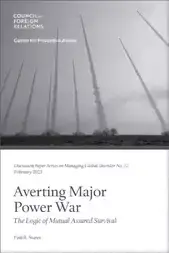
Although no two major powers have openly fought in over three-quarters of a century, growing tensions between the United States, China, India, and Russia threaten renewed conflict. CFR’s Paul B. Stares argues a new logic—“mutual assured survival”—could keep the peace.

The countries on the Bay of Bengal already face some of the world’s most severe natural disasters, and climate change will likely make things worse. Sarang Shidore argues the United States should partner with regional organizations to increase mitigation efforts.
Program Experts

Program Director
Paul B. StaresGeneral John W. Vessey Senior Fellow for Conflict Prevention and Director of the Center for Preventive Action
-
NATO (North Atlantic Treaty Organization)
The war in Ukraine marks a new era of instability in Europe. Countering Russia’s efforts will require a stronger, more coordinated NATO. -
Terrorism and Counterterrorism
Violence around U.S. elections in 2024 could not only destabilize American democracy but also embolden autocrats across the world. Jacob Ware recommends that political leaders take steps to shore up civic trust and remove the opportunity for violence ahead of the 2024 election season. -
Vladimir Putin’s grip on power in Russia does not appear as ironclad as it once did. Liana Fix and Maria Snegovaya recommend that the United States prepare for potential leadership change in Moscow and develop response strategies with its allies to mitigate fallout.
-
For CFR’s annual Preventive Priorities Survey, U.S. foreign policy experts assessed the likelihood and impact of thirty potential conflicts that could emerge or escalate in 2024.
-
The Middle East has suffered from protracted instability in recent decades, and climate-related disasters compound existing suffering. Marwa Daoudy argues that the United States and its partners should center mitigation efforts in assistance to the region.
-
The countries on the Bay of Bengal already face some of the world’s most severe natural disasters, and climate change will likely make things worse. Sarang Shidore argues the United States should partner with regional organizations to increase mitigation efforts.
-
Although no two major powers have openly fought in over three-quarters of a century, growing tensions between the United States, China, India, and Russia threaten renewed conflict. CFR’s Paul B. Stares argues a new logic—“mutual assured survival”—could keep the peace.