The History of Nuclear Proliferation
What are the most significant attempts to stop the spread of nuclear weapons, and have they succeeded? Explore this timeline, from the first atomic bomb to the recent U.S. and Israeli strikes on Iran’s nuclear sites.

By experts and staff
- Updated
Nuclear weapons pose an enormous threat to humanity. Since their first use, different leaders and organizations have been trying to prevent proliferation to additional countries. Despite their efforts, more states than ever before have obtained nuclear weapons. This timeline explores some of the critical actions and decisions that led to today’s distribution of those weapons and the world’s non-proliferation regime.
1938–62: The Nuclear Age Begins
In the late 1930s, new scientific discoveries made nuclear weapons a possibility. During World War II, the United States and its allies were afraid that their enemies would control nuclear weapons technology first. As a result, they began to produce bombs under the Manhattan Project, a secret research effort launched by the U.S. government in 1942. The success of the Manhattan Project and the use of nuclear weapons against Japan ushered in the nuclear age. In the aftermath of World War II, the growing tensions between the nuclear-armed United States and the during the made the threat of nuclear war a very real possibility.
Aug 6, 1945 - Aug 9, 1945First Atomic Bombs Are Dropped on Hiroshima and Nagasaki

In its fourth year of fighting Japan in World War II, the United States dropped the first bomb used in combat on Hiroshima, Japan on August 6. This weapon killed more than one hundred thousand people. On August 9, the United States dropped a second atomic bomb on Nagasaki. The second attack killed more than seventy thousand people. Six days later, Emperor Hirohito of Japan announced his country’s surrender. They remain the only atomic bombs ever used in war.
Jul 29, 1957IAEA Is Created

The was created with the mission of promoting and overseeing the peaceful use of nuclear technology, such as in power plants. President Dwight Eisenhower’s December 1953 “Atoms for Peace” speech is considered the institution’s origin. He said an international agency was needed to prevent the spread or proliferation of nuclear technology. Eisenhower warned that, if unchecked, nuclear weapons could result in “the annihilation of the irreplaceable heritage of mankind.”
Sep 29, 1957Kyshtym Nuclear Disaster Occurs In Secret
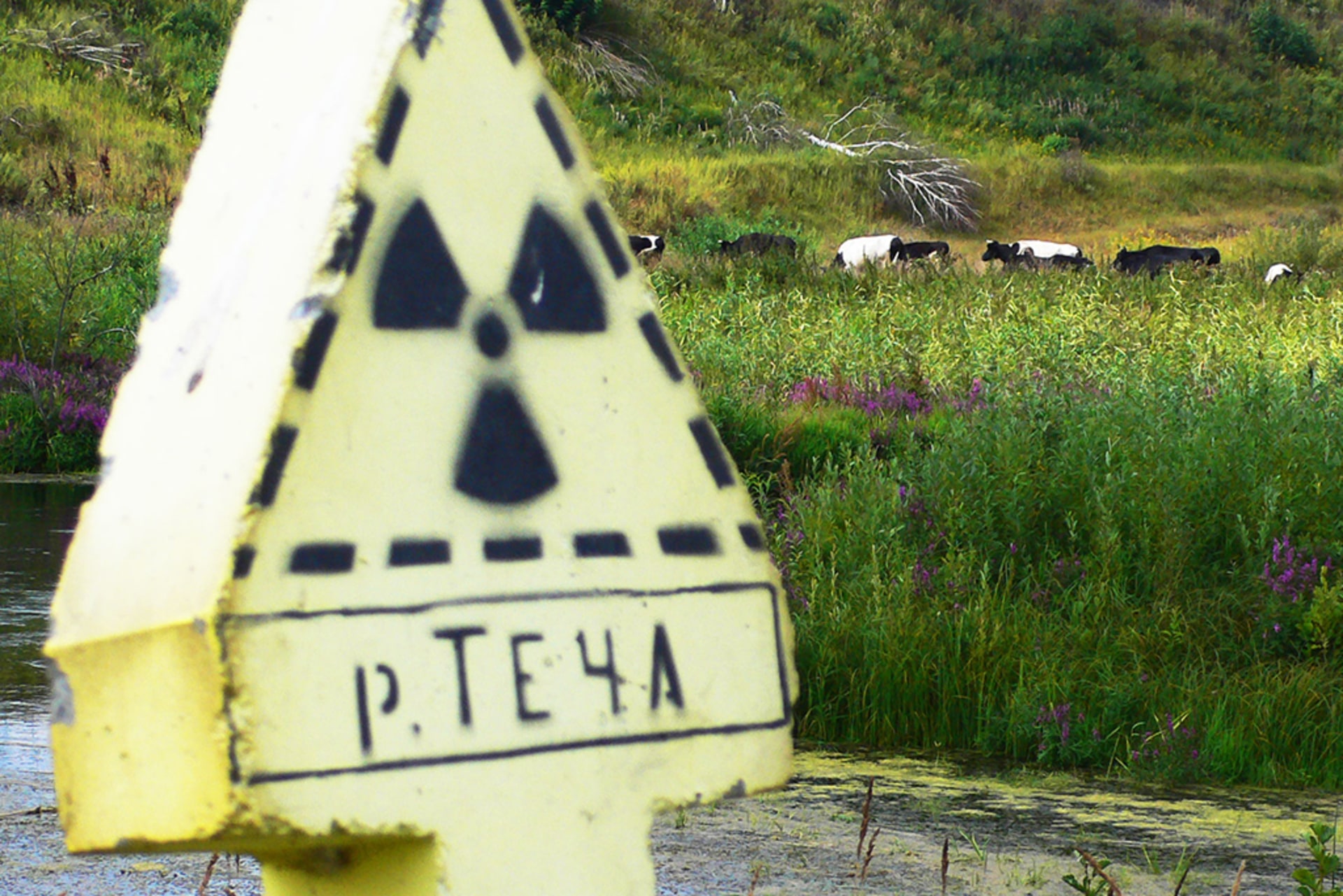
On September 29, a hastily stored tank of nuclear waste exploded in the town of Ozyorsk—the original site of the Soviet nuclear weapons program. The disaster released more radioactive contamination than Chernobyl, a 1986 accident and contamination event at a nuclear power plant. Due to a successful cover-up by the Soviet government, the Kyshtym Disaster went unknown to the world until it was exposed decades later by an exiled Soviet scientist.
Oct 15, 1962 - Oct 28, 1962The Cuban Missile Crisis Threatens Nuclear War
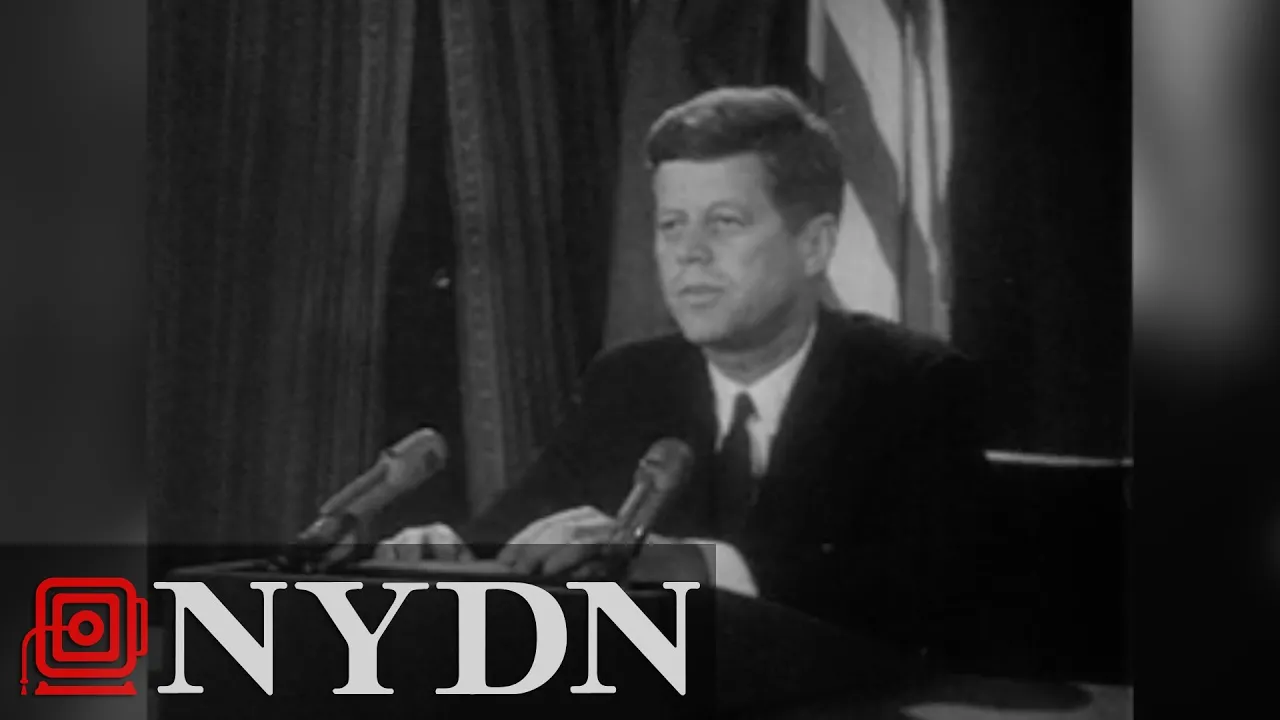
On October 15th, a U.S. military plane discovered Soviet nuclear missiles under construction in Cuba. The site was only about 100 miles from the Florida coast. President John F. Kennedy sent in the U.S. Navy to surround Cuba and demanded that Soviet leader Nikita Khrushchev dismantle the missiles. After several tense days, Khrushchev agreed to remove the missiles in exchange for a public U.S. guarantee to not attack Cuba, a Soviet ally. The United States also secretly agreed to remove certain missiles from Turkey and out of striking range of the Soviet Union. The crisis remains the closest the world has ever come to a nuclear war.
1968–75: Nuclear Nonproliferation Goes Global
The late 1960s and early 1970s were marked by both progress and setbacks in nuclear nonproliferation. On the one hand, the United Nations established the first framework relating to nuclear weapons with the Treaty on the Nonproliferation of Nuclear Weapons (NPT). And the world’s two biggest nuclear powers, the United States and the Soviet Union took their first steps toward limiting their nuclear arsenals. However, the era was also marked by a new country, India, obtaining nuclear weapons.
Feb 14, 1967First Nuclear-Weapon-Free Zone Is Established
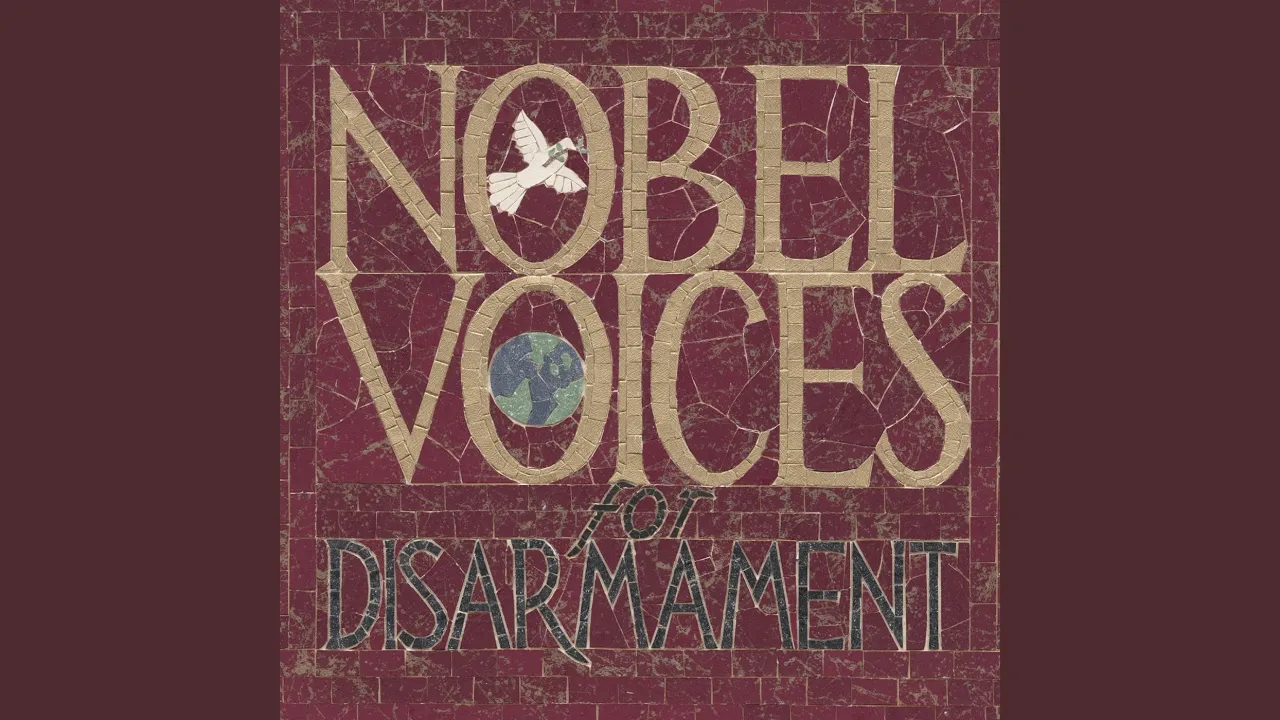
The Treaty of Tlatelolco opened for signature on February 14, establishing Latin America as the first nuclear-weapon-free zone (NWFZ): an area where countries agree to refrain from the “testing, use, manufacture, production, or by any means whatsoever of any nuclear weapons.” Mexican Ambassador and Nobel Peace Prize winner Alfonso García Robles hoped the “territories of powers which possess those horrible tools of mass destruction will become something like contaminated islets subjected to quarantine.” Following Latin America, the countries of the South Pacific established a NWFZ in 1985, Southeast Asia in 1995, Africa in 1996, and Central Asia in 2006. Additional treaties have designated outer space and the ocean floor as additional NWFZs.
Jun 12, 1968First International Treaty to Prevent Spread of Nuclear Weapons Is Signed

In June 1968, the United Nations General Assembly adopted a resolution endorsing the draft text of the Treaty on the Nonproliferation of Nuclear Weapons (NPT). The following month, the NPT opened for international adoption. Under this landmark international agreement, countries without nuclear weapons agreed to never obtain them. However, they were allowed to use atomic energy peacefully. The five countries with nuclear weapons at the time—the United States, the Soviet Union, the United Kingdom, France, and China—would all go on to sign the treaty, committing to eventually disarm. However, all five of these countries still have nuclear weapons today.
May 26, 1972SALT I Treaty Is Signed

President Richard Nixon and Soviet Union leader Leonid Brezhnev signed the interim Strategic Arms Limitations Treaty (SALT I), which was the first time in the Cold War that the United States and Soviet Union agreed to put limitations on their nuclear arsenals. This marked a victory for nonproliferation ten years after the Cuban Missile Crisis between the nuclear-armed enemies. Seven years later, President Jimmy Carter and Brezhnev signed SALT II, further limiting nuclear capabilities.
May 18, 1974India Joins the Nuclear Club
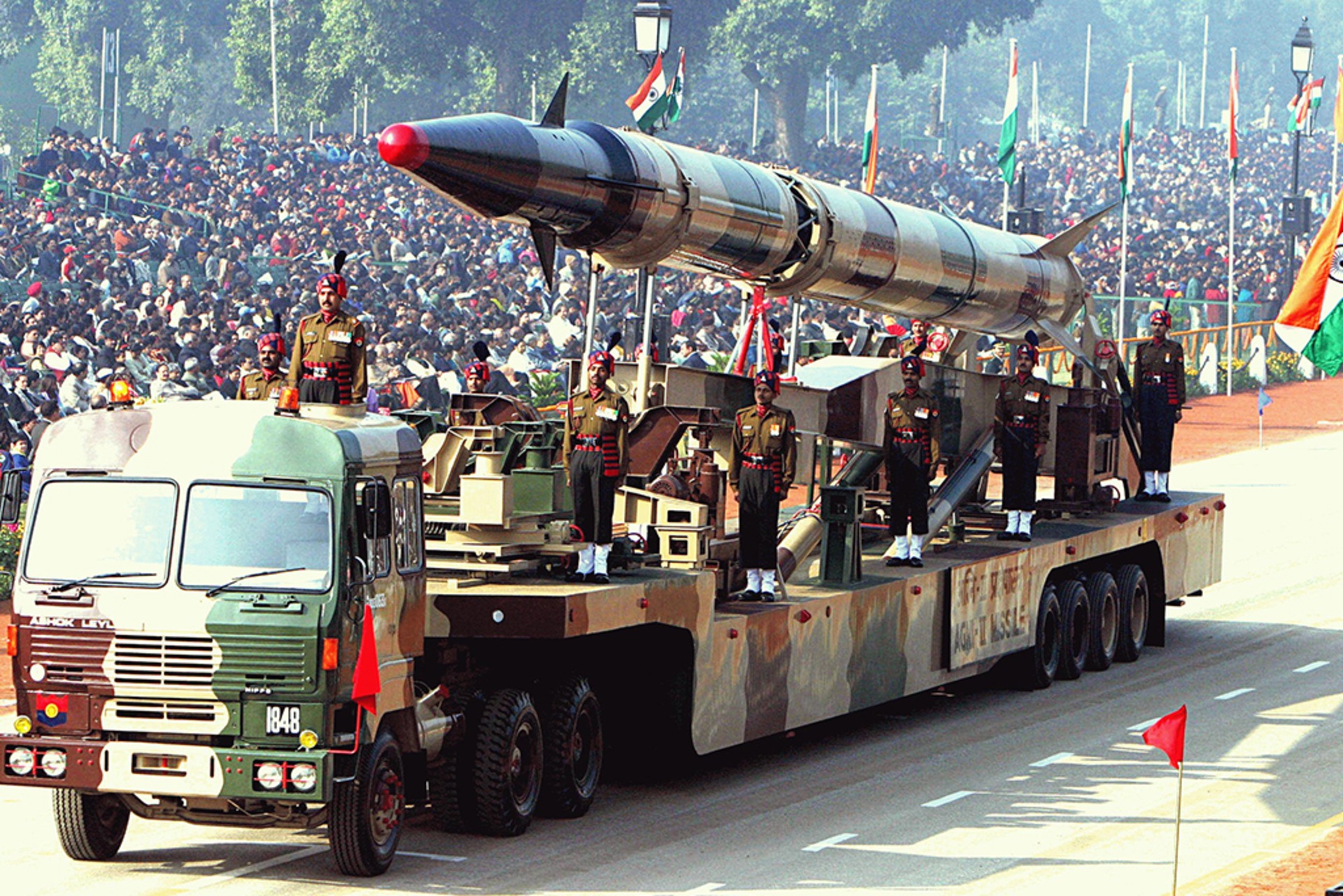
India conducted its first nuclear test, code-named “Smiling Buddha,” in May 1974. Although the country’s government initially denied it, India now sees its nuclear program as central to its security. India also leverages its nuclear capability to elevate its image as an emerging world power. This was the first time a country beyond the original five NPT-recognized nuclear weapon states had tested a nuclear bomb. India’s rival neighbor Pakistan would later test its first nuclear weapon in 1998.
1986–2000: End of the Cold War Improves Nonproliferation Efforts
During the Cold War, a period defined by tensions between the United States and Soviet Union, the threat of nuclear war was always present. But after the Soviet Union collapsed in 1991 and the Cold War ended, real progress was made to strengthen the NPT. This process included encouraging former Soviet countries to adopt the treaty and stop the further use of nuclear weapons.
May 23, 1992Belarus, Kazakhstan, and Ukraine Give Up Nuclear Weapons
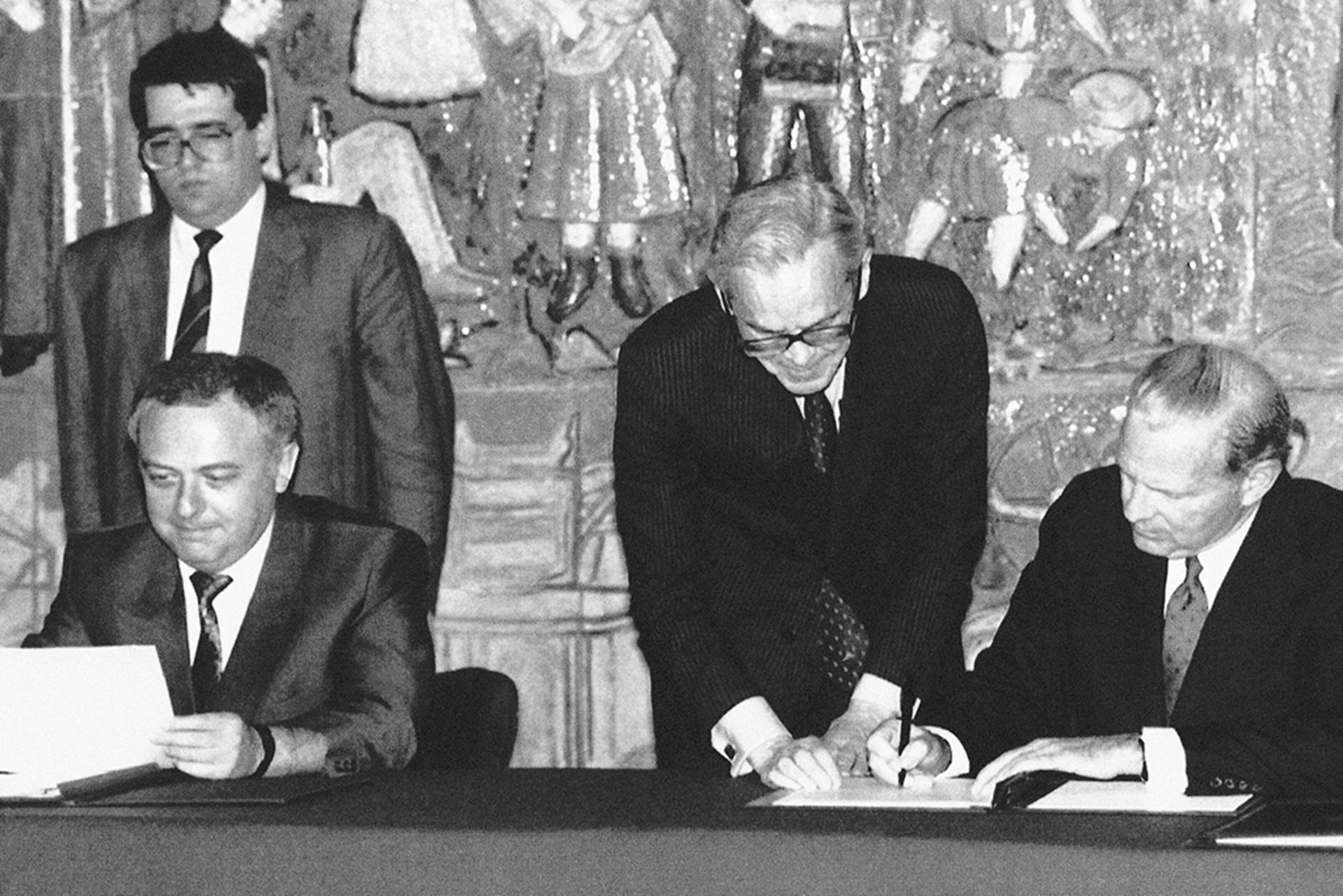
After the fall of the Soviet Union, three of its former territories--Belarus, Kazakhstan, and Ukraine--were left in possession of nuclear weapons. An international agreement between the three former territories and Russia required all nuclear weapons within the territories to be destroyed or transferred over to Russia for destruction. The three former Soviet republics also agreed to join the NPT as nonnuclear weapon countries. Moreover, Belarus, Kazakhstan, and Ukraine joined South Africa as the only four nuclear weapon countries in history to give up their arsenals.
Sep 24, 1996The Comprehensive Nuclear Test Ban Treaty Opens for Signatures

After two years of negotiations, the Comprehensive Nuclear Test Ban Treaty (CTBT) opened for signature at the United Nations. The treaty banned nuclear explosions of any kind, including for weapons tests. But the CTBT is not yet legally binding because not all the required countries — including China, India, Pakistan, and the United States — have ratified, or approved it. Despite this, most countries with nuclear weapons — including the United Kingdom, the Soviet Union, and later Russia, and the United States — have not conducted nuclear tests since the early 1990s.
May 1997The IAEA’s Model Additional Protocol is Introduced

Part of the IAEA’s mandate is to ensure that countries are using nuclear technology for peaceful purposes, like energy. This involves on-site inspections of nuclear facilities and power plants. However, after the 1991 Gulf War, it was discovered that Iraq had pursued an undeclared nuclear weapons program despite being subject to IAEA inspections. In response, the IAEA’s Board of Governors approved the Model Additional Protocol. This amendment to the IAEA procedure allowed the agency further access to information and nuclear sites. Though optional, the additional protocols are now implemented in 127 countries, strengthening the IAEA’s inspection capabilities.
2003–Present: Progress and Threats
Though many countries have worked to limit or eliminate nuclear weapons, threats still remain. Other countries continue to build arsenals, do not plan to completely disarm their weapons, or do not follow safety standards for nuclear material. Containing nuclear weapons and preventing nuclear war remains one of the single greatest challenges facing world leaders today.
Jan 10, 2003North Korea Withdraws From the Nonproliferation Treaty

North Korea announced its withdrawal from the NPT. They stated, “We can no longer remain bound to the NPT, allowing the country’s security and the dignity of our nation to be infringed upon.” Months earlier, the United States announced that North Korean officials had admitted to enriching uranium for nuclear weapons. North Korea denied the claim, but then reopened nuclear facilities it had previously shut down. Pyongyang also ordered IAEA inspectors out of the country. Almost four years later, the North Korean government announced that it had completed a nuclear test, becoming the eighth country in history to successfully do so.
Apr 14, 2009North Korea Walks Out of Six Party Talks

Negotiations between China, Japan, North Korea, Russia, the United States, and South Korea to find a peaceful resolution to North Korea’s nuclear weapons program fell apart after the United Nations Security Council condemned a North Korean test launch of a rocket. North Korea disguised the test launch as part of its civilian space program. The negotiations, also known as the six-party talks, had lasted for six years and failed to reach a resolution. North Korea remains one of the most unstable nuclear powers in the world today.
Jul 15, 2015World Powers Reach a Nuclear Agreement With Iran

In 2002, a large uranium enrichment plant and heavy water plant, crucial equipment in the production of nuclear weapons, were discovered in Iran. The discovery led the United States and its allies to believe Iran intended to build a nuclear weapon, despite the country’s denials. In 2015, the United States, China, France, Germany, Russia, the United Kingdom, and the reached a nuclear agreement with Iran after years of negotiation. This agreement was known as the Joint Comprehensive Plan of Action (JCPOA). By agreeing to limit its nuclear program and subject its nuclear facilities to much stricter monitoring than ordinary IAEA safeguards, the United States and others relaxed on Iran’s economy. But in 2018, President Donald Trump announced the U.S. withdrawal from the deal. Shortly thereafter, the United States re-imposed sanctions on Iran.
Jul 7, 2017The United Nations Adopts Nuclear Weapons Ban Treaty

In 2017, a United Nations Conference adopted the Treaty on the Prohibition of Nuclear Weapons (TPNW), a landmark international effort to promote nuclear . Since then, nearly 100 countries have signed the treaty, which prohibits the development, testing, production, stockpiling, stationing, transfer, use, and threat of nuclear weapon use. Advocates for the treaty see it as an important step toward the elimination of nuclear weapons. However, countries that already have nuclear weapons have not signed, creating an ongoing challenge.
Feb 24, 2022Russia Invades Ukraine

Although risks of nuclear conflict were already high after the TPNW, experts stress that those risks have only worsened. The reason for the danger is Russia’s military aggression toward Ukraine. Russia, a nuclear power, has signaled its willingness to use “all means” to protect its territory. In response, NATO countries agreed to strengthen their nuclear and increase readiness for any nuclear threat. Although NATO has committed to nonproliferation as a goal, it may be forced to strengthen its nuclear capabilities in the coming years.
June, 2025Israel and United States Strike Iran’s Nuclear Facilities

After the United States withdrew from the JCPOA, Iran began enriching uranium to levels beyond what was allowed under the agreement. In the spring of 2025, the United States began talks with Iran to craft a new nuclear deal. However, in June, Israeli intelligence services claimed that Iran was nearing the “point of no return,”after which the world could not stop it from creating a nuclear weapon. Although U.S. intelligence services and UN officials both disputed that claim, Israel launched a on Iranian nuclear facilities. Despite its earlier diplomatic efforts, the United States then launched strikes of its own. The extent of the damage to Iran’s nuclear program remains unclear. The implications for Iran’s nuclear ambitions are also uncertain. Some analysts fear that the strikes could set a harmful precedent for future nonproliferation efforts by undermining trust in diplomacy. Others speculate that if Iran wasn’t pursuing a nuclear weapon before, the attacks could motivate it to develop one now.