Boko Haram in Nigeria in 2017 (UNSC)
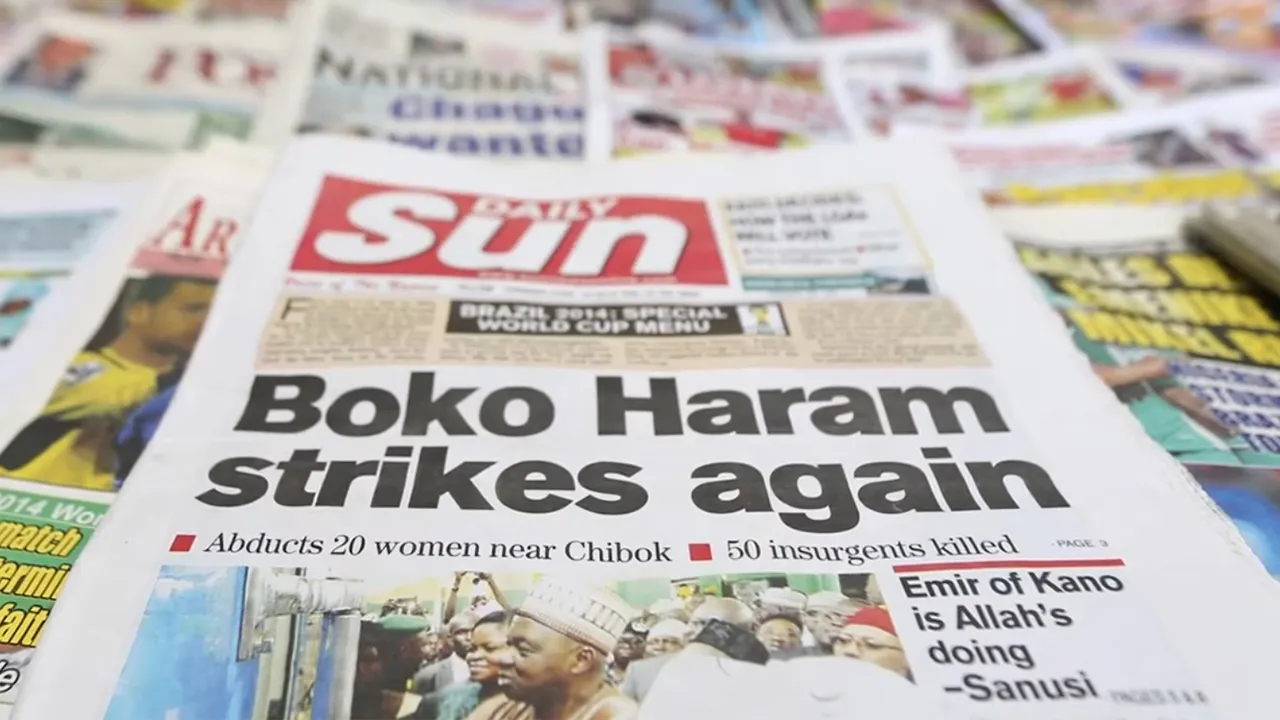
Set in February 2017. A Boko Haram attack threatens the stability of Nigeria, as the country seeks international aid.
- Level
- High School, Higher Education
What is a simulation?
Simulations offer students the chance to role-play either the U.S. National Security Council or the UN Security Council.
How do I use them?
A simulation comprises two readings (a council guide and the case notes) of roughly 2,500 words each. They also offer detailed guidance for preparing for and running the simulation in the classroom and reflecting on the experience.
Educator Overview
Case Overview
Set in February, 2017. The Radical Islamist movement Boko Haram is waging an insurgency in northeast Nigeria estimated to have killed at least twenty thousand people in recent years. The insurgency threatens the stability of Nigeria, a major oil producer and Africa’s most populous country. Nigerian security forces have made some progress against Boko Haram, but humanitarian and media organizations have reported extensive human rights abuses by these forces, including the killing of civilians. The UN secretary-general has called a meeting of the UN Security Council to address the unrest in Nigeria, with regard to both the presence of Boko Haram and the human rights violations committed by the Nigerian armed forces. The response will entail balancing a variety of considerations, including Nigeria’s role as a regional power and major contributor to UN peacekeeping forces, the threat posed by Boko Haram’s insurgency, and the significant violations of human rights committed by Nigerian forces.
Decision Point
Reports have recently emerged from Northeast Nigeria of a suicide bombing by Boko Haram This bombing has killed at least 50 people and wounded many others. The attack has inflamed popular criticism of President Buhari, who was elected on a promise to restore security by destroying Boko Haram. It has prompted several neighboring governments, alongside those with prominent economic ties with Nigeria, to express concern that Nigeria appears unable to contain the crisis.
The UN Secretary-General has called a meeting of the UN Security Council. The hope is to address the unrest in Nigeria, with regard to both the presence of Boko Haram and the human rights violations committed by Nigerian armed forces. Nigeria is a regional power and major contributor to UN peacekeeping forces. On the other hand, it is a fragile state facing a serious insurgency. Likewise, its forces are widely deemed responsible for significant violations of human rights. As they address the situation in Nigeria, member states will need to weigh the desire for a timely response to a crisis against the need to secure support from as many council members as possible, especially permanent members.
Learning Goals
CFR Education extended simulations use a variety of pedagogical tools to create an effective, meaningful, and memorable learning experience for students that builds their global literacy. Students will develop crucial skills such as critical thinking, communication, collaboration, and creativity. Students will complete authentic assessments that feel relevant: instead of five-paragraph essays and book reports, students will write policy memos and participate in a role-play of a meeting of a foreign policy–making body. There are no right or wrong answers in actual policy deliberations, and there are none here, either; students will walk away from this experience with an appreciation for the complexity of policy questions.
In this simulation, students will learn about the UN Security Council, as well as meeting these learning outcomes specific to this simulation:
- Students will understand the threat Boko Haram poses to Nigeria, the surrounding region, and international peace and security.
- Students will consider how the UN Security Council should support the fight against Boko Haram while safeguarding civilians from human rights violations perpetrated by Nigerian forces.
- Students will evaluate options available for the UN Security Council to address the present situation in Nigeria.
Concepts and Issues
Concepts
- Human rights
- Insurgency
- Oil and other natural resources
- Terrorism and counterterrorism
- Peacekeeping
Issues
- Nigerian political and religious dynamics
- Promotion of human rights, democratization, and the rule of law
- Regional security in West Africa
Policy Options
This section presents context, potential benefits and drawbacks, and other information about the policy options outlined in the case that you may find helpful as you guide the role-play and assess students.
Nigeria plays an important regional role, not just for its democratic governance but also because of Nigeria’s size, diversity, and potential to be a positive model for other African states. Democratic failure in Nigeria could be a setback to the development and maintenance of democratic norms that have facilitated increased diplomatic, economic, and security cooperation among many African countries. As the continent’s biggest oil producer, stability in Nigeria is important to both regional and international economic interests. The United Nations’ interests in Nigeria include supporting democratic governance and ensuring the government follows international laws and respects human rights. The United Nations also seeks to promote the acceleration of economic development in Nigeria, which would likely promote political stability both in Nigeria and the larger region.
Yet the United Nations’ most urgent interests in Nigeria are humanitarian. Past UN actions concerning the crisis have stressed the need to protect both displaced civilians and host communities affected by Boko Haram. The United Nations prioritizes preventing conflict and thwarting terrorist groups worldwide, as they present a severe threat to international peace and security. The UN Security Council has strongly condemned Boko Haram’s activities and called on countries to support Nigeria and its neighbors in their efforts to combat the group. However, the Security Council has also expressed concern about Nigerian forces’ continued human rights violations. It has also urged greater respect for international human rights standards. As Security Council members consider how to mount a response to the present situation in Nigeria, they will need to consider and prioritize how to counter Boko Haram, how to improve conditions and protections for Nigerian civilians, and how to address human rights violations by Nigerian security forces. UN Security Council members could consider several options:
Commission a report on human rights abuses in Nigeria
Security Council members could adopt a resolution commissioning a report from the UN secretary-general on the human rights practices of Nigeria’s military. The Security Council could then request that Nigeria implement certain recommendations to improve these practices and address violations. Nigeria has signed several major UN human rights treaties, including the UN Convention against Torture and the International Covenant on Civil and Political Rights. A report on Nigerian human rights practices could urge Nigeria to uphold the agreements that it has entered. If the Nigerian government complies, governments could be more willing to provide increased assistance. They might also consider selling Nigerian military equipment that they previously denied on human rights grounds. If Nigeria declined to implement the report’s recommendations, the Security Council could threaten to impose economic sanctions on Nigerian government officials or adopt a resolution blocking arms sales to Nigeria until certain conditions are met.
Commissioning a report would be the least demanding option that the UN Security Council could pursue, as it would require few resource contributions from member states and is unlikely to be controversial among permanent, veto-wielding members. If successful, it could improve human rights practices in Nigeria and potentially pave the way for increased assistance against Boko Haram. However, the Nigerian government would not be guaranteed to implement the report’s recommendations. Furthermore, sanctions to enforce compliance could harm Nigeria’s ability to combat Boko Haram. Such a report also would not guarantee actions against Boko Haram, and individual states would have to determine whether to rethink their provision of assistance if the report’s recommendations were met. Moreover, such a report would take time to complete, during which conflict, displacement, and human rights abuses could potentially worsen.
Deploy peacekeeping forces to Nigeria
The Security Council could seek to adopt a resolution establishing a peacekeeping mission in Nigeria. This mission would support the efforts of Nigerian troops and those of neighboring countries. This mission’s mandate could include ensuring access to humanitarian assistance, protecting civilians, assisting with the return of displaced individuals. It would also provide monitoring and training of Nigerian forces to prevent human rights abuses. A more robust peacekeeping plan could involve authorizing a peacekeeping mission to take offensive action or provide tactical support to Nigerian forces.
A peacekeeping mission could ease the humanitarian crisis caused by Boko Haram’s activities. It could also reduce human rights abuses, and potentially provide Nigeria the assistance necessary to defeat Boko Haram. Gaining the support of the permanent members to establish such a mission could be difficult. Nigerian forces have been resistant to monitoring by human rights groups in the past and could be reluctant to agree to monitoring by peacekeepers.
If a resolution did pass, a peacekeeping mission would be expensive. The Security Council would need to request contributions of troops and supplies from UN member states. Member states could be hesitant to put their troops at risk. Security Council members will also need to consider how long the mission would stay in Nigeria, how local communities would respond to its presence. Finally, it would have to decide what measures it could adopt to ensure that Boko Haram does not reemerge.
Authorize an intervention by UN member states
Security Council members could adopt a resolution declaring a cease-fire. This resolution would also call on member states to use all necessary means to enforce peace in Nigeria if Boko Haram failed to comply. This option would authorize countries to mount interventions, either by regional organizations such as the African Union or individual member states. These forces would bolster existing efforts to combat Boko Haram and improve stability in Nigeria and its neighbors.
Authorizing an intervention could have the greatest effect against Boko Haram. Intervening states would likely have better supplied and better trained militaries. However, a military intervention would be the most difficult option to implement. First, a resolution calling for intervention could be difficult to pass. Many states, including the United States, do not see Boko Haram as a direct threat and could thus be reluctant to put their military personnel at risk. Moreover, a resolution calling for intervention may not address human rights abuses committed by Nigerian forces. States that have been reluctant to supply arms to Nigeria over human rights concerns in the past could be far more hesitant to provide the resources and personnel that a full intervention would entail. Even if the resolution passed, success could not be guaranteed. Boko Haram’s decentralized structure would make achieving victory difficult. It could also intensify the conflict for civilians. Moreover, past UN Security Council–authorized interventions have been criticized for having poorly defined mandates and ineffective command structures. For an intervention to be effective, UN Security Council members would need to consider how to define the mission’s mandate, how long forces should remain in Nigeria to ensure a safe transition and lasting peace. Finally, they would have to consider what measures they can take to bolster political stability and protect human rights in Nigeria.
Running the Simulation
CFR Education extended simulations are project-based learning activities. Project-based learning (PBL) leads to better learning outcomes and improves skills, and is more fun than traditional instructional methods. The website that students will navigate throughout the simulation is divided into several parts:
In the UNSC Guide, students will learn about the UN Security Council, the body they will be simulating. Included are details on its history, how it works, who its major players are, and more. There is also a video interview with experts who have served on the body.
In the Case Notes, students dive into the actual situation they will be trying to solve in their simulation. At the beginning is a clear decision point: the question that students will debate during the role-play. This is followed by detailed background material and a discussion of the role that the United Nations plays.
Preparation and Role-Play includes details on the various roles students could take on, guidelines for the draft resolution clauses they will write, as well as an outline of how the discussion will flow during the role-play.
The Wrap-Up is an important part of the project and includes reflection questions and guidelines for reflecting in a class discussion and in a second memorandum. For historical cases, this section also includes a short description of how the decision point was addressed by policymakers in real life.
The simulation also includes Student Resources, which include a reading list to support research, additional directions and exemplars for writing assignments, and other tips students may find helpful.
Tips for Role-Play
Once students have read the simulation and prepared their draft clauses, here is how we recommend structuring the role-play:
| Round | Timing | Objectives | Procedural Notes |
|---|---|---|---|
| One: Public Meeting | 2 to 3 minutes per participant | Receive a five-minute briefing from the secretary-general on the issue to be discussed.Present opening statements.Crystalize the central questions of debate. | During opening statements, the president of the UN Security Council will recognize country representatives in the order in which they request to speak, and no representative may speak again if others have not yet spoken. Following opening statements, country representatives are free to openly debate the statements made, evaluating the various positions on their merits. |
| Two:Informal Meeting | 30 to 60 minutes | Debate each participant’s proposed clauses.Edit, add, or drop proposed clauses and combine them into one or more draft resolutions.Draft a presidential statement using proposed clauses and/or new material if no draft resolution appears acceptable to the group. | The president will recognize country representatives in the order in which they request to speak. Representatives should limit their statements to one minute each, but if time allows the president may permit them to speak longer. The president may also invite any participant to speak as they deem it appropriate. Any participant may motion for a ten- to fifteen-minute break, during which representatives can move freely and work on their draft resolutions individually or in small groups. |
| Three:Public Meeting | 30 to 60 minutes | Hear summaries of any draft resolutions as well as arguments for and against adoption.Vote on draft resolutions in order of submission.Attempt to adopt a presidential statement by consensus if no resolutions are proposed or passed. | The president will call first on the draft resolution’s main author(s) and then on other countries that wish to make arguments for or against the resolution. To be adopted, Security Council resolutions must receive at least nine votes in favor and no dissenting votes (vetoes) from any of the five permanent members. A state may abstain, often to indicate ambivalence or mild disapproval (in contrast to strong opposition). According to the charter, abstentions are mandatory if the state is a party to the dispute in question. Abstentions by permanent members do not count as vetoes; the resolution will pass if it receives the necessary nine votes. |
Tips for the President of the UN Security Council
In Round 1, you will chair a formal session. Make absolutely sure that every country gives their opening statement before any country is allowed to speak a second time. You will also have to use your judgment about when to move into the more informal meeting of Round 2. Give enough time for students to flesh out their positions and to identify potential allies, but do not wait too long—the most productive negotiations happen in informal meetings, so you want to save time for those in Round 2.
In Round 2, you will call on speakers one at a time. The time limits on speeches are a little looser, so pay close attention to make sure everyone is included and no one dominates. Deciding whether to grant a break for negotiations is a matter of balance. Negotiations can be advanced in small-group discussions, but it is also important for the whole body to be updated on what goes on during the breaks. You will want to strike a balance between breaks for negotiating, and informal meeting time for giving updates and rounding up support for resolutions. It is often helpful to set a deadline for the end of Round 2 to encourage negotiators to come to agreements in a timely manner.
In Round 3, completed draft resolutions will be presented, discussed, and voted on. Before starting, make sure you are clear on the order in which the resolutions were submitted and who is sponsoring each one. When it comes time to vote, it will be helpful to remind everyone of the unique voting rules of the Security Council. If none of the resolutions passes, you can allow further debate and attempt to vote again, or you can move on and guide the council through debate on a presidential statement. Use your judgment about which process is more likely to be successful.
Tips for Online Classes
We suggest conducting the role-play in three rounds and that three-round structure is a helpful way to approach chunking the role-play for online learning as well. You can conduct each round synchronously or asynchronously.
In round one, participants present their positions.
- In a synchronous meeting, you can go through opening statements using videoconferencing software, allowing for live clarifying questions.
- However, this is probably the easiest round to conduct asynchronously. You could disseminate positions in writing by having participants share their position memos or write a summary for the purpose of the role-play. You could also have participants record a video of themselves delivering their opening statement and disseminate it for all to watch.
In round two, participants debate the various policy options.
- In a synchronous setting, you can simply run a full-class discussion for round two. If you need more structure or want to prod reticent participants, consider starting by randomly assigning students to breakout rooms, assigning each breakout room one policy option. After working through pros and cons, representatives from each breakout room can share out to kick off the general discussion.
- In an asynchronous setting, consider a discussion forum, with a thread for each policy option.
In round three, debate begins to coalesce around the draft resolutions that have substantial support.
- This round can be approached similarly to round two. In this round, organize breakout rooms or threads around each draft resolution.
Flashpoints
To add spice or challenge to the role-play, partway through the discussion throw in one of the following flashpoints—additional hypothetical developments that fit within the case’s existing decision point—or create your own.
- A coalition of U.S., British, and Nigerian human rights organizations releases a report containing fresh evidence of widespread abuses by Nigerian security forces in their fight against Boko Haram and other insurgent groups. The report ascribes “hundreds, perhaps thousands, of previously unreported deaths” to Nigerian forces. It ignites a firestorm in the international press and on social media. President Buhari says he will not tolerate the abuses and pledges “a full, independent, and transparent investigation” of every charge. However, he also notes that “we are fighting against people who kill civilians, who kidnap and enslave women and children.”
- Only four days after the massive Boko Haram attack in Lagos, two more suicide bombings occur at a crowded commercial center in the city. The first bombing kills six and injures fifteen more. The second occurs twenty minutes later, when emergency personnel and civilians have begun to crowd the scene. Another thirty-two people perish, and some one hundred are injured. Boko Haram has not yet claimed responsibility for the blasts, though political leaders and observers widely assume it is responsible. At the presidential residence in Abuja, President Buhari pledges “to stop at nothing to protect all Nigerians from the scourge of terrorism.”
- Nigeria’s attorney general, who also serves as minister of justice, announces that “several dozen” soldiers will be arrested in the coming days and tried on charges of human rights abuses and extrajudicial killings in the fight against Boko Haram. Reports from diplomats and intelligence officers in Nigeria, along with media reports, offer competing interpretations. Some believe the announcement is a major step toward accountability and discipline in the Nigerian security forces. Others believe nothing will come of the announcement, which they view as a transparent effort by President Buhari’s administration to curry favor with the United States and other international partners.
After introducing a flashpoint, you might want to help students refocus their discussion by considering critical questions such as these:
- Who is affected by this event or development, and how?
- Is there any uncertainty about what has taken place? How credible is the report?
- Does this event or development affect the feasibility of any policy options? If so, how?
- Does this event or development affect the desirability of any policy options? If so, how?
UNSC Assessment
Case Assessment
- What is Boko Haram? Why is the group considered a threat to Nigerian, West African, and possibly global security?
- What are the major criticisms of the ways in which Nigeria has sought to fight Boko Haram?
- What are the interests of the UN Security Council in the situation in Nigeria? Why is Nigeria, in particular, important to the UNSC?
- What actions has the UN Security Council already taken on the situation in Nigeria?
- What are the potential benefits of the UN Security Council establishing a peacekeeping mission in Nigeria? What are the drawbacks?
Writing Assignments — Overview
- What are the six organs of the United Nations system? What are their responsibilities?
- How is the UN Security Council structured? How are Security Council decisions made?
- What are the two categories of tools that the UN Security Council has at its disposal to implement its decisions, and what are the range of specific tools available in each?
- What is the difference between a Chapter VI peacekeeping mission and a Chapter VII peace enforcement mission?
- What are the main challenges and limitations that the UN Security Council faces as it carries out its work? What solutions have been proposed to address these challenges?
Each CFR Education extended simulation involves writing assignments that help students think through policy options and reflect on their learning experience.
In UNSC cases, there are two types of writing assignments.
- Before the role-play, everyone writes draft clauses for a Security Council resolution.
- As part of the wrap-up, everyone writes a written reflection.
Simulations have instructions for written assignments (found under the Student Facing Simulation), rubrics, and samples for each of these writing exercises.
Samples:
Below are sample rubrics for your use in assessing the writing students will do as part of this extended simulation.
These are single-point rubrics. Jennifer Gonzalez, who writes the blog Cult of Pedagogy, has a great explainer, but the bottom line is that single-point rubrics are relatively easy for students to digest but still have all the advantages of giving structure to instructors’ feedback.
UN Security Council Draft Clauses Rubric
| CONCERNS What needs improvement | CRITERIA What is expected | ADVANCED What is excellent |
| Purpose - There are two to three preambular and three to four operative clauses - Clauses are properly formatted and styled | ||
| Preambular clauses - Accurately identify relevant prior agreements and existing organizations | ||
| Operative clauses - Are practical and within the UN Security Council’s powers - Address who - Address what - Address when - Address where - Address why - Address how - Address funding |
UN Security Council Written Reflection Rubric
| CONCERNS What needs improvement | CRITERIA What is expected | ADVANCED What is excellent |
| Subject paragraph - Is brief - Places the issue in the larger context of U.S. foreign policy - Clearly states whether the writer agrees or disagrees with the president’s decision | ||
| Options and Analysis paragraph - Discusses each option that came up during the role-play in discrete paragraphs - Weighs the advantages and disadvantages of each option - If options from the position memo are discussed, those options contain additional analysis | ||
| Recommendation and Justification paragraph - Makes a clear recommendation based on the writer’s personal position - Supports the recommendation effectively | ||
| Reflection paragraph or paragraphs - Reflects on and critiques the Security Council’s decision - Is written from a personal point of view, not that of the assigned role |
Downloadable rubrics are available here: