World Economic Update

Event date
Speakers
- Chief Economist and Head of Global Investment Research, Goldman Sachs Group, Inc.
- Professor of Law and Cofounder, Budget Lab, Yale Law School; CFR Term Member
- Managing Partner, International Capital Strategies; Nonresident Senior Fellow, Brookings Institution; CFR Member
Presider
 Sebastian MallabyCFR ExpertPaul A. Volcker Senior Fellow for International Economics, Council on Foreign Relations; Cohost, The Spillover; Author, The Infinity Machine: Demis Hassabis, DeepMind, and the Quest for Superintelligence
The World Economic Update highlights the quarter’s most important and emerging trends. Discussions cover changes in the global marketplace with special emphasis on current economic events and their implications for U.S. policy.
This series is presented by the Greenberg Center for Geoeconomics and is dedicated to the life and work of the distinguished economist Martin Feldstein.
MALLABY: Welcome to today’s Council on Foreign Relations meeting, the “World Economic Update.” This series is dedicated to the life and work of Martin Feldstein, the distinguished economist who was a mentor to many of us.
We’re meeting at a time when the global economy faces some pretty clear headwinds. The conflict in the Middle East, which I guess may or may not be over, has pushed up energy prices, fueled inflation, raised borrowing costs. Volatility in trade policy has not helped either. And so the World Bank just published a new forecast, projecting that global growth will slow to 2.5 percent in 2026. That’s down quite a bit from 2.9 percent last year. And it’s the weakest pace, by the way, since the onset of the COVID-19 pandemic. And meanwhile, we have a red-hot AI boom with enormous amounts of CAPEX fueling demand in the U.S., stock markets hitting records. So, as usual, it’s a paradox. We’re living in interesting times.
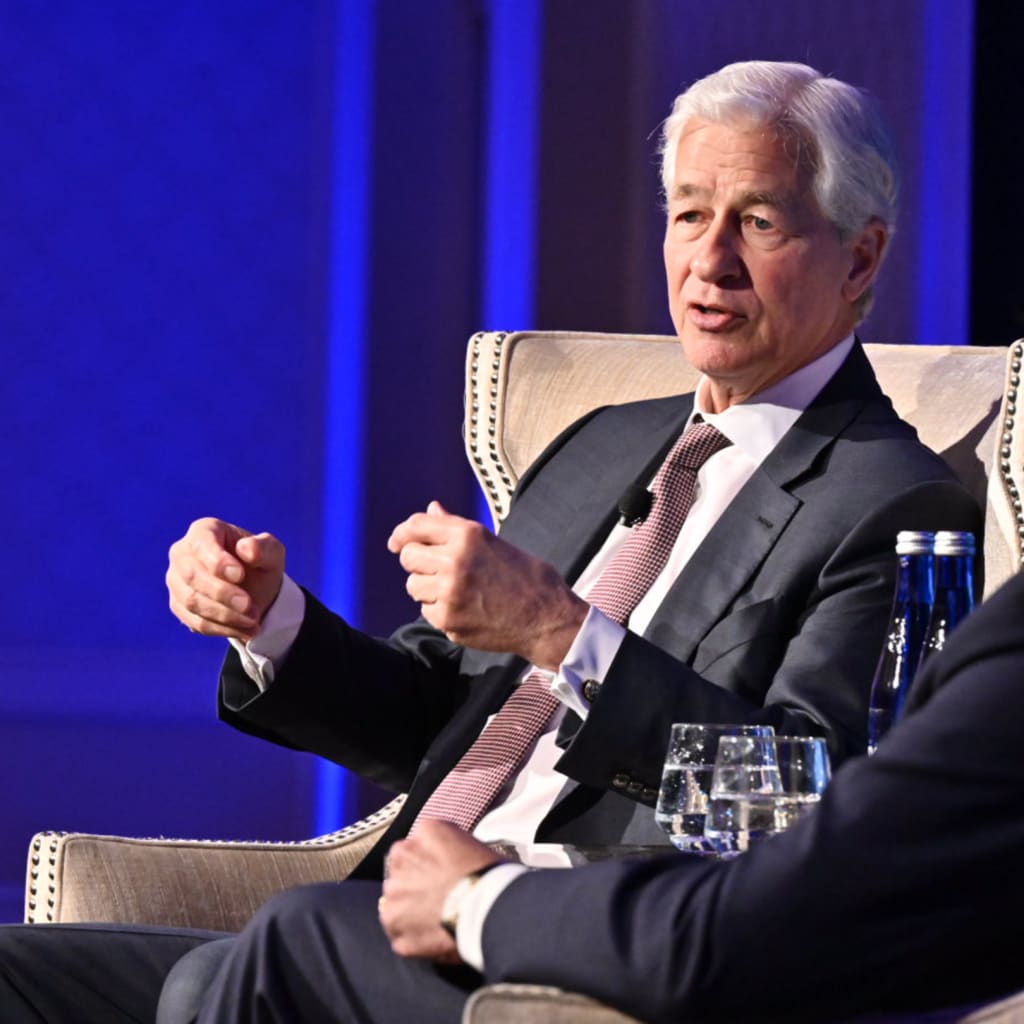
And luckily, we also have an interesting and all-star panel. We have Jan Hatzius, furthest over there, chief economist and head of global investment research at Goldman Sachs. Doug Rediker, managing partner at International Capital Strategies and also at Brookings. And next to me, Natasha Sarin, professor at Yale and co-founder of the Yale Budget Lab.
And, Doug, I thought I’d put the first question to you, picking on you if you don’t mind. Obviously, it seems pretty unclear whether this week’s agreement on Iran is really going to stick, but let’s step back and just talk about how the geoeconomic shifts from this war, what they’ve revealed. I mean, Iran has discovered a new power over the Strait of Hormuz, an ability to hold the world economy to ransom. China has reminded all of us of its ability to think in a strategic way about geoeconomics. Its big oil reserves, and its willingness to draw from them was a big reason why the oil price didn’t spike quite as much as the gloomy forecasts expected during the war. And it strikes me that neither of these developments is particularly great for the U.S. centrality in the global system. So how would you evaluate, you know, what—leaving aside what we don’t know about whether the agreement sticks—what about what we do know? How do you evaluate it?
REDIKER: Well, first of all, thank you, Sebastian, and the Council for having me here today.
It’s an impossible question to answer, not because I’m going to try and bob and weave around it, but because I do think that the major takeaways from the Iran war—whether it ends one way or the other, whether it ends at all—are going to be more strategic than economic. Which doesn’t mean there are not geoeconomic consequences, but I think the broader consequences are going to be much longer in coming and more strategic. That doesn’t mean they’re separate from geoeconomic, but I do think that in terms of framing let’s realize that what’s happened in the last forty-eight hours with the MOU, if it is what it appears to be, and the last several months, really has a structural change in the strategic landscape of the world, which goes far beyond economics. But within the context of economics, I think it has accelerated trends that were already in play without actually changing the direction in any particular way.
So when I was sort of writing some notes for this last night, I kept starting with my own words of “accelerates the trend of,” “accelerates the trend of.” And I think the one that is the most obvious is, to use the Council’s head of geoeconomics book title, chokepoints. I think that the acceleration of the importance of chokepoints, both physically, as your question suggests, in the Strait of Hormuz being the obvious one, and then the response thereto. So, you know, using financial weaponry, sanctions and others, as a chokepoint, as a means by which countries either seek a way round, or through, or they’re blocked by. I think one of the major takeaways of the Iran war has been this preeminence now of the dominance of chokepoints, both physical, financial, and otherwise.
And then what that means is countries are going to react. They’re going to say, wow, the previous emphasis we had on efficiency is now being replaced by the need for redundancy. So whether it is, you know, just a means to create an alternative source of energy, so whether it is new pipelines or, you know, an acceleration of the adoption of renewables, or even going back to using coal or other means by which you’re self-sufficient, that resilience, that redundancy because you’re trying to avoid chokepoints. So if there was one major geoeconomic takeaway that I would draw from this, it is the emphasis on chokepoints and the likely acceleration of countries’ need to find ways around those chokepoints.
MALLABY: Hmm. So, Natasha, the impact from the war clearly has been felt differentially in different regions. And if you look at that World Bank forecast which I just cited, the projection for developing and emerging economies has been downgraded quite a lot since January. So 3.6 percent growth is projected for this year, 0.4 percentage points below what was forecast in January. So, you know, and 3.6 might sound respectable but, you know, these countries are facing a massive entry of young people into the labor market, 1.2 billion people over the next decade. So give us your sense of this growth shock and how it’s going to play out in the developing world.
SARIN: Yeah. I think it’s accurate to say that emerging markets have really been hit hardest by developments that we’ve seen as a result of this war. And if you want to take, like, a concrete example, if you look on the African continent, at the beginning of this year there was actually a fair bit of optimism about what the growth picture was going to look like. In part, because we were in a situation where we were coming off a series of shocks that had been felt very substantially. You were coming off of COVID, you were coming off of the impact, potentially, of the war in Ukraine.
What’s happened as a result of this conflict is that both the sort of obvious thing, that, like, energy markets have been massively disrupted, we’re seeing massive increases in oil prices that are being born very substantially. And, frankly, even if we are at some sort of potential resolution, it’s going to take months, if not years, for this energy infrastructure in these markets and supply chains to really normalize. But the flipside is that it’s not just about oil, right? You’re also seeing massive delays in shipments of significant products, particularly refined products that are slow to arrive, in ways that are consequential for economies and, frankly, there isn’t a lot of resiliency right now in order for those countries to be able to bear.
And so something that I think that we—it’s funny, we’re talking from the perspective domestically about the consequences of this conflict. And, frankly, many of us have been thinking about the ways in which the increase in gas prices particularly are going to bear on political outcomes in the United States ahead of the midterms. I actually think, relatively speaking, we’re in better—a better position than many countries across the globe with respect to being able to navigate the aftermath of this conflict. Should we even be close to the aftermath?
MALLABY: So, Jan, one of the impacts, obviously, is an upward nudge to inflation from the war. So I’m going to ask two questions about central banks. The first is about Japan. You know, Prime Minister Takaichi came in with this reflationary program. It’s partly about much more defense spending, it’s partly just reflation, because she wants to go for growth. Obviously, Japan has a very high debt to GDP ratio in terms of sovereign debt. And so any time the cost of servicing that debt is pushed up because interest rates are rising, it’s not a good—it’s not good news for the Takaichi agenda. And the BOJ just this week did raise rates, right? So I’m wondering how much of a—you know, could we imagine a situation in which the Takaichi government has to really back down from its agenda?
HATZIUS: I don’t really see that as a—you know, as a high risk. I think what we’re seeing right now from the BOJ and what we have seen since early 2024 is normalization mode after a very long period of negative or zero interest rates. This was the fifth hike, to 1 percent. So we’re still at, you know, a level that is, I think, below where you’d expect it to be. If we’re closer to 2 percent inflation in the longer term, we still have, you know, another hike at the end of this year, beginning of next year, and then one more in 2027. That takes you to 1 ½ percent. And that basically would complete, in our view, the return of Japan to a more kind of normal macro environment.
The Japanese economy has a lot of headwinds. The demographics have been bad for a long time. Trend growth is low, GDP growth is low. But if you look at the performance relative to those supply-side realities, the performance has been pretty good. I mean, you can see it in, obviously, the equity market, which has been very, very buoyant, really outperformed most. But you can also see it in more standard economic indicators. And we have seen, I think, a return to normalcy.
On the fiscal situation, the debt level is very high but the deficit is actually reasonably moderate. Sort of 1 to 2 percent of GDP for the general government deficit. And over the last decade, the debt-to-GDP ratio has been stable. So I’m not saying there’s a lot of fiscal space. There will be constraints on how much the Takaichi government really can do on the fiscal side. But at the same time, it looks a bit more stable than some of the, you know, perhaps slightly overheated rhetoric that you sometimes hear in markets.
MALLABY: OK. So second central bank is obviously the Fed. I want to ask you about that too. You know, the Fed didn’t change rates, but Chairman Kevin Warsh, first time he’s chairing the meeting, did roll out a bunch of other initiatives about how he wants to put his mark on the institution. Chief among them is that he doesn’t want to communicate quite so much. And so I wondered if you could comment on his reluctance to comment. (Laughter.)
HATZIUS: Yeah, I think—I mean, for now the changes are still relatively small. We can get to the meeting and what the signals were. I mean, he basically said, we have, you know, these various task forces that are going to look at a range of things, including the balance sheet and including Fed communication. And at the end of the year or maybe early next year there will be some significant changes. It wouldn’t be shocking if the dot plot, the nineteen submissions that get published for where the funds rate is going to be, if that goes away or at least gets heavily modified. And he sort of nodded in that direction at the meeting yesterday by not submitting dot himself. And press conferences I think is a little bit less clear. He said press conferences can be helpful, but you need to actually have something to say. And so implying that maybe that’s not true every time they have a meeting.
At the same time, I also think there’s a little bit of a disincentive for him to sharply reduce the amount that he communicates, because if the other members of the committee still communicate, and I think they will still want to—and it’s going to be pretty difficult to keep them from doing that—then you kind of reduce agency if you don’t—if you don’t communicate much yourself.
MALLABY: Unless you pull an Alan Greenspan, which was to, you know, punish the ones who want to communicate too much by suddenly giving them the assignment of addressing a church hall a very long way from Washington at 8:00 in the evening to a hostile audience. And then they tend to communicate less after that.
HATZIUS: I mean, you would—you would know better than me. But was that not sort of in the second half of Greenspan’s very long—very long term, that he managed to sort of rein people in that way?
MALLABY: True. Fair. That’s true, yeah.
HATZIUS: So I think it’s going to take a little bit of time for Warsh to establish that same kind of—that same kind of control.
I mean, just on the meeting, the meeting was more hawkish than we expected. I mean, nine of the eighteen people that did submit dots had one or more hikes in 2026. The inflation forecast for next year was a little bit higher. And Warsh in the press conference said something that I think could be important going forward. Which is that he thought markets can provide a really important input—I’m not paraphrasing it 100 percent—but very important input for policy. And I think that raises the risk of sort of feedback between markets, who are trying to figure out what policymakers are trying to do, and policymakers that try to figure out what markets expect them to do. You know, markets can do a lot of things, but they do need, I think, some—
MALLABY: Was it clear if he meant the bond market or the equity market?
HATZIUS: Pardon?
MALLABY: Did you think he met the bond market or the equity market? Is this a statement about equity market bubbles, or is it a statement about bond market interest rates?
HATZIUS: I read it—it’s not clear. And I think we need a little bit of clarification. I read it more as when markets are pricing hikes or cuts, then policymakers may want to follow that. I mean, I hope that’s not the right interpretation, because I do think that can lead to some, you know, interesting hall of mirrors-types of things.
MALLABY: Natasha. I’d love to come to you on this. I mean, not least because you do run the Budget Lab at Yale. And, you know, this connection between a more hawkish Fed and the fiscal outlook must be something you’ve thought about.
SARIN: Totally. And I want to sort of piggyback on some of what Jan is describing, because I too was a little bit confused about this sort of framework of wanting to be able to follow the markets, and felt like the circularity was kind of confusing. Because the idea is that the market is pricing in some expectation of hikes on the horizon or staying stable from the perspective of the central bank. They’re doing that with cognizance about the direction that they think the central bank is going to go. And so I’m not entirely sure what it means to then follow the market. Does that actually make it more difficult?
Part of the sort of—actually, think there’s a really interesting debate to be had, and an interesting academic debate that has been had, about the extent to which central banks should communicate and provide forward guidance for the direction that they think monetary policy is likely to need to go. Part of what Chair Warsh has sort of articulated for an argument against doing more of that affirmative communicating is the idea that the Fed needs to be able to respond in more real time to changes as they occur. As inflation ticks up they need to be able to adjust and shouldn’t be able to—and shouldn’t feel like they are foreclosed from making movements because they have somehow telegraphed what they’re likely to do over the course of the next many months.
So that seems like in direct tension with this idea that somehow the Fed should be following the market. And I wasn’t really sure what to make of that. And I wasn’t entirely sure whether he, in fact, knew what to make of that, other than to say that he felt that the market had valuable information to provide that the central bank should care about, which I think many of us who think about these issues, like, fully agree with. But it’s really about how to internalize some of that information.
With respect to, like, what I am worried about, about the U.S. fiscal outlook and the relationship between inflation that, by its latest print, was at the highest level that we’ve seen in this country in the last three years, something that should give you a little bit, maybe, of less sort of nervousness is the fact that basically all of that is energy, right? So basically all of the increase is telling us something about the nature of exactly the sort of conflict in Iran that we started with this afternoon. But something that should give you more pause—(laughs)—is that we are in a quite challenging fiscal situation. Relative to Japan, our deficits are running at 6 percent in this country.
HATZIUS: We also have no growth, though.
SARIN: And also we have more growth. And we might have even more growth as a result of what we’re soon to talk about, with respect to artificial intelligence. But the thing that sort of should, I think, give all of us a little bit of concern about the nature of the U.S. fiscal outlook is that net interest payments are currently something like 3.3 percent of GDP. And they’re expected to rise very significantly over the course of the next few months, years. Every dollar of debt that we’re rolling over, we’re now rolling over in a higher interest rate environment. And that’s likely to tick up even further over the course of the next many months. And so I think that we’re in a situation where the expectation is that interest is going to consume something like 30 percent of revenue by 2036. That’s up from 19 percent in 2025. So high interest rates matter. And they matter significantly for the U.S. fiscal outlook.
MALLABY: So, Doug, you’ve spent all of your career, I think, you know, studying crunches in emerging markets. And when you see a global tightening cycle, even if it’s not a radical one, are your spidey senses tingling, in some sense?
REDIKER: Less emerging market focused, and more on what we were just discussing, to be honest. I think the days of emerging—I don’t want to jinx this—but the days where an individual, or even a series of emerging markets, can run into trouble—that’s spurring the Asia crisis, the Russia crisis, the Latin crisis—I don’t see that on the horizon as being a systemic risk. I do see some of what we were just talking about in the U.S. and other developed economies, that the—there is nobody left of the old, prudent, fiscally wait a minute, let’s be responsible crowd. Whether it’s Democrats or Republican—
SARIN: They’re here. (Laughter.)
MALLABY: Which is a fine place to be. (Laughter.)
REDIKER: I live in Washington. And it’s amazing the silence, from both sides of the aisle, when you hear numbers that are being floated around now for the defense budget, for the overall budget. The reason these things are not progressing in the U.S. is not because there’s a real resistance to overspending well beyond our means, 6 percent deficits not in wartime, are suddenly, like, oh well I guess that’s OK. Well, they’re not OK, but there’s nobody there who politically is going to say it.
So your question is about emerging markets. I am concerned that there are isolated emerging markets that are definitely in debt distress, or will be. I’m not sure if we’ll get into it, but the overall framework for resolving that, the debt restructuring mechanisms that are out there are problematic. Largely because China is now the largest bilateral creditor in the world and they play by a different set of rules. There’s been an effort to try and coalesce everybody around a common framework. It gets into very technical stuff, but let’s just say it’s not working the way it should, even if it’s working better than it was when it wasn’t working at all.
But that doesn’t mean I am sanguine about emerging markets. I think there are a couple of big restructurings out there that are going to be very difficult, and potentially problematic. One being Venezuela, another being Senegal. But I’m more concerned overall by this general sense that debt can simply be, you know, increased exponentially without there being a political pushback. And at some point, whether it’s the bond vigilantes or whatever that catalyst is, there’s got to be a time in which there’s a moment in which everybody says, that’s not good, and we won’t tolerate it anymore. It’s just to date we have seen no evidence of that whatsoever. So the party keeps going.
MALLABY: OK. So, yeah, let’s switch over to the kind of bull story for the world economy. We’ve been talking about the debt, and the inflation, and the war, and so forth. But sometimes it seems like all these concerns are dwarfed by artificial intelligence. Both the scale of the CAPEX, which produces this enormous boost to demand here in the U.S., and the hope for productivity gains that may follow from the CAPEX. But I guess, you know, the question is always how big and how soon. So I wondered if you could give us your take on, like, how much growth impetus from the CAPEX are you seeing? How much productivity gains do you think we’re going to get? And what does it do to unemployment in the labor market?
HATZIUS: On all that in three minutes? (Laughter.)
MALLABY: You can have three and a half. (Laughter.)
HATZIUS: Yeah, I mean, it’s interesting, because when you do these sort of roundtables or dinners, if you look at the topics that come up, you know, the top ten, eight or nine of them are negative, and downside. But then there is one big positive, which is that I do think we’re seeing an acceleration in underlying productivity growth, and ultimately potential GDP growth. So obviously lots of uncertainties about the social impact, but just from an economic perspective there is some very positive stuff happening. In the near term, I think right now the impact of CAPEX on GDP growth—well, we’re estimating that we’re getting about a five percentage point boost to the overall growth rate of capital spending in 2026. We’re also getting a boost from the changes in the depreciation rules. That’s probably worth another two or three percentage points. So it’s a very solid capital spending environment this year.
Some of that five percentage points isn’t actually measured in the national income accounts, because semiconductors are treated as intermediate inputs so there’s actually some under-measurement. The other point to say is that not that much of the AI investment actually feeds through to GDP growth ultimately, because much of it is imported. A lot of the equipment is imported from Asia. So it’s massively boosted Taiwanese GDP growth, it’s boosted Korean GDP growth, but in the U.S. that impact is smaller. Of course, on the demand side we also have a positive wealth effect from the increase in equity market values. But, yeah, overall I think this is still relatively modest. It’s a few tenths in terms of contribution.
Longer term, our expectation has been that we can get about a 1 ½ percentage point boost to productivity growth annually over a ten-year transition period as we incorporate AI into the economy. Obviously, there are lots of assumptions around that. There are some offsets as well. So we haven’t raised our long-term productivity growth rate, and certainly GDP growth rate, by anything like to 1 ½ percentage points. Demographics kind of push the other way. And businesses are redirecting some funds that would be directed towards other types of productivity improvements towards AI. But, yeah, I mean, despite the bad demographics we’ve lifted our long-term GDP growth forecast from 1.75 percent before COVID to 2.5 percent now. And so it’s a solid positive story.
I think on the labor market I’ve generally been in the camp that we’re going to have a substantial amount of disruption. And we can have a temporary increase in the unemployment rate, which is what we’ve seen in past positive technology shocks. But, you know, nothing like the sort of numbers that we’re hearing out of some of the AI firms. And also ultimately, if you ask me what’s the U.S. unemployment rate going to be ten years down the road, I’d give you a number that’s pretty similar to the current 4 to 5 percent range.
MALLABY: OK. Natasha, I think last time we had a meeting a few months ago you had a pretty firm view on the lack of strong evidence for any labor market disruption from AI. Do you still feel the same way?
SARIN: Yes. I do. In that, if you look at the moment at basically any indicators of AI exposure in different types of occupations, and a lot of these indicators are coming from the AI labs themselves. And you can say that there are problems with the data and we’re not doing a good job of capturing it. But, like, the best that we have at present, you do not see any evidence of differential trends with respect to hiring, with respect to layoffs, with respect to overall composition about the types of workers, dislikelihood to be hiring new entrants into the labor force, any of that. You see none of the difference between AI-exposed occupations and non-AI exposed occupations. And so in the data presently we do not see anything that indicates that there is widespread displacement that is happening at the moment as a result of the technology.
And in fact, part of what is giving me a little bit of pause as I try to evaluate this set of facts about the labor market, relative to the types of things that you’ve heard from a lot of these technology executives—like Dario Amodei saying, you know, we’re on the precipice of, like, you know, 50 percent of white-collar labor being displaced—is that it is actually the—it has for a long time been the case that sort of the pessimistic take about AI was coming from Luddites who didn’t really know much about the technology and were fundamentally kind of suspicious of it. It is now the case that what is happening is a lot of companies, who themselves are trying to deploy AI in ways that are productivity enhancing and ultimately revenue enhancing for their firms, are finding that they haven’t quite figured out how to do that yet.
So you’re hearing stories about how, you know, Uber went through its entire compute budget in the first three months of this year, or at Google they were trying to get everyone to do—to use a bunch of these tools in useful ways, and what they found was their employees were tokenmaxxing, so were using chatbots to, like, ask them what time it is rather than looking on their computers, in ways that were taking up a lot of compute and ultimately not super productive. And so all that is to say that I think that we are—I suspect that we are in relatively early innings with respect to seeing massive impacts on the labor market as a result of AI.
That said, I have to think that it is coming. In that my—and I’m sure all of you are having this experience as well—where a lot of the types of work that I do—I do a lot of research—a lot of the types of work that I do, where traditionally I would spend time with research assistants and, you know, go back and forth many times on, you know, trying to learn enough to be able to come and do this briefing this afternoon, like, basically AI is better than the best research assistants that I could marshal. And so you have to think that that means that there is going to be less of work for—particularly for early career-stage types of people in the economy. But we are just not seeing that yet.
MALLABY: Doug, let’s take this to Europe. There’s a paper floating around the internet. This is my last question before we open it up to members, so get your questions ready. And this paper, called Europe 2031, sort of tries to paint the picture of what’s going to happen in AI geopolitics, particularly how it impacts Europe. And it’s sort of one of these, you know, incredibly depressing narratives that essentially, you know, describes Europe. Every time AI accelerates a bit more they think, oh, we really understand we’re going to have to do something about this. And they do kind of 20 percent of what they should do. And then it accelerates some more, and they do another 20 percent. And they’re so far behind the curve that at the end they’ve got no significant compute, no bargaining power as to access to AI.
And the U.S., which is short of tokens, because that’s where we are, says, well, we need the tokens for our own economy. You can’t have any, or we’re going to throttle you back. And, by the way, if you’d like some, you need to hand over ownership of ASML, your lithography company. I mean, this is just a cue for you to talk about Europe in any way you’d like. But, I mean, there does seem to be—you know, we go through these phases of somewhat optimism—oh, Germany has changed its constitution to allow for more government borrowing, you know, there’s the Draghi Report. And then there are kind of periods of downgrading of expectations on Europe. And I’m kind of on a downgrade cycle right now, but where are you?
REDIKER: Well, it’s funny, because we’ve had this conversation on the various panels I’ve done with you over many years. And whether it was AI specific, as your question was this time, or any other catalyst, it’s really the same story. It’s just accelerated. But, I mean, Europe famously acts only in a time of crisis. And yet, it fails to recognize a crisis when it is in front of their face. So even before AI, Europe has all of the makings watching this Trump administration actually accelerate the need for Europe to say, well, whether it’s what Macron calls strategic autonomy, whether it’s defense specific, whether it’s on a variety of other areas, you know, Europe really needs to step up and do stuff—Draghi Report, Letta Report.
I always say this, I feel it’s incumbent upon me to do it every time I’m up here, to say the IMF did a paper in 2023 which showed that the euro area can issue 15 percent of euro area GDP through a common borrowing instrument with absolutely no incremental cost to Europeans whatsoever, just because of the added liquidity. That was before Trump made the U.S. dollar and the financial system even more of a there is no alternative but please give us an alternative scenario. Europe does not actually step up and do it. Whether it is pre-AI or post-AI. They seem incapable of stepping up and declaring a crisis that catalyzes the political necessity to act when, in fact, those of us taking a step back would say, this is a crisis.
On AI specific, it’s actually worse than your question suggests, although I can’t say that the paper is right or wrong. I haven’t read that specific paper. But if you look at where AI is going, it is really now, on the back of the Trump administration’s export controls on the Anthropic models this past week, this is a real crisis, because now the U.S. has said, you know, we have the ability—by the way, even if they were to remove the export controls today, the crisis is already there. Because what they’ve said is, we have the ability, at a whim, to turn off your access to one of the most fundamental building blocks of the twenty-first century economy, right? So some of the G-7 leaders actually acknowledged that this week, and they said we have to step back and realize what this means. Well, that’s what it means.
It means you have access to a U.S. set of models, which can be turned on and off at will. Again, there’s always been the risk of a kill switch in some of our defense provision to Europe. Well, this is a blatant kill switch, without even, you know, any ambiguity whatsoever. Then you’ve got the Chinese models which, again, depending on who you talk to, are six months behind, eighteen months behind, whatever it is. But they are the alternatives. And nobody really wants to go to the Chinese model, except there is an appeal to an open-source model, which some of the Chinese models are. Not all Chinese, and not all open source are Chinese. But an open-source model means you can download it on your, you know, local computer. And then if the U.S. decides to execute the kill switch, via export controls or otherwise, then, you know, you have something you can still work with.
That makes these alternatives more palatable, even if on their face they aren’t. But note, I said there’s the U.S. models, there’s the open-source, primarily Chinese models. What I didn’t say is there’s the European home-grown models. So the Europeans have Mistral, the French model. And I was mentioning this to you earlier in the lunchroom, Sebastian, that I learned this week Mistral, the French European great hope, is, you know, much smaller than its American or Chinese competitors. But Mistral trains its model in—dramatic pause—the U.S. Because European copyright and data protection laws are so overbearing, from their perspective, that they can’t take the risk of actually training their own competitive model in their own EU regulatory environment without running the risk of legal jeopardy, which would undermine the entire exercise in the first place.
So I am hoping that Europe wakes up. I’m hoping that the Trump administration’s policies have spurred them to recognize a crisis when it’s in front of their face. But I’m skeptical that that is going to actually be the moment that we’re watching right now.
MALLABY: OK. Who has the question? And please remember, this is on the record. Yes.
REDIKER: It’s on the record? I didn’t—(laughter)—
MALLABY: I didn’t want to tell you, Doug, but I’m telling—I’m telling the members.
Q: First, I so applaud your Knicks colors. Very well done.
SARIN: Ah, Knicks in five.
Q: Yeah. (Laughter.) You guys are all in the—if I go back up to 30,000 feet, we’re all in the business of forecasting. And it struck me, as you were talking, that, you know, all the sort of big risk that people used to look at came from outside. But with the apparent end of rules-based order, et cetera, you know, the risks are actually quite home grown. Like, a lot of them around turmoil in the world came straight from Washington. And even some on the positive side, the AI changes are coming from the U.S. We’re used to looking at the black swan coming from outside, and now it seems to be coming from our home. Can you talk about how or whether you’ve changed the way you actually forecast and think about it as a result?
MALLABY: Hmm. Who wants a crack at that?
HATZIUS: I can take a take a stab at it. I would say—well, if I go back to the kind of pre-2008 period—I basically started doing this in the late 1990s—then I actually thought a lot of the risks were coming from inside the financial system and inside, kind of, the—you know, the endogenous feedback in the economy, or between the economy and the financial system, because of the weakness of private sector balance sheets and the private sector financial deficits, and the over-leverage. So that’s—you know, that’s less—obviously been much less true since the financial crisis, or maybe since the aftershocks of the financial crisis.
Right now I would say, yeah, the U.S.—so if you define inside and outside as domestic and foreign, from a U.S. perspective, I’d say you’re right. A lot of the kind of shocks in one direction or the other—and, you know, could be negative shocks for activity, could be positive shocks for AI—does come from U.S. policy. So figuring out what’s happening with U.S. policy, and what happens in the U.S., and what the impact is on other economies along the lines of what Doug was talking about in terms of European access to AI, is more important.
I mean, one thing that we’ve definitely beefed up is, you know, our Washington Economist Alec Phillips has a much more prominent role in the team than, you know, would have been the case ten years ago. I mean, he’s always been great, but he now is, I think, much more top of mind for people than was the case. And if I look at Goldman Sachs as a whole, not just investment research, which I oversee, but also the other areas where people think about macro outcomes, yeah, we’ve definitely beefed up the amount of resources that we’re devoting to figuring out what’s happening politically in the U.S.
MALLABY: Sure, did you want to go quickly? I want to get more.
SARIN: Oh, I was just going to say that I feel like there’s needed to be a certain nimbleness in forecasting. In that, like, the effective tariff rate has changed over eight-five times over the course of—on eighty-five different days in this administration. Flip side, I think some of the sort of, like, volatility and the threats to institutions that we’ve seen over the course of the first year and a half have longer-term consequences for things like dollar dominance, and the safety of the U.S., and our stability. And I worry that we are—we, at Budget Lab but more generally, are not doing the world’s best job at thinking about how to contextualize some of those consequences in the long term.
REDIKER: Just you asked, how are things changing? I travel a lot less because I’m based in Washington. And so I used to be traveling the world to sort of assess the risks. And now I just stay home. (Laughter.) And my background, as Sebastian mentioned, was originally in emerging markets. So I have the curse of living in Washington and having an emerging markets prism through which to view the events of the day.
MALLABY: Yeah, I asked you about which emerging markets are in trouble, and you basically answered about the U.S. (Laughter.) Let’s go to a question here.
Q: Thank you.
Question to you. Sebastian mentioned that there were two issues a little bit in tension with each other, growth in CAPEX and productivity growth. My question to you is, markets. Some of us are old enough to remember 1998-1999, valuations going through the roof. There was no NPV that could justify these valuations. Are we in the same situation today with the valuations of companies going public? Especially since a week from today SpaceX will be integrated in the indices. And so this is going to proliferate all over the market and the markets.
HATZIUS: I mean, I look at the macro side rather than, you know, individual companies. I mean, clearly valuations are very high. If you look at it on a backward-looking basis, the, you know, Shiller PE now is not too far from where it was in, you know, 1999 or early 2000. So, you know, it’s a very highly valued market. I’d say one big difference, relative to the late ’90s, is the strength of earnings. Because if you looked in in the late 1990s, certainly in the national income account measures, profits actually started to come down in 1998-1999.
So by the time the market peaked, profits were already on a downward trend. Margins were on a downward trend. It wasn’t quite as obvious in the S&P 500 numbers until later, and there were also some restatements. But right now, the—I mean, earnings growth has been—you know, it’s been quite dramatic. You know, first quarter we had S&P 500 earnings per share growth. You know, I think it ended up in the high twenties. For the median S&P company, it’s, like, in the mid-teens. And as far as you can—you can make out from the national income account measures, there’s also strong growth there. So I do think that’s one difference.
Another difference is that the financial imbalances, which became even more severe once you got into the sort of 2006-2007 period, they were already pretty significant in 1999 and 2000. The private sector was running a financial deficit of 5 or 6 percent of GDP. The, you know, amount of—well, net borrowing in the corporate sector, a lot of this was concentrated in the corporate sector with the telecoms boom/ We’re not seeing anything like that at the moment. So I would say we have, you know, a very highly valued market, but at the moment still strong profit growth and, therefore, I think still some support for—you know, for where markets are going to be. But I would watch, you know, margins very closely. I’d watch things like, you know, aggregate financing gaps in the economy and private sector balances very closely, because this could change.
MALLABY: But I wonder whether, you know, some of the, you know, more comforting metrics on the public market reflect the fact that since 1999 the private markets have grown out of all recognition, both on the debt side and the equity side. And so a lot of what might be—what might have dragged down the numbers in the past, you don’t see it anymore because it’s all private. So if you look at, you know, OpenAI’s valuation in the secondary market, it’s way below its last valuation in the round that it did. If you look at the private credit runs that have been going on—I don’t know, I feel like there may be similar problems, but they’re just less visible because they’re not public.
SARIN: I similarly share that view. And I’ll say, like, if you look at these sort of three mega IPOs—SpaceX already, and Anthropic and OpenAI on the horizon—taken together they exceed by almost two times the size of the IPOs in the internet bubble from 1995 to around 2001. And when you look at analysts who are talking about these companies, what they say is that essentially the way that the valuations can be justified is as if you are pricing in something like a monopoly or an oligopoly outcome for these firms. That we’re in this sort of winner take all race, and at the end these are the firm standing such that everyone is paying for their models, and they’re the best models, and all of that.
Something that seems hard for me to grapple with is I haven’t quite understood that sort of revenue case for these firms, ultimately. In that it strikes me that these are pretty competitive markets at the moment. And it’s not obvious to me that there is going to necessarily be that—it seems likely to me that you’re going to be in a world in which there are going to be a few very dominant players. It seems likely to me that some of us are going to need access to the very best LLMs. But also, some of us and the way we use AI isn’t necessarily going to be willing to pay for those types of LLMs, and it’s going to be fine with a substitute that’s almost as good, but much cheaper. And so in that sense, like, how do we justify the valuations that seem monopolistic or oligopolistic in a world that—in a market that feels more competitive than that? It seems an open question to me that I don’t quite know the answer to.
MALLABY: Hmm. Let’s go over there.
Q: You shouldn’t need a microphone in this small a room.
But actually, the most interesting question that your fabulous session has come up is a military one, which is chokepoints and the future of the military. But I’m going to let that go, because that’s not your subject. I’m stunned by all the things that not only don’t we know, we’re not doing research on. That we have very unusual financing mechanisms between the users and the developers of these big models. How do you analyze those? Where are they going? You have CAPEX spending, which is doing what traditionally was an operations function. It’s ultimately going to train models, not so much to build capital stuff. A lot of talk about open source. We think open-source software is much more vulnerable to hacking and to being used in a hacking. But we don’t really know. I mean, why isn’t there—
MALLABY: So the question is?
Q: Why isn’t there more relevant research going on in this—
MALLABY: What’s—yeah.
Q: Even the definition of productivity—
MALLABY: I feel like Natasha might have some research on this.
SARIN: (Laughs.) But it’s hard. I think part of the challenge is that we’ve all been circling around the sort of, like, known unknowns, but the unknown unknowns are much more challenging. In that it becomes—one of the things that I’ve been grappling with is I’ve been thinking a lot about private credit. And I’ve been trying to understand the extent to which we—private credit, and a potential sort of bubble collapsing where you start to see a lot of the AI investments that these firms are funding through private credit vehicles start to go bad. And so what does that actually mean from a financial stability perspective?
And the answer to that question is, it is just genuinely really hard to know, because if you look about—if you look at public credit markets, things like bank loans, for example, we have, like, a lot of information about the extent to which there are interconnectivities between different types of financial institutions, about who ultimately holds the bag, about how to think about the ratings that are coming on these types of debt instruments. Whereas, for private credit we just know much less. In part because the word “private” is in the name, right?
That it’s sort of, like, in fact, there—I mean, there is some information, and Apollo is trying to be really transparent, and all this stuff, but, like, the extent of knowledge that we have about the actual sort of relationships, and the exposures, and where they lie in our financial system, are much weaker than more developed public credit markets. And so all that is, like, a long-winded way of saying, I feel like part of my challenge as an economist trying to analyze in real time a lot of these developments is I don’t necessarily have all the information or tools that I might want in order to be able to do that important work.
MALLABY: Perfect, and economists—
SARIN: And therefore, we need to make a lot of assumptions and do our best, which is what we are trying to do.
Q: (Off mic)—our research focus.
SARIN: And our research focus needs to be well-informed.
MALLABY: OK. Let’s go to another question. Let’s go over here to Earl Carr.
Q: Thank you. Earl Carr, CJPA Global Advisors. Thank you, Sebastian, for a fascinating discussion.
Given chokepoints, and given that countries will be focusing more on internal renewable energy-type sources, do you think that one of the byproducts of the Iraq war—the war in Iran will be that the U.S. petrodollar will decline and the internationalization of the renminbi will increase, given that global supply chains are so embedded with China.
MALLABY: Doug.
REDIKER: I think the first part of your question, yes. The second, not so much. I think that the petrodollar foundation, from decades ago—which was U.S. provides security, the Gulf states agreed to denominate oil in dollars, and they recirculate those dollars into investments into the U.S.—I think that that is breaking, and going to continue to break. Whether the renminbi becomes the beneficiary of that is probably a vast overstatement. I’m not sure what comes next. I think the renminbi—certainly on the back of the chokepoints, the manifestation in the Iran war and elsewhere—clearly, the dollar’s use as a bilateral trading currency is being selectively undermined. It’s not being undermined overall as a reserve currency.
But if and when the Gulf states, at the end of this sixty-day period, and then thereafter, find that U.S. security ain’t what it was cracked up to be, and that the U.S. withdraws in a way that they are not comfortable with, they’re going to have to rethink because they’re going to have to redeploy their assets in a different way. It makes more sense for them to be actually denominating oil in a trade-weighted basket of currencies, just from an objective standpoint, if you didn’t have this implicit/explicit petrodollar deal, so if that if the security part of that becomes more questionable, then all of the other steps become, you know, a little more vulnerable to change. But I don’t think the renminbi becomes the de facto beneficiary of oil priced in renminbi as opposed to dollars. I think it’s going to be something much more multipolar.
MALLABY: I wonder whether either Jan or Natasha wants to come in on this, because I’m always a bit confused by this petrodollar argument. In the sense that if you ask the question, why do people hold dollars? Is it because defense comes to the United States was it because they want to hold dollar assets because the U.S. economy generates very attractive, very liquid, very high-growth, you know, technology-connected opportunities to invest? I would say it’s overwhelmingly the second. People hold dollars because they want to buy stuff with dollars, assets in dollars, because U.S. capital markets are so attractive. It’s not really about who provides the Patriot missiles.
SARIN: I very much agree with that. And, by the way, look at how foreign investment in China has, like, basically collapsed in recent years. No, that is another argument against this.
MALLABY: Yeah. I mean, China has great technology, but it also has overcapacity in all these technologies. So if you’re a shareholder, it’s not great to buy stocks in BYD. Yes, let’s go over there.
Q: I’d like to ask a naïve, hopefully not Luddite, question. About two and a half years ago, even the leaders, including Musk, of AI companies said they would entertain a six-month pause to allow the major economies, basically the U.S. and China, work out a regulatory regime. That seems like an awful long-ago world. But in your conversation today you touched on two things which remind us of the need, or perhaps the need, for state control over the new technology. One was the recent kill switch issue that just arose this week, and the other was back when Hegseth and Anthropic came to blows back then. You, Sebastian, mentioned a six month or so, or eighteen-month lead over China’s technology. Obviously restraint here—and there’s also the states in our federal system, which also threaten to regulate. The question then is, is there still an opportunity for the major powers to slow the development to establish a common regulatory regime? Or is that such an idealistic, fantastical vision at this point that none of you forecasters have to take it into account at all?
SARIN: I worry that it is a little bit of an idealistic vision, in the following way. If you take seriously what some of these executives at these leading labs are saying—and they’re saying different things at different moments in different audiences at the moment. Where you had Sam Altman on CNBC recently say he doesn’t think AGI is all that useful of a term, and maybe that’s—sort of, there’s going to be this, like, stepwise accumulation of improvements with respect to super intelligence, but it’s not going to happen all at once. But I think that was sort of more trying to calm all of us, the public, down. I think if you take seriously what they’re saying, it’s possible that by, you know, 2028-2029, we are going to live in a world of recursive self-improvement, or a world of essentially AGI.
If that’s true, what that means, if you want some sort of coordinated global regulatory framework sort of policy perspective, is that in this administration—in this one, in the Trump administration—
Q: He’s already two years in. So let’s put that aside. But that’s—then we’re further behind the ball then, but go ahead.
SARIN: Yeah, but, I mean, what I’m saying a little bit is I see no capacity for the policy process to ultimately find its way to regulate successfully or coordinate across countries successfully, based on my belief about how policy ultimately tends to work and how far behind it is relative to understanding this technology and the way in which you might even want to regulate it.
And then, second fact is I don’t actually know what a pause means. Like, I actually—like, structurally, even if we want—I know they were all saying it, but, like, even if we wanted to do that, how would one effectuate it? And how would one effectuate it in a world, if what Sebastian is saying is true that China is sort of eighteen—we have an eighteen-month lead. Then you’re going to say we’re going to pause and then we’re going to lose some of that ground, and to do what exactly? Because we don’t have a cogent policy process for what it would mean, like, even to regulate successfully. And so all that makes me—like, I think you need it, but I don’t know how you get it. And I’m quite nervous.
MALLABY: Yeah, OK. Shall we take one last question? Right here in the front.
Q: Thank you. My name is Vanessa (sp). I’m a corporate member.
It’s about unemployment, and what are your views about that. But I just want to make a comment on that. Is it’s really hard to price. And, like you said, there’s not enough evidence in the data. But one thing we know is the technology capabilities is so much higher than the business is actually being able to implement, enable. The gap just keeps growing. And we know there’s a bunch of resistances that make that happen. Once that happened, that feeling you had about your research assistant can be a huge effect, because when you look at end-to-end processes in a corporation involves a gigantic number of people. (Laughs.) So having said that, what is your perspective in terms of the unemployment rate for the upcoming years?
MALLABY: OK. We’re going to answer this in a rapid-fire way, because we’re just about out of time. But so we’re going to frame this as unemployment, let’s say, three years from now, 2029. What’s your number, Natasha?
SARIN: Four, five—four and a half, five (percent).
MALLABY: Doug,
REDIKER: I’m not going to answer that question. I’m going to answer it differently. I’m just going to say, I think it’s going to be a big problem. And I think there’s going to be a political reaction.
MALLABY: You speak rapidly, even if it wasn’t rapid fire.
SARIN: Yeah. You made me give you a number. (Laughter.) He just goes, like, eh, on the one hand, on the other hand. (Laughter.)
REDIKER: I’ll just say, I think there’s going to be a political reaction to the populist need to address a rising unemployment that is currently taken with a bit of whistling through the graveyard.
MALLABY: OK. Four and a half, five (percent). Populism is a problem. (Laughter.) Jan.
HATZIUS: I have a similar, Four and a half, four and three quarters (percent).
MALLABY: OK. All right. There we will end it. Thank you, everyone, for coming. Thank you to all the speakers. (Applause.) It was fun.
(END)
This is an uncorrected transcript.