America’s Arsenal Problem

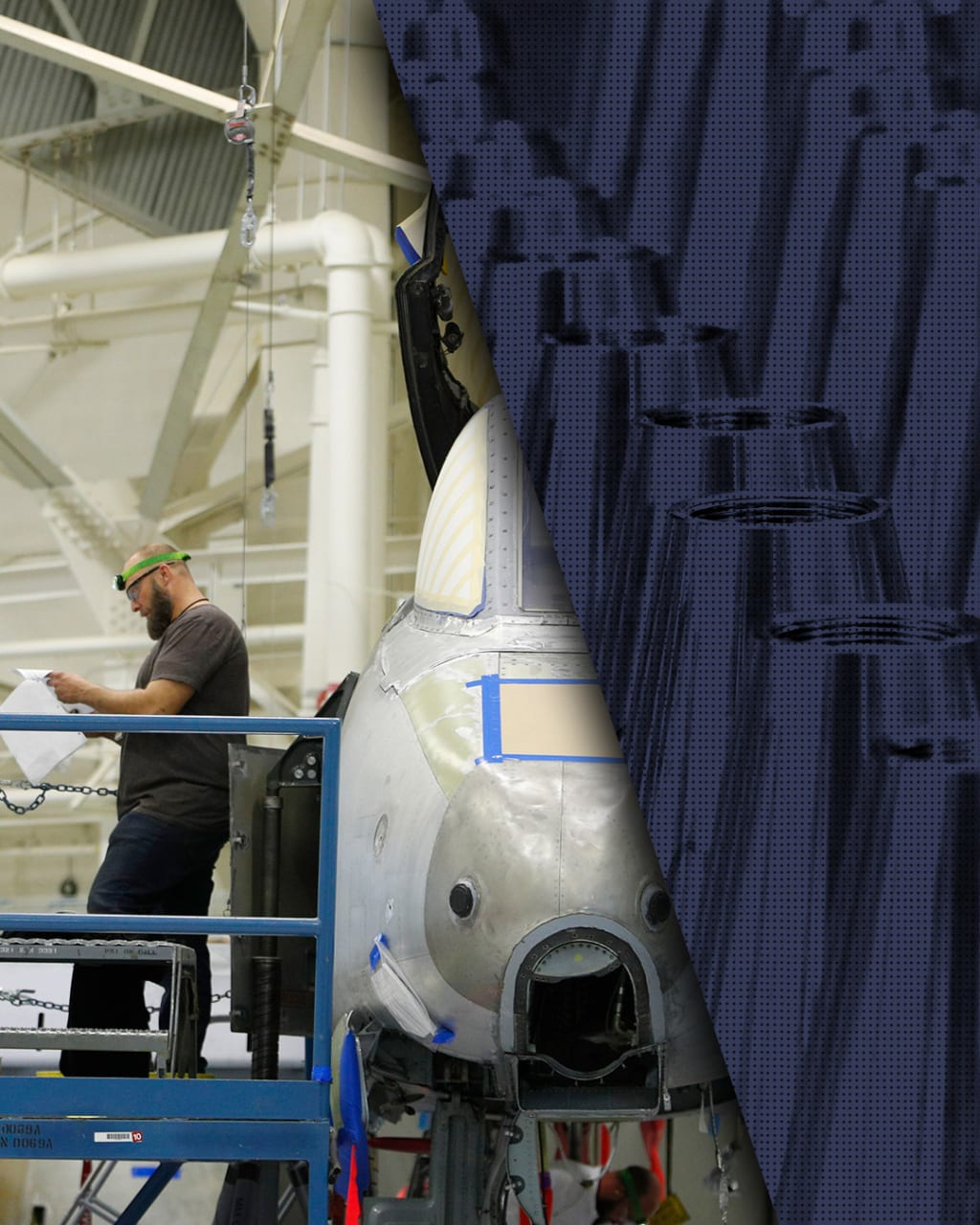
Since 2019, the United States has tried to build a more resilient defense industrial base. The need first impressed itself upon Washington during the COVID-19 pandemic, and it only grew stronger after Russia invaded Ukraine, China manipulated supply chains critical to defense production, and the revolutionary implications of artificial intelligence (AI) became clear.
Numerous policy initiatives have been set in motion to deal with the problem. In 2021, Congress created the position of assistant secretary of defense for industrial base policy. The next year, Secretary of Defense Lloyd Austin created the Office of Strategic Capital to boost funding for new, innovative defense technologies. In 2024, the Department of Defense published the first-ever National Defense Industrial Strategy and Implementation Plan. Congress also significantly increased appropriations for several programs aimed at shoring up the defense industrial base, funneling more money toward the Defense Production Act Title III program and the Industrial Base Analysis and Sustainment program (which address gaps in the United States’ industrial capacity and workforce), the U.S. Navy’s submarine pipeline, and the U.S. Army’s efforts to modernize depots and arsenals.
There has been a rare degree of continuity between the Biden and Trump administrations on defense industrial policy. Both have used the Defense Production Act, a 1950 law giving the executive branch broad authority over private industry, to provide grants and purchase supplies necessary for defense industrial production. Both have invested in the critical minerals and rare-earths supply chains necessary for defense systems.
Today’s defense industrial base is expanding to include recently established technology companies, as well as legacy defense contractors. That mixed makeup creates a new challenge: policymakers now need to rebuild stocks of key munitions (which have been depleted by conflicts in the Middle East and Ukraine) and ships sourced from legacy contractors, while incorporating artificial intelligence, autonomous capabilities, quantum computing, and other technologies supplied by the newer companies.
In the coming years, Washington will need to rapidly integrate such technology. For decades, the Defense Department has purchased expensive, complex, and highly customized systems that take years to produce and require extensive maintenance. Those systems include F-35 fighter jets, as well as Patriot and Tomahawk missiles, which remain some of the Pentagon’s most effective weapons. The wars in Ukraine and Iran, however, have demonstrated the effectiveness of low-cost, commercially available capabilities, such as AI-enabled drones. The United States will need more such capabilities, and policymakers should make it easier to procure and field them.
Another challenge policymakers must address is fiscal uncertainty. Defense companies crave predictable U.S. government spending and market conditions. Uneven appropriations cycles, which often stretch across multiple fiscal years, severely hamper production planning. Smaller suppliers are especially vulnerable to demand fluctuations and shifts in defense budgets. To give them the necessary certainty, policymakers in the executive branch should work closely with Congress to secure multiyear funding authority and appropriations.
Next, policymakers should prioritize increasing domestic production capacity. The United States’ manufacturing capabilities have been progressively eroded, particularly by unfair trade practices. As a national security imperative, Washington needs to rebuild domestic defense manufacturing capacity. Doing so, however, will take time and require targeted government interventions coupled with private investment. Policymakers should fund programs that embed innovative manufacturing processes into both current and future systems so that weapons can be produced or maintained in the field—a feat enabled by technologies including three-dimensional printing and robotics. Such investment is critical for improving readiness and resilience. Ultimately, advanced manufacturing will shrink production timelines, allowing the United States to become more self-reliant.
Washington should also ramp up its efforts on workforce development. Skilled workers remain critical to defense production. Without a well-trained, motivated workforce, efforts to expand production, incorporate autonomous capabilities, and sustain the United States’ competitive edge will fail. Policymakers need to ensure that future defense industrial strategy prominently features workforce training, upskilling, and retention programs.
The overhaul of the defense industrial base cannot be considered complete until adversaries are removed from U.S. supply chains. China is a particular threat. It has a choke hold on rare earths and critical minerals, especially when it comes to processing, separating, and refining. China’s dominance allows the country to control global prices and weaponize supplies through export controls, harming the U.S. defense sector in particular.
Washington has already taken steps to reverse that situation. In 2022, the Department of Defense launched a “mine-to-magnet supply chain” strategy for building domestic production of rare-earth magnets, components that are indispensable to modern electronics. In the last year, the Pentagon has made record investments in several rare-earth mining, production, and recycling companies, including MP Materials, Vulcan Elements, and ReElement Technologies.
To build on that progress, policymakers will need to expand the use of industrial policy incentives, including purchase commitments, price floors, guarantees, and production subsidies. As Washington secures trusted sources of inputs, it should fund the research and development and commercial scaling of quantum, AI, materials science discoveries, and other next-generation technologies that could, in the long run, eliminate the need for critical minerals, rare earths, and other supply chain choke points.
Finally, Washington needs to reinvest in its alliances, which remain critical to supply chains and overall defense industrial policy. The North American and European defense industrial bases remain tightly integrated. Major weapons systems such as the F-35 are made up of parts from suppliers across three continents. The United States will need to keep working with allies and partners to build trusted supply chains and produce reliable weapons. The Biden administration expanded defense industrial cooperative agreements with allies and partners. While pressing NATO allies to increase defense spending, the Trump administration has also expanded defense cooperation and supply chain resilience agreements with Australia and Japan.
A strong industrial base deters potential adversaries. It sharpens U.S. military power and allows the United States to mobilize quickly in wartime. If Washington fails to build one, it risks giving its rivals more leverage to weaponize choke points, weakening its own defenses. Any grand strategy worthy of the name must start with a more resilient and innovative defense industrial base.
More from the Future of American Strategy >>