How the Next Congress Can Repair the Military’s Personnel Crisis
A change in Pentagon leadership won’t undo the purge of senior officers since early 2025, but the incoming Congress can begin repairing the damage by protecting promotions, guaranteeing women’s access to combat roles, and restoring oversight.
By experts and staff
- Published
Linda Robinson’s work centers on women’s political and economic leadership, the relationship between gender equality and democracy, technology-facilitated violence, and current international affairs. She has served as chair of the U.S. Army War College Board of Visitors and has testified before Congress on multiple topics including special operations, the Iraq war, and the Middle East.
The articles of impeachment filed by Representative Thomas Massie against U.S. Defense Secretary Pete Hegseth this week have inevitably drawn many of the headlines about the future of the U.S. Department of Defense. But the crisis and chaos within the Pentagon will outlive the current leadership unless Congress also takes steps to fix personnel policies, particularly those affecting women.
Hegseth’s departure, whether through dismissal or resignation, is a necessary condition for addressing the multitude of problems besetting the military and U.S. national security. Yet although there has been growing pressure on Hegseth—the conduct of the Iran war, reports of munitions shortages, and a purge of experienced senior generals and admirals have all raised red flags, including among some Republican lawmakers—a House vote to impeach is unlikely to be followed by the two-thirds majority required in the Senate to remove him. Instead, what is likely to make his position untenable is an inability to secure support for defense spending and defense authorization bills once a Democrat-led Congress is seated in January.
Any successor to Hegseth would have to deal with the fallout from the way the Iran war has been conducted. But munitions shortages are short-term problems compared with the lasting damage to manpower and the culture and climate of the force. Congress therefore urgently needs to enact policy and legislative changes to repair the damage done to the armed forces—specifically the people who make up the institution—by a leadership that too often has seemed focused on partisanship and culture wars.
The dangers of this approach are already apparent in the growing disaffection with the leadership. According to a poll conducted by the veterans’ organization Common Defense Civic Engagement and reported by Military.com, 53 percent of active-duty respondents are considering separating early because they believe the military is becoming politicized. An even higher percentage of those polled, 67 percent, believe decisions are being made for political gain rather than mission readiness.
Such concerns come against the backdrop of the dismissal or forced retirement of an unprecedented number of generals and admirals, including a disproportionate number of women and Black officers. This loss of experienced leadership directly increases the risk of poor national security decision-making as less experienced officers are promoted. Hegseth has also reportedly intervened to remove officers from one- and two-star promotion lists to the army and navy, which will have generational consequences for future leadership given that it takes decades to grow a four-star leader.
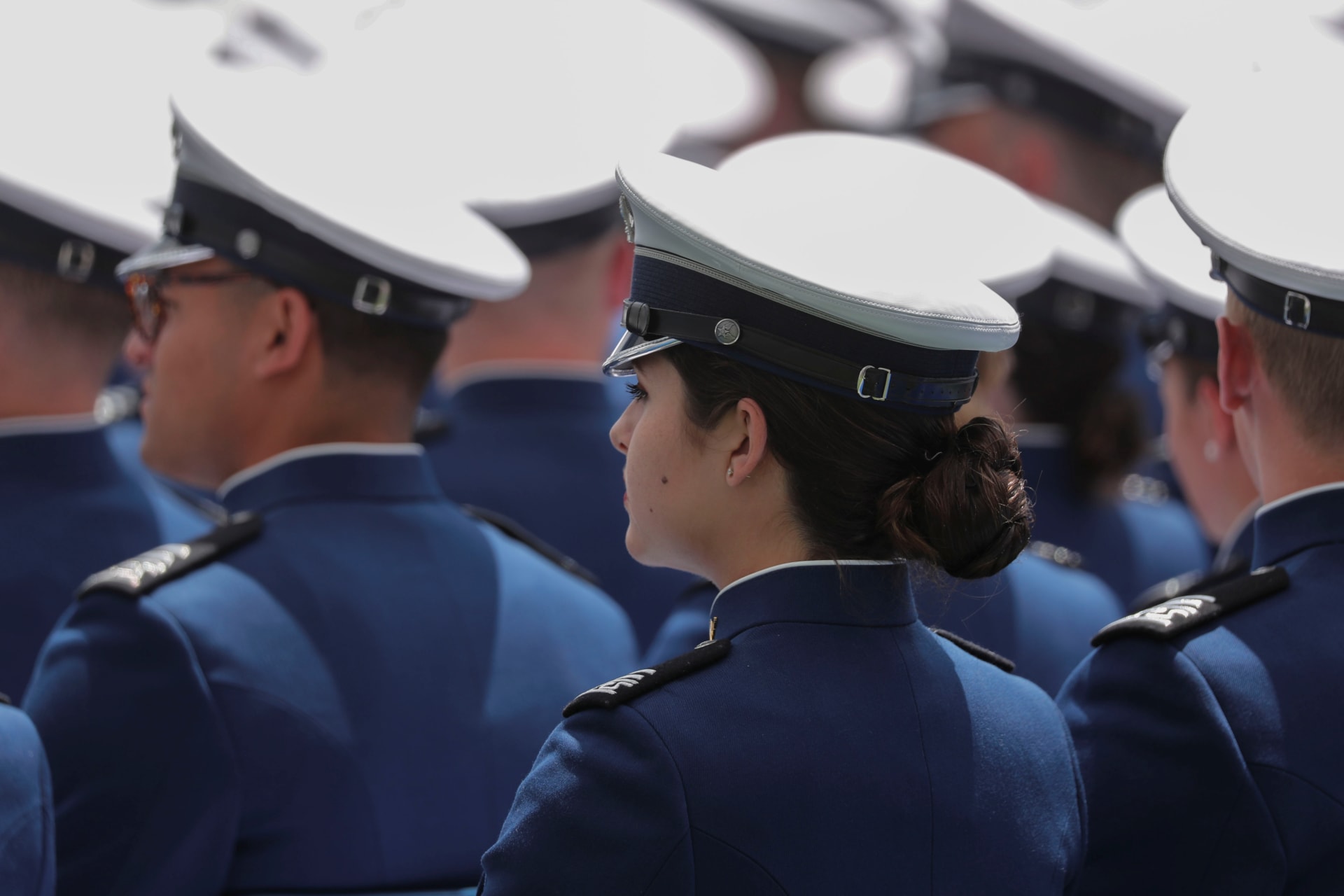
The current leadership’s approach falls particularly hard on women: there are no four-star female officers today, only eight of 201 nominees for promotion are women, according to one analysis, and the number of women in the service academies’ class of 2030 has dropped. Women make up 18 percent of the active-duty force and meet the standards for entry at higher rates than men, so it is not hard to see how diminishing their prospects will also degrade the quality of U.S. forces.
Earlier this year, senior enlisted leaders and vice chiefs of the services charged with oversight of personnel matters all testified in Senate hearings that women’s participation in combat units has not affected their readiness or effectiveness. But this testimony has failed to quell fears that a review of the performance of women serving in ground combat operations ordered by the Pentagon in December 2025 will be used as a pretext to exclude women from ground infantry positions based solely on their gender. The uniformed leadership, for its part knows that such a step would reverberate through the military, engendering a lack of trust in those who abandon the long-standing tradition of a meritocratic military culture.
The fiscal year 2027 National Defense Authorization Act (NDAA) is the best vehicle for enacting much-needed changes to personnel policy, either in the lame-duck session this year or in January when the new Congress convenes. Legislative action is needed to tighten the promotion process so that duly vetted and approved officers are not removed from promotion lists without notification of cause and the right to appeal. Senator Richard Blumenthal and other senators introduced the Military Officer Promotion Integrity Act in late September, and Senator Tammy Duckworth has urged NDAA negotiators to strengthen the bill’s promotion provisions to ensure all those removed from promotion lists since January 2025 have the right to written notification and to appeal their removal. These measures are essential to reverse the current secretary’s efforts to reshape the force in ways that could undermine national security.
To prevent current or future efforts to reverse women’s right to compete for combat units, Congress should also pass the proposed WARRIOR Act or a similar provision to prohibit exclusion based on gender and to ensure fitness tests are not used to exclude those who meet the position requirements. The legislation has been proposed in the House and Senate with multiple cosponsors, including Representative Chrissy Houlahan and Senator Mazie Hirono.
Finally, Congress should exercise stronger oversight to ensure that future Defense Department leadership from the service chiefs and service secretaries on down reinforces the military’s professional, apolitical norms. It should also reinstate the Defense Advisory Committee on Women in the Services, founded in 1951, and restore the historical record of women’s contributions. The likely next chair of the House Armed Services Committee, Adam Smith, has pledged to reestablish a formal subcommittee dedicated to Pentagon oversight.
Another step, the restoration of top talent, would need to be undertaken by the next secretary of defense. Any successor to Hegseth would do well to consider recalling to duty some of the highly qualified officers with vitally needed experience and expertise, such as Adm. Lisa Franchetti, an expert in Asia; Lt. Gen. Telita Crosland, a career medical affairs expert; Rear Adm. Jamie Sands, who championed an integrated Naval Special Warfare Command; and numerous others with frontline expertise in Ukraine and an understanding of the reforms needed to retool the army for future warfare.
These remedies should not be viewed as optional measures that can be postponed until some later time. The loss of talent is already affecting the quality of decision-making and leadership, and the climate of prejudice within the force will eat away at unit cohesion and ethical behavior at all levels. That humans are more important than hardware—the first truth embraced by the special operations community as its guide to recruiting and maintaining the most elite units—applies to the entire military. The armed services committees and Congress as a whole should rank this issue as one of their top priorities.
This work represents the views solely of the author(s). The Council on Foreign Relations is an independent, nonpartisan membership organization, think tank, and publisher, and takes no institutional positions on matters of policy.