Serbia Election Marks the End of an Era
The country’s student-led opposition movement secured a historic victory in parliamentary elections. But the new government will have its work cut out, says CFR senior fellow Charles Kupchan.
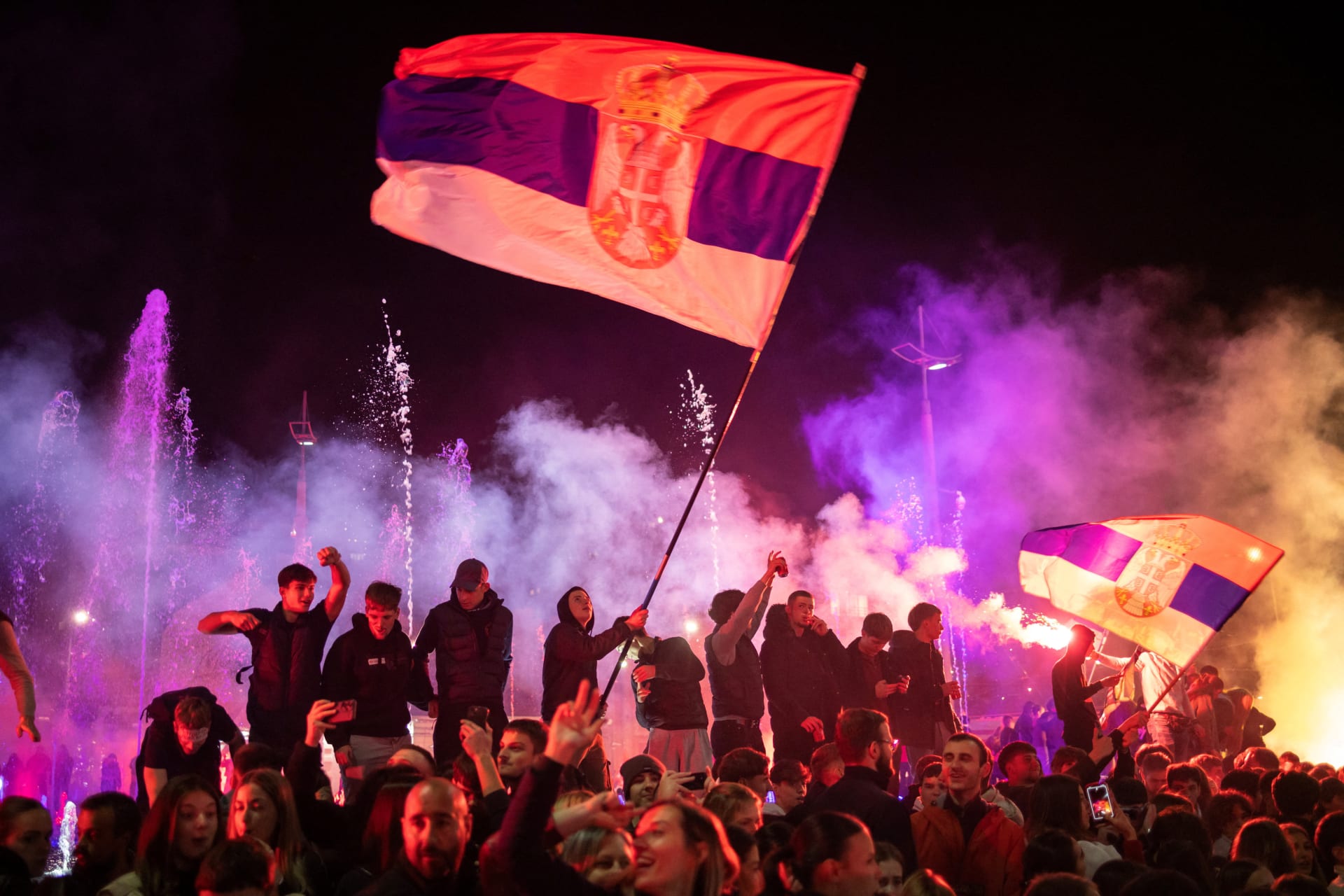

Former Serbian President Aleksandar Vucic conceded defeat to a student-led opposition movement in Serbia’s October 25 parliamentary elections, ending his party’s fourteen years in power. Vucic had called snap elections in a bid to regain his previous post as prime minister, but the list led by his populist Serbian Progressive Party (SNS) managed just under 40 percent of the vote compared with around 53 percent for the opposition Student List.
Pollsters and the Republic Electoral Commission estimated turnout at nearly 70 percent, which Reuters noted was the highest turnout since the breakup of Yugoslavia. The vote came after nearly two years of student-led protests sparked by the deaths of sixteen people when a canopy collapsed at a renovated railway station in Novi Sad, a disaster that protesters blamed on corruption and cronyism.
Some opposition parliamentary parties supported the student movement, which demanded early elections. It put forth a list of 250 candidates—including doctors, professors, farmers, and activists. Most opposition parties declined to field their own candidates and urged supporters to back the Student List. Several ran anyway, although no non-minority list outside the Student List and the SNS-led coalition crossed the 3 percent threshold.
Charles Kupchan, a senior fellow at the Council on Foreign Relations (CFR) and author of the new book Bringing Order to Anarchy: Governing the World to Come, spoke with CFR about the election results—and what they might mean—following his recent trip to Belgrade.
You just returned from Belgrade. What was the mood like on the ground?
I arrived last Thursday evening. In the city center, where my hotel was located, a massive protest was taking place; the crowd was estimated at around 150,000 people. The atmosphere was electric. The crowd was singing and chanting as it coursed through the streets, excited by the prospect that the Vucic era was about to come to an end. There were police everywhere and lots of streets cordoned off, but I saw no confrontations or violence. In my conversations on Friday and Saturday—I was at the University of Belgrade—students and faculty expressed cautious optimism that the Student List would prevail. In the end, a very high turnout helped the opposition win.
Based on your conversations there, what were the main drivers of dissatisfaction with Vucic’s party?
The student movement reflected a spontaneous mobilization of civil society that spread broadly across the country. One of the main slogans of this movement was “Serbia or the mafia,” indicating exasperation with years of corruption and state capture. The student movement now has wind in its sails and lots of political momentum. It needs to focus on turning that momentum into good policies and good governance.
What does Vucic’s defeat mean for Serbia and its relationships with the European Union (EU), Russia, and its Balkan neighbors?
It is difficult to say, because the Student List opposition campaigned mainly on domestic issues. Once a new government forms, it is likely to focus on fighting corruption, purging Vucic loyalists from the ministries and public enterprises, opening up a media community that had been dominated by Vucic, implementing economic reforms, and reducing political patronage. Relations with the EU are likely to improve as democratic reforms move forward. Ties to Russia may well grow more distant. Although it is unclear if the new government will try to move forward on relations with Kosovo, the change of government opens up the possibility of rekindling the normalization dialogue between Belgrade and Pristina.
What challenges are ahead for the movement as it shifts to the task of governing?
There is no clear leader of the Student List, and, as you noted, many of the winning candidates have little or no political experience. So the key challenge will be moving from a grassroots movement that inspired many voters across Serbia to governing a country that has long been run by Vucic and his embedded network of supporters. The movement has its work cut out.
This work represents the views solely of the author(s). The Council on Foreign Relations is an independent, nonpartisan membership organization, think tank, and publisher, and takes no institutional positions on matters of policy.