The Iran War’s Forgotten Front: Global Food Insecurity and the Limits of U.S. Aid
The Trump administration’s Operation Epic Fury has fueled a global hunger crisis affecting millions of people. Meanwhile, the State Department is sitting on $5.4 billion in unspent humanitarian funds. The rainy day it was saving them for has arrived.

Sam Vigersky is an international affairs fellow at the Council on Foreign Relations. He previously served as senior humanitarian advisor to the U.S. ambassador to the United Nations and has two decades of experience as a field aid worker and policymaker.
Pentagon Comptroller Jules Hurst III told the House Armed Services Committee on April 29 what nine weeks of war with Iran has cost: $25 billion. A State Department spokesperson said the agency’s humanitarian tab since the start of the war is $49 million. That’s a ratio of 510:1, and the gap has likely widened.
The Trump administration is discussing a $200 billion congressional supplemental funding package for the war, and not a penny is allocated for aid. The absence of humanitarian funding is a sharp break from precedent. In the earliest weeks of the 2003 U.S. invasion of Iraq, for example, Congress approved $2.5 billion for life-saving aid—equivalent to $4.5 billion today.
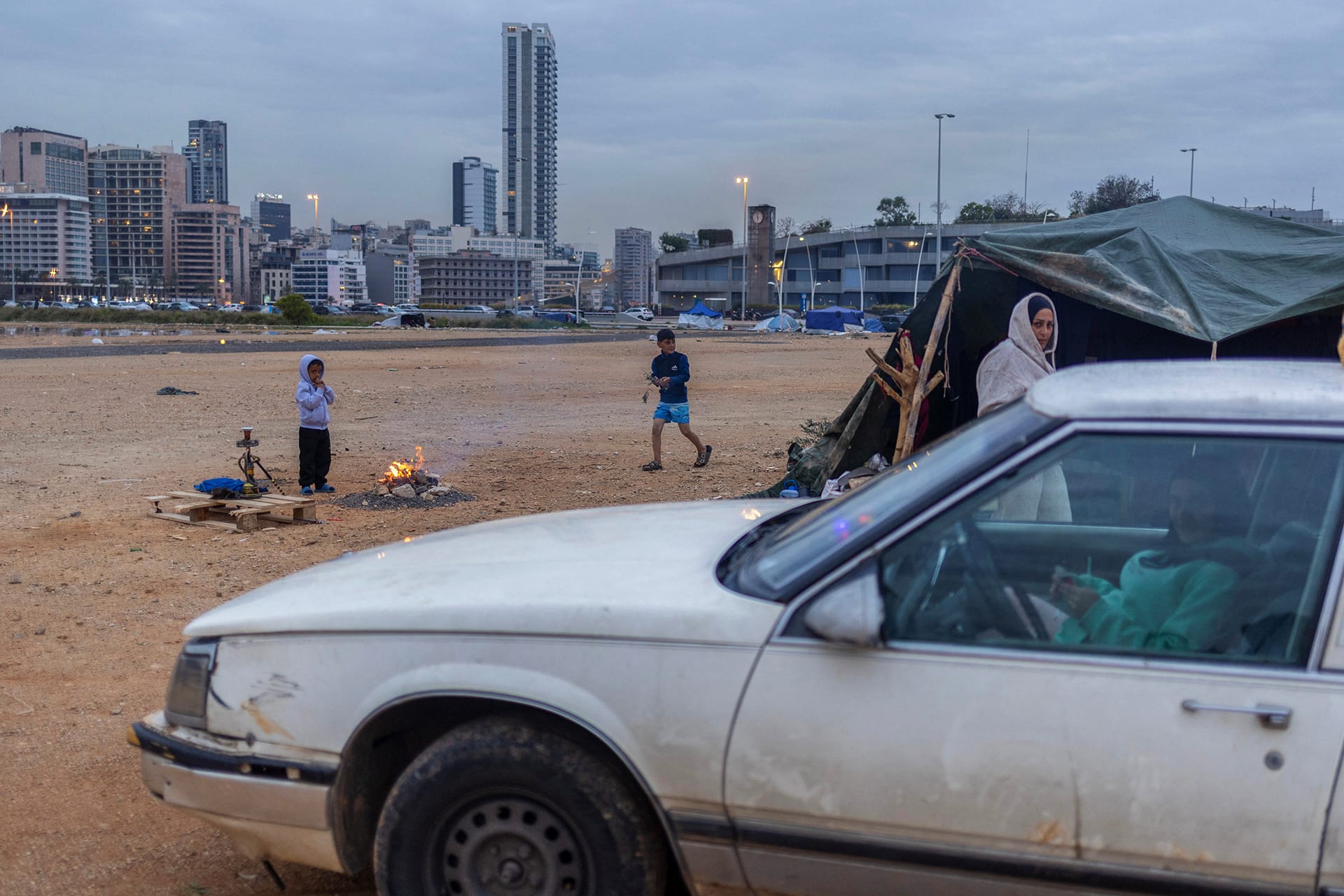
As Washington debates, the direct and cascading impacts of Operation Epic Fury have pushed millions of people to the brink of starvation. According to a report [PDF] released the same day as Hurst’s testimony by the Integrated Phase Classification System, the internationally recognized scale for classifying the severity of food security, 1.24 million Lebanese—nearly one in every four people—are experiencing acute levels of hunger. That represents a 42 percent increase over the six months prior. This follows U.S. cuts to global humanitarian aid from $14 billion in 2024 to $4 billion in 2025.
Across the first four months of 2026, the U.S. humanitarian retreat is becoming increasingly alarming. The Trump administration’s global humanitarian aid contributions this year ($2.4 billion) is not even half of what the National Retail Federation reported Americans spent on Easter candy and flowers ($5.7 billion).
[Interactive chart]
This year’s anemic spending is not for lack of evidence or urgency. Nor is it for lack of budget: the State Department’s new Bureau for Disaster and Humanitarian Response has some $5.4 billion in funds already appropriated for 2026. That’s in addition to the $2 billion carried over from 2025, which was transferred to the United Nations in February after it was announced in December.
Despite the mounting evidence of record-breaking hunger, that money remains unspent so far. Perhaps it’s because a lean new bureau needs time to find its footing. Or maybe, simply, they’re saving that $5.4 billion for a rainy day.
But that day has come. It is pouring across the globe, and it’s time for the State Department to respond.
The new bureau is described as the U.S. government’s “center of excellence” for international humanitarian food assistance and food security—tasked with leading the country’s response to high-priority, complex humanitarian situations overseas. If anything meets the threshold of this mandate, it’s the current global hunger crisis.
And yet a decline in U.S. aid funding has continued despite famine conditions in two countries and hunger spiraling toward record levels across the world. In three countries that are one step removed from famine—Afghanistan, Somalia, and Yemen—a new State Department policy has outright terminated U.S. support.
[Interactive chart]
A growing global catastrophe
The UN World Food Program (WFP) projects that in countries dependent on food and fuel imports, primarily in Africa and South Asia, some forty-five million more people could face acute food insecurity if the Iran war continues through June. This toll would exceed the record levels reached when Russia invaded Ukraine in 2022.
Those affected would join the millions of people already unsure of where their next meal will come from. Within Sudan, which is experiencing the world’s largest hunger crisis, famine rages [PDF] for a third consecutive year. New research from Islamic Relief found that 42 percent of the country’s community kitchens, a lifeline of local aid, have shut down in the last six months due to international funding cuts.
Outfits that are still operating face soaring costs, with fuel and wheat up 80 percent and 70 percent, respectively. Emergency supplies previously stored at the UN humanitarian hub in Dubai have been forced to reroute, doubling the cost of shipping to Sudan for some UN agencies. Amid this supply chain volatility, the Sudanese pound depreciated by 10 percent, leading Prime Minister Kamil Idris to ban imports of foods and industrial inputs to stem inflation.
Those in South Sudan are hardly faring better. Between 2020 and 2024, U.S. aid to South Sudan regularly exceeded $700 million. This year, the State Department has provided only $100 million, while the WFP reports a $193 million shortfall—meaning fewer meals to feed the seventy thousand South Sudanese already experiencing famine conditions. And it’s not just food that people can’t access: health services are collapsing as conflict rages, leaving few trained staff to treat patients suffering from severe acute malnutrition.
In Somalia, severe drought had already plunged 6.5 million people into acute hunger. Half a million children [PDF] are now one step removed from famine, with supply chain disruptions triggered by the Iran war causing shortages of life-saving therapeutic peanut butter paste. Clinics are now rationing supplies, turning away mothers and children in desperate need. Without funding, the WFP is closing programs. In total, thirty districts in Somalia no longer receive emergency food aid because of cuts. Countrywide, WFP can only reach one in ten people who need aid.
The International Rescue Committee has warned that Yemen—where rising food, fuel, and fertilizer costs have caused severe economic shocks—is entering its most dangerous food security phase in years, with half of the population suffering from severe hunger. Worsening the situation is the $3,000 risk fee added to forty-foot containers destined for the country, raising the cost of imported goods by 15 percent. Sea freight now routed around the Strait of Hormuz is incurring 400 percent insurance premiums while air freight capacity on key routes is down 50 percent.
Afghanistan is growing more desperate by the day. In a country where 3.7 million children are suffering from acute malnutrition, three out of four were turned away from clinics with therapeutic food even before the Iran war began. Today, the WFP says the cost of imported goods has tripled due to the ongoing conflict.
Delivering food aid had once involved direct transit across the Strait of Hormuz to Iran before entering Afghanistan. Now, it entails an odyssey that passes through much of Saudi Arabia before crossing Jordan, Syria, Turkey, Georgia, and Azerbaijan—followed by a trip across the Caspian Sea by ferry and a final journey across Turkmenistan. These extra costs hollow the food budget every day the Strait of Hormuz remains a choke point.
[Interactive chart]
Still, Lebanon exemplifies perhaps the starkest funding shortfall yet. The United Nations’ $308 million emergency Lebanon appeal—intended to fund a government-led response for a three-month period from March to May 2026—is only 41 percent funded.
The list of countries impacted by the Iran war can, and does, go on. Gaza is reckoning with a bread shortage caused by ingredient restrictions and price spikes. Egypt’s vegetable prices have tripled. Post-Hurricane Melissa recovery is stalled in Jamaica due to stranded building materials. Ethiopia is facing fertilizer scarcity right as planting season begins. A lack of fuel in Myanmar is disrupting humanitarian operations. And the international NGO Save the Children projected that every $5 increase in oil prices triggered by conflict will wipe out one month of life-saving humanitarian aid for nearly forty thousand children.
How the State Department should proceed
The State Department should take three immediate steps to mitigate the suffering of millions.
First, the Strait of Hormuz needs a humanitarian corridor. The newly drafted United States resolution in the UN Security Council calls for such a passageway, relying on parties to the conflict to support that action and placing coordination in the hands of the United Nations to facilitate impartial and unhindered access. This is the right direction. Now other countries need to rally behind this move.
Second, the Trump administration should immediately reinstate humanitarian funding to Afghanistan, Somalia, and Yemen. The people on the edge of famine deserve compassion and life-saving aid.
Finally, it is time for the State Department to respond to the moment for what it is: a spiraling humanitarian crisis that already ranks among the worst in the twenty-first century. That means aggressively spending their $5.4 billion budget to save lives and alleviate needless suffering. And if the Defense Department is asking for money linked to this war, the State Department’s humanitarian bureau should too.
This work represents the views and opinions solely of the author. The Council on Foreign Relations is an independent, nonpartisan membership organization, think tank, and publisher, and takes no institutional positions on matters of policy.