The Sinking of the Lusitania
The death of 128 Americans in a German submarine attack horrified Americans but failed to push the United States into World War I.
By experts and staff
- Published
 James M. LindsayCFR ExpertMary and David Boies Distinguished Senior Fellow in U.S. Foreign Policy
Asking “what if” is a popular parlor game. Seldom, however, do we truly know the answer, and certainly not almost immediately. King George V of Britain is a rare exception. On the morning of May 7, 1915, he was discussing what might lead the United States to enter World War I with a visiting U.S. envoy, Colonel Edward M. House. The king asked: “Suppose they [the Germans] should sink the Lusitania, with American passengers on board?” Within hours he had his answer. It was likely not the one he wanted.
The Birth of Submarine Warfare
One of the frictions between Great Britain and Germany in the years leading up to World War I was the rapid buildup of the German Navy. When war broke out in August 1914, however, the British Navy quickly established dominance of the North Sea. In November, London announced that it considered the North Sea to be a combat area and effectively closed it to neutral traffic by mining the area and demanding that all neutral ships headed there to stop first at a British port. Few ships were allowed to make their onward journey to Germany.
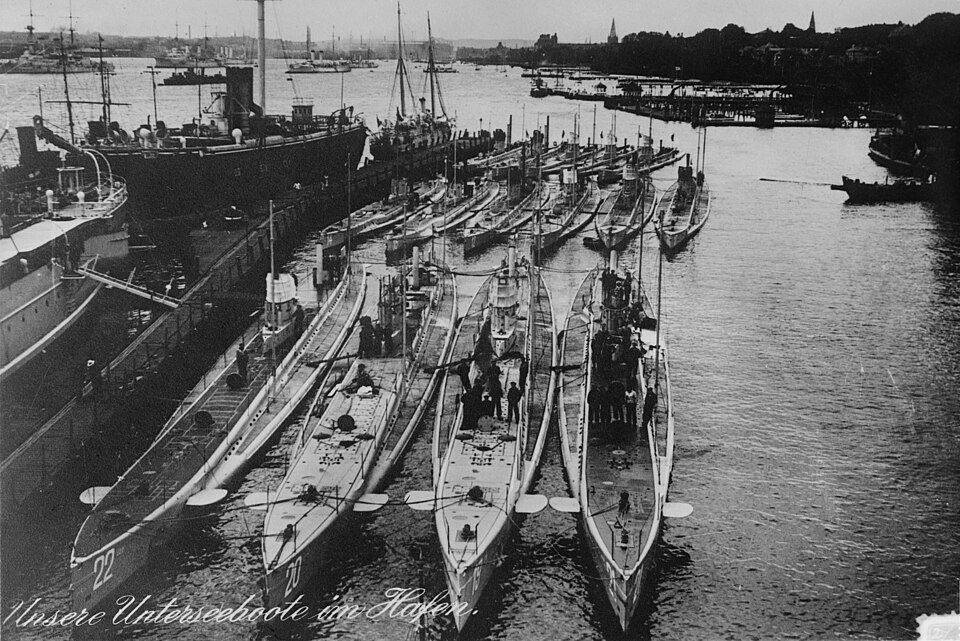
Faced with what amounted to a blockade and unwilling to use its battleships and cruisers to challenge the British Navy, Germany retaliated by turning to what was then a relatively new military technology: the U-boat, or submarine. In February 1915, Berlin announced that the waters surrounding the British Isles constituted a war zone. Any vessel that entered the area was subject to being sunk without warning. The threat drew very little attention at first. At the time, Germany had just four submarines at sea. But their lethality would soon become evident.
A Fatal Decision
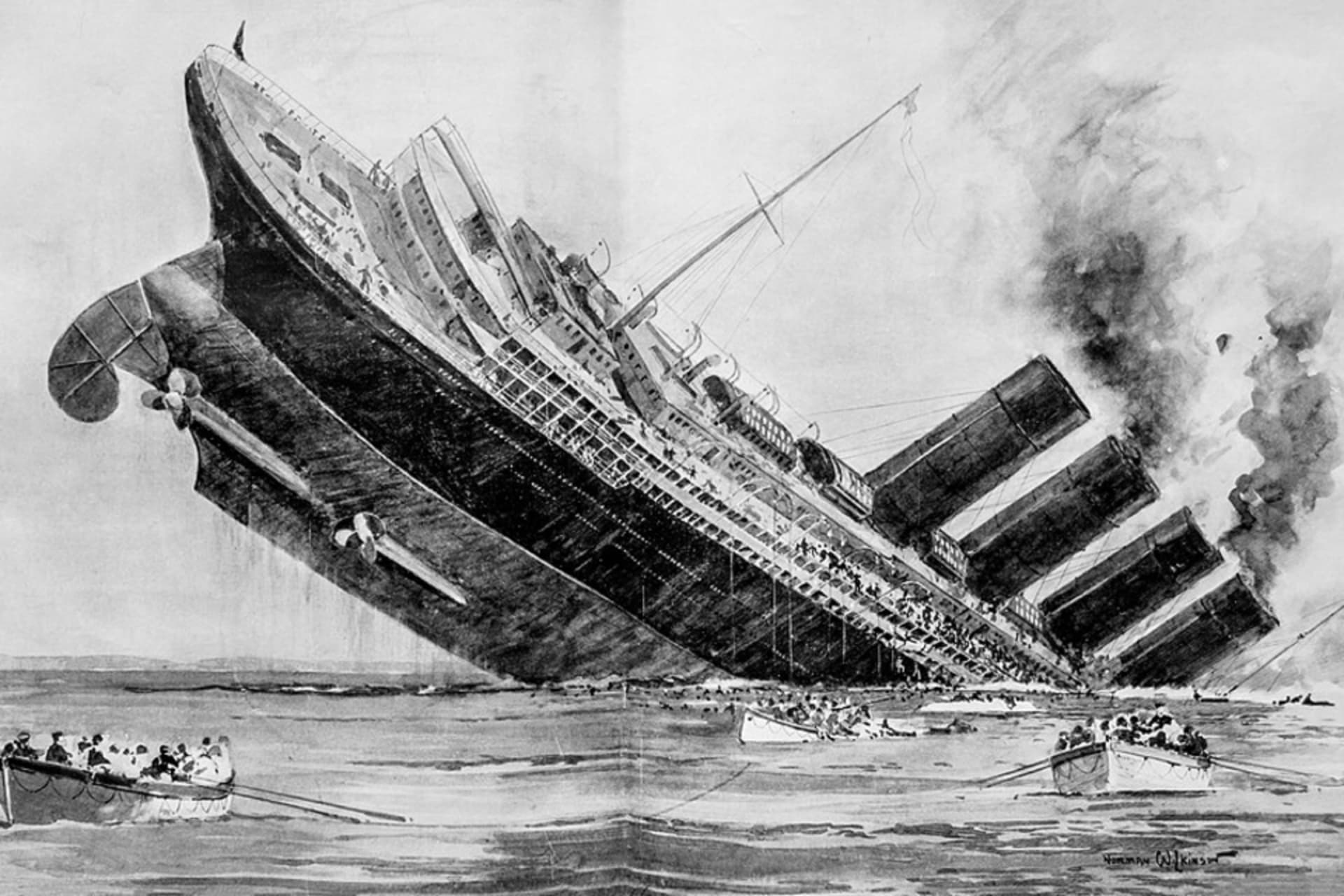
May 7, 1915, was a beautiful day off the coast of southern Ireland. The morning’s fog had lifted, replaced by bright sunshine. The passengers on board the RMS Lusitania, the fastest and most luxurious cruise ship on the seas, eagerly anticipated their impending arrival in Liverpool, just six days after departing New York. The liner’s great speed and design were thought to protect it against a submarine attack.
What the passengers did not know as the Lusitania headed toward the Irish Sea in the early afternoon, just a dozen miles off the Old Head of Kinsale on Ireland’s southern coast, was that a German submarine, U-20, had spotted the liner. The Lusitania’s captain had known about possible submarine activity in the area but had ignored guidance to plot an evasive course.
It was a fatal mistake. At 2:10 p.m., U-20 fired one of its two remaining torpedoes. It was a direct hit. The “Greyhound of the Seas” sank in just eighteen minutes. Nearly 1,200 people died, including 128 Americans.
A Shocked American Public
The sinking of the Lusitania horrified Americans at the time, much as Pearl Harbor and September 11 would shock future generations. Unlike those two tragedies, however, the horror did not translate into swelling public support for war.
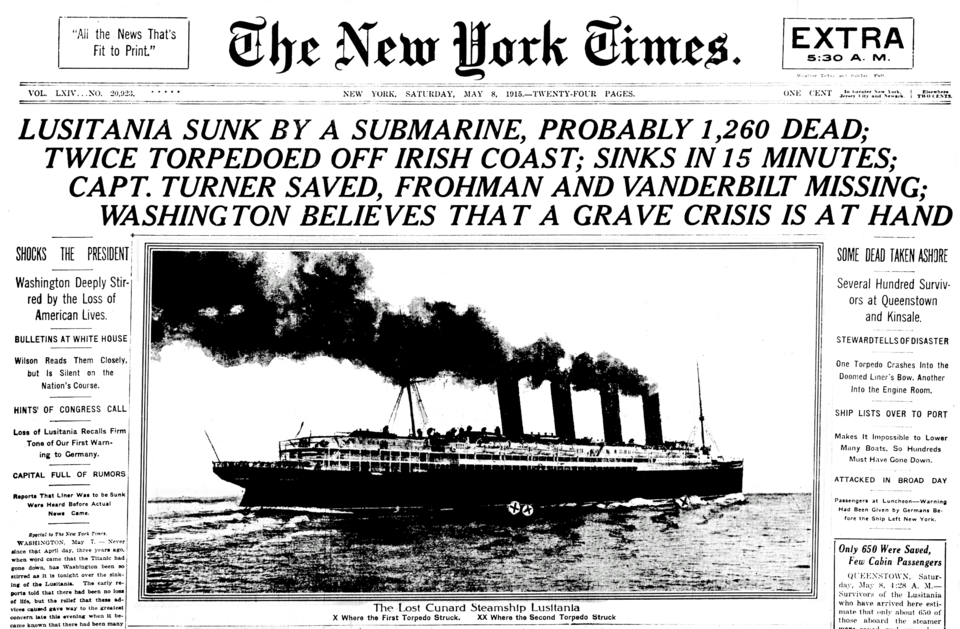
Some Americans did see the sinking as a cause for war. Former President Teddy Roosevelt, who thought that Wilson had erred nine months earlier in proclaiming U.S. neutrality, denounced the attack as barbarous and demanded a confrontation with Germany. So did some newspapers. The day after the Lusitania sank, the New York Herald ran a headline exclaiming, “WHAT A PITY THEODORE ROOSEVELT IS NOT PRESIDENT!”
The British government’s release of the Bryce Report five days after the Lusitania sank further inflamed American public anger. The report detailed (and exaggerated) atrocities German troops had committed after invading neutral Belgium in August 1914. Germany was one of the signatories to the treaty guaranteeing Belgian neutrality, and it had repeated its pledge to honor the treaty only a year before the war started.
As horrified as most Americans were at the atrocities committed in Belgium, the duplicity of German behavior, and the thought of civilians being left to drown on the high seas, they recoiled at the thought of joining a war in Europe. They still treated George Washington’s advice to stand apart from Europe and Thomas Jefferson’s warning against “entangling alliances” as gospel.
Ethnic politics also played a role. Irish Americans had no interest in helping Britain while it denied Irish independence. German Americans sympathized with their ancestral homeland. And still other Americans saw no virtue in either war or in joining squabbling European powers. When New York newspapers asked editors around the country how the United States should respond to the Lusitania’s sinking, only six out of the thousand who responded urged war.
A Divided Cabinet
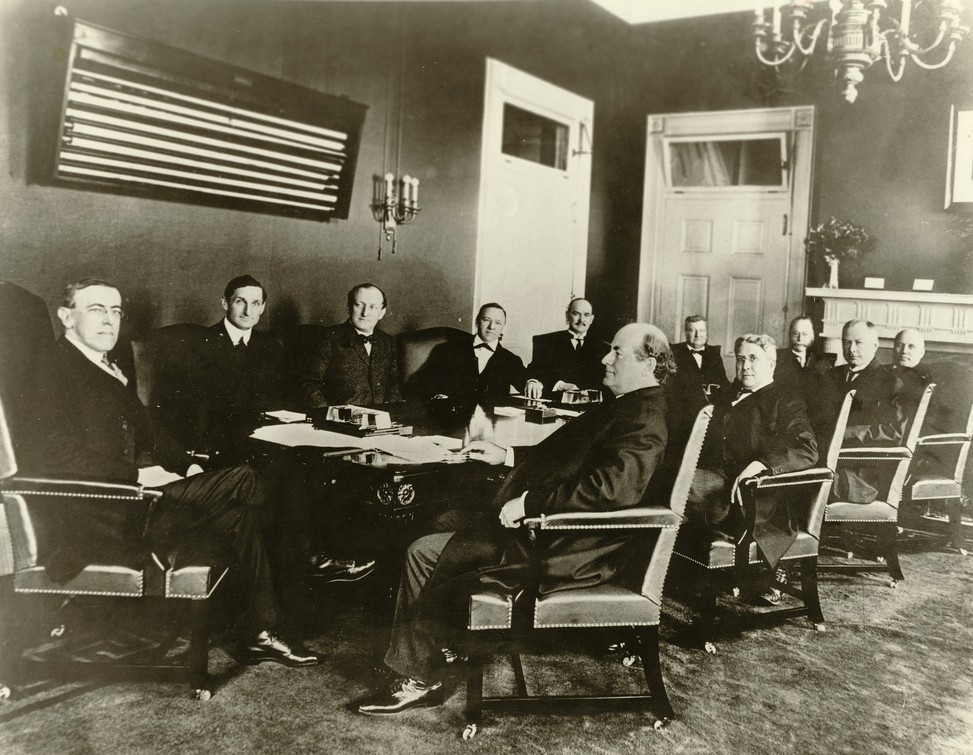
Hawkish voices were more numerous in the Wilson administration. House, Wilson’s close confidant and in many ways his de facto secretary of state, spoke for many of Wilson’s advisers when he counseled: “America has come to the parting of the ways, when she must determine whether she stands for civilized or uncivilized warfare. We can no longer remain neutral spectators.”
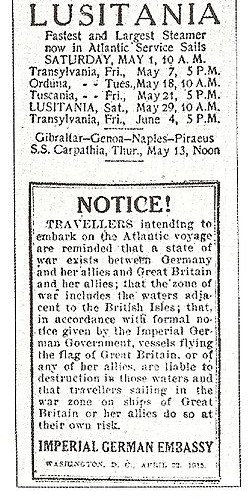
Wilson’s actual secretary of state, William Jennings Bryan, a pacifist who had long worked to convince countries to settle disputes through binding arbitration rather than war, opposed the rush to condemn Germany. He suspected—correctly, it turned out—that the Lusitania was carrying munitions to Britain. He believed that Americans traveling into a declared war zone bore the risk doing so, and he noted that Germany had placed ads in New York City newspapers warning Americans not to sail on the Lusitania. Bryan also pointed to the many ways that Britain had trampled on U.S. neutral rights and how Germany’s submarine warfare was linked to Britain’s blockade. He favored protesting both British and German actions. Doing otherwise, in his view, effectively meant abandoning neutrality.
The “Double Wish”
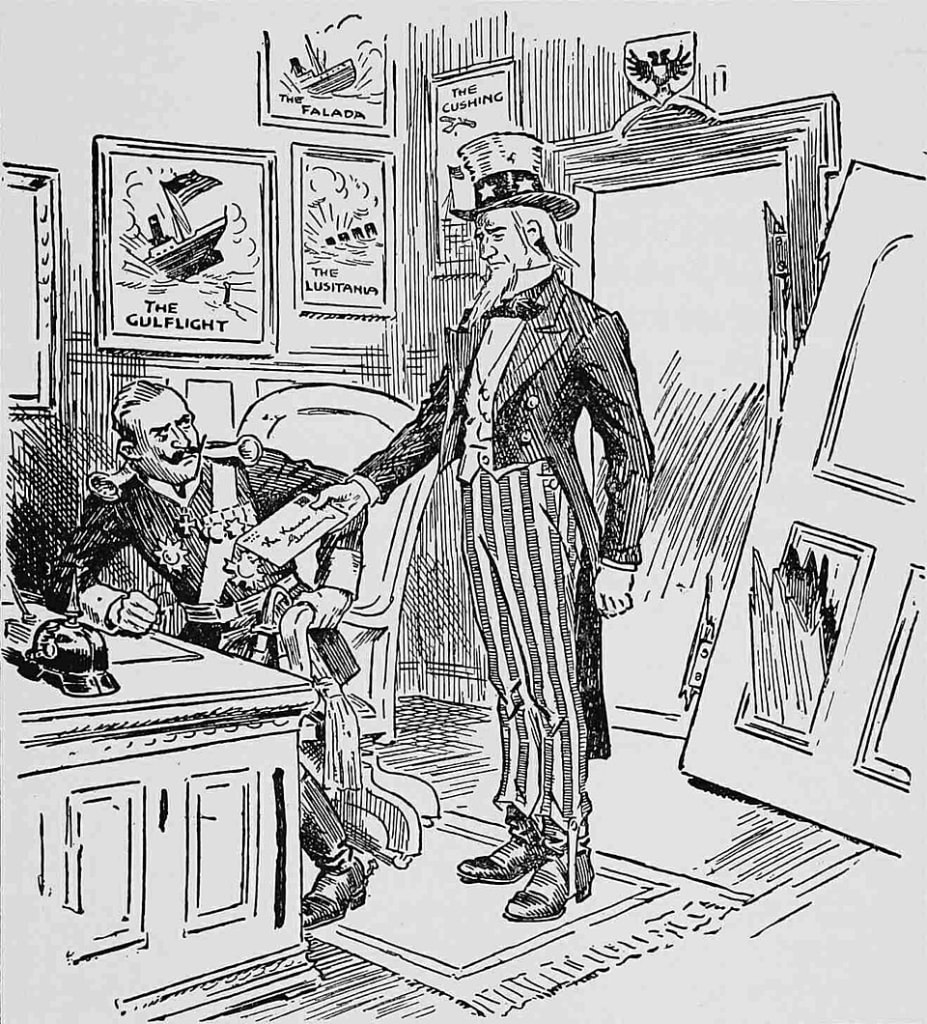
Wilson sought to find a defensible middle ground between the two poles laid out by his advisers. He saw his task as satisfying what he called the public’s “double wish”: a desire to stop future German submarine attacks while keeping the United States out of war. To that end, he drafted the first in a series of increasingly stern diplomatic notes demanding that Berlin halt its submarine warfare.
Even this was too much for Bryan. When Wilson decided in early June to send a second note to Berlin, Bryan resigned in protest. If the Boy Orator of the Platte had hoped that his resignation would stir the nation, he guessed wrong. Wilson had accurately gauged the public mood. They wanted Washington to stand up to Berlin, not draw equivalencies between British and German behavior.
The Road to War
Unbeknownst to both Wilson and Bryan, German Kaiser Wilhelm II had immediately recognized the damage that the attack on the Lusitania had done to German interests.Three days before Bryan resigned, the Kaiser ordered German submarines to cease attacking cruise liners. But, reluctant to take any action that suggested that the submarine campaign and the sinking of the Lusitania had been unjustified, Berlin kept the order secret. It wasn’t until September that Germany informed the United States that its submarines would not attack passenger ships.
The dispute over submarine warfare flared up at the end of March 1916 after Germany resumed attacks on armed merchant vessels. A U-boat crippled an unarmed French ship crossing the English Channel, killing more than fifty people and injuring several Americans. Wilson threatened to break diplomatic relations if the attacks continued. In early May, Germany again retreated in the face of Wilson’s ultimatum and agreed to sharply curtail its submarine warfare.
The new policy held for nine months. But faced with a battlefield stalemate in Europe and convinced that the United States could not enter the war quickly enough to influence its outcome, Germany resumed unrestricted warfare of February 1, 1917, in a bid for victory.
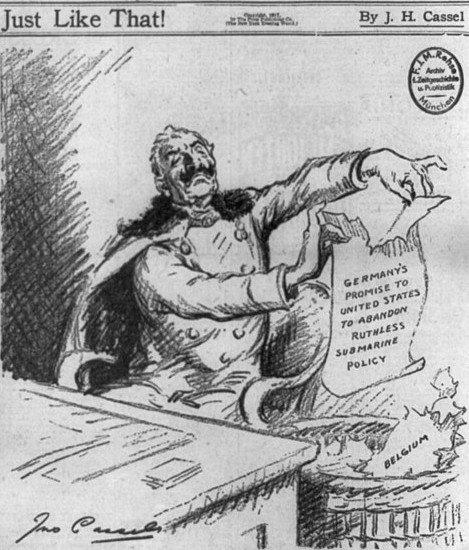
A clash with the United States became inevitable. U.S. public attitudes toward Germany had hardened, and pressure mounted on Wilson to do more than send Berlin threatening notes. On April 2, 1917, he went before a joint session of Congress to “advise that the Congress declare the recent course of the Imperial German Government to be in fact nothing less than war against the government and people of the United States.” Four days later, Congress voted for war.
So King George got the answer to the question he posed to Colonel House. The sinking of the Lusitania would produce outrage and diplomatic protests. It would not, by itself, push the United States into war.
The United States celebrates its 250th anniversary in 2026. To mark that milestone, I am resurfacing essays I have written over the years about major events in U.S. foreign policy. A version of this essay was published on May 7, 2015.
Oscar Berry assisted in the preparation of this article.