The U.S. Supreme Court Rules on Mail Ballots, Congressional Maps, and the SAVE Database
Two U.S. Supreme Court decisions handed down last month provided some much-needed clarity on 2026 election rules while a third opened the door to some uncertainty.
By experts and staff
- Published
 James M. LindsayCFR ExpertMary and David Boies Distinguished Senior Fellow in U.S. Foreign Policy
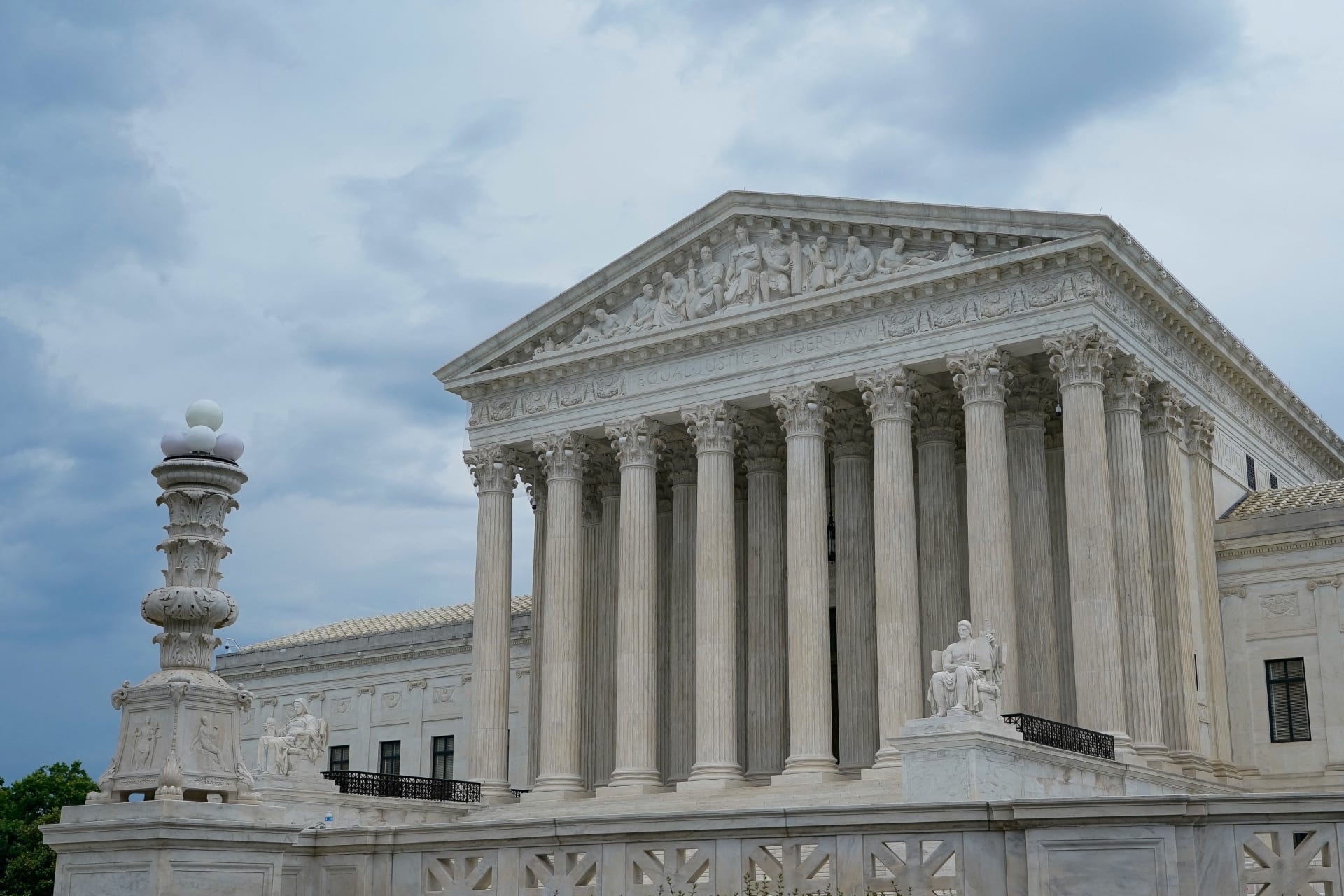
Tomorrow marks one month until Election Day. In recent weeks, the U.S. Supreme Court has decided three sets of lawsuits with the potential to reshape the midterms. Two of its decisions helped clarify the upcoming vote. The first restored the status quo that had previously governed mail balloting and the second finalized the congressional district maps that will be used. The third decision, however, injected a fresh note of uncertainty into an election that has already had more than its fair share.
United States Postal Service, et al. v. California, et al.
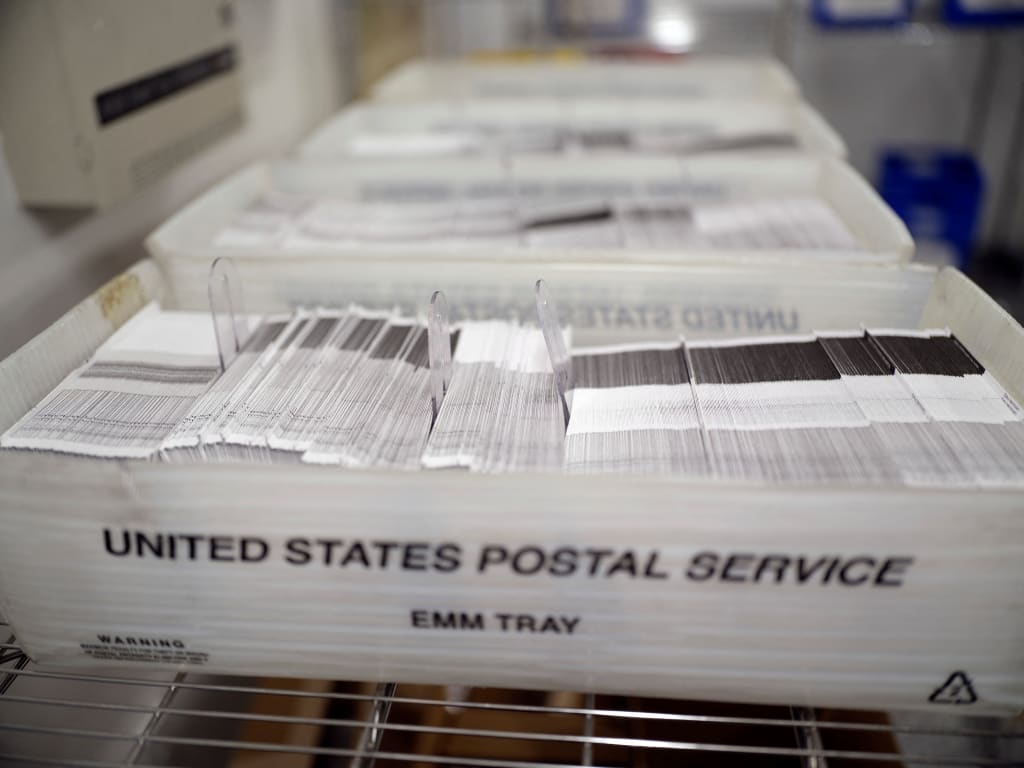
The first and perhaps most important decision came on September 14, when the Court let stand a lower court’s preliminary injunction blocking the U.S. Postal Service from implementing its “Final Rule” on mail ballots. Those regulations, which the Postal Service developed to comply with an executive order that President Donald Trump issued in March, would have established a national standard for mail or absentee ballots in federal elections.
The Court’s order was unsigned, though Justice Brett Kavanaugh wrote a one-paragraph concurrence and Justice Samuel Alito penned a far longer dissent that Justice Clarence Thomas joined. Kavanaugh argued that even if the Postal Service could show it had the legal authority to implement the new regulations, election officials “do not have sufficient time to reasonably implement the rule before the elections.” Alito argued that the Postal Service had broad statutory authority to regulate the mail and blamed the states opposing the new regulations for creating the time crunch that worried Kavanaugh.
The Court’s ruling leaves in place existing state-level rules for distributing and collecting mail ballots, sparing the country from a disruptive last-minute change in election procedures that would have confused voters, election officials, and postal workers themselves. Several states had begun mailing out ballots before the Court handed down its ruling, and many others were getting ready to do so.
Hoskins v. von Glahn and People Not Politicians v. Onder
In the second significant election-related decision—or more accurately, set of decisions—the Court ratified a decision by the Missouri Supreme Court blocking the state of Missouri from using a congressional map that its Republican-controlled legislature adopted last year and that was used in the state’s August primaries. The Missouri court ruled that the state must use the map it adopted in 2022 because state law dictates that a new map cannot go into effect unless and until Missouri voters ratify it. They will have a chance to do so with the 2025 map next month. The 2025 map likely would have allowed Missouri Republicans to pick up one House seat.
Kavanaugh initially rejected an emergency request to block the Missouri Supreme Court’s decision. The issue returned to the U.S. Supreme Court two days later, with the full Court siding with the Missouri Supreme Court.
A federal district court and the U.S. Court of Appeals for the Eighth Circuit subsequently challenged the U.S. Supreme Court’s decision by ruling that Missouri’s 2025 map had to be used. The Court reversed those rulings last week, in an unsigned opinion with no concurrences or dissents. The ruling explicitly directed that “the District Court and Court of Appeals should not enjoin or otherwise prohibit the use of the 2022 map in the 2026 congressional election in Missouri. And the District Court and Court of Appeals should not order or otherwise require Missouri to use the 2025 map in the 2026 congressional election in Missouri.”
Department of Homeland Security, et al. v. League of Women Voters, et al.
The third decision came a week ago, when the Court ruled in an unsigned opinion that states can search the Systematic Alien Verification for Entitlements (SAVE) database for ineligible voters. That national database was created in 1986 to enable states to verify the citizenship and immigration status of applicants for public benefits. The Trump administration has expanded SAVE to make it easier, and in theory more accurate, for states looking to find ineligible voters. States are not required to use the database.
Justice Ketanji Brown Jackson wrote in a twelve-page dissent that Justices Elena Kagan and Sonia Sotomayor joined that the Court’s majority “focuses only on the harms the Government will purportedly suffer absent a stay, disregarding the harms that the modified SAVE system has caused, and will likely continue to cause, to lawful voters.” In short, if states use the SAVE system and it contains inaccuracies, people who are legally entitled to vote could be disenfranchised.
In theory, the Court’s decision should have no significant effect on the midterms. By federal law, states cannot make major changes to voter rolls in the ninety days before Election Day. The Court’s majority stressed that point in defending its decision to sanction use of the SAVE database.
But practice sometimes diverges from theory. States can remove individual voters from the voting rolls in the so-called quiet period before elections. The legal dividing line between individualized and major changes is fuzzy, however, and some states and localities might seek to test the boundaries of what is permissible. The Justice Department has advanced an expansive position in other legal cases on what governments can do to uncover ineligible voters.
Complicating matters is the accuracy of the SAVE database itself. A year ago, Texas reported that its pilot use of the SAVE database had “identified 2,724 potential noncitizens who are registered to vote in Texas.” In a process that took nearly a year, Texas found that 578 of those individuals were eligible voters. That is an error rate of 21 percent.
Much like the talk about the Trump administration invoking the Insurrection Act to intimidate voters or duly elected Democratic lawmakers being barred from being sworn in next January 3, concerns that the SAVE database will enable widespread voter suppression seem farfetched. But in a deeply polarized society, where control of political power is up for grabs and some people continue to believe, against all available evidence, that the 2020 election was stolen from Trump and that the voter rolls are stuffed with noncitizens, it is not so far-fetched as to be impossible.
Numbers to Note
The betting money a month out from Election Day is that the Democrats will retake control of the House. The only question is how big their margin will be. The Cook Political Report has the Democrats picking up five to fifteen House seats. Democrats may even be a slight favorite to take back control of the Senate, something that seemed implausible at the start of 2026.
Polling numbers and consumer sentiment explain why Democrats are increasingly optimistic, and Republicans increasingly pessimistic, about their chances next month. An average of national polls has 37.2 percent of Americans giving Trump a thumbs up today, a 1.4-point drop from where he stood on September 3. In comparison, 60.5 percent give him a thumbs down, an increase of 2.8 points from last month’s number. Trump’s net approval rating now stands at -23.3 points, his lowest number so far in 2026.
To put Trump’s current numbers in perspective, he had a net favorability rating of -11 points at this point in 2018, while President Joe Biden had a net favorability rating of -8.8 points at this point in 2022. To repeat a fundamental point about House midterm elections, they generally function as a referendum on the president’s performance, and the president’s party almost always suffers as a result. It has lost seats in thirty-seven of the past forty-one midterm elections.
Two poll results show how Trump has become a drag on Republican candidates. In February 2025, Echelon Insights asked respondents who identified as Republican or as leaning Republican whether they considered themselves “to be primarily a supporter of Trump or the Republican Party.” Sixty-three percent answered, “Trump,” and 33 percent answered, “Republican Party.” Last month, however, Echelon found that the numbers had essentially flipped: 56 percent said, “Republican Party” and 34 percent said, “Trump.”
The Democrats’ lead over Republicans in an average of national polls on the generic congressional ballot stands at 8.9 points, up 2.5 points from a month ago. This is the highest gap recorded so far in 2026, and points to how trends have shifted sharply in favor of Democrats in recent weeks. Not surprisingly, the party that comes out on top on this metric generally does better in the midterms.
The Republicans’ sagging numbers likely reflect growing concerns about the economy. Surging gas and diesel prices probably top that list. The average price for a gallon of gas today stands at $4.40, up thirty-one cents from this time last month and just a shade below the peak average price of $4.50 a gallon earlier this year. The average price of a gallon of diesel is $6.37, up almost $3 compared to a year ago. Rural areas, which generally lean Republican, consume more diesel per capita than do urban, Democratic-leaning areas.

While unemployment remains at historic lows at 4.1 percent and the economy is enjoying strong growth overall, inflation remains at 3.4 percent. The rate for a conventional thirty-year mortgage now stands at roughly 7.35 percent, up from just over 6 percent back in January.
The public’s pessimism about future economic conditions also continues to grow. The University of Michigan’s monthly survey of consumer sentiment hit 48.1 in September, down from 51.7 in August and down 12.7 percent compared to a year ago. The Conference Board’s Consumer Confidence Index showed a similar drop over the past month, falling from 88.6 in August to 81.9 in September. Unhappy voters generally do not reward the incumbent majority party.
Republicans are running out of time to turn things around. By this Wednesday, thirteen states will have begun early voting.
Worth Reading
The Washington Post’s Ben Binday and Eric Lau reviewed how Democratic prospects for retaking control of the Senate moved from unlikely to possible over the course of 2026.
G. Elliott Morris of the Strength in Numbers newsletter and Nate Silver of the Silver Bulletin newsletter both argued that election forecasters like the Cook Political Report are understating the prospects for a blue wave on Election Day. Silver acknowledged the challenges that election forecasters face but nonetheless concluded that their “cautious view is misaligned with the long history of strong opposition performance in midterm elections, especially when the incumbent president is as unpopular as Trump.”
The New York Times’ Nate Cohn predicted that the combination of history and recent poll results suggests “that Democrats seem poised for a wave election.” One factor that Cohn stressed is that polls conducted after Labor Day are far more likely to survey likely voters than all adults or all registered voters. As of now, Democrats are polling much better among likely voters than they are among all adults or all registered voters.
ProPublica’s Jen Fifield reported on the conclusion reached by the U.S. Postal Service’s Office of Inspector General last month that a lack of proper training had led postal workers to mishandle ballots during some 2026 primary elections, increasing the chances that some ballots would be marked as spoiled for having incorrect postmarks or arriving late for consideration. It is unclear how successful the Postal Service will be in addressing the problem in short order. It hasn’t helped the Postal Service’s reputation that the Justice Department arrested a Utah postal worker in late September for throwing out three hundred mail ballots he was supposed to deliver to voters. The government alleged that the worker tossed the ballots because he wanted to “lighten his workload.”
Oscar Berry and Jack Patton assisted in the preparation of this article.
Other posts in this monthly series:
This work represents the views solely of the author(s). The Council on Foreign Relations is an independent, nonpartisan membership organization, think tank, and publisher, and takes no institutional positions on matters of policy.