Trump Extends Iran War Ceasefire
By experts and staff
- Published
Welcome to the Daily News Brief, CFR’s flagship morning newsletter summarizing the top global news and analysis of the day.
Top of the Agenda
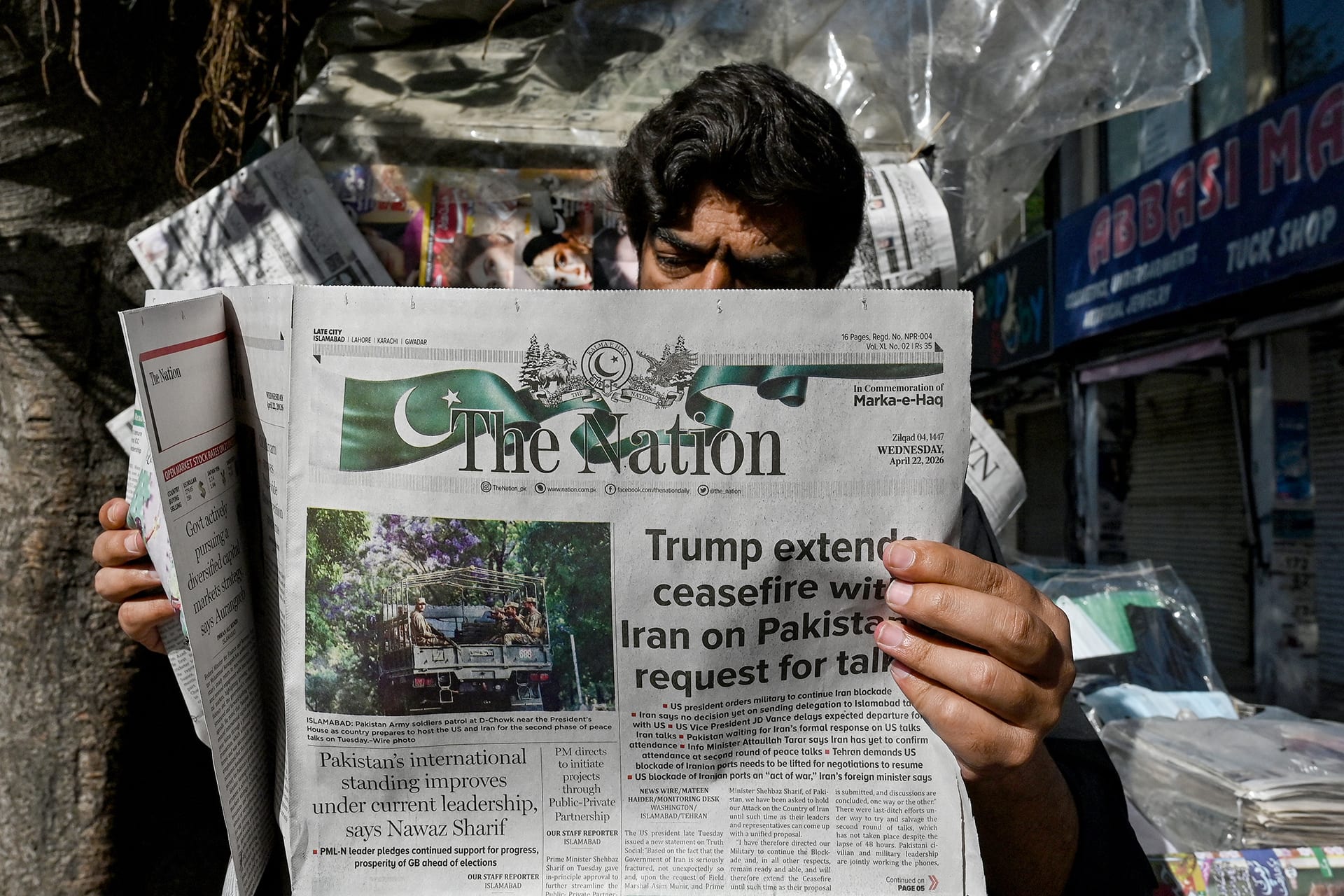
Trump announced an extension to the U.S.-Iran truce yesterday to allow Iranian leaders to reach a “unified proposal” in talks. The eleventh-hour move came as the truce was in its final stretch and marked an abrupt shift for the president, who earlier yesterday had reiterated opposition to an extension. While it staves off resuming large-scale hostilities in Iran and the Persian Gulf, both Washington and Tehran are maintaining their restrictions on shipping in the Strait of Hormuz while condemning each other’s actions. The United States boarded a tanker carrying Iranian oil in the Indian Ocean yesterday, while Iran’s semi-official Tasnim news agency said today that Iranian forces seized two ships in the strait.Meanwhile, attacks in Lebanon and northern Israel tested the ceasefire there.
U.S.-Iran diplomacy. Trump’s truce extension came after fears of a return to fighting rippled through oil markets, sending the price of Brent crude temporarily back up to around $100 per barrel. Unnamed U.S. officials told multiple news outlets that the extension reflected divisions in opinion among Iran’s leadership as well as trouble communicating with injured Supreme Leader Mojtaba Khamenei. An advisor to one member of Iran’s negotiating team called the extension meaningless, though the team did not immediately give a unified response. Pakistani Prime Minister Shehbaz Sharif thanked Trump for the extension, writing it would “allow ongoing diplomatic efforts to take their course.”
The Lebanon front. Both Israel and Hezbollah accused each other of violating Israel’s ceasefire with Lebanon yesterday. Hezbollah said Israel attacked civilians and homes in the country’s south and that the group had responded by firing into northern Israel. Israel’s military said buildings it targets were part of Hezbollah’s infrastructure, which are not covered by the ceasefire. In a meeting with Lebanon’s president yesterday, French President Emmanuel Macron said he would help the country prepare for talks with Israel. The next round is set for tomorrow in Washington.
“There is a way forward if the United States agrees to pare down its immediate demands to focus on the most important issue confronting the world: the closure of the Strait of Hormuz…Because both countries are now complicit in keeping the strait closed, neither one will lose face by opening it—as long as the other one does the same. A mutual end to the blockades could be an important confidence-boosting step that could pave the way for more fruitful talks on other issues.”
—CFR Senior Fellow Max Boot in an Expert Take
Across the Globe
Hearing on Fed nominee. Trump’s Federal Reserve chair nominee Kevin Warsh told senators at his confirmation hearing yesterday that he would be “strictly independent” if confirmed and would not allow Trump to influence his interest rate decisions. Hours before the hearing, Trump said he would be disappointed if Warsh did not lower rates.
Report on resettling Afghans. The Trump administration is in talks about sending as many as 1,100 Afghans who assisted the United States during the Afghanistan war to live in the DRC, the head of aid group AfghanEvac told the New York Times. The Afghans have been living at a former U.S. base in Qatar. Those who don’t wish to go to the DRC—which is experiencing an acute humanitarian crisis—would be sent back to Taliban-controlled Afghanistan. A Congolese government spokesperson did not immediately comment, while a State Department spokesperson said the Biden administration moved Afghans to the United States too quickly following the war.
UK lifetime smoking ban. The UK parliament passed a bill yesterday banning the sale of tobacco or vape products to anyone born in 2009 or later. It is expected to go into effect after receiving the formality of final approval from the king. The government estimates that smoking costs the country almost $29 billion per year in healthcare and lost productivity costs and has touted this bill as a means to create a “smoke-free generation.”
U.S.-Iraq tensions. The United States has put military cooperation programs and U.S. dollars shipments to Iraq on hold in order to pressure Baghdad to dismantle Iran-backed militias in the country, unnamed U.S. and Iraqi officials told the Wall Street Journal. Iraq’s central bank denied a shortage of U.S. dollars yesterday, without mentioning any suspended shipments. A State Department spokesperson said Iraq’s failure to prevent attacks by the militias was hurting the bilateral relationship.
Yuan banking in Africa. Pan-African bank Ecobank is in talks with the Bank of China to allow for financial settlements in yuan, its CEO said, decreasing their reliance on the U.S. dollar. While China has invested in projects across Africa, African businesses that work with Chinese firms have often complained that having to convert their money to dollars in order to conduct business has slimmed their profit margins.
Peru’s election chief resigns. The head of the country’s election authority announced his resignation yesterday after logistical problems delayed the vote count in Peru’s presidential contest. The vote was held over a week ago and no winner has yet been declared. The official said he hoped his resignation would help “generate more confidence” ahead of a runoff set for June 7.
Mass trial in El Salvador. A court in the country began a trial yesterday of 486 alleged gang members, who face charges of homicide, femicide, extortion, and arms trafficking, among others. Mass detentions and trials are pillars of Salvadoran President Nayib Bukele’s security strategy, but human rights groups say the mass trials violate defendants’ due process rights.
Potential U.S.-UAE currency swap. Washington is considering a U.S. currency swap with the United Arab Emirates (UAE) to help it deal with the economic fallout of the Iran war, Trump told CNBC yesterday. The UAE had raised the idea with U.S. officials last week but not formally requested it, unnamed sources told the Wall Street Journal.
What’s Next
- Today, the Delphi Economic Forum begins in Greece.
- Tomorrow, European Union leaders begin an informal meeting in Cyprus.
- Tomorrow, Pope Leo concludes a tour of Africa in Equatorial Guinea.