What Is the Future of U.S.-Mexico-Canada Trade?
CFR President Michael Froman analyzes the future of trade in the region the Trump administration has declared its top strategic priority: the Western Hemisphere.

Greetings from Mountain View, California, where a group of CFR members and I spent two days doing a deep dive into the nuts and bolts of artificial intelligence and quantum computing, the potential upsides—and risks—associated with their deployment, and the status of the U.S.-China technology competition. More to come on all that.
In the meantime, I thought I’d take a break from the non-stop focus on Iran and analyze a sleeper issue in the region the Trump administration has declared to be the United States’ top strategic priority: the Western Hemisphere.
This summer, the United States-Mexico-Canada Agreement (USMCA) is up for mandatory joint review. Negotiated and implemented by President Donald Trump in his first term, the agreement was, in his own words, “the best and most important trade deal ever made” by the United States. As part of that deal, the three countries agreed to a joint review of USMCA’s performance in 2026 and, if satisfactory, to reaffirm it for another sixteen years until 2042.
The president’s affection for USMCA has since waned. Using the International Emergency Economic Powers Act (IEEPA) and Section 232 on imports like steel, aluminum, and lumber, he subjected various Canadian and Mexican products to new duties since February of last year, with the aim of permanently hiking tariffs on a sprawling list of strategic goods. Ultimately, many of these tariffs were rolled back, partly because of the Supreme Court decision on IEEPA, but the actions nonetheless upended the sense of North American integration and contributed to the “rupture” Canadian Prime Minister Mark Carney cited earlier this year at Davos.
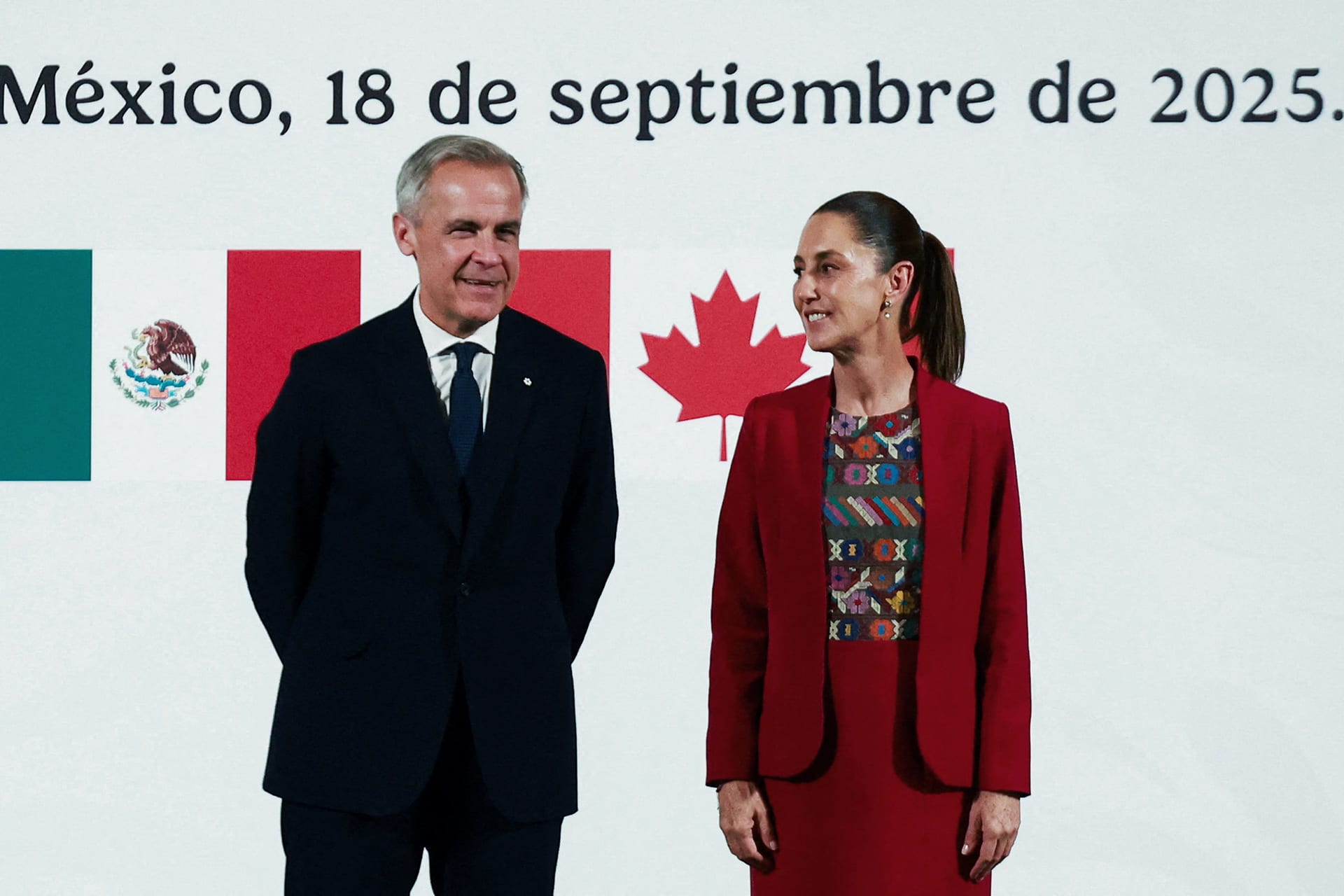
These actions flew in the face of USMCA, both in spirit and by the letter of the law, and Ottawa and Mexico City took notice. Last September, Carney and Mexican President Claudia Sheinbaum announced their own bilateral Comprehensive Strategic Partnership, an attempt to hedge against an unreliable Washington and present a united front in advance of the mandatory joint review. The stage is now set for a fraught renegotiation.
Below are four observations about the upcoming review.
First, we shouldn’t expect the parties to reach consensus by July 1, but that doesn’t mean the agreement will screech to a halt overnight. Even if consensus isn’t reached immediately, the agreement will likely remain in force, at least for some time. However, failure to reach a clean renewal could give way to serial annual reviews which would create significant uncertainty and make it more difficult for companies to plan and invest under the USMCA framework.
Second, the USMCA negotiations reveal how serious the fissures are between the United States and Canada. When the USMCA was concluded more than six years ago, negotiations with Mexico were the more challenging ones. Now, Canada is the pain point. So far, negotiations have taken place primarily on a bilateral basis. Last week, U.S. Trade Representative Jamieson Greer told Congress, “There are two countries that have retaliated economically against the United States in the past year: the People’s Republic of China and Canada.” Then, Deputy U.S. Trade Representative Rick Switzer said at a CFR event, “We have issues with Mexico we’re still working through, but Mexico intends on coming to an agreement with us.” He added, “The grown-ups are in the room talking because there’s a grown-up in leadership there. And I would argue there’s not a grown-up in Canada in charge.” Ouch. That brings me to my third point.
Third, trade has always had a way of spurring domestic politics, but Trump’s tariff threats against Canada in particular have ushered in a new wave of “Canada first” patriotism. Canada is condemned by geography to be dependent on the U.S. market. It cannot fully pivot away from the United States, but U.S.-Canada trade and tourism are falling, to say nothing of goodwill. There have also been reports of boycotts of U.S.-made goods. Last month, Carney put it this way: “The U.S. has fundamentally changed its approach to trade, raising its tariffs to levels last seen during the Great Depression. Many of our former strengths, based on our close ties to America, have become our weaknesses, weaknesses that we must correct.”
Fourth, the USMCA review creates a new opportunity for Trump to exert leverage over two of the United States’ largest trading partners in the wake of the Supreme Court’s ruling on IEEPA earlier this year, which made it more difficult for the president to use tariffs as his primary cudgel. There are still a number of authorities—including Sections 301, 232, 201, and 338—Congress has provided the president to impose tariffs in response to significant trade issues or bona fide national security ones. But USMCA is consequential for Canada and Mexico and, therefore, the review is a unique source of negotiating leverage. I could see the United States trying to use it to get Canada and Mexico to adopt a common approach to China, whether it is a common external tariff, export controls, or investment limitations. It’s possible the Trump administration will press its neighbors to move from a “rules of origin” paradigm—where the definitive factor in determining how a product is treated is where it’s made—to what Oren Cass has called a “rules of control” paradigm—where the United States might impose bans on products exported by Chinese firms even if those products are manufactured in Mexico or Canada.
The administration has a lot on its plate at the moment, internationally and domestically, from the war in Iran (not to mention Ukraine) to the transition in Venezuela (not to mention Cuba). Inflation remains stubbornly high, now exacerbated by elevated gasoline prices. The last thing we need is a major trade crisis. Ideally, the USMCA will be reviewed expeditiously and reaffirmed, with modifications kept to a minimum. If the past is prologue, though, I’m not sure I should hold my breath.
Let me know what you think about the USMCA and what this column should cover next by replying to [email protected].