State Capitalism
How the Return of Statism is Transforming the World
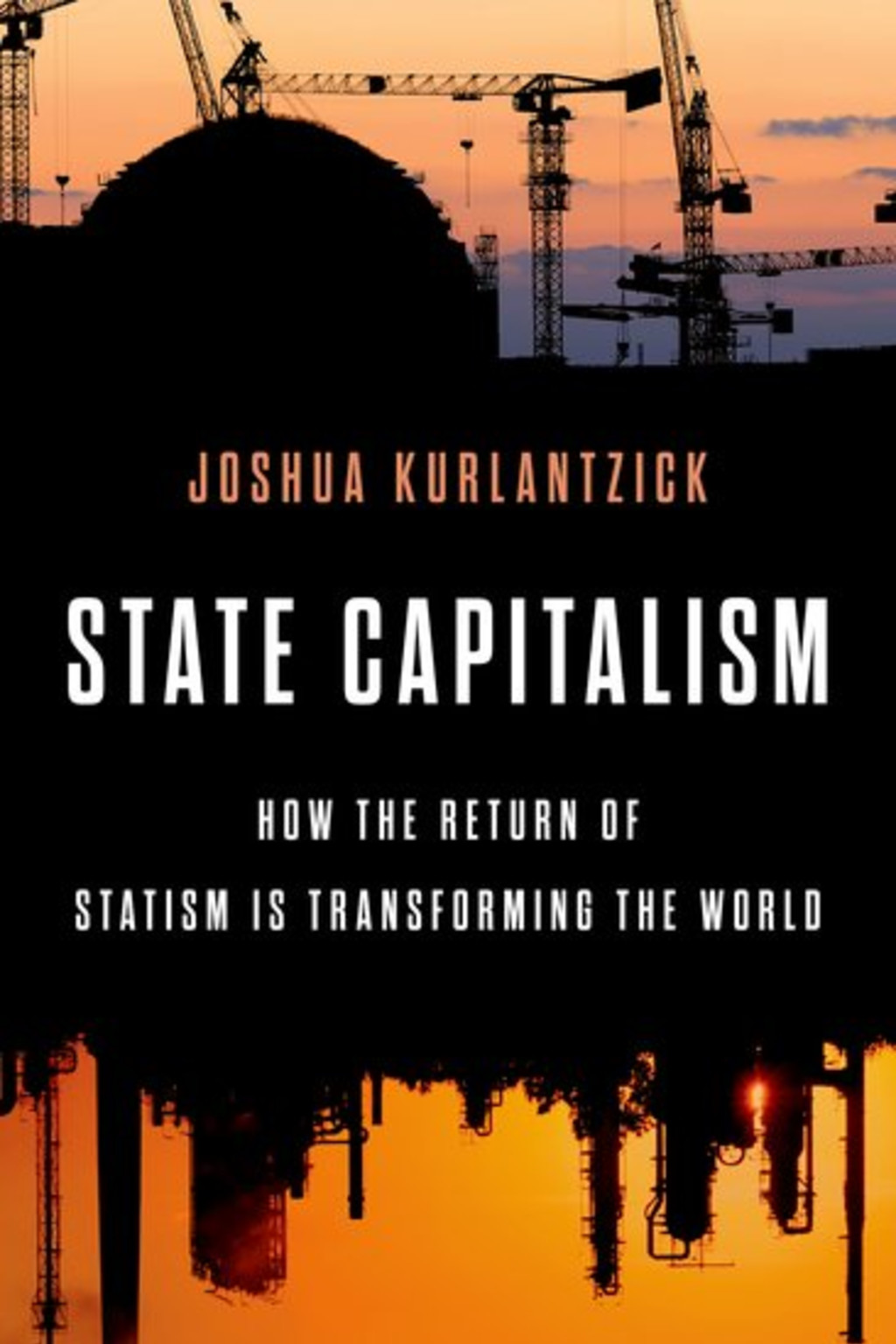
In State Capitalism, Joshua Kurlantzick ranges across the world—Brazil, China, Russia, South Africa, Thailand, Turkey, and more—and argues that the increase in state capitalism across the globe has, on balance, contributed to a decline in democracy.
- Publisher
- Oxford University Press
- Release Date
- February 2016
- Pages
- 296
- ISBN
- 978-0-199-38570-6
Over the past two decades, many developing countries have turned away from free market capitalism and toward modern state capitalism, which is a combination of traditional state economic planning and elements of free market competition. In his new book, Council on Foreign Relations Senior Fellow for Southeast Asia Joshua Kurlantzick argues that modern state capitalism is ultimately “more protectionist, more dangerous to global security and prosperity, and more threatening to political freedom” than free market economics.
“The most serious threat from state capitalism is that the two big state capitalist authoritarian powers, China and Russia, will use their state companies as weapons in conflicts with other countries, as vehicles to control certain types of natural resources, as vehicles for obtaining and stealing sensitive technology from other nations, or as tools for undermining environmental and labor norms in countries where their state companies invest,” Kurlantzick writes in State Capitalism: How the Return of Statism is Transforming the World.
The author identifies other problems posed by state capitalism:
- “In young democracies, state capitalism could potentially put too much power in the hands of a few leaders and help corrode democratic culture and institutions.”
- Some democratic state capitalists, such as Brazil, India, and Indonesia, appear capable of balancing economic statism with political freedom. However, in less democratic countries like Thailand, Turkey, and Malaysia, state capitalism’s erosion of political freedom may undermine stability and impair strategic relations with the United States.
- “In some of the most inefficient state capitalists, like Russia, these countries‘ economic weaknesses, exacerbated by state capitalism, ultimately will lead to economic collapses that could shock the entire global economy.”
- Despite China’s current economic downturn, the overall economic success of an authoritarian state capitalist like China could increase the appeal of the model as an alternative to free market capitalism in other nations, further undermining democracy and economic freedom.
Kurlantzick encourages the United States to look beyond the level of state control of economies, to the type of political system in place. He notes that democratic state capitalists are not necessarily a threat and may even be effective partners for the United States. He urges policymakers to concentrate on democracy promotion and civil society in strategically important nations with weak democracies that are beginning to embrace state capitalism. “If policymakers understand only one lesson about modern day state capitalism,” writes Kurlantzick, “they should know to focus on how state capitalists are governed.”
Educators: Access Teaching Notes for State Capitalism.
A Council on Foreign Relations Book
Reviews and Endorsements
The rise of state capitalism is a defining feature of today’s world order. As Kurlantzick warns, authoritarian regimes, like Russia and China, will use their state companies as ‘de facto weapons of war’ against the United States and its allies. The author’s insights are essential for responding to this threat.
Devin Stewart, Senior Fellow, Carnegie Council
‘State back in business,’ declares Josh Kurlantzick. A real alternative to that free market model is emerging and gaining ground. Will that pose a threat to political and economic stability throughout the world? This is a serious, yet immensely readable book.
Mo Ibrahim, Founder and Chair, Mo Ibrahim Foundation
If expanding the conditions of the environment to encourage innovative commercial behaviors is what needs to be done, then Joshua Kurlantzick puts forward a compelling why in his new book, State Capitalism.