Dispute in the East China Sea in 2016 (NSC)
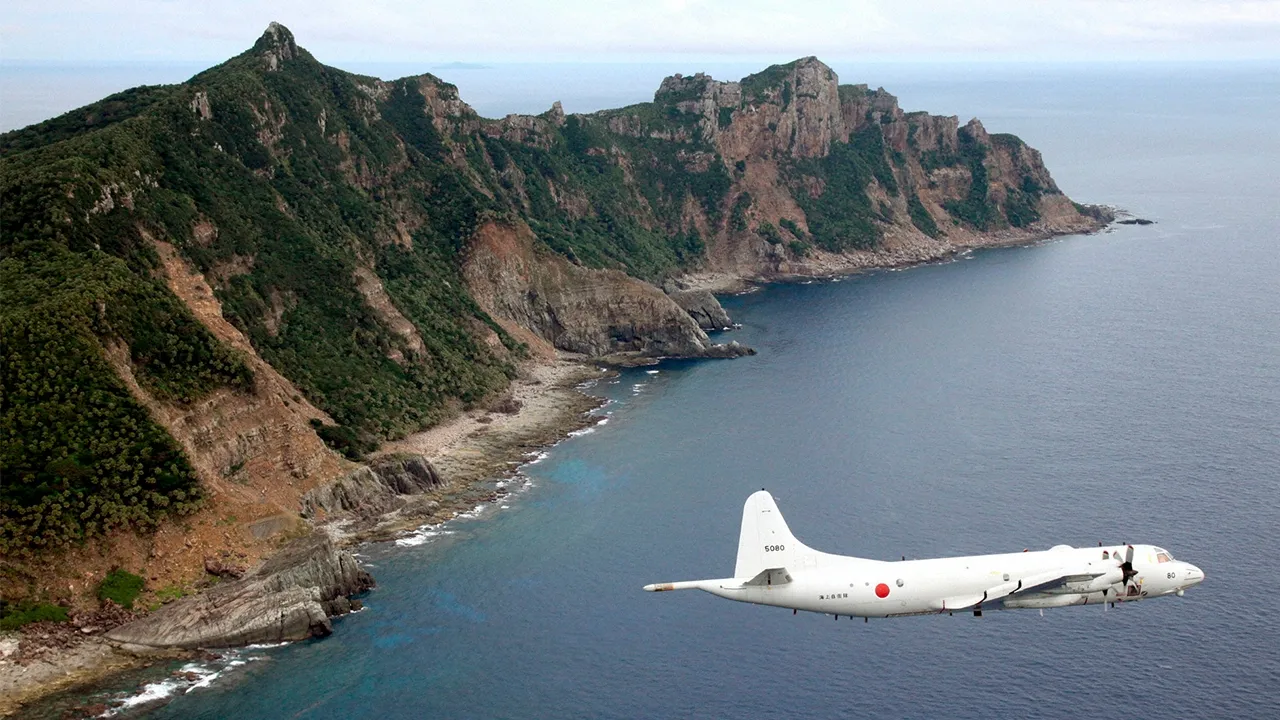
Set in September 2016. Japan and China challenge each other in the airspace above the Senkaku/Diaoyu Islands in the East China Sea.
- Level
- High School, Higher Education
What is a simulation?
Simulations offer students the chance to role-play either the U.S. National Security Council or the UN Security Council.
How do I use them?
A simulation comprises two readings (a council guide and the case notes) of roughly 2,500 words each. They also offer detailed guidance for preparing for and running the simulation in the classroom and reflecting on the experience.
Educator Overview
Case Overview
Tensions between China and Japan have sporadically erupted in the East China Sea over the five small, uninhabited islands the Japanese refer to as the Senkaku and the Chinese call the Diaoyu. The islands have been the subject of competing sovereignty claims by China, Japan, and Taiwan for decades. After a 2010 flare in tensions, Chinese and Japanese naval and air forces began to come in increasingly frequent contact, as both countries sought to demonstrate control over the islands. Both countries established Air Defense Identification Zones (ADIZ) and demanded that all aircraft give notice before entering them. Both of these zones include the disputed islands. Neither country has recognized the other’s ADIZ, and both continue to send civilian and military aircraft into the East China Sea airspace, claiming that they are doing so legitimately under international law. The increasing tensions in the East China Sea raised concern among observers about the risk of a miscalculation or accident sparking an armed clash between Asia’s two largest powers.
The United States has maintained a long-standing policy of neutrality in the dispute. As tensions rose, policymakers in Washington grew concerned that competing U.S. interests and commitments could drag the country into the fray. On one hand, the United States is treaty bound to defend Japan in the event of an attack. On the other hand, the United States also has a strong interest in maintaining a stable relationship with China, a major trade partner. The dispute has forced the United States to consider what price it would be willing to pay to fulfill its treaty commitment to Japan’s defense. This is particularly important given that a change in U.S. policy or a U.S. intervention could alter the United States’ relationship with China or Japan. A change in policy could also jeopardize other pressing interests that require the cooperation of either country. These interests include nuclear nonproliferation, global economic growth, climate change mitigation, and the safety of Americans abroad.
Decision Point
Over the Summer of 2016, tensions in the East China Sea suddenly ratcheted up. In June, a Chinese frigate sailed through the disputed zone of the East China Sea. Although Chinese coast guard ships passed through the area before, this marked the first appearance of a Chinese naval vessel. In the following weeks, China alleged that Japanese fighters intercepted its military aircraft over the disputed islands. During the incident, Japan’s fighters briefly locked weapons radar on the Chinese aircraft. Two months later, hundreds of Chinese fishing vessels appeared in the waters near the disputed islands in the East China Sea. For the first time, these vessels were accompanied by seven Chinese law enforcement vessels.
With tensions showing no sign of easing, policymakers and media outlets alike have turned their eyes to Washington to see how the United States will respond. The president has convened a National Security Council meeting to consider possible action it could take to ease related tensions.
Learning Goals
CFR Education extended simulations use a variety of pedagogical tools to create an effective, meaningful, and memorable learning experience for students that builds their global literacy. Students will develop crucial skills such as critical thinking, communication, collaboration, and creativity. Students will complete authentic assessments that feel relevant: instead of five-paragraph essays and book reports, students will write policy memos and participate in a role-play of a meeting of a foreign policy–making body. There are no right or wrong answers in actual policy deliberations, and there are none here, either; students will walk away from this experience with an appreciation for the complexity of policy questions.
In this simulation, students will learn about the National Security Council, as well as meeting these learning outcomes specific to this simulation:
- Students will understand the multifaceted nature of U.S. interests in the East China Sea dispute between China and Japan.
- Students will consider how a miscalculation or use of force between China and Japan would destabilize the region and disrupt the global economy.
- Students will evaluate the various options that the United States has to help resolve the dispute in the East China Sea.
Concepts and Issues
Concepts
- Great power rivalry
- Preventative measures
- Dispute resolution
- Sovereignty
- Nationalism
- Alliances
Issues
- U.S. treaty responsibility to Japan
- Relations between established and rising powers in Asia
- Trade and investment relationships among China, Japan, and the United States
- Balance of power in the Pacific
Policy Options
This section presents context, potential benefits and drawbacks, and other information about the policy options outlined in the case that you may find helpful as you guide the role-play and assess students.
The United States is especially concerned about the escalating tensions between Japan and China in the East China Sea. The growing interactions between the two nations’ militaries, the lack of a political dialogue on risk reduction, and the sensitivity of public opinion in both nations, as well as in Taiwan, have created a challenging situation.
The United States has a number of options as it considers its role in helping to resolve the ECS dispute. Washington could use its leverage to persuade Tokyo and Beijing to reduce their maritime and air forces in the region, or encourage greater military-to-military communication (such as through the development of hotlines). It could also express greater vocal support for either China or Japan. However, if it were to lean in favor of China, Japan and other U.S. allies in the region could begin to reassess their close relationships with the United States. On the other hand, if Washington were to demonstrate its support for Tokyo, Japan could interpret this backing as a blank check to behave recklessly, thereby escalating the conflict.
The United States could help build frameworks of cooperation for the East China Sea, working to reinforce the 2008 joint energy agreement and other mechanisms for resource sharing. It could attempt to persuade the parties to accept international arbitration on this dispute or to involve other regional players such as South Korea.
Before considering specific policy steps, NSC members should clearly establish which objective they believe the United States should aim to achieve. Two broad objectives are possible:
- The United States maintains its current position of neutrality over the sovereignty of the Senkaku/Diaoyu Islands and maintains or arrives at a stable arrangement, whatever it may be. In this case, the only overriding goal is to avoid hostilities.
- The United States helps establish a new state of affairs, such as recognized Japanese sovereignty over the islands, recognized Chinese sovereignty, or a new status agreed to by all parties concerned.
NSC members’ thoughts about the desired goal are likely to affect the applicability of the various policy steps available. Many of these steps can be undertaken together or sequentially.
Use diplomatic measures to reduce tensions
Washington could use its leverage to try to persuade Beijing and Tokyo to reduce their military forces in the region, or to encourage greater military-to-military communication. It could further urge the two parties to return to negotiations to resolve the dispute peacefully. If China and Japan cannot come to a peaceful resolution alone, the United States could attempt to persuade the parties to accept international arbitration and bring the matter before the United Nations’ International Court of Justice (ICJ). It could also express greater vocal support for either China or Japan, in hopes that this support would prompt the other party to stand down. However, if the United States were to lean in favor of China, Japan and other allies in the region could reassess their close relationships with the United States. And if Washington were to express support for Tokyo, Japan could interpret the support as a blank check to behave recklessly, thereby escalating the conflict.
A diplomatic approach has several advantages. If successful, it could peacefully achieve a lasting deescalation of tensions in the region. It also entails the least risk of drawing U.S. military forces into conflict and would help maintain stability in the region. Further, a diplomatic approach also poses a lower risk of damage to the United States’ economic relationships with China and Japan. That China and Japan can be persuaded to come to the negotiating table, however, is no guarantee. Meanwhile, Japan could criticize the United States for failing to enact a robust response that signals its commitment to Japan’s defense.
Use U.S. military forces to prevent escalation
The United States could use its military and naval forces to try to contain the incident and prevent escalation. Those efforts could involve offering search-and-rescue assistance for the downed aircraft, increasing naval and air patrols in the East China Sea, and conducting military exercises with Japan to increase readiness and demonstrate U.S. commitment to Japanese defense. Such action could keep Chinese and Japanese military forces separate, possibly avoiding further incidents, and deter escalation on the part of the Chinese. It would further signal U.S. resolve in the face of China’s military growth.
At the same time, involving U.S. military personnel in the dispute carries significant risks. The increase of military presence in the region could raise the chances of an accident or miscalculation; any U.S. military response would need to be effectively communicated to both Chinese and Japanese military forces in the area to minimize the risk of an unintended incident. Moreover, any escalation in the situation could put U.S. military personnel at risk. This response could also damage the U.S. relationship with China.
No action
The United States could simply maintain its neutrality and allow China and Japan to resolve the incident on their own. This option would avoid the risks that the other options pose, both to U.S. military personnel and to U.S. relations with China and Japan. However, taking no action could also signal a weak U.S. commitment to its presence in the Asia-Pacific region. Further, if China and Japan fail to come to a peaceful resolution and the situation escalates, the United States could face more forceful calls to honor its treaty commitment to defend Japan, requiring greater U.S. involvement than before.
The nature of this scenario—a dangerous situation that could easily turn more violent—could leave room for steps from both categories of policy measures. Still, some of the steps could be most practical in the short-term. Others will take more time and would thus be viable only if an immediate crisis is averted. NSC members may wish to advise that the United States take certain steps now while outlining other steps to be taken if the situation evolves in certain ways.
As noted, the determination of the United States’ overall goal in this situation will also shape consideration of particular policy steps. If, for example, policymakers decide to maintain U.S. neutrality over the islands’ status, diplomatic steps such as encouraging bilateral or multilateral discussions, or encouraging the parties to seek arbitration, could be desirable. Policymakers could also find it useful to reiterate the current U.S. policy, including the applicability of the security guarantee with Japan. If a crisis erupts, a U.S. desire to maintain neutrality could dictate urging the parties to stand down and offering assistance to both sides. If, on the other hand, policymakers wish to change the U.S. stance, they may seek to steer any diplomatic initiatives more directly in the desired direction and to respond militarily to a crisis in a way that advances the new U.S. aim.
Running the Simulation
CFR Education extended simulations are project-based learning activities. Project-based learning (PBL) leads to better learning outcomes and improves skills, and is more fun than traditional instructional methods. The website that students will navigate throughout the simulation is divided into several parts:
In the NSC Guide, students will learn about the National Security Council, the body they will be simulating. Included are details on its history, how it works, who its major players are, and more. There is also a video interview with experts who have served on the body.
In the Case Notes, students dive into the actual situation they will be trying to solve in their simulation. At the beginning is a clear decision point: the question that students will debate during the role-play. This is followed by detailed background material and a discussion of the role that the United States plays.
Preparation and Role-Play includes details on the various roles students could take on, guidelines for the memorandum they will write (the student playing the role of president has a slightly different task), as well as an outline of how the discussion will flow during the role-play.
The Wrap-Up is an important part of the project and includes reflection questions and guidelines for reflecting in a class discussion and in a second memorandum. For historical cases, this section also includes a short description of how the decision point was addressed by policymakers in real life.
The simulation also includes Student Resources, which include a reading list to support research, additional directions and exemplars for writing assignments, and other tips students may find helpful.
Tips for Role-Play
Once students have read the simulation and prepared their position memos, here is how we recommend structuring the role-play:
| Round | Timing | Objectives | Procedural Notes |
|---|---|---|---|
| One | 2 to 3 minutes per participant | Present initial positions to the president.Investigate the nuances of the positions through questioning.Clarify the central questions to be debated. | Each participant presents their position statement. If time permits, the president may ask questions to understand each NSC member’s position and bring out the essential questions they wish to debate. |
| Two | 30 to 60 minutes | Clarify the obstacles, risks, opportunities, and threats.Evaluate the various positions on their merits. | This is the debate portion of the role-play, when participants can defend their recommendations against others’ and identify potential areas of compromise agreement. |
| Three | 30 to 60 minutes | Narrow the options to a few comprehensive and well-focused strategies that the president prefers.Provide the president with clear recommendations (from NSC members), perhaps as a consensus or through a vote.Arrive at a final presidential decision. | This round should start with the president’s stating one to three preferred options to be fleshed out. |
Tips for the National Security Advisor
In Round 1, call on everyone for their opening statements, keeping to a strict time limit—if students have more to say, they can say it in Round 2. The president doesn’t have a specific time limit, but you should keep things moving by not letting the president get bogged down on one issue or policy option.
In Round 2, students do not need to follow a prescribed speaking order; you can call on them as they raise their placards. Work to include everyone and prevent anyone from dominating. As debate goes on, remind students they can change their minds. If it will help move things along, help students see when they are agreeing with each other without realizing it. Feel free to pose questions or propose discussion topics if you feel that certain issues are not receiving adequate consideration. Ultimately, it’s up to you to judge when Round 2 has run its course and it is time to move on to Round 3. You will want to move on when all policy options have been discussed and all of the president’s questions have been answered. The room does not need to come to a consensus—every option just needs to have a fair airing.
In Round 3, ask students to make a final case for their positions. If, during the course of the discussion, some students seem to have coalesced into blocs, you could ask one student to present on behalf of the bloc. If consensus seems possible, you could work toward it; if not, just make sure each option has been clearly presented to the president. Remember, the NSC is not democratic and is an advisory, not decision-making, body. There is no vote, and the president does not need to choose the most popular option.
Tips for the President
Before Round 1, review all the position memos, if you can. During Round 1, as students are presenting their opening statements, you can ask questions to clarify or help draw out the differences between one policy option and another. Try not to get too deep in the weeds, though—that is what Round 2 will be for.
In Round 2, you can take a more active role. If you have concerns about a policy option, ask questions; if some policy options seem stronger than others, say so. If an element of the issue is not being discussed, raise it.
In Round 3, once you have heard all the policy options, it is all down to you. You should choose whichever policy option you think is best, or combine the strongest elements of several different options. Remember, the NSC is not democratic and is an advisory, not decision-making, body. There is no vote, and you do not need to choose the most popular option. Your decision must be made and announced before the wrap-up discussion, although the written presidential directive can come later.
Tips for Online Classes
We suggest conducting the role-play in three rounds, and that three-round structure is a helpful way to approach chunking the role-play for online learning as well. You can conduct each round synchronously or asynchronously.
In round one, participants present their positions.
- In a synchronous meeting, you can go through opening statements using videoconferencing software, allowing for live clarifying questions.
- However, this is probably the easiest round to conduct asynchronously. You could disseminate positions in writing by having participants share their position memos or write a summary for the purpose of the role-play. You could also have participants record a video of themselves delivering their opening statement and disseminate it for all to watch.
In round two, participants debate the various policy options.
- In a synchronous setting, you can simply run a full-class discussion for round two. If you need more structure or want to prod reticent participants, consider starting by randomly assigning students to breakout rooms, assigning each breakout room one policy option. After working through pros and cons, representatives from each breakout room can share out to kick off the general discussion.
- In an asynchronous setting, consider a discussion forum, with a thread for each policy option. Coach the National Security Advisor and President to be active in the forum, raising questions and responding to points.
In round three, debate begins to coalesce around the policy options that the president favors.
- This round can be approached similarly to round two, but the president should set the topics for breakout rooms or forum threads.
Flashpoints
To add spice or challenge to the role-play, partway through the discussion throw in one of the following flashpoints—additional hypothetical developments that fit within the case’s existing decision point—or create your own.
- Japan’s parliament, the Diet, has convened a special session. The outspoken chair of the lower house’s foreign affairs committee has publicly called on the prime minister to demand American military assistance. The prime minister has requested a phone call with the U.S. president.
After introducing a flashpoint, you might want to help students refocus their discussion by considering critical questions such as these:
- Who is affected by this event or development, and how?
- Is there any uncertainty about what has taken place? How credible is the report?
- Does this event or development affect the feasibility of any policy options? If so, how?
- Does this event or development affect the desirability of any policy options? If so, how?
NSC Assessment
Case Assessment
- What are the three sovereignty claims to the Senkaku/Diaoyu Islands, from their historical roots to their modern claims?
- Why do Japan, China, and Taiwan consider sovereign rights over the Senkaku/Diaoyu Islands valuable or important?
- According to relevant treaties and official statements, what is the U.S. government’s position on the administration and sovereignty of the islands?
- What are the goals of any U.S. policy decision in this case? How do these goals align or conflict with each other?
Writing Assignments — Overview
- What are the four categories of tools available to U.S. leaders crafting foreign policy, and what is the range of specific tools in each?
- What is the interagency process and how is it related to the NSC system?
- What are the various committees in the NSC system and how do they interact to drive U.S. policymaking and implementation?
- What are the responsibilities of the national security advisor (NSA)?
- What are the major departments and agencies involved in the U.S. national security and foreign policy–making process? What are their responsibilities?
Each CFR Education extended simulation involves writing assignments that help students think through policy options and reflect on their learning experience.
In NSC cases, there are three types of writing assignments.
- Before the role-play, everyone but the president writes a position memo.
- After the role-play, the president writes a presidential directive.
- As part of the wrap-up, everyone writes a written reflection.
Simulations (on the student-facing side) have instructions for written assignments, and samples for each of these writing exercises. You can also find sample rubrics below.
Samples:
Below are sample rubrics for your use in assessing the writing students will do as part of this extended simulation.
These are single-point rubrics. Jennifer Gonzalez, who writes the blog Cult of Pedagogy, has a great explainer, but the bottom line is that single-point rubrics are relatively easy for students to digest but still have all the advantages of giving structure to instructors’ feedback.
NSC Position Memo Rubric
| CONCERNS What needs improvement | CRITERIA What is expected | ADVANCED What is excellent |
| Subject and Background paragraphs - Briefly explains the significance of the issue in the context of U.S. foreign policy - Clearly identifies the central question - Does not summarize the case | ||
| Objectives bullet points - Lists several objectives of the department the writer represents - Objectives are grounded in knowledge of the role of the department - Objectives help to shape the analysis of options described in the next section | ||
| Options and Analysis paragraphs - Lists all options mentioned in the case - Lists other potential options - Analysis considers advantages, disadvantages, and trade-offs | ||
| Recommendation and Justification paragraphs - Clearly identifies a preferred option or options - Supports the choice with appropriate analysis - Explains why other options are less preferable - Written with the president as the intended audience |
NSC Presidential Directive Rubric
| CONCERNS What needs improvement | CRITERIA What is expected | ADVANCED What is excellent |
| Purpose - Provides context for the memo - Is succinct | ||
| Decisions - Clearly states the decisions made - Explains the decisions convincingly - Details how to implement them | ||
| Communications strategy - Contains an effective strategy for relevant foreign governments - Contains an effective strategy for the public |
NSC Written Reflection Rubric
| CONCERNS What needs improvement | CRITERIA What is expected | ADVANCED What is excellent |
| Subject paragraph - Is brief - Places the issue in the larger context of U.S. foreign policy - Clearly states whether the writer agrees or disagrees with the president’s decision | ||
| Options and Analysis paragraph - Discusses each option that came up during the role-play in discrete paragraphs - Weighs the advantages and disadvantages of each option - If options from the position memo are discussed, those options contain additional analysis | ||
| Recommendation and Justification paragraph - Makes a clear recommendation based on the writer’s personal position - Supports the recommendation effectively | ||
| Reflection paragraph or paragraphs - Reflects on and critiques the president’s decision - Is written from a personal point of view, not that of the assigned role |
Downloadable rubrics are available here: