Dispute in the East China Sea in 2016 (UNSC)
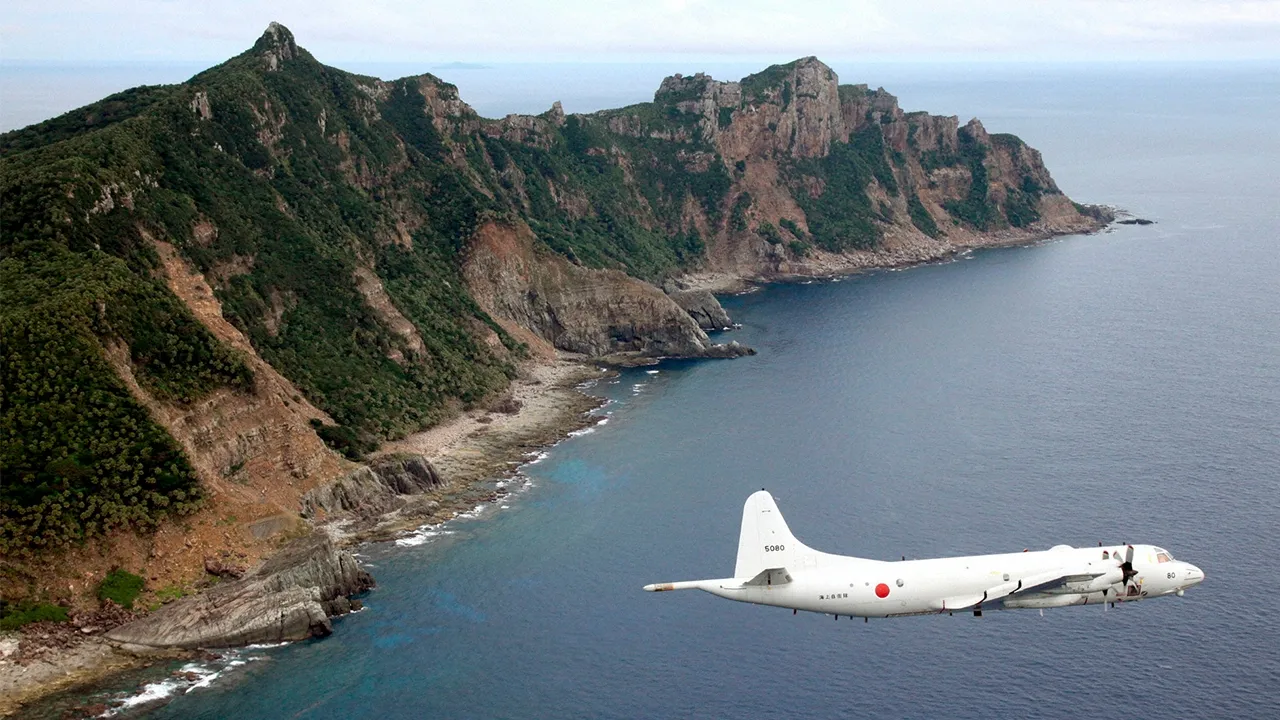
Set in September 2016. Japan and China challenge each other in the airspace above the Senkaku/Diaoyu Islands in the East China Sea.
- Level
- High School, Higher Education
What is a simulation?
Simulations offer students the chance to role-play either the U.S. National Security Council or the UN Security Council.
How do I use them?
A simulation comprises two readings (a council guide and the case notes) of roughly 2,500 words each. They also offer detailed guidance for preparing for and running the simulation in the classroom and reflecting on the experience.
Educator Overview
Case Overview
Set in September 2016. Japan has long maintained an air defense identification zone (ADIZ) that encompasses the Senkaku/Diaoyu Islands, over which it has administrative control. China declared its own ADIZ in 2013, stating it had the right to take military action against any aircraft that entered the zone without prior notification. Japan, along with the United States and South Korea, has protested the Chinese ADIZ and refuses to conform to China’s demand for prior notification. Japanese civilian and military aircraft continue to operate in the skies above the East China Sea. The intensification of the island dispute has raised political sensitivities in both countries, making it difficult for leaders to ignore the increasing interaction between ships and aircraft in the area. China now sends its coast guard to patrol the islands alongside Japan’s coast guard. The changing balance of military and economic power in Asia, growing popular distrust between the two nations, and deep dependence on the sea lands for access to energy resources and trade have heightened concerns that Japan and China may inadvertently end up in an armed clash. Miscalculation by their militaries or an unforeseen incident provoked by fishermen or sovereignty activists could trigger a crisis. The United Nations does not take a position on the disputed sovereignty claims, but the UN Security Council is meeting to consider any action it should take to ease tensions in the East China Sea and to evaluate its long-term policy in the region. A UN decision in this case could be difficult to achieve because China, a veto-wielding permanent member of the council, has the ability to block many actions that have proven effective in past disputes.
Decision Point
Over the Summer of 2016, tensions in the East China Sea suddenly ratcheted up. In June, a Chinese frigate sailed through the disputed zone of the East China Sea. Although Chinese coast guard ships passed through the area before, this marked the first appearance of a Chinese naval vessel. In the following weeks, China alleged that Japanese fighters intercepted its military aircraft over the disputed islands. During the incident, Japan’s fighters briefly locked weapons radar on the Chinese aircraft. Two months later, hundreds of Chinese fishing vessels appeared in the waters near the disputed islands in the East China Sea. For the first time, these vessels were accompanied by seven Chinese law enforcement vessels.
The UN Security Council is convening to discuss, and take possible action on, the dispute between China and Japan in the East China Sea. The UN Security Council will consider both the immediate situation and the broader issue of the two sides’ competing claims.
Learning Goals
CFR Education extended simulations use a variety of pedagogical tools to create an effective, meaningful, and memorable learning experience for students that builds their global literacy. Students will develop crucial skills such as critical thinking, communication, collaboration, and creativity. Students will complete authentic assessments that feel relevant: instead of five-paragraph essays and book reports, students will write policy memos and participate in a role-play of a meeting of a foreign policy–making body. There are no right or wrong answers in actual policy deliberations, and there are none here, either; students will walk away from this experience with an appreciation for the complexity of policy questions.
In this simulation, students will learn about the UN Security Council, as well as meeting these learning outcomes specific to this simulation:
- Students will understand the UN Security Council’s interest in resolving the East China Sea dispute between China and Japan.
- Students will consider how the dispute in the East China Sea constitutes a threat to international peace which requires action from the UN Security Council.
- Students will evaluate various options that the UN Security Council has to address the dispute in the East China Sea.
Concepts and Issues
Concepts
- Great power rivalry
- Preventative measures
- Dispute resolution
- Sovereignty
- Nationalism
- Alliances
Issues
- Relations between established and rising powers in Asia
- Balance of power in the Pacific
Policy Options
As tensions rose in 2016, the UN Security Council had several interests in the East China Sea. China and Japan are both major powers and a conflict between the two could involve several more major powers. The United States has been a treaty ally of Japan since 1960. Likewise, several other members of the UN Security Council are treaty allies with the United States (most prominently France and the United Kingdom). Although the United States has remained neutral on the dispute, it has also stated that its commitment to Japan’s defense includes any threat to the islands. Consequently, rising tensions risked becoming an international confrontation, threatening global economic growth and the immediate safety of those in the region. The dispute in the East China Sea therefore posed a clear threat to international peace and security worthy of the UN Security Council’s consideration.
The UN Security Council had a number of options available to help resolve the East China Sea dispute. Most of these would be difficult to enforce, difficult to approve, or both. Negotiations have frequently had weak enforcement systems. International rulings have often gone ignored. Stronger measures such as imposing sanctions or deploying peacekeepers were likely impossible for the council to approve given China’s Security Council veto power. Given the high potential for a stalemate in the Security Council over this issue, members would have to carefully consider how the council could be most effective.
The UN Security Council could consider the following options:
Call for negotiations to reduce tensions
The UN Security Council could direct China and Japan to negotiate in an attempt to resolve the situation peacefully, perhaps using a mediator. The United Nations could use its leverage to persuade Beijing and Tokyo to reduce their military forces in the region. The United Nations could encourage greater communication between the two countries’ militaries to avoid unintended incidents.
This option would be the least ambitious, yet it would be the most likely to gain the approval of member states. Calling for negotiations would offer a way to respond quickly to the situation at hand.. However, this option could not guarantee that China and Japan would respond to such a call. Security Council members would need to consider how they could ensure that these negotiations succeeded where past talks had failed. If negotiations were successful, the UN Security Council would also need to consider what monitoring and enforcement measures it could adopt.
Refer the dispute for international arbitration
If China and Japan could not come to a peaceful agreement alone, the United Nations could adopt a resolution referring the matter to a third party for settlement. (This could be the United Nations’ International Court of Justice, or an independent body such as the Permanent Court of Arbitration). This option could prove more contentious among Security Council members than a call for negotiations. In particular, China could be reluctant to agree to arbitration. Security Council members would need to consider how, if at all, they could persuade China not to veto this option.
International arbitration could provide a legitimate forum for the dispute to be settled. However, if the Security Council decided to refer the dispute to any international body for arbitration, members need to be aware of the lack of enforcement mechanisms for any decision. China has rejected previous rulings against it in territorial disputes and could do so in this case as well. Furthermore, cases can take years to resolve, and the lack of immediate action could allow the dispute to escalate. This option would avoid certain risks that other options pose but could also signal a weak UN commitment to stability in the region.
Authorize military action to prevent escalation
The United Nations could adopt a resolution authorizing military action by the United States or other outside powers to prevent escalation of the dispute between China and Japan. This action could entail military forces from a third country conducting military patrols in the East China Sea to keep Japanese and Chinese forces separate. This could possibly prevent further incidents, and prevent escalation. However, involving military personnel in the dispute carries significant risks. The increase of military presence in the region could raise the chances of an accident or miscalculation. Any military response would need to be effectively communicated to both Chinese and Japanese military forces in the area to minimize the risk of an unintended incident.
This option would be extremely difficult to implement, as China would likely veto any measures that could harm its national interests. Military actions involving outside powers, especially the United States, would likely not gain Chinese approval. Security Council members would need to consider what, if anything, they could do to persuade China to willingly allow outside military forces into waters it claims as part of its territory.
No action
The Security Council could decide it is unable to take meaningful action in the East China Sea in light of conflicting interests among council members. In this case, Security Council members could issue a presidential statement expressing concern about the situation but ultimately leave action up to individual countries. If the situation worsened, however, this decision could give rise to criticisms of the Security Council for failing to take action on a growing threat to international peace and security.
Running the Simulation
CFR Education extended simulations are project-based learning activities. Project-based learning (PBL) leads to better learning outcomes and improves skills, and is more fun than traditional instructional methods. The website that students will navigate throughout the simulation is divided into several parts:
In the UNSC Guide, students will learn about the UN Security Council, the body they will be simulating. Included are details on its history, how it works, who its major players are, and more. There is also a video interview with experts who have served on the body.
In the Case Notes, students dive into the actual situation they will be trying to solve in their simulation. At the beginning is a clear decision point: the question that students will debate during the role-play. This is followed by detailed background material and a discussion of the role that the United Nations plays.
Preparation and Role-Play includes details on the various roles students could take on, guidelines for the draft resolution clauses they will write, as well as an outline of how the discussion will flow during the role-play.
The Wrap-Up is an important part of the project and includes reflection questions and guidelines for reflecting in a class discussion and in a second memorandum. For historical cases, this section also includes a short description of how the decision point was addressed by policymakers in real life.
The simulation also includes Student Resources, which include a reading list to support research, additional directions and exemplars for writing assignments, and other tips students may find helpful.
Tips for Role-Play
Once students have read the simulation and prepared their draft clauses, here is how we recommend structuring the role-play:
| Round | Timing | Objectives | Procedural Notes |
|---|---|---|---|
| One: Public Meeting | 2 to 3 minutes per participant | Receive a five-minute briefing from the secretary-general on the issue to be discussed.Present opening statements.Crystalize the central questions of debate. | During opening statements, the president of the UN Security Council will recognize country representatives in the order in which they request to speak, and no representative may speak again if others have not yet spoken. Following opening statements, country representatives are free to openly debate the statements made, evaluating the various positions on their merits. |
| Two:Informal Meeting | 30 to 60 minutes | Debate each participant’s proposed clauses.Edit, add, or drop proposed clauses and combine them into one or more draft resolutions.Draft a presidential statement using proposed clauses and/or new material if no draft resolution appears acceptable to the group. | The president will recognize country representatives in the order in which they request to speak. Representatives should limit their statements to one minute each, but if time allows the president may permit them to speak longer. The president may also invite any participant to speak as they deem it appropriate. Any participant may motion for a ten- to fifteen-minute break, during which representatives can move freely and work on their draft resolutions individually or in small groups. |
| Three:Public Meeting | 30 to 60 minutes | Hear summaries of any draft resolutions as well as arguments for and against adoption.Vote on draft resolutions in order of submission.Attempt to adopt a presidential statement by consensus if no resolutions are proposed or passed. | The president will call first on the draft resolution’s main author(s) and then on other countries that wish to make arguments for or against the resolution. To be adopted, Security Council resolutions must receive at least nine votes in favor and no dissenting votes (vetoes) from any of the five permanent members. A state may abstain, often to indicate ambivalence or mild disapproval (in contrast to strong opposition). According to the charter, abstentions are mandatory if the state is a party to the dispute in question. Abstentions by permanent members do not count as vetoes; the resolution will pass if it receives the necessary nine votes. |
Tips for the President of the UN Security Council
In Round 1, you will chair a formal session. Make absolutely sure that every country gives their opening statement before any country is allowed to speak a second time. You will also have to use your judgment about when to move into the more informal meeting of Round 2. Give enough time for students to flesh out their positions and to identify potential allies, but do not wait too long—the most productive negotiations happen in informal meetings, so you want to save time for those in Round 2.
In Round 2, you will call on speakers one at a time. The time limits on speeches are a little looser, so pay close attention to make sure everyone is included and no one dominates. Deciding whether to grant a break for negotiations is a matter of balance. Negotiations can be advanced in small-group discussions, but it is also important for the whole body to be updated on what goes on during the breaks. You will want to strike a balance between breaks for negotiating, and informal meeting time for giving updates and rounding up support for resolutions. It is often helpful to set a deadline for the end of Round 2 to encourage negotiators to come to agreements in a timely manner.
In Round 3, completed draft resolutions will be presented, discussed, and voted on. Before starting, make sure you are clear on the order in which the resolutions were submitted and who is sponsoring each one. When it comes time to vote, it will be helpful to remind everyone of the unique voting rules of the Security Council. If none of the resolutions passes, you can allow further debate and attempt to vote again, or you can move on and guide the council through debate on a presidential statement. Use your judgment about which process is more likely to be successful.
Tips for Online Classes
We suggest conducting the role-play in three rounds and that three-round structure is a helpful way to approach chunking the role-play for online learning as well. You can conduct each round synchronously or asynchronously.
In round one, participants present their positions.
- In a synchronous meeting, you can go through opening statements using videoconferencing software, allowing for live clarifying questions.
- However, this is probably the easiest round to conduct asynchronously. You could disseminate positions in writing by having participants share their position memos or write a summary for the purpose of the role-play. You could also have participants record a video of themselves delivering their opening statement and disseminate it for all to watch.
In round two, participants debate the various policy options.
- In a synchronous setting, you can simply run a full-class discussion for round two. If you need more structure or want to prod reticent participants, consider starting by randomly assigning students to breakout rooms, assigning each breakout room one policy option. After working through pros and cons, representatives from each breakout room can share out to kick off the general discussion.
- In an asynchronous setting, consider a discussion forum, with a thread for each policy option.
In round three, debate begins to coalesce around the draft resolutions that have substantial support.
- This round can be approached similarly to round two. In this round, organize breakout rooms or threads around each draft resolution.
Flashpoints
This case offers no suggested flashpoints.
UNSC Assessment
Case Assessment
- What are the three sovereignty claims to the Senkaku/Diaoyu Islands, from their historical roots to their modern claims?
- Why do Japan, China, and Taiwan consider sovereign rights over the Senkaku/Diaoyu Islands valuable or important?
- According to relevant treaties and maritime agreements, what is the UN Security Council’s position on the administration and sovereignty of the islands?
- What are the goals of any UN Security Council policy decision in this case? How do these goals align or conflict with each other?
Writing Assignments — Overview
- What are the six organs of the United Nations system? What are their responsibilities?
- How is the UN Security Council structured? How are Security Council decisions made?
- What are the two categories of tools that the UN Security Council has at its disposal to implement its decisions, and what are the range of specific tools available in each?
- What is the difference between a Chapter VI peacekeeping mission and a Chapter VII peace enforcement mission?
- What are the main challenges and limitations that the UN Security Council faces as it carries out its work? What solutions have been proposed to address these challenges?
Each CFR Education extended simulation involves writing assignments that help students think through policy options and reflect on their learning experience.
In UNSC cases, there are two types of writing assignments.
- Before the role-play, everyone writes draft clauses for a Security Council resolution.
- As part of the wrap-up, everyone writes a written reflection.
Simulations have instructions for written assignments (found under the Student Facing Simulation), rubrics, and samples for each of these writing exercises.
Samples:
Below are sample rubrics for your use in assessing the writing students will do as part of this extended simulation.
These are single-point rubrics. Jennifer Gonzalez, who writes the blog Cult of Pedagogy, has a great explainer, but the bottom line is that single-point rubrics are relatively easy for students to digest but still have all the advantages of giving structure to instructors’ feedback.
UN Security Council Draft Clauses Rubric
| CONCERNS What needs improvement | CRITERIA What is expected | ADVANCED What is excellent |
| Purpose - There are two to three preambular and three to four operative clauses - Clauses are properly formatted and styled | ||
| Preambular clauses - Accurately identify relevant prior agreements and existing organizations | ||
| Operative clauses - Are practical and within the UN Security Council’s powers - Address who - Address what - Address when - Address where - Address why - Address how - Address funding |
UN Security Council Written Reflection Rubric
| CONCERNS What needs improvement | CRITERIA What is expected | ADVANCED What is excellent |
| Subject paragraph - Is brief - Places the issue in the larger context of U.S. foreign policy - Clearly states whether the writer agrees or disagrees with the president’s decision | ||
| Options and Analysis paragraph - Discusses each option that came up during the role-play in discrete paragraphs - Weighs the advantages and disadvantages of each option - If options from the position memo are discussed, those options contain additional analysis | ||
| Recommendation and Justification paragraph - Makes a clear recommendation based on the writer’s personal position - Supports the recommendation effectively | ||
| Reflection paragraph or paragraphs - Reflects on and critiques the Security Council’s decision - Is written from a personal point of view, not that of the assigned role |
Downloadable rubrics are available here: