Korean War in 1950 (UNSC)
Set in September 1950. Five years after World War II, conflict on the Korean Peninsula threatens the fragile post-war order.
- Level
- High School, Higher Education
What is a simulation?
Simulations offer students the chance to role-play either the U.S. National Security Council or the UN Security Council.
How do I use them?
A simulation comprises two readings (a council guide and the case notes) of roughly 2,500 words each. They also offer detailed guidance for preparing for and running the simulation in the classroom and reflecting on the experience.
Educator Overview
Case Overview
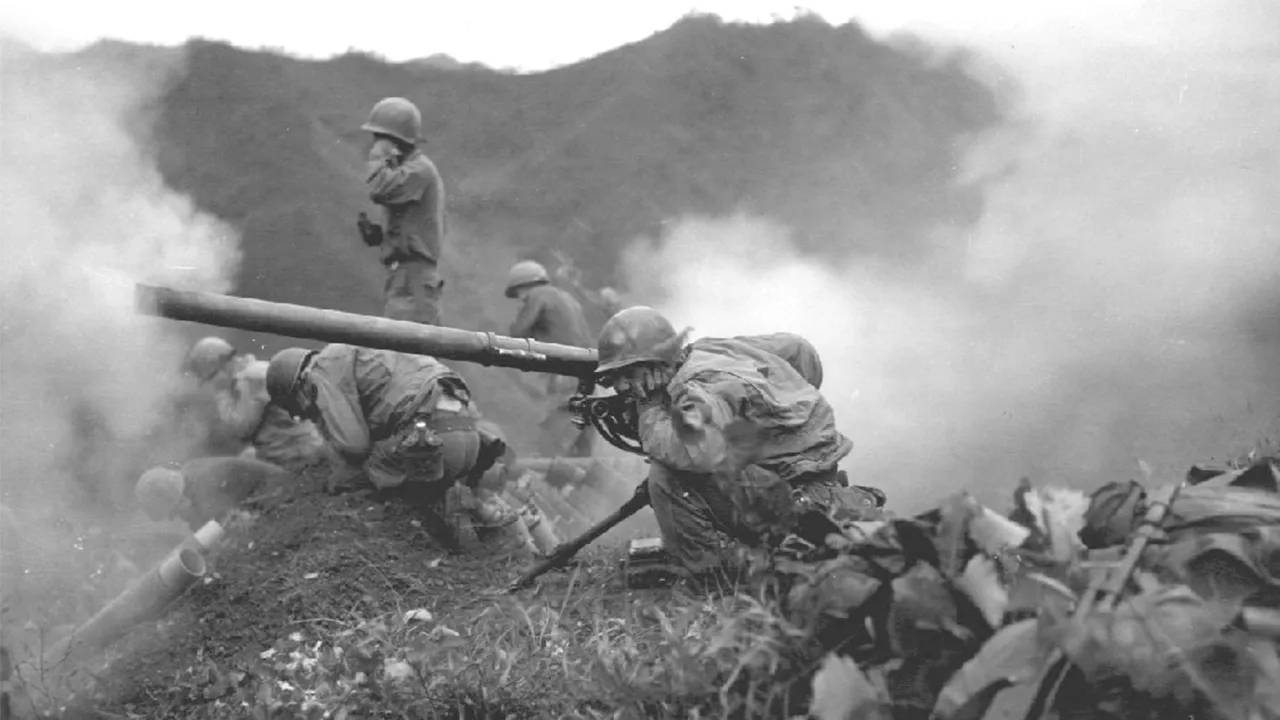
Set in September 1950. At the conclusion of World War II, Korea—formerly under Japanese control—was divided at the thirty-eighth parallel into a U.S.-occupied south and a Soviet-occupied north. Although the division was meant to be temporary, by 1948 both countries had declared independence. North Korea became a Soviet-supported communist state; South Korea was supported by the United States. Two years later, North Korea invaded South Korea in an attempt to bring the entire peninsula under its control. After several weeks of fighting, UN and South Korean forces were defending an area called the Pusan perimeter, in the southernmost portion of the peninsula. General Douglas MacArthur, who was commanding U.S. and allied forces as part of a UN mission, was also making plans for a landing at Inchon, near the South Korean capital of Seoul, in order to surprise North Korean troops and recapture Seoul.
Anticipating the possible success of the Inchon landing, The UN secretary-general has convened the Security Council to discuss the situation in Korea, specifically whether to extend the UN military intervention north of the thirty-eighth parallel in an attempt to unify the Korean Peninsula. Security Council members will have to weigh the risks of such an intervention, and whether intervention offers a better opportunity to form a durable peace than stopping at the thirty-eighth parallel would.
Decision Point
The UN secretary-general has convened the Security Council to discuss the situation in Korea, specifically whether to extend the UN military intervention north of the thirty-eighth parallel in an attempt to unify the Korean Peninsula. The secretary-general has made clear that this decision depends on the success of the Inchon landing and victory in South Korea. Security Council members will need to consider a few critical questions. First, what is at stake in the conflict? Is it just a Korean national issue fueled by north-south rivalry, each side seeking to lead a unified nation, or could the conflict become a major flash point in the Cold War? Second, what are the chances of Soviet or Chinese intervention if UN forces invade North Korea? Finally, does reunifying Korea offer a better prospect of a durable peace than stopping at the thirty-eighth parallel would?
Learning Goals
CFR Education extended simulations use a variety of pedagogical tools to create an effective, meaningful, and memorable learning experience for students that builds their global literacy. Students will develop crucial skills such as critical thinking, communication, collaboration, and creativity. Students will complete authentic assessments that feel relevant: instead of five-paragraph essays and book reports, students will write policy memos and participate in a role-play of a meeting of a foreign policy–making body. There are no right or wrong answers in actual policy deliberations, and there are none here, either; students will walk away from this experience with an appreciation for the complexity of policy questions.
In this simulation, students will learn about the UN Security Council, as well as meeting these learning outcomes specific to this simulation:
- Students will understand the factors that led to the Korean War and what led to the UN Security Council approving military intervention.
- Students will consider key disagreements within the UN Security Council, particularly regarding the role of the United States and the appropriate response to the war.
- Students will evaluate the options available to the UN Security Council related to intervention above the thirty-eighth parallel.
Concepts and Issues
Concepts
- Alliances
- Dispute resolution
- Interests versus values
- U.S. military options
- Civil war
- Great power rivalry
- Balance of power
- International law
Issues
- U.S. support for democratic governance
- Costs, benefits, and risks of military interventions
- U.S. interests in East Asia
- The UN Security Council and the U.S. role at the United Nations
- Early flash points in the Cold War
- Security and diplomacy in Northeast Asia
- Chinese and Soviet support of North Korea
Policy Options
Little consensus could be found in the UN Security Council by late summer 1950. Until that point nearly every resolution on the issue had passed unanimously. However, the Soviet representative’s return to the council in August 1950 and his assumption of the council presidency in the same month brought the council into a new stage of conflict.
On the one hand were those—above all the United States—who saw intervention above the thirty-eighth parallel to be necessary and imperative to repel Communist aggression. Members of this camp, including the United Kingdom and the Republic of China, interpreted Resolution 83 as an authorization of any and all action that would unify the two countries and reestablish peace on the peninsula. These nations called for a UN resolution authorizing an intervention above the thirty-eighth parallel with the goal of defeating North Korea and holding UN-supervised elections on the peninsula. This view pleased MacArthur. In mid-July, just weeks after the war began, MacArthur told other military leaders, “I intend to destroy and not to drive back the North Korean forces. I may need to occupy all of North Korea.” If this was not possible, the United States and its allies advocated for a resolution that condemned North Korea for continued defiance of the United Nations and called on all states to refrain from assisting the invaders.
The Soviet Union and its allies were starkly opposed to UN intervention of any nature, let alone above the thirty-eighth parallel. The Soviet representative called the intervention illegitimate, asserting that the Korean War was a civil war and that the United Nations had no right to intervene. More importantly, he maintained that the UN Security Council was becoming a U.S. puppet, arguing that “the United Nations was allowing itself to become the tool of reactionary American ruling classes to suppress national liberation movements in Asia.” Accordingly, the Soviet Union called for an immediate cease-fire and withdrawal of foreign troops. It proposed that once peace was established, Korea should hold a joint north-south election for a national assembly and establish an interim government under observation from a UN committee.
Between these two poles were countries that called for a peaceful resolution of the conflict. Many had supported the United States initially, but were now wary that the powerful permanent member was wielding too much influence in “shaping the agenda” at the United Nations and would drag the United Nations into a third world war. Others, including France, faced domestic political opposition to the war or were embroiled in their own conflicts abroad. India, a nonpermanent member at the time of the invasion, argued that “every attempt should be made at peaceful settlement before United Nations troops crossed the Parallel.” These governments were staunchly opposed to military operations in North Korea. This was primarily because of the risk of drawing the Soviet Union or Communist China into the conflict. They proposed a variety of policies focused on mediation and negotiation, including cease-fires, the creation of a neutral buffer zone at the thirty-eighth parallel, and multilateral peace talks.
During this time, much of the disagreement at the council revolved around the role of the United States in the conflict. By the fall of 1950, many UN member states had expressed displeasure at the United States’ apparent monopolization of the UN Command in South Korea. Many of the United States’ allies were extremely cautious of involving Communist China, and repeatedly warned U.S. representatives that “the United Nations was concerned only with the question of Korea, and that it should not under any circumstances become embroiled in the quarrel of the two Chinas.” Security Council members also wanted to emphasize the collective nature of UN action, reportedly requesting changes to resolutions to reduce the number of references to the United States.
At the time of North Korea’s attack on South Korea, nearly every member of the Security Council shared the view that the invasion was a breach of international peace and security. Many member states had supported Resolutions 82 and 83 with a view to reestablishing the prewar status quo. These member states saw any conflict on the peninsula as incompatible with UN policy toward Korea. As the liberation of South Korea neared, however, members were split on what steps to take next. One thing was certain: any
Running the Simulation
CFR Education extended simulations are project-based learning activities. Project-based learning (PBL) leads to better learning outcomes and improves skills, and is more fun than traditional instructional methods. The website that students will navigate throughout the simulation is divided into several parts:
In the UNSC Guide, students will learn about the UN Security Council, the body they will be simulating. Included are details on its history, how it works, who its major players are, and more. There is also a video interview with experts who have served on the body.
In the Case Notes, students dive into the actual situation they will be trying to solve in their simulation. At the beginning is a clear decision point: the question that students will debate during the role-play. This is followed by detailed background material and a discussion of the role that the United Nations plays.
Preparation and Role-Play includes details on the various roles students could take on, guidelines for the draft resolution clauses they will write, as well as an outline of how the discussion will flow during the role-play.
The Wrap-Up is an important part of the project and includes reflection questions and guidelines for reflecting in a class discussion and in a second memorandum. For historical cases, this section also includes a short description of how the decision point was addressed by policymakers in real life.
The simulation also includes Student Resources, which include a reading list to support research, additional directions and exemplars for writing assignments, and other tips students may find helpful.
Tips for Role-Play
Once students have read the simulation and prepared their draft clauses, here is how we recommend structuring the role-play:
| Round | Timing | Objectives | Procedural Notes |
|---|---|---|---|
| One: Public Meeting | 2 to 3 minutes per participant | Receive a five-minute briefing from the secretary-general on the issue to be discussed.Present opening statements.Crystalize the central questions of debate. | During opening statements, the president of the UN Security Council will recognize country representatives in the order in which they request to speak, and no representative may speak again if others have not yet spoken. Following opening statements, country representatives are free to openly debate the statements made, evaluating the various positions on their merits. |
| Two:Informal Meeting | 30 to 60 minutes | Debate each participant’s proposed clauses.Edit, add, or drop proposed clauses and combine them into one or more draft resolutions.Draft a presidential statement using proposed clauses and/or new material if no draft resolution appears acceptable to the group. | The president will recognize country representatives in the order in which they request to speak. Representatives should limit their statements to one minute each, but if time allows the president may permit them to speak longer. The president may also invite any participant to speak as they deem it appropriate. Any participant may motion for a ten- to fifteen-minute break, during which representatives can move freely and work on their draft resolutions individually or in small groups. |
| Three:Public Meeting | 30 to 60 minutes | Hear summaries of any draft resolutions as well as arguments for and against adoption.Vote on draft resolutions in order of submission.Attempt to adopt a presidential statement by consensus if no resolutions are proposed or passed. | The president will call first on the draft resolution’s main author(s) and then on other countries that wish to make arguments for or against the resolution. To be adopted, Security Council resolutions must receive at least nine votes in favor and no dissenting votes (vetoes) from any of the five permanent members. A state may abstain, often to indicate ambivalence or mild disapproval (in contrast to strong opposition). According to the charter, abstentions are mandatory if the state is a party to the dispute in question. Abstentions by permanent members do not count as vetoes; the resolution will pass if it receives the necessary nine votes. |
Tips for the President of the UN Security Council
In Round 1, you will chair a formal session. Make absolutely sure that every country gives their opening statement before any country is allowed to speak a second time. You will also have to use your judgment about when to move into the more informal meeting of Round 2. Give enough time for students to flesh out their positions and to identify potential allies, but do not wait too long—the most productive negotiations happen in informal meetings, so you want to save time for those in Round 2.
In Round 2, you will call on speakers one at a time. The time limits on speeches are a little looser, so pay close attention to make sure everyone is included and no one dominates. Deciding whether to grant a break for negotiations is a matter of balance. Negotiations can be advanced in small-group discussions, but it is also important for the whole body to be updated on what goes on during the breaks. You will want to strike a balance between breaks for negotiating, and informal meeting time for giving updates and rounding up support for resolutions. It is often helpful to set a deadline for the end of Round 2 to encourage negotiators to come to agreements in a timely manner.
In Round 3, completed draft resolutions will be presented, discussed, and voted on. Before starting, make sure you are clear on the order in which the resolutions were submitted and who is sponsoring each one. When it comes time to vote, it will be helpful to remind everyone of the unique voting rules of the Security Council. If none of the resolutions passes, you can allow further debate and attempt to vote again, or you can move on and guide the council through debate on a presidential statement. Use your judgment about which process is more likely to be successful.
Tips for Online Classes
We suggest conducting the role-play in three rounds and that three-round structure is a helpful way to approach chunking the role-play for online learning as well. You can conduct each round synchronously or asynchronously.
In round one, participants present their positions.
- In a synchronous meeting, you can go through opening statements using videoconferencing software, allowing for live clarifying questions.
- However, this is probably the easiest round to conduct asynchronously. You could disseminate positions in writing by having participants share their position memos or write a summary for the purpose of the role-play. You could also have participants record a video of themselves delivering their opening statement and disseminate it for all to watch.
In round two, participants debate the various policy options.
- In a synchronous setting, you can simply run a full-class discussion for round two. If you need more structure or want to prod reticent participants, consider starting by randomly assigning students to breakout rooms, assigning each breakout room one policy option. After working through pros and cons, representatives from each breakout room can share out to kick off the general discussion.
- In an asynchronous setting, consider a discussion forum, with a thread for each policy option.
In round three, debate begins to coalesce around the draft resolutions that have substantial support.
- This round can be approached similarly to round two. In this round, organize breakout rooms or threads around each draft resolution.
Flashpoints
This case offers no suggested flashpoints.
UNSC Assessment
Case Assessment
- When and why was the Korean Peninsula divided at the thirty-eighth parallel? Who divided the peninsula, and for what purpose?
- In what ways did North and South Korea develop differently, politically and economically, after division? What factors influenced each state’s post–World War II trajectory toward independence?
- What was the nature of the relationship between the Soviet Union and the United States in 1950? How might this affect the Soviet Union’s reaction to a U.S.-backed invasion of North Korea?
- What interests did the People’s Republic of China (mainland China) have at stake in the Korean Peninsula in 1950? How might China view U.S. intervention over the thirty-eighth parallel?
- What was the role of the United Nations in the first months of the Korean War? What was the institution’s response to North Korea’s invasion of South Korea, and why?
Writing Assignments — Overview
- What are the six organs of the United Nations system? What are their responsibilities?
- How is the UN Security Council structured? How are Security Council decisions made?
- What are the two categories of tools that the UN Security Council has at its disposal to implement its decisions, and what are the range of specific tools available in each?
- What is the difference between a Chapter VI peacekeeping mission and a Chapter VII peace enforcement mission?
- What are the main challenges and limitations that the UN Security Council faces as it carries out its work? What solutions have been proposed to address these challenges?
Each CFR Education extended simulation involves writing assignments that help students think through policy options and reflect on their learning experience.
In UNSC cases, there are two types of writing assignments.
- Before the role-play, everyone writes draft clauses for a Security Council resolution.
- As part of the wrap-up, everyone writes a written reflection.
Simulations have instructions for written assignments (found under the Student Facing Simulation), rubrics, and samples for each of these writing exercises.
Samples:
Below are sample rubrics for your use in assessing the writing students will do as part of this extended simulation.
These are single-point rubrics. Jennifer Gonzalez, who writes the blog Cult of Pedagogy, has a great explainer, but the bottom line is that single-point rubrics are relatively easy for students to digest but still have all the advantages of giving structure to instructors’ feedback.
UN Security Council Draft Clauses Rubric
| CONCERNS What needs improvement | CRITERIA What is expected | ADVANCED What is excellent |
| Purpose - There are two to three preambular and three to four operative clauses - Clauses are properly formatted and styled | ||
| Preambular clauses - Accurately identify relevant prior agreements and existing organizations | ||
| Operative clauses - Are practical and within the UN Security Council’s powers - Address who - Address what - Address when - Address where - Address why - Address how - Address funding |
UN Security Council Written Reflection Rubric
| CONCERNS What needs improvement | CRITERIA What is expected | ADVANCED What is excellent |
| Subject paragraph - Is brief - Places the issue in the larger context of U.S. foreign policy - Clearly states whether the writer agrees or disagrees with the president’s decision | ||
| Options and Analysis paragraph - Discusses each option that came up during the role-play in discrete paragraphs - Weighs the advantages and disadvantages of each option - If options from the position memo are discussed, those options contain additional analysis | ||
| Recommendation and Justification paragraph - Makes a clear recommendation based on the writer’s personal position - Supports the recommendation effectively | ||
| Reflection paragraph or paragraphs - Reflects on and critiques the Security Council’s decision - Is written from a personal point of view, not that of the assigned role |
Downloadable rubrics are available here: