Filling the “Missing Middle” to Scale Energy Breakthroughs: Public, Private, and Philanthropic Solutions
Event date
Speakers
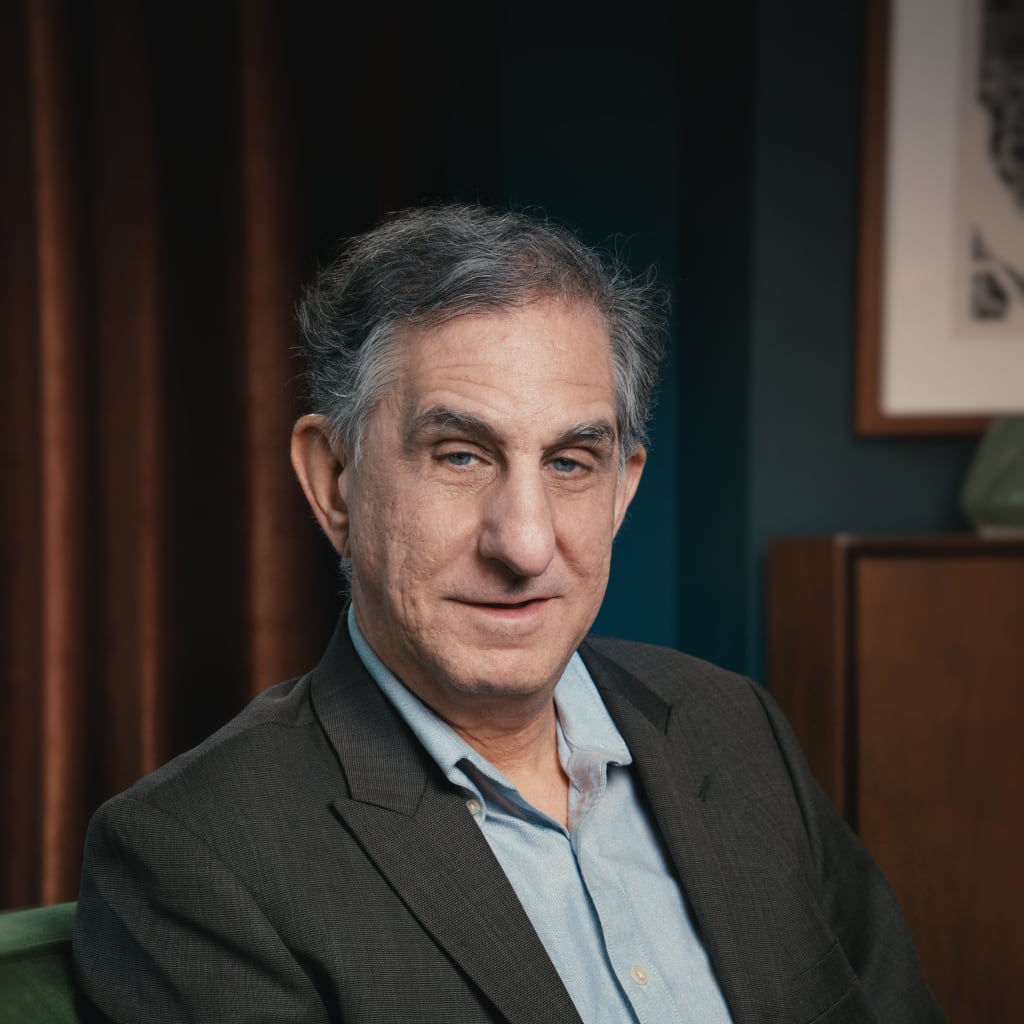 David M. HartCFR ExpertSenior Fellow for Climate and Energy, Council on Foreign Relations
- Jonathan and Linda Brassington Practice Professor, Materials Science and Engineering and Inaugural Vice-Dean of Innovation and Entrepreneurship, University of Pennsylvania
- Chief Executive Officer, XGS Energy
Presider
- Incoming Philip D. Reed Senior Fellow and Director of the Energy Security and Climate Change Program, Council on Foreign Relations
From Climate Realism.
A gap in private funding for companies and projects inhibits energy innovation in the United States. This “missing middle” slows or blocks technologies that could help the energy system become more secure, affordable, and sustainable, and weakens U.S. firms relative to Chinese and other international competitors. Join CFR’s Climate Realism Initiative as it launches Financing the Missing Middle, a collection of policies and strategies to help bridge that gap.
This event, and the essay collection itself, has been made possible through the generous support of the Alfred P. Sloan Foundation, under grant number G-2025-25233.
VAITHEESWARAN: Good evening, everyone. Welcome to our session on “Finding the ‘Missing Middle’ to Scale Energy Breakthroughs: Public, Private, and Philanthropic Solutions.” I’m Vijay Vaitheeswaran, and I’m very pleased to say I am the incoming director of energy security and climate change here at the Council on Foreign Relations. It’s a pleasure. I’ll be starting soon. (Applause.)
Having been a term member and then life member now for more than twenty years, it really feels like I’m still part of the family but maybe shifting to a different room in the house. But I look forward to many more sessions together with you and getting to know all of you even better, going forward.
We have a really distinguished group today to help us think through a tricky challenge. It really is. It’s a tough one when we think about energy and finance and maybe the fast-changing world of geopolitics. There’s a—there are a few chokepoints.
Another one of our colleagues has made popular the phraseology of chokepoints, Eddie Fishman. This is one of those chokepoints in the world of energy and finance. We’re going to try to make our way through it and ask for you to contribute your thoughts, of course.
Vanessa Chan to my immediate right, who’s a professor of material science engineering as well as the fantastic title, the inaugural vice dean of innovation and entrepreneurship at the University of Pennsylvania.
To her right is Josh Prueher, who’s chief executive officer of XGS Energy, an innovative geothermal startup, and we have David Hart, senior fellow for climate and energy here at CFR.
Please give them a round of applause to get them going. (Applause.)
This is a(n) on-the-record session and, as ever, we will come to you and your questions at about the halfway mark.
I wanted to just start, in a sense, by talking about what are we talking about? What do we mean here by missing middle?
When you look at the area of innovative energy technologies, the topic of the evening, you might think that this is actually an area that’s working really well. If we look at the numbers, more than $2 trillion were invested last year, according to International Energy Agency data and a variety of innovative energy technologies around the world, double the amount as went into conventional energy technologies, and the direction of travel seems clear.
The world seems to be in the midst of what has been called the electrification super cycle, an age of dramatic acceleration in a range of new technologies, whether it’s in transportation industry or in home heating and so on, with the rate of electrification expected to rise more than twice the rate of overall energy growth in the next five years, according to the IEA analysis globally.
That is, the world is becoming ever more electrified. Generally, that’s a very good thing. No emissions at the point of use. It’s a pathway to use cleaner fuels and upgrading the grid. Possibly, you know, more efficient, ultimately. Therefore, efficiency, always good.
And whether it’s we use the energy for AI or for air conditioning and economic development in the developing world, all to the good, surely. Sounds like a fantastic age for energy innovation.
If we look at the R&D pipeline, look at innovative startups, an extraordinary outpouring of climate tech, energy tech, resilience tech, companies that have been coming out of the laboratories, the hard-tech companies that have been gestating for ten, twenty years since the clean tech boom. Some of you might remember fifteen years ago the clean tech boom and bust.
And now they’re now mature and having benefited from a wave of new science, whether it’s the more recent AI arrival but before that material science, synthetics, genomics. The confluence of all these things have actually led to many of these companies becoming much more likely to achieve their goals, more successful. They’ve gotten pilot plants.
But then we get to that missing middle. They find the valley of death and find it very hard to get to the first-of-a-kind plant, second-of-a-kind, and make its way towards that project finance and the nirvana of trillions in capital that’s waiting to fund anything that’s bog standard, that’s de-risked.
And that’s the missing middle we’re here to talk about because there is a real problem. There’s no shortage of capital, but there’s a bundle of risks that are not well understood by financiers and policymakers, and maybe even by startups and companies themselves that need to be taken on if we’re to bring these innovations to the fore that can bring enormous benefits to the world in terms of energy security, resilience, climate risk, and other kinds of positive spillovers—lower energy costs, most importantly.
So how do we tackle this? Let me turn first to my colleague, David. David, you have led a group—I’ve thought about this a lot over the years, of course—but as well convened a group of experts to talk about this and you’ve produced a wonderful collection of essays, pointed ones, that you can find on our website. I recommend to all of you to look up that. But tell us a little bit about how you see this challenge of missing middle and how far have we come with the thinking?
HART: Sure. Well, thanks, Vijay, and let me say publicly how pleased I am that you’re joining us. I can’t be more—(audio break)—as a colleague. So welcome to the club, which I’ve only been a member of for a short while. So I’m really happy to have you on board. And I did want to also acknowledge the funding that we got for this project from the Sloan Foundation, which have been a wonderful partner.
And so we convened a group of folks in November and the challenge that confronted them is how do we get inventions that are made in America scaled up in America, or anywhere? In some cases, this missing middle just leaves the invention high and dry. In other cases, it may get scaled up elsewhere.
And the challenge is that you need to spend a lot of money before you make a lot of money, and there are a lot of people that are willing to put money into invention, into the venture capital side, and then there are folks that are willing to build things that have a proven risk-return profile. Like, we know we’re going to make 8 percent a year on a project so we can put our money in because a hundred of these projects have been done in the past.
But if you haven’t done a hundred projects, how do you get there? And we’ve also had a couple of factors that have really exacerbated this problem in recent years. One is that interest rates have risen, as I’m sure all of you are aware. It used to be relatively cheap to finance things. Now it’s more expensive.
And the second is the federal government pulled out of its—many of its programs, and Vanessa will speak to that, I’m sure.
So the question is, all right, what’s left? So what can philanthropy do? What can the private sector do using its own innovative creativity in the financial world, and what’s left for the government?
So those are the questions that we took up in this project and this, I think, is—the next step is, you know, trying to make clear that there is a challenge here. It is something that all the sectors, our major sectors, are going to need to deal with, and in some ways it’s getting worse, although there are definitely some signs of life, some excitement, and we have folks on stage who will speak to that.
But we need to get the word out and we need to start thinking about solutions because the clock is ticking.
VAITHEESWARAN: David, I’m going to—I’m going to come to both our former government guru, Vanessa, who was in the Department of Energy in a very interesting role, and to our private sector innovator who is in the midst of this kind of financing for his company.
But before we do, just a framing comment, because you’ve looked at this, you’ve done the papers and seen sort of the 30,000-foot view on this.
Is this a market failure? You know, we’re here in New York, the world financial capital. Is this a problem in which somehow capitalism has lost its way, and it should be funding fantastic companies, whether it’s XGS or others in this area, or something else?
You know, what’s—what are we actually talking about here?
HART: Yeah, I think we’re talking about a failure to create a market environment in which people can really make money on these kinds of projects and these kinds of companies. That’s the challenge. That’s what the government should be doing is creating that kind of environment.
Because markets don’t exist on their own. Markets are embedded in a context, whether it’s the law, whether it’s the culture, and so we need to create an environment in which people can make money doing these projects.
That’s the fundamental challenge. I think that’s what’s missing.
VAITHEESWARAN: OK. So you’re pointing the finger very clearly at a role for government in this. You’re not saying pick winners, you’re not saying subsidies, but you’re saying there’s a role for market creation, framework boundary conditions, because there’s something wrong here. There’s something missing, and we’ll come to later on maybe other countries that do things differently.
But before we get to that, let’s start with how the U.S. is doing things.
Vanessa, you served in a very interesting role at the Department of Energy when we first got to know each other a few years back, one that had you exhilarated some moments and also banging your head against the wall some other times because it’s sometimes not easy to move the apparatus of government.
Can you give us your perspective now that you’re on the outside? What should—now that you also have seen the cycles of multiple administrations, what’s the role of government here within the context of Anglo-Saxon capitalism?
I mean, this isn’t, obviously, China with its different tools of state capitalism. Within what we can do, how do you motivate profit-seeking investors to work on this challenge if there are bigger solutions and spillovers for America at large or a competitive advantage in the world? How do we make progress on this?
CHAN: Well, first of all, it’s great to be here, and I actually see a lot of people I haven’t seen in twenty-something years when we were all, like, twelve.
But, you know, when I was at the federal government it was pretty amazing because under the Biden administration my role was to figure out how to bring all the technologies in our seventeen national labs to market.
But during my first year, we had the passage of the bill on IRA, which meant we now had $400 billion in Department of Energy to go towards demonstration and deployment, which are the last two stages of commercialization, and DOE’s annual budget in Trump I—end of Trump I—was 40 billion (dollars). So we now had ten times the budget to actually go towards the final stages of commercialization.
And I think the role of government is to figure out how to catalyze the private sector so and the Biden administration were very much around commercialization is private sector led but government enabled. And so $400 billion is a lot of money, ten times the annual budget, but it’s peanuts compared to the 23 trillion (dollars) that the private sector has.
So our question was how do we use that $400 billion as effectively as possible in order to help the private sector commercialize all these clean energy technologies?
And so one of the things that we did was we quarterbacked something called the Pathways to Commercial Liftoff, which were basically roadmaps that we created with the private sector on what the unit economics would have to look like, what the supply chain risks are, all the things that an ecosystem would have to do in order to bring these technologies to market, and all the money that we had coming out of the bill and the IRA were tied to those liftoff reports. So if you wanted money from the hydrogen hubs, you had to have dog-eared copies.
And then we did some really innovative things where we had $8 billion towards hydrogen hubs, and we convinced Congress and the White House to let us take a billion dollars of it to create the first-ever demand-activated federal program.
So what do we mean by that? When you’re trying to commercialize technologies, one of the biggest issues with the missing middle is no one wants to set up a supply chain until they have an offtake agreement. No one wants to sign an offtake agreement until they know the supply chain is there.
VAITHEESWARAN: It’s a chicken-and-egg problem.
CHAN: So it’s—exactly. So how do you fix that?
Well, I think government should play a role. And that’s what we invented, was this new demand-side activation where we took a billion dollars and said, look, anybody who is able to make hydrogen, right—the first ones to get it off the line—we will pay for the contract for differences through the billion dollars.
VAITHEESWARAN: Can you explain a contract for differences for those that don’t follow this?
CHAN: Sure. Yes. So the contract for differences, if—let’s say you are wanting to buy my hydrogen and I’m like, OK, I’m going to sell it to you for $2.50 a kilo because I think I can manufacture with the 45V at $1.50 and I make $1 per kilogram. But then I start—
VAITHEESWARAN: And that was the relevant hydrogen provision of the IRA.
CHAN: Right. And then I start doing the work. I build out my supply chain. It’s like, oh no, it’s going to cost me $2.45 so I need to charge you more money, and you’re like, well, I didn’t agree to that, and I was, like, well, I can’t eat this.
And so the government was saying, we will eat that, because we know when you’re trying to commercialize technologies, the unit economics are super critical, and we don’t know what the unit economics are going to be.
And one of the reasons why the liftoff reports were really important was in the federal government oftentimes you publish reports and they’re static, saying there’s this thing from 2022 and this is gospel.
And we’re like, no, what we know now is wrong six months from now because the world evolves, right?
VAITHEESWARAN: Technology gets better, the markets—
CHAN: Technology gets better, but also you get inflation and all this other stuff happening. So we were constantly updating the liftoff reports so that the nation would have the updated roadmap and a single source with which we could try to get to.
And so I think the role of government is to bring an ecosystem together and to really think about ways in which we can catalyze the private sector to move faster, and we are not going to talk about China right now but I’ve got some very strong thoughts around why it’s very hard for us as capitalists to win against China.
But we will take—we’ll come back to that.
VAITHEESWARAN: Sure, we’ll come back to China, but let’s—I wanted to see.
But that’s how you saw this and, of course, the contracts for difference and other tools like that are used in the U.K. and other countries around the world as well in renewables bidding and other kinds of areas where—as a price discovery mechanism or to give confidence to the marketplace and have smart subsidies, as it were—smart support from the government for encouraging innovation.
So that’s one sort of policy tool that you talked about, as well is some of the informational tools and collective action in a way for bringing industry and government together. So we’re seeing different kinds of things that government can do in an interesting way.
We’ll also come to some of the backlash maybe in a future round of questioning in policy volatility. Obviously, we know the Trump administration has gone a different way with some of those things but kept some of the things as well, just not as well advertised.
David, maybe you can give us an overview of that when we come to you.
But nevertheless, we’ve seen some ideas about what could be a more interesting, robust way for government to play a role consistent with the market—
CHAN: Can I add one thing? Which is, you always need to read the laws that are passed very carefully because in the CHIPS and Science Act there was something that was put in there to the DOE Foundation, which is how I got into this role in the first place was I went to a workshop in 2015 trying to figure out what this foundation should do.
And in the CHIPS and Science Act it was put in law that DOE should establish a foundation and the chief commercialization officer should establish it.
You know, the reason why this is important is the federal government cannot take philanthropic money. We have a lot of rules and regulations around what we can—who we can bring together. We can’t choose winners. We can’t fund certain things.
But the DOE Foundation is the thirteenth federal foundation and they have a lot more flexibility. And I know in the title we talk about philanthropy so these foundations are a way that philanthropy can be tied into federal government.
And very excited—I just met Rick, who’s the new CEO. He’s been in the job for eleven months and he’s so excited because there’s so much more flexibility that he can do as DOE’s Foundation that wasn’t there before.
VAITHEESWARAN: Well, that’s a fertile area for discussion as well—the role of philanthropy, a blended capital, of sort of thinking about the capital stack and who should take first dollar risk, who takes later risk.
In the world of international development, that’s old hat. People have been doing this for a long time. But typically it’s subscale and often in terms of human development rather than thinking about tech development, and at the scale of, you know, the hundreds of millions or even billions that we’re talking about with climate technologies and energy innovations.
Typically that’s one of the challenges here is we’re talking on a scale of investment, even for a first-of-a-kind in energy tech, can be 100 million (dollars) or more.
And maybe this is a good time to come to you as our private sector intervener, Josh.
When we talk about energy technology and building that first-of-a-kind plant as opposed to, say, manufacturing, there is a difference, isn’t there? Because there’s lots of experience in building out manufacturing, but in some ways it’s easier than trying to build a first-of-a-kind you name it, carbon capture, green hydrogen, or in your case, closed-loop geothermal.
Give us a sense of what are the challenges. Why is this hard? Why is it any harder in energy than in other areas?
PRUEHER: I might argue that it’s actually easier. I’d probably back up and say that my experience, I’m not really a geothermal guy, ironically, for someone who runs a geothermal company. I’m mostly a battery guy, and spent the last fifteen years commercializing batteries in a variety of applications.
From the days, 2008, when people thought if you looked at it wrong it would catch on fire and burn the world down, into doing billions of dollars of regular way, non-recourse debt in large infrastructure projects, and that’s a process of proving out the technology to financial investors in a very quantitative way.
Now, I think there’s a real parallel to the world we’re in now. We started, frankly, I was a—before I was a finance guy I was a veteran in the military, and we started in Iraq and Afghanistan building micro grids because there was a market for it because, you know, effectively, if you’re trying to get someone to take that first-dollar risk, you have to express some sort of expected value and for financial investors that’s going to be a cash flow at the end of the rainbow.
But for the government or others, there needs to be some public good. In Iraq and Afghanistan it was deferring fuel logistics where people were dying, and so there was almost an infinite value if you could prove that you could make this work.
And so when you proved that it made it work, you started getting those repetitions and those repetitions were good in and of themselves because you had an effect on that market segment, but they were also—that provided empirical data that helped other investors get comfortable with, well, if it works there maybe it’ll work somewhere else.
And I think that’s what’s so exciting about energy right now is we have a world now where in addition to all of the regular economic incentives to create energy cheaply, whether you care about the climate, whether you care about costs, whatever your factors are from a pure economic sense, we now have two what I would consider massive sort of national security goods that energy can provide or can deliver.
The first is—I happen to believe that AI is a strategic imperative for the country and so powering AI growth and its associated storage requirements I regard as a really important thing for this country.
VAITHEESWARAN: There’s no AI without energy, right, Josh?
PRUEHER: No, exactly. I mean, it is the chokepoint.
I was just in China, and I know we’re not supposed to talk about China but China’s, like, we got energy, we don’t have chips. We got chips, we don’t have energy. So energy is the chokepoint, and so affecting there’s some public good to that expressed in national security terms.
I think also with what’s going on in Iran that has created some volatility, particularly in countries—less so the United States but other allied countries who are dependent on imported natural gas that sets their electricity prices, and the longer that goes on and the longer the new normal of a volatile and risky LNG- and oil-based world that we are just going to now live in, I think we all probably agree, those countries are starting to think about infrastructure investments that they wouldn’t otherwise make to try to mitigate against that volatility, right?
If I’m living in a world where my imported LNG prices and my electricity prices could triple overnight, if I wake up and something happens in the Strait of Hormuz, I need, from a political standpoint, to invest in order to mitigate that risk.
And so I think we have this really exciting time where not only can you make money from a pure financial perspective, but I can go to those investors and also say the government has a role to play here because we’re delivering other types of maybe non-financial goods in the energy space.
VAITHEESWARAN: So we are seeing a little bit of movement in this, aren’t we?
To your point, those are two powerful tailwinds supporting energy technologies that can demonstrate that they’re homegrown, meaning you can have them here—you don’t have to bring stuff from Hormuz—and secondly, can somehow enhance resilience, produce energy abundance, especially produce low-cost energy over time, right? Clean, firm, lower-cost energy over the long haul.
Those are very powerful, compelling attributes, and we’ve now seen already a queue of unicorns—energy unicorns—lining up for the IPO train, right? We saw X-energy, which is a small modular reactor company, start off early with their relationship with Amazon Web Services and Dow Chemical do an IPO.
Of course, some of you will know Fervo, which is a geothermal company that relies on fracking and interesting innovations, also to be able to do geothermal not just in—you know, in geysers but in many other places, do an IPO just very recently. And we have others like Kraken in the U.K., which is a grid aggregator company that relies on AI and smart management and distributed energy management with a massive valuation headed towards an IPO.
There’s a few others as well, and they’re all taking advantage of a window where suddenly investors are looking at resilience as a thesis of—energy security as a thesis, not climate, as might have been or ESG a few years ago, but emphasizing these other traits.
David, do you see this then as something that could make a big dent in the missing middle we’re talking about, the so-called 100 billion (dollars) to $200 billion gap I read in the academic literature?
Is this—is the market going to save the day or does this require some additional premium?
HART: I think the answer is—I think the answer is we’ll see. I don’t think we know yet, and whether—how big that risk premium is going to be is a huge question.
So, for instance, the natural outcome we would think in the short run will be that fracking would pick up and we haven’t really seen that yet. Now, maybe it’s going to, but that’s a proven technology. We know where the resources are. But the price of oil hasn’t yet stayed high enough long enough to trigger that.
So I think—I think it has the potential to be a very powerful tailwind. But I don’t think by itself it’s—we can count on it yet, and I’m not sure we want to live in the world where everything is national security either.
So there’s some downsides to this. But I do think it’s a big pull factor right now, yes.
VAITHEESWARAN: What are some additional—and we had some ideas from Vanessa that she was working on previously. What are additional proposals that you think would make sense for the federal government to think about that could help if it’s not going to be—we’re not going to be saved by this wave of, you know, resilience IPOs?
There are ideas about insurance products. Again, if we see this as a risk problem rather than a capital inadequacy problem or, you know, the world is awash in capital—there’s trillions in dry powder. All of you know this very well in this room.
Is there—are there interesting insurance or reinsurance products or roles that government can play or private sector can play in that?
HART: I think Vanessa will be better equipped to speak to the insurance thing specifically. But there are a bunch of different tools that the government can use to get through and pull in private capital to fill this missing middle.
So we’ve talked about offtake. That is an historical capability especially that the Department of Defense has used. So if you look at the development of the—
VAITHEESWARAN: The procurement.
HART: —the semiconductor, yeah, procurement is one. Grants are another. I think cost sharing.
So one of the things we might talk about is whether taking equity stakes in companies makes sense, which is one of the experiments, as I would call it, that the Trump administration has undertaken.
I am worried because the goal of—I think the government investment should take risk off the table. But in some ways, putting equity capital in raises the risk for everybody else. So grants can be a tool for taking risk off the table.
Low-cost loans—Vanessa alluded to this. The Department of Energy has a big window for loans. It might be able to move more quickly, more effectively, have a broader scope. And, again, I think the Trump administration is experimenting here, specifically in nuclear power. So that’s the area that they’ve chosen to focus on, and they’re using a lot of different tools to explore that.
So those are a few of the tools that the government can use and should use, in my view.
VAITHEESWARAN: Well, you mentioned nuclear.
Vanessa, I know you have a view on this sort of blunderbuss of innovation going on. I mean, there’s dozens of different approaches to nuclear, just limiting ourselves to fission. Small modular reactors, lots of different approaches, lots of startups.
Is that a good thing?
CHAN: So we have a pathway to commercial liftoff report on advanced nuclear and every single one of the reports have, like, a killer chart. The killer chart in nuclear was in the U.S. we have fifty first-of-a-kinds, right? Because in Korea and other places, they choose the IKEA model. I like that chair, we’re going to keep minting that chair.
I’m like, wait a minute, I don’t like that chair. I want another chair that looks like this. We have fifty different chairs, and if you want to get up the learning curve and down the cost curve, you need one chair that we can all focus on and figure out how to make that chair as effectively as possible.
So I think one of the challenges that we have as a capitalistic society is that we are all first in line to be the eighth, ninth, or tenth of something because when you’re eighth, ninth, or tenth you can make money, and that’s exactly like the original “Squid Games” where it’s, like, you cross the bridge first. You cross the bridge first. No, you go. I’m not going until someone else goes because I’m not taking that risk.
Whereas China on the other side is, like, playing a long game. Like, in the short term, we are going to lose money in an area. Solar is a perfect example. We invented solar here, but no one was willing to invest in solar because it wasn’t profitable.
So it’s, like, if you invent a sport but you’re not willing to train for it and then China wins the gold in the Olympics, you’re, like, wait a minute—they won and we invented the sport. Like, yeah, but you have to train. You can’t just magically invent something and then feel like it’s going to work.
So the problem we have right now is how do we as a capitalistic society figure out a way for the entire ecosystem to come together almost like a massive Kickstarter campaign. If all of us were to give a little bit, then no one’s going to lose their shirt in the back, but the problem is the way we work here is someone has to go first versus all of us going first together.
So is there a way we can think about crowdsourcing the risks? It’s not just insurance. It’s the off takers. It’s the EPC companies. It’s all these folks who—what we have to realize is the pie on the other side is so massive that if we were able to bridge that gap, right, the missing middle together, none of us are going to lose our shirts.
But the problem is we’re expecting one or two of us to go first and then we’re going to step on their bodies and go over, and it just doesn’t work that way.
I think the second issue, right, is the way in which we do budgeting in the federal government. I was pretty surprised because I wasn’t at all thinking I was going to be—
VAITHEESWARAN: Because you come from a private sector background before the—
CHAN: I come from a private—right, but I also didn’t have my vision board, which is I will one day serve in the federal government. That was not my vision board and so I really hadn’t been keeping close to these things.
And what’s interesting is the way in which we do budgeting in the federal government is every few years, right, we’re changing things, and we put the money out there without a strategy.
So the problem is China’s the exact opposite, right? In the private sector, you create a strategy and then you try to figure out how you’re actually going to fund that strategy. In the U.S., the CFO, which is Congress, sits by themself. I, as, you know, a federal agency can’t go talk to them because then I’m lobbying and that’s illegal.
So imagine if the CFO of a private company sits by themself to figure out what they want to spend their money on. Then they lob that money over to the business unit to actually execute it. That’s what we’re doing here in the U.S., and we are not being coordinated in a programmatic way, which I think makes it super challenging.
So I think there’s ways that we have to think about the federal government and the role we’re playing so that we actually can get the continuity that we need, which is why, in the end, it’s private sector led but government enabled, which is why I think the private sector has to figure out how do you crowdsource.
And then how do we use the federal government in a way where it doesn’t matter which side of the House we’re on, it just makes sense. And so I think the private sector should always be relying on the government to be taking risks that they’re not willing to take.
I was on the board of the loan program office, which is now called the Energy Dominant Finance—EDF—and we had to—in order for us to have many money go out with LPO, we had to have a reasonable form of repayment, right, which means if there’s a reasonable pathway to repayment the private sector should be taking that on. Why is the government taking that on?
So these are the kinds of things I think is the challenge.
VAITHEESWARAN: There’s a one-word answer, right?
CHAN: Well, I don’t like that answer with yes.
VAITHEESWARAN: Right, and it’s Solyndra, right? We know the Solyndra problem. That’s why.
CHAN: But—right, but hang on a minute.
But the problem is this is where it goes to marketing because on the same time we fund a Solyndra we fund a Tesla.
VAITHEESWARAN: Agreed.
CHAN: Right? And so we are not looking at the portfolio.
VAITHEESWARAN: But that’s the political reason.
CHAN: But this is the problem, right, is we’re politicizing everything and not looking at the data.
VAITHEESWARAN: Right.
CHAN: And so then what happens now is we’re saying, OK, the government needs to have a reasonable form of repayment, but then we’re not catalyzing the new technologies and we’re competing against a world superpower that’s willing to take a long game on this, and that’s really hard.
VAITHEESWARAN: That’s the scale of the challenge. Well stated.
Again, I don’t know if I’m more depressed or encouraged, but I thought I started off with a little enthusiasm but you brought us back down to the realities—nitty-gritty realities.
CHAN: No, no, no, no, these are just a challenge. We can get there.
VAITHEESWARAN: We can get there. We can get there.
CHAN: If this financial capital is willing to think differently—
VAITHEESWARAN: I’m going to come to you all for questions in just a moment, but I just wanted to share a small anecdote.
When you were talking about climbing over the dead bodies, I was reminded of another factor here that does make innovation difficult in energy compared to other industries, say, biotech. You can also argue molecules cost a lot of money. There’s a VC model. There’s a valley of death. Hey, what’s so different?
Ultimately, electricity is a commodity product that comes out of the wall—you don’t know if it’s green, brown, geothermal, nuclear, coal—and you just want the lowest price. You want it to stay on, and no one will pay for differentiated electrons. Not really, even if they pretend to. Whereas you’ll pay anything to save Grandma’s life, right?
So there’s a huge willingness to pay on biotech drugs, novelty—novel drugs, and so on. So there’s a difference in the end customer, and in particular utilities are typically the gatekeepers for our electricity.
And I was at a gathering of utilities, CEOs and senior officers of utilities and regulators last year where this topic came up, and one of them—somebody was advocating for innovation, and one of the executives said, “You don’t understand. In my industry we say second mouse gets the cheese,” and from the back of the room, “Fifth mouse,” right?
There’s no incentive to innovate in traditionally regulated utilities.
Now, it exaggerates a little bit but not that much. And so to try new technologies it’s a hurdle the way we have historically regulated in a zero-growth environment.
CHAN: But that’s why we have a missing middle because no one wants to be the first four mouses to bridge that middle so the other mouse can go over, right?
VAITHEESWARAN: Agreed. Agreed. Agreed.
So now in an era of growth we finally, after twenty years of flat consumption in electricity we now have a sudden increase in growth. In the U.S. it’s led by AI datacenters but also electrification of other kinds. We’re finally getting an opportunity for a potential new windfall. A rich green uncle is coming to town—big tech. There’s a pressure for growth, there’s a pressure for innovation, for upgrading grids, for new technologies.
So there’s an opportunity to think differently. So there’s something new, one of the headwinds or the tailwinds that Josh had mentioned, so with the—with an idea of what might be possible solutions.
I’m going to turn to our members here. I remind everyone that it is on the record and we’ll have microphones, if I’m not mistaken.
Great. I saw this hand here first. Please introduce yourself and make it a good question.
Q: Thank you. Earl Carr representing CJPA Global Advisors. We are an international consulting firm and we’re currently building the largest solar farm in Jamaica with batteries.
So, Josh, I want to start with you first. I saw in your bio that you sold a company called Earl Energy. I just want to say first, I love that name.
Second, a comment and a question.
So, Vanessa, you said that it’s hard to compete against a country like China when you are a capitalist. When I worked at McKinsey in Shanghai, I was actually quite surprised at how capitalist China was, so that’s a comment on that.
And then in terms of my question, given everything going on with the weaponization of the Strait of Hormuz, I agree with you, Josh, that we’re going to see a lot more countries focus on domestic like solar, renewable energy.
Does that—do you see that a byproduct of that is going to be the decline of the U.S. petrodollar and the international renminbi-zation of the renminbi, given the fact that China is so integrated into the global supply chains of developing economies?
VAITHEESWARAN: Thank you.
Let’s see, maybe you want to take that on, Josh, and then Vanessa, both of you.
CHAN: Well, I can—yeah, I can talk. I was also at McKinsey. In fact, there’s a bunch of us here that are—
VAITHEESWARAN: There’s a bit of a cabal in this room.
CHAN: Yeah, we’re, like, every—
VAITHEESWARAN: I don’t know if I should be concerned.
CHAN: (Laughs.) But I think the way to think about capitalism in China versus the U.S. is China has a long-term view on capitalism, right? If you think about the average tenure of a CEO here in the U.S. it’s a few years, right?
And so imagine that I’m going to make an investment that’s going to benefit a CEO five generations down. I’m not going to do it in the U.S. We’re not incented that way. Whereas I think in China, right, there’s a longer-term view on capitalism than we have here with, like, the quarterly earnings and all the stuff that’s going on.
So I think as a nation they are thinking more long-term than we are and I think that’s part of the challenge.
PRUEHER: Yeah, I wouldn’t—I wouldn’t go that far in terms of, like, I guess, reserve currency because I think there are other things that will happen before that happens and there are a lot of other factors at play than maybe oil prices.
I guess my observation—and I’m probably not very well educated to answer that currency question, but I would say that it will cause a number of countries to rethink their dependence on what’s fundamentally imported energy, right, and seek domestic resources, and that is a good thing because, again, that’s going to incentivize people to probably look in places where they haven’t looked before.
You take Japan, for instance, a country that’s had a fraught history with nuclear. They have very limited land for solar and wind. They have a tough problem but a lot of load, and very high energy prices because of imported LNG.
For us, that’s a wonderful market because it also happens to be one of the best geothermal resources in the entire world and we have a very small footprint. So there are places like that where I think, you know, again, fundamentally, if you’re trying to get money into the middle, you’re convinced—you’re telling someone there is an outcome that you’re going to—a payoff for you that it’s worth you investing now.
In a pure financial sense, I have to go to an investor, and there are probably folks in this room that I’ve knocked on your door and said, you care about that asset class, you want that 8 percent returning fully de-risked asset. You’re going to get a right of first offer on that, but I got to squeeze some development dollars out of you in order to get a couple projects across the line to get there, and that’s worth something to me and that’s a fair trade that we can negotiate and get there, and I think countries can do that as well.
I think China does that in a, you know, obviously, clearly a command way that doesn’t have any negotiation as part of it and, as a result, you know, they have commanded—I was just—like I said, I was just there. There’s a law 85 percent of new datacenter demand will be satisfied by renewables.
Now, that is them obscuring a natural coal resource in favor of supporting technologies that they know in the long run will be very, very cheap in terms of renewables, but it also has climate impacts that are going to be pretty positive for the world.
CHAN: And Minnesota said the same thing. Minnesota said a hundred percent of their datacenters will be supported by renewables. So there’s pockets within the U.S. where they think they can get the stars to align.
VAITHEESWARAN: It doesn’t hurt that they have a vast overcapacity of renewables, so this helps mop up that demand as well. So there’s a certain sense to it.
Yes?
Q: So, first of all, I hope—welcome, Vijay.
VAITHEESWARAN: (Inaudible.)
Q: And I hope you’ll be more tolerant of long-winded questions than when you were at the Economist. (Laughter.)
So I have a four-pointed question. (Laughter.)
CHAN: (Inaudible)—it’s three points. (Laughs.)
VAITHEESWARAN: If you can make it efficient, please.
Q: I will make it efficient.
To my right is seated a gentleman from Federal Express. Federal Express’ initial business premise was completely wrong, and they survived by hook or by crook including by having Fred Smith commit loan fraud, and it was just an extraordinary—
VAITHEESWARAN: This evening is taking a turn. I should be concerned. But you promise me you’ll get to a question.
Q: Survival story.
My second datapoint is a paper written by my former colleague Gary Pisano, who advocates killer experiments, and so if the killer experiment fails then you stop. Obviously, if killer experiments had been tried with Federal Express, they would have long stopped. We would not be talking about Federal Express.
My third data point is a battery company I invested in which should have—which went on for about twenty-five years and which should have stopped in about—after the first five years when things were not working out. And my fourth data point is the eradication of sparrows by Mao.
And so how does one, in your model or in your worldview—I mean, things never work correctly the first time. We know this. Anybody who studied innovation knows this.
What is the mechanism that you propose by which public funds continue or stop when things don’t work out as—(inaudible)?
VAITHEESWARAN: OK. I’m glad you landed on an outstanding question.
How do you decide? Anyone on this panel want to weigh in on this?
CHAN: So I personally think that it’s important to really understand what is it that isn’t working, right? There’s things where there’s fundamental science that doesn’t work. When I looked at cellulosic ethanol, like, the energy density for—(inaudible)—was never going to get there, so we shouldn’t be investing in that because without the federal support it’s not going to get there.
But then there’s other things where it’s not, like, endemic to the laws of physics—that’s not something that’s going to work—and the question becomes can we do things more efficiently.
So one of the things that I created when I was at the Department of Energy was something called adoption readiness levels. How many of you guys know TRLs?
Yeah, TRLs were invented in the ’70s by NASA to launch rockets—
VAITHEESWARAN: Because, of course, technology readiness?
CHAN: Right, technology readiness levels. And the only thing NASA cared about was whether or not the rocket made it safely and that the technology worked.
What it doesn’t take into account is do you need a permit to land on the moon? You didn’t. They didn’t care about the economics. It’s not like every single person needs a rocket.
So these are the things that do matter if you’re trying to bring a technology to market. So we created this framework called adoption readiness levels, which is still on the DOE website. It’s being used by B Capital, BCG’s investment arm, Breakthrough Energy, and others to really look at technologies to understand what are the fundamental risks that you have to overcome besides technology in order for a technology to make it to market.
So I think the problem is we are not looking at things like adoption readiness when we are making decisions on stage getting of whether there’s a go or no go, and without that then we keep investing in technologies without actually understanding what we have to de-risk.
So I think that’s what fundamentally was a problem with commercialization when we started looking at it.
VAITHEESWARAN: David, anything to add?
HART: Yeah. I think there are some decisions we need to take out of the hands of the Congress and balance that view. I do think there has to be accountability for the funds, but technical decisions should be made by technical experts and you need informed judgment. And we aren’t good at cutting things off and it is a challenge and it is a risk, I think, of some of these investments.
Now, we shouldn’t hold the government to a perfect standard either. It’s a portfolio, and you want to have some big wins and there’s going to be some losses. But we can do better in terms of managing that payoff.
VAITHEESWARAN: Let’s go for a question here.
PRUEHER: My thought, just quickly, is that starts are easy and stops are hard, especially in the government, right? That’s a challenge. And no one is subjected to creative destruction in the government. They’re just subjected to creation.
And so I actually think that the government should be a follower of private enterprise or private investment because they will apply the discipline to stop and there’ll be an investment committee that says: This is not working; we’re not going to fund this anymore. And that—
VAITHEESWARAN: Having said that, it’s just a small thing but I think I remember correctly that your company, along with some other geothermal companies, have been on something of a whitelist, as it were, a pre-approved list for Department of Defense bases around the world.
Should they want to bid on a geothermal contract you’re on sort of a short list of those that are A-OK, and that is a sort of a clever use of government to speed the process, right? Cut the red tape. That sort of thing is fine by you?
PRUEHER: Yeah, I think the comment earlier on offtake—to me, offtake is the number-one thing. If I can provide credit-worthy offtake, the rest of the capital stack will fall into line. I can leverage that.
I mean, I can go get a lot of credit against that offtake. But it’s creditworthy offtake is the driver of everything. It’s a demand signal, but the credit is important.
CHAN: But this is what the problem I have is that is the way in which we do financing here in the U.S. is creditworthy offtake. So what I’m pausing out there is can there be a new way to think about risk that is not all about creditworthy offtake, because the problem is that when you haven’t commercialized or actually done something before, we don’t know what’s creditworthy.
When we start looking at insurance they have actuarial tables and all this kind of stuff. When you look at new technologies, we don’t have the data for that yet. So this is when you start getting into this do loop, right, around they want the creditworthy side but you can’t prove the creditworthy side because no one’s ever done it before and we don’t have the data for it.
And we really need to rethink the way in which we spread risk as an ecosystem if we actually are going to get around this missing middle. The middle’s—
PRUEHER: Yeah, sorry, I meant—I meant an offtaker posting credit against that contract so that me as a supplier can go and convince someone else to take that risk. It de-risks an element of the story, not the complete picture.
CHAN: But that’s my question is can we get that person to take it on without the creditworthy offtake. That’s my question, right? And right now the answer is no.
PRUEHER: More challenging, yeah.
CHAN: No, but that’s what I’m trying to posit is unless we fix that fundamental disconnect, I don’t know how here in the U.S. we actually bridge the missing middle, because the reason why the middle is missing is the mice are smart. They know they’re going to get killed if they go across that middle so they’re not going, just like in the “Squid Games.”
So the middle’s going to continue to be missing unless we have a new way to bridge that gap, and just keeping talking about the missing middle without fundamentally disrupting how we think about risk, financing, and the role the entire ecosystem play(s) is not actually going to fix this.
VAITHEESWARAN: Yeah.
I saw a hand here. The gentleman—former McKinsey, apparently, but we won’t hold that against you.
CHAN: That’s like three. Maybe just call on some non-McKinsey people.
Q: It’s McKinsey Iranian, so I apologize for that. Joe Muniyem (ph), a retired McKinsey partner. Great to see you guys.
So I have two questions. First one is on grid. If you talk to anyone, any of the AI company, they gave up on grid. They say, you know, they cannot, you know, build or they would basically just bypass it. So why did we miss grid? I mean, any learnings on that one?
The second one I have an analogy with the space industry. The space industry fifteen years ago—some of us were in this room. There was something about, you know, the U.S. being completely lost on the space and launch, and now we are the leading. I don’t know if you guys went to Florida, but you can see we have 90 percent of the launch that are basically done out of the Florida coast.
What does it take in fifteen years from now at the Council to have the same conversation saying that we are now world leaders?
VAITHEESWARAN: Who wants to take on this?
CHAN: I’ll take on the—
HART: Well, we can’t give up on the grid. I mean, it’s not a done deal. I think it fundamentally comes down to our governance structure. It’s too fragmented, too Balkanized. There are too many utilities. There’s too many utility commissions.
So I think it’s going to take an act of Congress to kind of reset that, and maybe this buildout can help trigger that by being kind of a forcing mechanism.
CHAN: I think the problem with grid is the way in which utilities get paid.
And so in the grid liftoff report, one of the things that we were looking at was how could we actually deploy technologies into the grid, and we did some really interesting analysis that showed, like, reconductoring. So, basically, if you change the materials that are in the wires, if you would do dynamic line rating so you’re using intelligence to understand how to do supply/demand and so forth, we actually could increase the current capacity of the existing grid by 30 percent and the ROI payback was less than one year in order to do this.
But the utilities can’t do it because they can’t be paid for making investments that are low capital. So this is the problem is the way in which we have structured the utilities right now are actually disincenting them to put technologies on the grid that have a very fast payback and are low capital intensity.
So until we fix things like that, which I think we just need to steam through this and figure out how do we do things that are common sense, it’s going to be very hard to fix the grid.
And then I think on the space side, I mean, a lot of this is private sector, right, stepping in to go do this where there’s people who’ve made a lot of money in different businesses and are now investing it into space, right?
So you think—look at Elon. He didn’t make his money off of space, he made his money elsewhere. You look at Jeff Bezos—he made his money elsewhere. And they’re using it to go after something which they think is important. So this goes, again, to the capital sector, right, and the private folks wanting to go do this.
So is there that kind of vision? The issue is I don’t think a lot of people when they were kindergartners were thinking about becoming grid operators; a lot of people wanted to go to the moon. So I don’t know how we get kindergartners to think about becoming grid operators so that when they make the money they will go try to do that.
PRUEHER: I have a controversial point on the grid as a developer.
When you—when you’re applying to—the grid operates a nodal power market. It’s designed to incentivize you to place investment in order to alleviate constraints. That is the way the grid works and it functions quite well.
The problem is that anybody can come in with a relatively small amount of capital and say, I might be able to cause that, you know, or leave that constraint when I file an interconnection deposit with a capital requirement that might be tens of thousands of dollars. That capital requirement should not be ten times that much; it should be one hundred times that much.
That would eliminate the bulk of projects being proposed to the grid, which is a multi-year, multi-variable, dynamic engineering analysis that has to factor in all of these elements that Vanessa pointed out.
Reduce that problem set and force private investors and developers to do their homework and focus investment in places where it will yield the highest return. You will solve the grid’s problems overnight. Private capital will rush in.
VAITHEESWARAN: Back row.
Q: Thank you. Josh Goldman. I’m a term member and at Blackstone.
If you zoom in on why today the first, second, third mouse is not crossing the middle, i.e., is not providing debt finance to projects featuring technologies that are emerging and have not yet been deployed at scale, one could think of at least a couple of reasons why.
One is the cost of capital would be too high, and the second would be, even if you could get the cost of capital down it would be impossible because the N is too low. There are not enough technologies and not enough projects. You couldn’t possibly construct a portfolio that had enough diversification to sort of achieve reasonable returns.
So on the first, we’ve experimented over the last couple decades with a variety of different credit subsidy mechanisms, right, so you have Department of Energy loan guarantees. You’ve got all kinds of warehousing and other kind of green bank facilities.
So curious on what’s not working there, although also in the 2010s you saw for the first time commercialization of utility-scale renewables in large part because of the loan guarantee program.
And on the second part, is it possible that today what’s different now in the last two or three years from, for example, when you served in government or the last decade and a half, with the emergence of hyperscalers with almost insatiable energy appetites with a willingness to pay for speed to power and, critically, with recent developments whether it’s in nuclear technologies, geothermal, and others, is it more possible than it was before to construct that portfolio?
Do you need better credit subsidization or what sort of—if you could drill in on the specific problem and why the current instruments we have have not yet solved it.
CHAN: Yeah.
So I think, first of all, I’m grateful to hyperscalers like Google and others who are willing to pay more in order to try to meet the energy demands that are required and that’s that creditworthy offtake you’re talking about, because when, you know—Fervo, the reason why they’re doing well is, like, you know, they’ve got commitments, right, to be buying, which I think is really, really important.
But in the end, anyone who’s done commercialization knows it’s all about the learning curve and going down the cost curve. In the end, no one wants to pay more for anything. So the question is how do you get to the unit economics where we’re able to get this stuff out the door at a price that consumers are willing to pay for it and at a cost where the private sector can make money with no government help.
That is the problem we’re trying to solve, and the issue is that these loan guarantees and all that they help for the first chair, the second chair, but it’s not helping for the Nth chair.
So until we have a pathway for how we actually get to the Nth chair, which is what I was trying to figure out when I was at the government, it’s really, really hard to do this piecemeal, which is why I think we have to blow up the way in which we are trying to finance things today because we can’t bridge this risk.
Like, you know, I’ve looked at it in all these different ways. I’m right now actually working with Clean Energy Ventures to think about a new paradigm for how do we spread risk across an ecosystem, and so that if we all collectively invest we can all collectively win on the other side because the pie is big enough.
But the problem is we want to hoard our own pie. We want to make a blueberry pie, an apple pie, and all this, but we just need pie, right?
So let’s not try to architect all these special pies. Let’s just all get pie together. We’re going from chairs to pie, but anyway.
VAITHEESWARAN: Now you’re making me very hungry.
Another question from the floor? It may be a dessert choice, if someone wants cake instead. Let’s go to the front row here.
CHAN: It’s all about pie. This is a problem. We can’t offer cake at all.
VAITHEESWARAN: I forgot. I thought we’re not China. You said we’re different.
Q: Thank you very much. Joe Gasparro, Royal Bank of Canada.
We actually took Fervo public. So, Josh, you know, once you’re ready we should talk.
So David talked about broader—the government taking stakes in companies. I’d love to just get the kind of broader panelist view about state capitalism, good or bad.
And then, Vanessa, would love to just get your take from what’s the pulse of students at UPenn? Are they afraid of the missing middle? Are they—is that too far down the road for them? Would love to just get your take. Thank you.
HART: State capitalism, good or bad? Bad.
No, I think we’re going to have to learn new things. I don’t think we can have as standoffish a government as we’ve had because of the competition from China, but just how we build the guardrails in that prevent, you know, permanent subsidies and cronyism.
That, I think, is one of the challenges for the next, you know, decade, let’s say, because I think this administration is experimenting with new tools, but they haven’t really done it in a systematic way and that’s where we’re going to need to go.
But I do think we’re going to have to create some new economic tools to compete.
CHAN: And I think, like, when you think about state capitalism, I don’t like terms like that because I don’t know what it means. And so in my mind, it’s really around—and I think this way as well, right?
Like, we had all this money from taxpayers, and, by the way, when my daughter had her first summer job she was, like, what’s this thing here that’s taxed and why am I not getting my $15 per hour? I was, like, oh, and I explained to her what the tax was. So she was, like, wait a minute, so I’m paying for your salary so am I your boss? And I was, like, kind of. (Laughs.)
You know, but I do think about the fact that there’s, you know, people who’ve worked really, really, really hard and they’re using that money, right, to fund economic growth and to make this place better.
So, in the end, it’s really more about the ROI to the Americans, right, and how are we building that out. And so I think if there’s ways to think about how the taxpayers’ money is going to lead to economic growth further down the line, then that is where the ROI comes from, right? And I don’t think we’ve quite yet calculated how that math works, but I think that’s really important.
And then in terms of the student side of things, I am hoping—this is part of my role at engineering—is, you know, I went to MIT for my Ph.D. I’ve spent a lot of time with, you know, students in engineering disciplines. We don’t teach them the real world at all. We teach them really hard technology, and so I didn’t learn the real world until I went into the private sector through McKinsey.
And so what I think about is if I could have all my engineers actually understand the way in which utilities price electricity, the way in which if you’re going to go into health care you understand the reimbursement process and all this, then they understand the boundary constraints and the problems that you actually have to solve in the real world.
But right now, they’re so naïve they don’t know these things because they’re not going to get an A because there’s no class on this.
VAITHEESWARAN: Microphone in the back row. I saw the lady’s hand first. Then we’ll come to the front row here, so probably the last question.
Q: Hi. My name is Elizabeth Blazey. Thank you for speaking to us.
I’m a trader at Bank of America. I don’t have a ton of background in this space. It sounds like there’s a fundamental disconnect almost where democracy enables a lot of types of economic growth to flourish but, perhaps, not ones where there’s really high barriers to entry and long-term profit gains in the future.
So, you know, everyone has mentioned the need for different economic tools. What—do we have specific ideas of what those might look like?
I know Trump is—obviously, the Trump administration is playing with, like, equity stakes. Sounds like other economic tools that have existed that you’ve referenced don’t—aren’t necessarily sufficient. What are the new economic tools that could occur to bridge this gap?
VAITHEESWARAN: There’s an outstanding report on the CFR website I recommend to you for in-depth analysis of all of this, curated by none other than David Hart.
HART: Yeah. I mean, I’ll put a plug in for Alex Kaiser’s (ph) paper, which is about the demand-side program that Vanessa talked about. So he helped put together the hydrogen demand side program and he’s got kind of a toolbox concept there. That’s just within the domain of procurement.
But I think it has to be tailored to the problem and different technologies have different characteristics. Geothermal is different from long-duration storage, and that’s where I think the government is going to have to get smarter about how it deploys these tools.
CHAN: And I think the new tools has to be long-term capitalism, right. I really think that, because I think these technologies take time and the problem is the private capital markets are impatient and VCs are wanting their money back quickly.
And so the economy has to figure out and the ecosystem has to figure out how do we all put a little bit in to make this stuff happen faster.
HART: We should put a plug in here too for philanthropy, and if you look at Breakthrough Energy Ventures as an example—this was Bill Gates’ fund—to take a longer-term approach and a lesser return, it has to be said, and I think we need more creative philanthropy as well, especially as government pulls back.
CHAN: But the problem is it’s not enough.
VAITHEESWARAN: It won’t be enough.
CHAN: It’s not enough. That’s the problem.
VAITHEESWARAN: So we need—it’s a multiple—
HART: So it’s a part of the puzzle.
VAITHEESWARAN: I want to try to sneak in one question because I promised you this.
Quick question, quick answer, please. We’re just almost out of time.
Q: Thanks so much. I’ll keep it very quick. David Talbot, most recently with IP3 but shifting into this space.
Building on your last point there, David, for a conversation that, you know, HAS really honed in on private sector led, government enabled, we’ve been focused very on the government side of it.
If you were starting a new philanthropic venture, a new blended finance platform today, what would you do? Where would you focus?
CHAN: So, I mean, for me, I would think about where is there the opportunity for an ecosystem to get together, choose one type of design, crowdsource it and figure out how to mint it out.
We need the workforce that actually knows how to build these things, right? We’ve lost that workforce in nuclear. We need a—this is a different panel but we need to figure out how do we fix the education system here so we have the trades coming back.
We need to figure out how do we get the offtakers, the folks who are doing the supply chain, all those folks together to co-invest as a group for this stuff to happen, and then once we have it, we have to use the IKEA model and just mint this stuff out.
So there are so many components to it right now that need to be coming into place, especially on the education side, that I think unless we look at this in a completely new way it’s going to be hard, and right now I’m working in Philadelphia and Pennsylvania to think about ways we might do this in AI robotics where trades and all these other things all come together.
VAITHEESWARAN: Just since we have a very enthusiastic hand, I’ll give you a quick thirty-second answer.
Q: Yeah, and actually it’ll be really quick. So Jessica Matthews. I work in the private bank at JPMorgan.
So it’s not just the VCs that are asking for our money back; they’re asking because our clients want it back, and so it’s a real challenge and I appreciate—and I’ve been in so many middle—missing middle conversations that it’s very difficult to figure out how to get these investors to want to do anything that’s risky.
And whenever I hear things about, let’s do the more innovative capital, which I appreciate—I was, like, taking notes from what you said—but they don’t want to do it. They’re not going below market rate. It’s not blended.
So kind of almost just a comment to wrap it up, too. I’m wondering if you agree, you’ve ever looked at it, what about donor-advised funds? I’m having a lot of conversations with people—(inaudible)—and I think about that tool to use and put some of these funds in or some of the things that are needed.
But I don’t know if there’s any other solution, but our clients are very impatient and wanting that.
VAITHEESWARAN: It goes to market reality. What do you—what would you say?
PRUEHER: I would say both, to answer these questions. Some of the smartest things that I think people are doing are they’re getting into what I call first-of-a-kind credit solutions. So when I’m building a first-of-a-kind facility, credit’s just as good as cash. It’s all expensive. It’s probably non-diluted to my equity.
But if you’re willing to loan some quantum to reduce my amount of equity that I have to go raise, which is my most expensive, and then, again, maybe I’m willing to give you a lien on my IP because you’ve taken a risk on a project. A project might fail, but the IP at the top co might still be valuable, right?
It might have been an execution failure. It might have been any of a dozen things that are trying to kill a project during a construction phase at any point in time.
That’s a scary risk to take, that first-of-a-kind risk, in isolation. If I take that first-of-a-kind risk—I mentioned that sort of ROFO on sort of future opportunities to deploy capital. But if you have a limited amount of capital, putting capital in that first-of-a-kind and then taking a lien on the IP so you can get more shots on goal if you have a belief in that IP, I think there are a number of philanthropic organizations that are doing that in a smart way, and that’s a real catalyst.
VAITHEESWARAN: That’s a great concrete example and a good note to end on, because I did want to end on a note of optimism to say, look, there’s a missing middle but there are also solutions that are emerging. We’ve heard about two extraordinary tailwinds, which is something this sector has needed for a long time.
And so it is possible to come up with creative solutions. So I encourage you all, go out, innovate.
Thank you very much.
CHAN: Finance. Finance. (Applause.)
VAITHEESWARAN: Thanks to our—thanks to our panelists here today, Vanessa, David, and Josh.
(END)
This is an uncorrected transcript.
 Meeting
 Meeting
 Meeting