How the Iran War is Remaking the Global Economy
Event date
Speakers
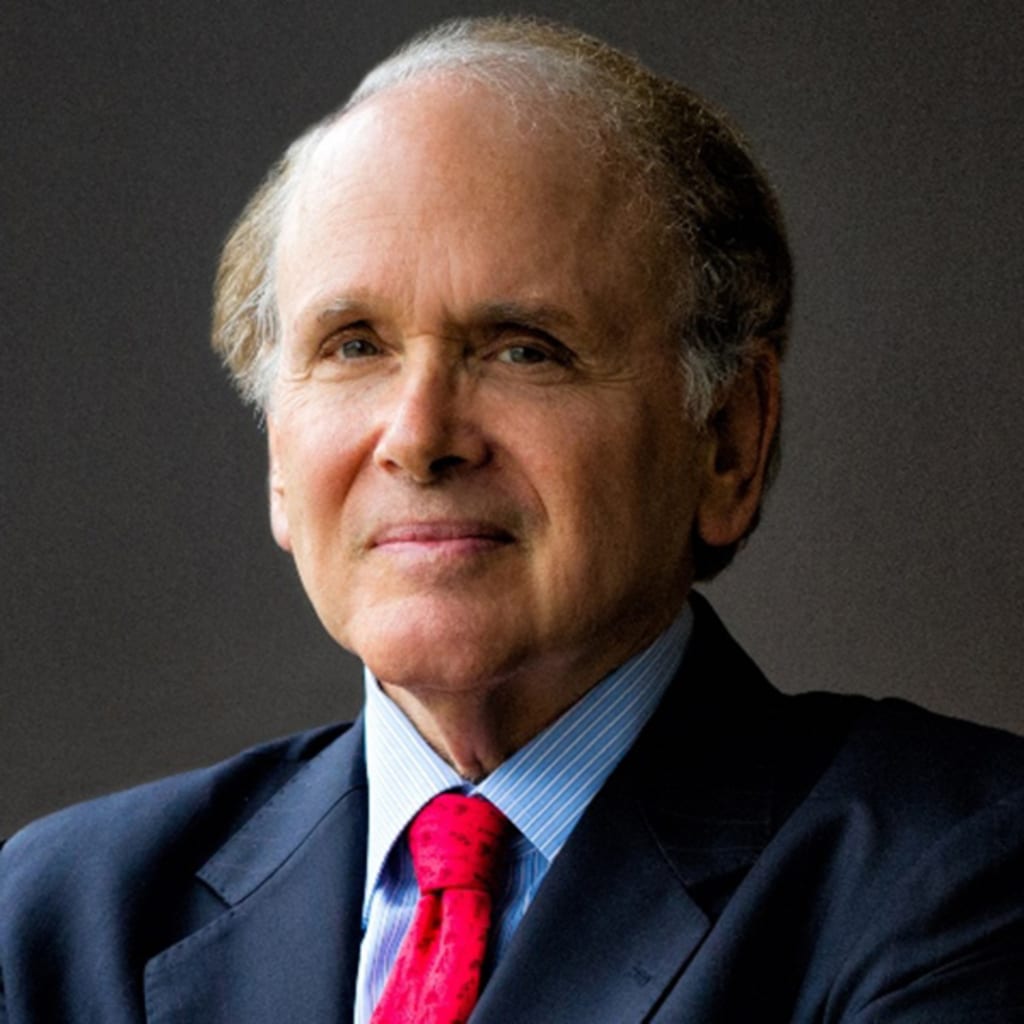 Vice Chairman, S&P Global; CFR Member
- Managing Director and Global Head of Commodity Strategy, RBC Capital Markets; CFR Member
- Managing Director, Head of FX Thematics, Deutsche Bank Research
Presider
 Edward FishmanCFR ExpertSenior Fellow and Director of the Maurice R. Greenberg Center for Geoeconomics, Council on Foreign Relations
Panelists provide an update on the geoeconomic consequences of the Iran war and the crisis in the Strait of Hormuz, including disruptions to oil, gas, and other commodity markets, and the longer-term implications for the petrodollar system and the energy transition.
This meeting is an update of an earlier CFR panel discussion on The Geoeconomic Ripple Effects of the Iran War.
This meeting is presented by the Greenberg Center for Geoeconomics.
FISHMAN: Thank you so much. Good morning, everyone, and welcome to today’s Council on Foreign Relations virtual meeting on “How the Iran War is Remaking the Global Economy.”
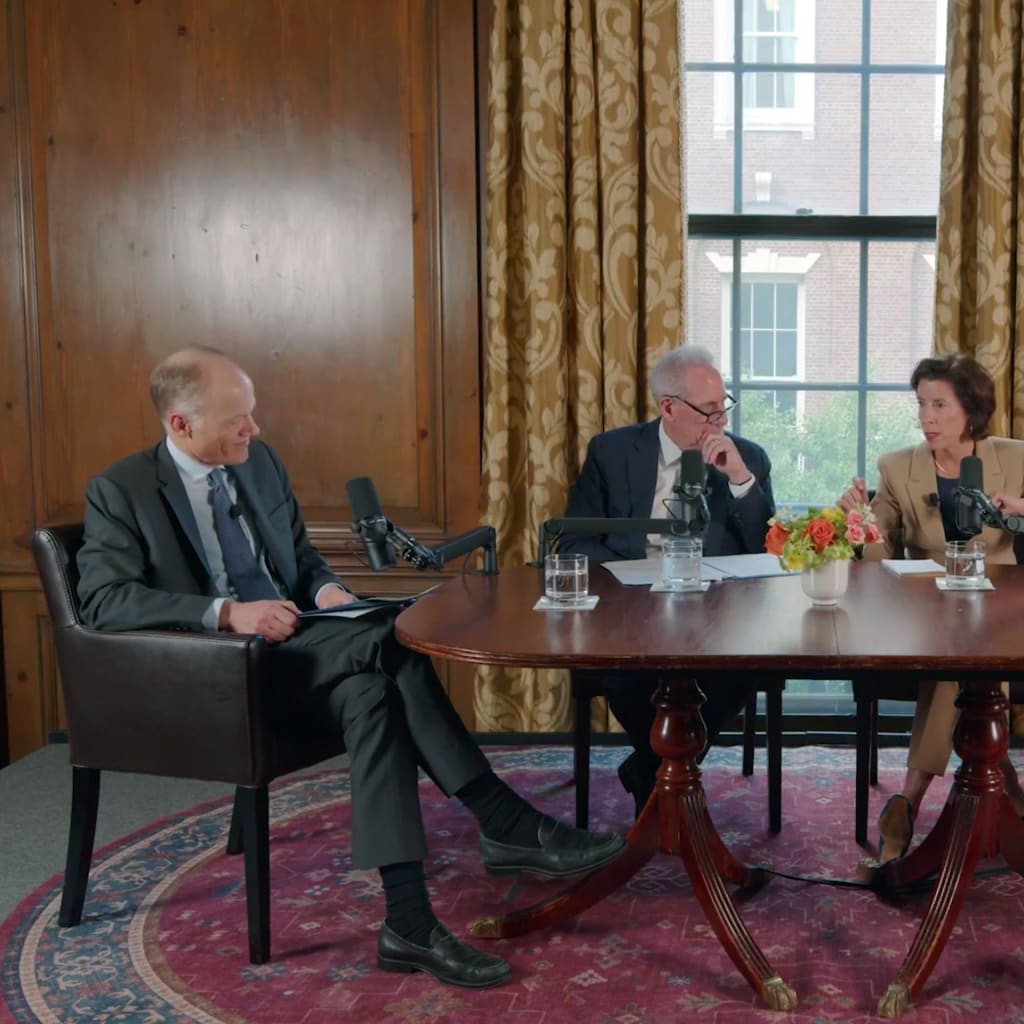
I’m Eddie Fishman. I’m senior fellow and director of the Greenberg Center for Geoeconomics here at the Council. I’ll be moderating today’s conversation.
So our last general meeting on this topic was in the middle of March, just over two weeks into the war. And already at that time the IEA was calling this crisis the largest supply disruption in the history of the global oil market. I suspect many of us would be horrified at that time to hear that two and a half months later the Strait of Hormuz would remain closed and there still would be no end in sight to this crisis. It’s clear that no matter how this war ends, the consequences for global energy markets and the world economy will be profound and far-reaching.
So thankfully we have an exceptional panel today to analyze those consequences.
We have Dan Yergin, who is the Vice Chairman of S&P Global and a longtime CFR member. He’s the author of books including The New Map and The Prize. And he is the foremost historian of the global energy industry.
We also have Helima Croft, who is managing director and global head of commodity strategy at RBC Capital Markets, and she’s also a CFR member. Helima was previously a former CIA analyst and has been one of the most important voices on the oil market throughout this Iran crisis.
And, finally, we have Mallika Sachdeva, who is a managing director and head of foreign exchange thematics at Deutsche Bank Research. And recently she has written some compelling articles about how this war could impact the petrodollar and the dollar system more broadly.
So for the next thirty minutes or so I’m going to moderate a conversation amongst the three panelists. And then I’m going to open it up to Q&A around 9:30. So please get your questions ready, and get—you know, because I know the panelists are eager for some hard-hitting questions in just about a half hour. So, Dan, I’m going to start with you. You know, you’ve written that since the 1979 Islamic Revolution in Iran, the nightmare scenario for the energy market is that a war in the Gulf would cut off the region’s oil supplies from the world and cause a global recession. So has this nightmare scenario arrived? And where do you think we are right now in the arc of the crisis?
YERGIN: Well, in terms of the global recession I will leave that to our other panelists to address, but there’s no question that this is the biggest disruption. And it is the nightmare scenario. It’s not—and the world—the world goes on. It’s lost about fifteen million barrels a day of supply. And I think that, Eddie, one of the big discoveries—I think if this had been February 27, people would have talked about oil and maybe gas, but wouldn’t have thought about aluminum, helium, fertilizer, and all of the other products, and just how integrated the Gulf has become in the world economy.
The recession, well, we’re seeing—on the other side, we’re seeing the enormous expansion of spending on datacenters, which has been—certainly been very positive for the U.S. economy. And I guess we’ll hear from Mallika whether the European economies are going to drift into recession, but as long as this goes on. And maybe just one other thing to say is that I do think that we may well be at a juncture that, because so far between the buffering of inventories and leakage and so forth, we haven’t seen the full impact. But there’s a lot of concern now that inventories are really being run down and the longer this goes on the more pressure there’ll be on the price and on supply.
FISHMAN: Yeah. No, I think in some sense, Dan, many of us have been surprised by the fact that oil prices have not gone higher in the last few months, especially given the fact that, I think we were discussing this earlier, we’ve lost a cumulative 1.2 billion barrels of exports. So, Helima, maybe over to you for a second. Are you surprised that oil prices are not higher than they are today?
CROFT: I mean, given the fact that this disruption is on the order of magnitude so much larger than what we saw with the Russia-Ukraine war—remember, Eddie, we ran up above $128 Brent on the fear that we would lose three million barrels a day of Russian oil exports because of sanctions. That never materialized, but, like, the fact that we now have a disruption—on any given day you could have 12 ½-13 million barrels of crude off the market, even with offset routes through Saudi Arabia or Fujairah in the UAE, like, that is an unprecedented amount of oil that’s not reaching the market.
I think several things account for the fact that we’re not higher in terms of prices. As Dan mentioned, we had a very substantial inventory buffer going into this war. Remember, everybody talked about 2026 being the year of oversupply in the oil market. So we had much more robust shock absorbers starting off this year than we did in 2022. We were in a much lower inventory situation when the Russia-Ukraine war happened. Also, it was at a weak point in terms of demand. It was the shoulder season for refineries. So we did not hit in the peak demand moment. Also, there was an abundant amount of oil on the water that had been sanctioned. And we’ve lifted sanctions and allowed that oil to flow to consumers. So there was more oil available when the war began to blunt the impact.
But also, I think the fact that the White House has been very successful in making a number of market participants believe the war is about to end. And so people have been pricing the end of the war from the start of the war. And we always said duration mattered, but also perception of duration. So I think that accounts in part for why flat prices are lower. The number you look at on the screen I don’t think reflects the real reality in terms of the shortages. But as we go deeper into summer, as Dan mentioned, if we don’t have a resolution by middle or end of summer, then you’re going to be talking about do we have actual shortages of molecules? Are we going to have to start to see industrial operations curtailed because of a lack of supply?
FISHMAN: And how soon—you said end of the summer. Like, when actually would we get to a dangerously low inventory?
CROFT: I think that is the big debate right now. You’ve had a number of very prominent, very sober executives come out in the last couple of weeks saying: We’re going to be hitting an inflection point in several weeks. The question is, like, do we start to see a wall in terms of curtailments, in terms of rationing? We certainly think that if you get to September-October, and you get down to a situation where you only have thirty to forty days of inventory cover, you will start to see—particularly in Europe—you’ll start to see companies having to, like, curtail operations, potentially, because of a lack of energy supplies.
FISHMAN: Yeah. Dan, maybe one other question for you, just because it’s—I think this is a puzzle that a lot of us are working out, you know, trying to figure out exactly what’s happening. I’ve been reading recently that there’s also—China, perhaps, has been significantly reining in its imports. Do you think that’s been a factor in terms of sort of decreasing demand from China? Have they been using their own large reserves to, you know, potentially bring down demand, and thus sort of put a ceiling on prices?
YERGIN: Well, I think Helima will also have a view of this, but it looks like China has reduced its imports by two or three million barrels a day. And they have built up enormous, enormous inventories of oil, as they seem to have built up enormous inventories of many other things as well and have been doing that for a couple of years. So that’s certainly been a factor. And I think elsewhere in Asia you see governments repressing demand, whether by rationing, by telling people to work at home, by saying, well, these consumers will get these supplies, but these consumers will not. So I think that’s a—you know, that’s a factor. And China is such a big factor that that matters. And I don’t know if that matches Helima’s numbers.
FISHMAN: Helima, do you have—you want to—you want to add anything?
CROFT: No, I would just say that China did a lot of risk management going into this conflict. As Dan mentioned, like, they were backing up the truck and, you know, importing the whole host of commodities for strategic reasons. They built out ample storage going into this war. What’s interesting is that they’ve first gone to commercial inventories in terms of drawing down. And they’ve prioritized transport fuels, you know, basically decreased importance of, you know, chemicals. You know, basically saying, like, if we need chemical production, go to coal. So they’ve been managing through this crisis. We’re also watching for when they start really drawing down those, you know, government strategic reserves. Also, you’ve had, you know, refineries, the Shandong refineries in particular, they have continued to import maybe Iranian barrels. So they’ve managed through this crisis because they started off in a better position in terms of inventories. But we will be watching when they start having to draw down from their actual, like, state enterprise—you know, in terms of their inventories.
FISHMAN: Yeah. No, it’s extremely interesting the role that China is playing in this crisis.
So, Mallika, I want to go over to you. I mean, you have written a really fascinating article basically arguing that the war could be a perfect storm for the petrodollar. So can you just walk us through your thesis, and tell us what this crisis specifically—why this crisis specifically could put the dollar’s role at risk?
SACHDEVA: Sure, Eddie. Great to be here. And I think the Middle East is strategically very important to the dollar’s role as the world’s reserve currency. And what I argue in my research is that the long-term legacy of this conflict could be the ways in which it challenges one of the core foundations of dollar dominance, which is the petrodollar.
So if we spend a minute on the basic logic, being a reserve currency is about having the world save in your currency. You know, it gives the U.S. the exorbitant privilege of being able to borrow more cheaply than it otherwise could have. And very simply, the world saves in dollars because it pays for things in dollars. There’s, you know, significant literature by, you know, Gopinath and Stein that the currency that imports are invoiced in is the currency that corporates naturally want to hold. And so it’s what bank liabilities get built in, and it’s what central banks then save in. So there’s this kind of inextricable and two-way relationship between the currency of trade and the currency of reserves.
So if we bring it now back to the conflict in the Middle East, you know, most global trade today is invoiced in dollars. And what I argue is that having oil priced in dollars plays a really crucial role in that. Now, oil is only about, you know, say, 10 percent of the total value of global trade. But what we shouldn’t overlook is the importance of oil to the other 90 percent. You know, oil kind of sits underneath almost everything. You know, it’s not just a source of energy for, you know, manufacturing and, like, fuel for the ships and trucks that move the goods. It’s, you know, feedstock for everything—from plastics, to fertilizers, to clothing. You know, my water bottle, you know, detergent, tires, they’re all made from oil.
So because oil is upstream and universal, the currency that oil is getting priced in matters hugely, in my view, for how the rest of the value chain gets priced. And so the real question is, you know, why is oil priced in dollars? And that’s because of the petrodollar. The petrodollar arrangement can be traced back to 1974, when Saudi Arabia agreed to price oil in dollars and invest those dollar surpluses into U.S. Treasurys in exchange for U.S. security guarantees. So essentially the kind of core basis of the petrodollar regime is security for oil pricing.
And what I basically argue is that the current conflict is testing the U.S. security umbrella over the Gulf. You know, Gulf countries have been—have been targeted in this war. Not just, you know, military bases, but also their oil infrastructure. And crucially, you know, the straits, you know, remains closed. Which is not just about the flow of oil. It is about economic and national security for that region. So I think what it really comes down to is how do perceptions of the U.S. security umbrella for the Gulf change as a result of this conflict? And if they change, that could really test the foundations of the petrodollar system.
The related angle that could destabilize, you know, the petrodollar, is the fact that, you know, these Gulf countries are probably going to need to draw on more of their dollar reserves. You know, whether that’s to build up their own defenses, you know, to repair damaged infrastructure, you know, to deal with the potential scarring on services sectors, to kind of reorient diversification programs. So if Gulf countries need more of their savings, and a lot of those savings are held in dollars, and we talked about how there’s this kind of two-way relationship between reserves and invoicing, arguably you could have both paying for oil in dollars and the stock of savings in dollars at risk from this conflict.
FISHMAN: Wow. Yeah. I know that you—that’s a fascinating and compelling argument. I think we oftentimes debate whether it’s the store of value element of the dollar that is really the core to why it is such an important global currency, or if it’s medium of exchange. But to your point, you know, there is sort of these knock-on effects, because I imagine that if you’re producing, you know, plastics or something, where a significant percentage of your inputs are being priced in dollars, it makes sense then for you to price your goods in dollars, so you can sort of hedge against the price of your inputs.
SACHDEVA: Absolutely.
FISHMAN: Yeah. Well, along those lines, I mean, I think this is a fascinating argument, particularly around the security situation. I mean, one of the sort of core elements of the U.S. role in the Gulf region is providing—or has been, at least for decades—providing freedom of navigation through the Strait of Hormuz. You know, more times than I can count it’s been reported in recent weeks that we’re nearing a peace deal. But it seems like a sticking point, and a reason we haven’t gotten one, is really the issue of the strait. Iran is insisting that it retains control of the strait. That it potentially wants to even charge fees for going through the strait. Whereas the Trump administration has repeatedly said that they need the strait to return to being a free and open waterway with no tolls being charged by anyone, neither Iran nor Oman.
So, Dan, I want to go over to you for a second. Where do you see things landing on the strait? Do you think that Iran is going to retain control of this waterway after the war?
YERGIN: Well, I think you said the Trump administration. I think all the Gulf countries feel the same way, and most other countries in the world feel the same way, that this is an international waterway and should not be turned into an Iranian canal, charging tolls that it would make—in a sense, almost make Iran potentially the regulator of world oil. So I think it’s just—to say it’s unacceptable, you have to underline that it’s unacceptable. And there is also the knock-on effects. What does this do to freedom of seas, in terms of other—if I can borrow a phrase you know, chokepoints, Eddie, in terms of international commerce? In the way Mallika says what’s happening is a challenge to the dollar, Iranian control of the strait is it really a challenge to world trade as we know it. So, you know, this has to be resolved. It’s not acceptable.
Meanwhile, countries will build pipelines and try to reduce this—you know, seek to reduce the significance of—you know, going back to Helima’s numbers, a reason that we don’t—we aren’t missing twenty-one million barrels a day is because the Saudis in the 1980s built a pipeline system that goes to the Red Sea, because the UAE, Abu Dhabi, ADNOC, has built a pipeline that goes around it. And so we’ll certainly see more pipelines. But, I mean, it’s very hard to see how this ends up being acceptable in a very fundamental way for Iran to own the Strait of Hormuz.
FISHMAN: Yeah. I’m with you, Dan. I mean, the idea that Iran could control the world’s most important energy chokepoint seems like a really awful potential consequence here. But, Helima, maybe—you know, putting on your old CIA hat—I’m sorry to sort of take you down memory lane—you know, it’s one thing for things to be unacceptable. It’s another thing for—
CROFT: What are you going to do about it?
FISHMAN: What are you going to do about it? And so I’m sure—
CROFT: A hundred percent.
FISHMAN: Do you see a—like, what is—what are we going to do?
CROFT: I mean, this is what I struggle with, when people keep saying, like, this cannot stand. It’s unacceptable that Iran exercises operational control over the Strait of Hormuz. But who is going to change that dynamic? And, again, like, how does this war end with Iran not exercising control? And from their established—wanting to reestablish a measure of deterrence in the region against future attacks, like, is the Strait of Hormuz now more important than the nuclear program, in terms of, like, their position in the region? And so if we’re saying that Iran cannot be in charge of the Strait of Hormuz, does that mean we need a new government in Iran? Like, what type of deal are we going to strike where they essentially say, you know what? Like, we are vacating this control, right?
And so I struggle to see how it ends right now, unless we are prepared to do some type of regime change operation, unless we’re prepared to go in and physically reopen the strait and take control over the waterway. Are we close to a situation where President Trump has the playbook for wrestling control of the strait away from the regime in Iran? I’m not sure we’re there. So I think we need to think about a variety of scenarios going forward, but I think there is a clear path to Iran keeping some form of operational control.
And what does that mean, to close the Strait of Hormuz? Like, in that type of situation, can you get a full reopening? Certain countries are already willing to pay, you know, the Tehran toll. Will Western shipping companies be prepared to do so? Will they prepare to go through there if there is a, you know, threat of missiles and drones going forward? Like I think the day after scenario is really important. And I struggle right now to see a path—you know, barring a much more deeper military involvement—that Iran is sort of you know, not exercising those operational rights.
YERGIN: So let me add to that. I mean, I think Helima points out there may be a gray zone, where it’s neither fully closed nor fully open. I think the second thing is, going back to your book, Chokepoints, I think the administration has made it clear that it will sanction those who do pay the fees. Thirdly, I did hear from one Gulf country this week saying, you know, you could, with air power, open part of the Gulf that—the strait, that allowed traffic to go through, and sort of laid out an air power to do that. But, of course, people would have to be confident of the staying power of that. But that—I think we’re going to hear more about that next week.
FISHMAN: Yeah. No, Dan, a couple days ago you may have seen that the Treasury Department sanctioned the Persian Gulf Strait Authority, which is this governmental agency that Iran set up to administer the strait. And it occurred to me that we could actually get in this odd situation where Iran says you can’t go through the strait unless you pay a toll, but then nobody—a lot of shipping companies don’t want to pay the toll, because they don’t want to be sanctioned, which could permanently depress flows through the strait, even after some sort of a deal scenario. But, Mallika, I want to go back to you, because it feels like all of this—like how the strait reopens, right, then the sort of whether Iran actually can institutionalize control over the strait could also potentially have an impact on the dollar.
SACHDEVA: Yeah, absolutely. I think how the straits reopens is, in my view, as important as when it does. And, you know, we still don’t know how it’s going to be reopened. You know, to Helima and Dan’s point, is this going to be through some kind of military action, or air power, or, you know, physical force by the U.S.? Is it going to be through a diplomatic breakthrough? And if so, you know, how large and defining a role might China play in that? Or will it ultimately come down to kind of a new economic arrangement, where, you know, a toll or a fee is paid to Iran that then polices the strait. Earlier in the conflict there were reports that, you know, a toll could be demanded in the RMB or in bitcoin. There were also reports that, you know, oil cargos might only be allowed to pass if payments were made in the RMB. And that’s sort of what led us to argue that, you know, this conflict could be remembered not just as a catalyst for erosion in the petrodollar, but, you know, the beginnings of the petroyuan.
So, you know, one can imagine a scenario where oil pricing in the world starts to fracture down different trade routes and corridors. So you can kind of imagine Middle East oil that’s passing through the Straits of Hormuz to Asia. And, you know, 85 percent of that oil that’s leaving the Gulf is going to Asia. You can imagine that, you know, that starts to be priced in yuan, while, you know, the oil that is moving from the U.S. and the Western Hemisphere, that the U.S. may have more influence over, and that’s being sold, you know, across the Atlantic and across the Pacific to U.S. allies, you know, that remains priced in dollars. And, again, there’s excellent kind of, you know, academic literature that shows that, you know, geopolitical alignment is becoming a driver of trade invoicing decisions.
So I think, you know, if there’s a toll that is being paid in a non-dollar currency, and that toll is a substitute for U.S. military action to reopen the strait, then that is a challenge to the U.S. security umbrella. And it could be kind of—you know, the straits could be the sort of birthplace of differentiated pricing for oil. It’s not going to be, like, a full-fledged transition away from the dollar, necessarily, but a world in which maybe we end up with, like, a mix of currencies and invoicing, and therefore, like, a multipolarity of currencies and reserves. And essentially, currency power becomes more distributed and less concentrated in the dollar than it is today.
FISHMAN: Yeah. I mean, it’s clear that how—you know, the way that the strait opens has pretty far-reaching consequences, potentially even for the global currency order. Helima, Dan mentioned a few minutes ago that we could also see substantially new infrastructure being built in the Gulf to try to circumvent the strait. I think this is something that we see as a broader phenomenon, that when chokepoints are weaponized other countries take steps to try to insulate themselves from that chokepoint. I’m curious, how long do you think it actually would take for there to be substantially more routes around the Strait of Hormuz? And how expensive actually would it be?
CROFT: I mean, I think this is going to be the big infrastructure story coming out of this war. I mean, obviously Saudi’s had the most success with the East-West pipeline. I mean, that has been the key reason why we’re not in a greater crisis when it comes to oil prices. They’ve been able to run about seven million barrels a day through this pipeline, five million-plus barrels of exports through their Red Sea port of Yanbu. But that’s also conditional on the fact that we don’t have active conflict in the Red Sea anymore. So I think that’s really important to say. It was the infrastructure investment, but also the derisking of that Red Sea chokepoint as well. But it’s worth bearing in mind that flows through the Red Sea—even with the U.S. doing the deal with the Houthis a year ago, even with the Saudis doing the deal with the Houthis—Red Sea flows are still, on any given day, 50 percent below the pre-crisis level. So could we actually normalize at something that looks like the Red Sea when this war ends?
But I think that the question about—you know, the UAE has another pipeline that they are running to Fujairah, which sits outside that S curve. That’s about 50 percent complete. But, again, Fujairah hasn’t been entirely immune from Iranian attacks either. So I think with derisking infrastructure, it also is contingent on other security situations remaining stable. We will be watching, obviously, you know, what does Iraq do at this point? I mean, is there an effort to expand the use of the ITP Pipeline, for example? Because Iraq is in a very, very perilous situation in terms of their exports being blocked in, not having abundant exit routes. But Iraq is a difficult investment environment going forward.
We will be looking at what happens with Kuwait. We had April with no Kuwaiti exports. So I think there’ll be a huge push for that country to try to think about alternative routes. There will be a, you know, all hands on deck, but it won’t be immediate. But I do think we are probably looking at a situation where February 27, 2026, was peak Hormuz; I mean, I think the high point we will ever see for flows going through the Strait of Hormuz. But beyond pipelines, the other thing I think, for infrastructure, I think there’ll be more investment in building out storage capabilities closer to actual customers as well.
YERGIN: If I can add—if I can add one thing, going back to both those points and Mallika’s point. I mean, the U.S. obviously really doesn’t import anything from the Gulf. China does. About half of China’s total imports, and China’s the largest importer. So reflecting on her remarks, you do wonder about how China will exercise its power as a buyer to change what Mallika talked, of trade invoicing. Which we realized it sounds very clerical, but obviously takes on geopolitical meaning.
FISHMAN: Yeah. So, Dan, actually, you know, a couple of years ago you wrote this fantastic book, The New Map, about how, you know, the shale revolution and clean energy technologies and geopolitical shifts are really changing the whole energy landscape. I want to focus on one of those, which is clean energy. Because if you look at the data in recent months, it looks like the Chinese are making a huge amount of money selling solar panels, and electric vehicles, and batteries, and just demand for these clean energy technologies is through the roof. I mean, how do you see this war reshaping the energy system? Do you think it could accelerate adoption of alternatives?
YERGIN: Well, I think certainly, you know, in terms of electricity for Asia and Southeast Asia, do you go back to coal? Do you go to solar panels? I mean, what do you do? Because, of course, we’re talking about oil, but gas has been disrupted too. Ninety percent of the LNG exports have gone to Asia. You know, and I think the other big boost is electric cars, which then gets into all trade wars and so forth. But last year, about 23 million, I think, is the number, of EVs were sold in the world, compared to a sixteen or seventeen million barrel a day U.S. new car market. And so I think that’s—you know, I think that accelerates. And it comes at a time when the Chinese have an incredible export drive to push their EVs out into the world. So, you know, as long as you have somewhere to charge it, I think this—it will affect consumers. So I think that is really the biggest impact.
FISHMAN: Yeah. No. And so I have about maybe one or two more questions. So everyone in the audience, get your own questions ready. But, I mean, I have one for Mallika, and then sort of a lightning round for Helima and Dan. So Mallika, if this is correct, and we do get sort of additional adoption of electric vehicles and maybe even coal—you have just basically more domestic uses, sort of domestic sourcing for energy, whether it’s clean or dirty—(laughs)—what does that mean?
YERGIN: Well, don’t use—just don’t put value judgments on it. (Laughs.)
FISHMAN: OK.
YERGIN: I mean, China produces a lot of stuff with coal. Remember, 60 percent of their electricity.
SACHDEVA: I mean, I think, yeah, very much, you know, to Dan’s point, this crisis has been a very different shock for Asia than it has been for other parts of the world, right? It’s not just been a price shock for Asia. It’s been an access shock. There’s been this kind of risk that oil never arrives at the port at all. And I do think countries will wonder, do I really want to keep doing things as I’ve been doing them? Most of the oil that is used around the world, you know, it travels on a ship to get to where it’s used. You know, 70 percent of all the consumed oil is traded. That compares to, I think, 25 percent for gas, less than 20 percent for coal, and, naturally, zero percent for solar and wind.
And so in a world where, you know, free navigation has been brought into question, you know, where you have to worry about geopolitical chokepoints for your energy, I think there’s a question of do you really want to be dependent on trade to get your energy? And I think, you know, to your point, Dan and Eddie, I think Asia and the Global South will look for ways to secure more of their energy domestically. You know, for renewable energy, the sun shines everywhere, the wind blows everywhere. It is a way of bringing energy security home. And, you know, China stands to benefit tremendously from it, because it has built the entire industrial base, you know, for green energy. Eighty percent of the world’s solar panels, and wind turbines, and lithium batteries are kind of made in China.
If I can bring this back to the dollar for a second, I think it does matter a lot for the dollar. Because, again, if we go back in history, the rise of the dollar’s role as the world’s global currency, you know, the rise of the dollar in global reserves happened in the 1990s as a sort of direct function of globalization. So it’s world trade that means we use the dollar for cross-border payments and countries, you know, around the world save in it. The dollar derives its power from globalization. Now if countries are going to be deglobalizing energy trade and potentially drawing on their dollar savings to make that energy transition, then that has to be relevant for the dollar. You know, bringing energy home means trading less in energy, which means less dollars moving around the world, even independent of kind of how those—you know, those oil flows are being priced.
FISHMAN: All right. So here’s the quick lightning round. I want to sort of one sentence answer from each of you, and then we’re going to open it up. Because the title of this session is, How the Iran War is Remaking the Global Economy. So, I’m going to challenge you to zoom out and to sort of summarize in a sentence or two what you think a decade from now the biggest long-term ramification of the Iran war will be for the global economy. So, Mallika, I’ll go to you, and then Helima, and then Dan.
SACHDEVA: Yeah. I think this conflict will be remembered as beginning the process of eroding petrodollar dominance and the beginnings of the petroyuan.
FISHMAN: Helima.
CROFT: I think the infrastructure play is going to be, you know, really important in terms of, as I said, peak Hormuz.
FISHMAN: And Dan.
YERGIN: Further electrification and increased emphasis on energy security, and that security comes from diversification. I think there’ll be—governments will have more of a focus on energy security and not allow it to fall off the table, as it did during COVID.
FISHMAN: Got it. Thank you so much. That’s exactly what I was hoping for.
So I’m going to now hand it over to Liz and Talia to take questions from the audience.
OPERATOR: Great. We’ll take our first question from Theodore Roosevelt IV.
Q: Good morning and thank you for such a great presentation.
One thing you’ve all suggested is that the options for the Trump administration to open the straits are severely limited. And clearly, we see that decapitation did not result in regime change. If anything, it strengthened the current regime there. So we traded a blockade for bombs. I wonder whether the administration is beginning to sort of think that that should be the status quo for a while, keep the blockade in place, and hope that within some, however you define it, reasonable period of time, that results in enough unrest in Iran so that you do have regime trade that would—regime change, so you could have successful negotiations.
And I wonder whether the administration would be smart enough to link that with a ratification of the United Nations Convention Law of the Seas, which would neutralize the Iranian assertion that anybody that’s not a signatory to that can’t pass through the Strait of Hormuz. And if the administration did that, it would have, arguably, significantly greater diplomatic leverage. But we haven’t seen in the past their ability to use that leverage effectively. But 169 nations have ratified the U.N. convention.
FISHMAN: Ted, OK, we should get to the question.
Q: That’s my question. My question is, you know, can you—can you see an extension? The question is, do you see the administration’s position now is an extension of the status quo?
FISHMAN: Helima.
CROFT: So I think the fact that we do not have this sort of breakout in oil prices, we’re not talking about $130 or $150 oil, which many people would have said if you are three months into a war with this much oil off the market we should, at a minimum take out the Russia-Ukraine highs. The fact that flat prices have been contained, I think the administration is not feeling the urgency necessarily to, like, meet Iran’s terms. And so I think they are—they’ve signaled, at times, a willingness to, like, let the blockade do the damage. Essentially, let enough economic pain, you know, happen in Iran that the regime essentially says, fine, we will cave.
The problem is—with the wait-out strategy for the White House—is the damage is being done in terms of inventories. Like, I talk about this as, like, iceberg under the water. So you may not see, you know, immediately on the horizon the actual, like, economic challenges that will be coming, because you look at the flat price and you say, OK, we can—we can muddle through this, and Iran will come to terms eventually. But if we get in a situation where we have the strait effectively closed, or the strait status quo, and we’re sitting in September or October, then you’re going to be looking at, I think, industrial shortages of feedstocks. Then you will be talking about a much more severe economic crisis.
Now, you could see that happening—we already see it in parts of Asia, but you will see that migrating to Europe. And so the question is, what is the pain threshold of the White House in terms of broader economic impacts of this war with actual physical shortages, willingness to sort of see this through?
YERGIN: Can I just to add one quick thing? We had $100 oil before in 2008. And if you put that into current dollars, that was $161. So that point is that it’s—as Helima says, we’re not at that real pain point.
SACHDEVA: I might jump in with, kind of, the observation that obviously what makes the status quo a bit more sustainable for the U.S. is that the U.S. is not dependent on global oil in the ways that it used to be. And so it comes down to how much pressure can U.S. allies bring to bear? Because there’s a lot of U.S. allies, whether that’s in North Asia or in the Gulf, you know, that are struggling with the fact that the conflict is ongoing. And how much pressure can they bring to bear on the U.S. to do something to bring this conflict to a close faster?
FISHMAN All right. So we have a lot of questions, so I think we should go to the next one.
OPERATOR: Yeah. So we’ll take our next question from Lindsay Iversen.
Q: Hi. Thank you so much for a terrific conversation. I’m Lindsay Iversen with the Climate Initiative here at CFR.
I wanted to come back to this question of the clean energy transition. I think there’s been a lot of attention paid to these sort of, like, near-term statistics about increases in purchases of Chinese solar panels, or EVs, or whatever. But it’s—sort of to Helima’s slightly different point, this is really an infrastructure question, right? If we’re talking about how countries are rethinking their strategic positions in energy, that the right metric isn’t purchases of EVs this month. It’s what policies are they putting in place to reshape incentives in their energy systems for the next decade, or more? So are we starting to see countries make changes like that? And if not, what are the sort of policy changes or positional changes that you would be looking for that would indicate that countries were taking a meaningful turn toward clean energy in response to this crisis?
YERGIN: Well, I think you have to go back to the fact that the consensus around a quick energy transition had really eroded over—ever since we’ve come out of COVID. And I think the European countries, particularly struggling with competitiveness with increased defense spending, are not in an easy spot to kind of increase the kind of subsidies and incentives and regulatory pressures they put on to move to renewable energy. But I think this does—you know, it just makes it a tougher position all around for these governments that are already on the defensive and have the rise of right-wing parties that, you know, oppose energy transition policies.
SACHDEVA: I might add that I think there’s also a question of where should we be looking for this transition. I mean, are we looking in the U.S. and Europe? Are we looking in Japan, which has, you know, turned on nuclear power earlier in the year? I would argue that, you know, we should really be focusing on countries in the Global South, and which are going to have incrementally the greatest marginal energy needs. And it makes a lot of sense for them to look to renewables to fulfill that. Renewables are already much cheaper on many metrics. They’re more secure. And many of these countries are, you know, geopolitically and trade-wise, more aligned with China already, and kind of happy to be integrated into, you know, Chinese supply chain dominance in the green sector space. So I do think it’s the Global South that will be crucial to watch.
FISHMAN: All right. Let’s go to the next question.
OPERATOR: Let’s take our next question from James Galbraith.
Q: Thanks very much. And I will ask a very brief question for the panel. Whether any of the four—of the three of you have seen any evidence that Iran will crumble before the United States and the world economy? Thank you very much.
FISHMAN: Helima, do you want to—you want to start?
CROFT: I mean, certainly, I think, the double blockade has, you know, upped the economic pain for Iran. The question is, were they—are they able to offset it to any extent by the fact that we do know, you know, some ships are moving through the Iran channel. There are reports that there is, call it the Hong Kong hotline, where you know they’re securing passage through bitcoin payments. Certainly, Eddie, I’d love to hear your thoughts on this, the fact that we did un-sanction, you know, Iranian—the floating, you know, barrels for export. Like, have they been able to get enough revenue that they have, you know, enough runway to see this through in terms of causing enough pain that the U.S. changes its calculus? And I think the great debate over who has more runway right now.
And do I see a scenario—and President Trump is out today saying, well, this could go to Labor Day. If this goes to Labor Day, or if the U.S. has the willingness to see this going to Labor Day, I do think we’re going to be talking about, obviously, significant economic pain in key parts of the world. And, again, I keep coming back to this issue of, like, actual, like, physical shortage of molecules. Like, what happens when we run our inventories down globally to such levels that you have to think about, like, who gets the molecules? So I think we don’t have ample runway to avoid that type of situation. The question is, like, you know, do we see the type of protests reemerging in Iran that we saw in December, in January? No indication yet that we have a mass revival of those type of demonstrations. So does the regime in Iran believe that they have some time on their side?
YERGIN: I guess the question is that we don’t know, just Helima addresses it, just what the full impact of an extended blockade on Iran does to their economy. And only time will tell us that.
FISHMAN: Yeah. Maybe the one other thing I would add is, look, I think the blockade—the U.S. blockade certainly gives the Iranians a greater incentive to negotiate than they had before the blockade was enforced. So I think it was a good move by the Trump administration to do it. At the same time, I think the idea that this would cause capitulation is, I think, pretty unfounded. The track record of economic pressure leading to sort of capitulation is effectively zero. If you look at Venezuela in the late 2010s, I think their economy contracted by 75 or 80 percent. And, you know, Maduro stubbornly held on to power.
And even Iran, if you go back to March of 2020, they were down to oil exports of around 100(,000) or 200,000 barrels a day. So at much, much lower—you know, negative oil prices for a while. So Iran’s economy is definitely hurting, but the idea that this is then going to cause the Iranian regime to come to the table and give the Trump administration everything it wants I think is just not likely. And I would agree with what Helima said earlier, that if your real goal is to establish the strait—re-establish the Strait of Hormuz to the status quo ante, probably the only way to accomplish that is through regime change. Which would require a much broader military engagement than I think the United States is prepared for right now. But, anyway, I will go to the next question.
OPERATOR: We will take our next question from Jim Tisch.
Q: So the blockade that we currently have can change tomorrow. It’s a short term—it can be a short-term item. Of longer-term impact could be missiles. Well placed missiles on petroleum facilities, gas facilities, as we’ve seen, where it could take five to ten years to repair the damage and restore the volumes of energy coming out of the Gulf. So could you talk a bit about the risk that is involved in countries relying on the Gulf for their energy needs, in light of the ability of Iran or anyone else destroying petroleum facilities in the Gulf?
FISHMAN: Helima.
CROFT: I mean, I think this is some of the reticence behind President Trump’s, you know, to get fully back engaged militarily with Iran, is that Iran seemingly retains enough missile capabilities and drone capabilities to still hit Gulf infrastructure. And we really got a warning shot in 2019. And I think about the security for dollar, you know, that deal. I mean, initial test was in 2019, when we had the Iranians do that attack on Abqaiq, the world’s largest oil processing facility in Saudi Arabia, and temporarily took off half of Saudi’s production. And then we kind of said, well, we don’t really have a Carter document in place anymore, and so that’s not our responsibility to go defend these sites.
I do think that is a clear risk in a military escalation situation if we were to decide, OK, like, we’re going to go in and we’re going to hit Kharg Island facilities. The risk is that Iran would retaliate on neighboring states in terms of infrastructure. So I think that is just a challenge for the White House when they think about the sort of decision tree, is if you do escalate militarily what does Iran have left in its arsenal in terms of its ability to inflict more damage on regional energy flows and supplies?
FISHMAN: Dan?
YERGIN: No, no. I think you’ve said it. I mean, it’s tit for tat.
FISHMAN: All right. Well, thank you for that. We’ll go to the next question.
OPERATOR: We will take our next question from Mark Finley. Please remember to state your affiliation. Mr. Finley, please accept the unmute now prompt. We seem to be experiencing technical difficulties. We’ll take our next question from David Goldwyn.
Q: Hi. It’s David Goldwyn, Goldwyn Global Strategies.
My question is about Qatar. What does the future hold for Qatar, which obviously doesn’t have a bypass option? Does the North Field expand? And how do you rate the prospects that Qatar capitulates to Iran and strikes a deal, and essentially dares the U.S. to blockade Qatari exports?
CROFT: Dan.
YERGIN: No, Helima, you take—
CROFT: Dan.
FISHMAN: I love this. You guys are just—you know, you’re cold calling each other.
CROFT: And, by the way, I love the fact that you have people calling in, like David Goldwyn, with so much expertise. And I would have loved Mark Finley’s question as well. But I think this is going to be the really interesting challenge. Again, we talk about countries that have bypass routes, and maybe they have a different calculus. And then countries that don’t have any easy alternatives in terms of alternative routes.
And the question is, if we talk about an end state where Iran has some operational control—maybe they don’t call it a toll booth, maybe they call it a permit, essentially the Iran E-Z Pass to go through. And they say it’s for environmental reasons. Will there be certain countries in the region that just say, like, that is a cost of doing business. Like, I need to use this route and, call it the E-Z Pass, call it, you know, the Iran version of the Bosphorus pass—but, like, I’m willing to pay that price. And so I do think you’re going to have differing strategies coming out of this from different Gulf states, depending on available access routes.
FISHMAN: Yeah. And, look, this is not specifically about Qatar, but I would refer everyone to the interesting Financial Times piece yesterday, when an owner of a Greek shipping company said: I’m ready to pay the toll, if that means—if that allows us to get through the strait.
YERGIN: That’s sort of—it’s throwing down the gauntlet in front of the U.S. Treasury to do that.
CROFT: Right?
FISHMAN: You’re going to set up a real—a real game of chicken that’ll be quite interesting to see how it plays out. Did anyone else want to add anything on Qatar, and maybe on LNG? I know Ras Laffan has taken quite a—quite a significant beating.
CROFT: Right? I just think, Eddie, when we think about, like, how we come out of this as well, we’ve talked about alternative routes and the infrastructure play. What we haven’t talked about is how long it’s going to take countries to even be able to restore production. And we know—I mean, Fatih Birol said, you know, in April that the IEA was calculating 80 facilities were damaged, and two-thirds were damaged in such a way that, like,, it could take, you know, years to come back. And so the question is, we don’t know what the subsurface damage is as well. All we know is what we can see visually on satellite.
And I think that, beyond how the strait reopens and who’s in charge, I think we’re going to have varying restart times because there has been, you know, very significant damage to Gulf facilities. And I would look to, you know, I think Iraq is going to be having a much more challenging restart process. You know, we are deeply concerned about the attacks that have happened in Kuwait and its facilities. So I do think it’s going to be a varied restart time based on, like, damage and, like, you know, existing infrastructure challenges in these countries.
YERGIN: And it’s—you know, in some countries I think the production will come back very quickly. In others, part of it will come back quickly and part won’t. We did at S&P—just tried to do a bottom-up analysis of how long—if you had restart tomorrow, how long? And basically, about six months, end of the year, to get back to 80 percent of where the world was—where they were before the crisis. And the other 20 percent would sort of trickle out.
FISHMAN: All right. Let’s go to the next question.
OPERATOR: We will take our next question from Lindsay Newman. Please remember to state your affiliation. Looks like she’s experiencing technical difficulties. We’ll take our next question from Sarah Leah Whitson.
Q: Hi, there. Thanks for all of this.
I wonder if all of you could help us understand the impact of the war on Iran—of which, you know, the crisis over Hormuz is only a sort of collateral outcome—on ordinary people around the world. I have been shocked to read some of the impacts that have been reported by farmers in Sri Lanka, and so on and so forth. And in terms of delinking the pricing of oil and pricing generally to the dollar, doesn’t sort of the move in that direction predate the Hormuz? And, you know, I think that countries have tried to find a workaround to the broader global U.S. sanctions regime more broadly, including the sanctions—(inaudible).
YERGIN: You know, on the second part of that question, that’s probably for Edward Fishman to answer, since he wrote the book on that very subject. But on the first part, you’re quite right. I mean, there is—it’s, like, divided into three parts. There’s Asia and the Global South. There’s Europe, which is really looking at a tough time in terms of jet fuel. And then there’s the U.S., which is, you know, exporting. But, you know, I was thinking in the discussion before, is a little over a decade—or, maybe exactly a decade ago when Prime Minister Modi launched the plan to get LPG to farmers so that they wouldn’t have to burn wood and waste. Their LPG comes from the Gulf. And now it’s been very strained and people are going back to, quote, “natural fuels,” I think. And the prime minister has asked people to avoid international travel and to be frugal. So it’s—and I think your point about fertilizer is something that really was not—I don’t—was hardly on anybody’s mental map on February 27, but, as you say, is very significant. Also diesel fuel is very significant for agriculture.
CROFT: I would just follow up on that, Dan. I mean, I think it’s such an important point that you raised, Sarah. And I would look to a country like Brazil as well. There’s been a lot of concern about what 2027 could mean for Brazil. They got through 2026 planting season, but there are deep concerns about what the fertilizer shortage will mean for Brazil’s planting season, and what does that mean for the currency in Brazil? What does it mean for food security? So we focus so much on the energy story, but I think the fertilizer story is something to be very concerned about when we think about the next planting season.
FISHMAN: Mallika, do you want to weigh in on the—
SACHDEVA: Yeah, I would—yeah, sure. I mean, I think, you know, in my role I spend time looking at markets, and asset markets, and currencies, and oil prices. And I think it’s a really nice question, Sarah, to kind of bring this back to the human side of everything, right? I mean, I think a lot of the wealthier countries in the world have the reserves, whether that’s, you know, SPR or inventory, to tide themselves over in this time of crisis. They might have the economic and the fiscal space to subsidize, you know, oil prices for the average consumer. They may not be seeing the real impact of this conflict. But, yes, in many parts of the Global South and in South Asia you do have questions around food security. You have questions around, you know, whether migrant workers have the cooking gas to be able to stay on in the cities. And so there is definitely a human side to this war that sometimes goes—it gets overlooked. And, you know, thank you for bringing the attention back to that.
YERGIN: All right. Well, we only have four more minutes, so we should probably go to the next question.
OPERATOR: We’ll take our next question from Mark Finley.
Q: All right. Trying again. Thank you all for a great conversation.
We talked earlier about the administration’s ability to manage expectations about the duration of this, but there have been a lot of other conversations about how the administration is engaged in managing prices. I mean, clearly timing announcements around the markets opening and closing, you know, allegations about insider trading. And I’m just wondering, what lessons does this experience of how the government has engaged with, you know, managing prices more broadly—what lessons do governments and companies take away from this? And what does it mean for the reliability of price signals going forward? Thank you.
YERGIN: I think that’s a question for the people who are in the markets, my co-panelists.
CROFT: I mean, I would just say that there is a question about the futures market now. Is it a broken barometer for assessing risk in the system? And I think that the fact that you have so many headlines coming out saying, you know, an MOU within hours—like, I thought it was so striking, Mark, on the day you had Dr. Sultan Al Jaber, the ADNOC CEO, say in a public interview that it was going to take—you know, he had four months to get 80 percent back, but, you know, it would—you know, then you had a massive report of a—EIA report of a, you know, nine million barrel, you know, crude drop. And yet, on that same day, you had the markets sharply down because you had an anonymous Pakistani source on a wire service say that we were going to have an MOU within hours. And that was two weeks ago.
That you keep having the sort of selling pressure on these headlines. And I think what it means is that a lot of, you know, commodity traders who are real, you know, physical specialists, say, I’m not going to—even though I think there’s a fundamental case for higher oil prices, I’m not going to get involved in this market right now. I’m going to stay on the sidelines because I could be wiped out by a headline. And so I do think there are sort of interesting conversations about what does it mean to have the kind of futures market kind of upended like this in terms of price discovery, but I think there’s a risk now that you’re not seeing demand come down fast enough. We’ve talked about demand destruction, but it’s not been fast enough to meet the fall in supply. And that’s why I keep saying, like, we’re kicking this can down the road in terms of when the real breakpoint comes. The breakpoint may just come when you hit physical shortage.
YERGIN: Right? I think I’d like to just add, we talk about demand destruction as though it’s permanent. I like to—the term I’ve started to use is demand repression, because some part of that demand will certainly come back. And need to just keep that in mind. But I think it is quite striking what you just described, Helima.
SACHDEVA: I think, from a—from a markets perspective, I mean, some of the conversations that we’re now having with clients, you know, in the FX and fixed income space is really around how the need to build defense and energy security as a result of this crisis could change currency flows. You know, Asia, Europe, the Middle East, they have a lot of foreign assets held in dollars that they may need to draw upon to fund expenditure. They may also be issuing more debt. So the stock of safe assets around the world, you know, will grow. We are going to have more issuance in Europe, potentially more issuance, you know, in Japan and Korea, if these countries are not only being encouraged to spend more on their own defense, but potentially also on their own energy. So that’s, I think, going to change how investors think about the stock of assets around the world.
YERGIN: Yeah. And I guess—I guess just one final takeaway from that remark is, more global spending on defense is in the cards for the years ahead. And that was already in motion starting on February 24, 2022, with the invasion in Europe, but now much more.
FISHMAN: All right. Well, look, we are now at time. I think this has definitely been extremely successful by the metric that we still have a lot of questions that, unfortunately, we didn’t get a chance to get to. But that means we’ll just have to get back together again sometime in the coming months. But, Dan, Helima, Mallika, thank you so much for sharing your insights with us today.
YERGIN: Thank you.
CROFT: Thank you.
SACHDEVA: Thank you. Great to be here.
(END)
This is an uncorrected transcript.