Exporting Authoritarianism
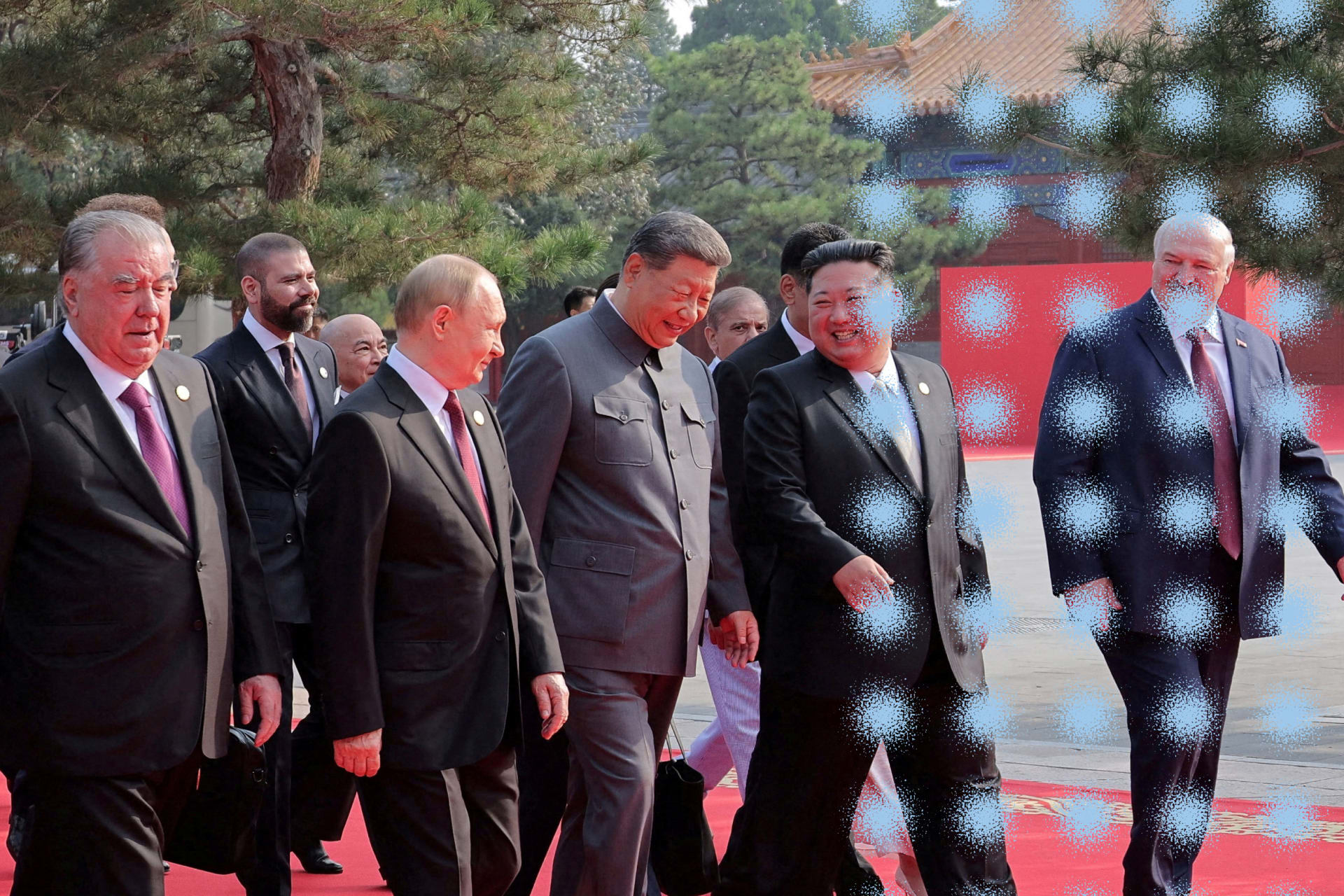
China is undertaking massive infrastructure projects across the world and loaning billions of dollars to developing nations. On paper, the objective is to build a vast trade network, but is China also exporting authoritarianism?

Published
Host
 Director, Podcasting
Show Notes
In recent decades, China has captivated the world with its ambitious foreign policy. A major part of this story is China’s Belt and Road Initiative, a massive infrastructure and trade project that has poured billions of dollars into developing nations. But some scholars say that China is also seeking to export its authoritarian model of government and erode global democratic norms. With so much at stake, how will the world choose to view China’s motives?
From CFR
“Yes, Virginia, China Is Exporting Its Model,” Elizabeth C. Economy
“China’s Massive Belt and Road Initiative,” Andrew Chatzky and James McBride
“What the COVID-19 Pandemic May Mean for China’s Belt and Road Initiative,” Mira Rapp-Hooper, Kirk Lancaster, and Michael Rubin
Read More
“A World Safe for Autocracy?” Foreign Affairs
“In Nigeria, Chinese Investment Comes With a Downside,” New York Times
“Made in China, Exported to the World: The Surveillance State,” New York Times
Watch or Listen
“Who wins and who loses? Jamaica on China’s Belt and Road Initiative,” CBC News: The National
Transcript
Elizabeth ECONOMY: I will relate that interesting story, the president of Kazakhstan, actually visited a company called Hikvision. It’s another one that provides surveillance technology. He visited their office in China. And he saw how with one click on a person’s face, you could get that person’s school history, work history, financial situation -
Gabrielle SIERRA: Wow.
ECONOMY: And, wait for it, how did this person spend his or her leisure time. So, where did this person go to have fun? Did you go to the movies? Did you stop by the bank? Did you go to the post office? Were you hanging out with friends? Did you participate in a protest? And his reaction after seeing all of this was, “we need this technology.”
SIERRA: Oh. That’s not where I thought the story was going.
This is probably not the first time you’re hearing about China’s surveillance technology.
And that’s because it gets a lot of coverage. It’s like a Black-Mirror episode, it gives us visions of a dystopian future.
But this technology, and the eagerness of some countries to begin implementing it, is only a small part of a much bigger story about China.
Through its Belt and Road initiative, China is in the process of building and funding infrastructure projects across the globe, and loaning vast sums of money in the developing world. Some observers argue that as it does this, China is also exporting its authoritarian model of government, and eroding democratic norms that many of us take for granted. Others say that China is simply taking business opportunities where it sees them, and providing countries with an alternative to a global order that has gone unchallenged for decades.
The debate comes down to one question - how will we choose to view China as they pour money into hospitals, ports, and roads around the world?
I’m Gabrielle Sierra and this is Why It Matters. Today, is China exporting authoritarianism?
ECONOMY: I think the most important thing to understand about China’s foreign policy over the past 10 years or so is that it really has been transformed.
This is Elizabeth Economy. She is a senior fellow and director for Asia studies here at the Council. She is also a distinguished visiting fellow at Stanford University’s Hoover Institution.
ECONOMY: You know, beginning in about 2008, with the global financial crisis, China’s, you know, hosting the Olympics. These are really moments that defined in the minds of many Chinese leaders that China was rising.
Douglas Paal: 0:30 - 0:40 The Chinese have many goals for these Olympics one of them was to announce to the world that China is back after 200 bad years.
DW News: 1:41 - 1:45 China’s economy has grown faster than that of any other major country... The Asian giant has now grown into one of the most important export markets for manufacturers from all over the world.
Mark Schwartz: 0:37 - 0:45 This is a period of historic change in China. There haven’t been many periods in history as fascinating as this.
ECONOMY: So there was a real sense within China for the first time that they had always expected that at some point, China was going to surpass the United States. But maybe that time was coming sooner than they had anticipated. But what really has changed the game, on the ground has been Xi Jinping. Everything for Xi Jinping is under the sort of mantra of the great rejuvenation of the Chinese nation. And it is a call for reclaiming a much greater degree of centrality for China on the global stage.
Xi Jinping became China’s president in 2013. Some observers have called him the most powerful Chinese leader since Mao Zedong.
ECONOMY: Look, I think there are any number of objectives, and we can find them all in Xi Jinping’s writings and speeches. But fundamentally, what I think Xi Jinping is attempting to do, is simply to make the world safe for authoritarianism.
Jessica CHEN WEISS: Xi Jinping is a dictator, but dictators still have to answer to domestic constituents.
This is Jessica Chen Weiss. Associate Professor of Government at Cornell, and a leading expert on Chinese politics. She has a different take on China’s expansion, one that sees it as being less offensive and more defensive.
WEISS: China is concerned about a whole lot of different risks. Some of them domestic and others, ones that sort of emanate from abroad and you know, sparks that might, you know, start the prairie fire and bring down the Chinese government. And my take is that, you know, it’s overriding purpose is to continue to make a world safe for the Chinese Communist Party to survive at home. So this is a world that’s safe for autocracy to coexist alongside democracy in the international space. So it’s not been as ideological I think in its foreign policy as some have made it out to be.
SIERRA: So China is trying to find a way to sort of fit in with a world that might not be comfortable with its model of government?
WEISS: Yeah. It’s tried to make space for its form of government to be regarded as one that can continue to exist that is legitimate. That democracy isn’t the only form of government, so to speak. And so this has made it easier for other authoritarian states to survive.
Whether offensive or defensive, evidence of China’s expansion can be read about every day in the news. And if China is exporting authoritarianism then a big part of how they’re doing it is through something called the Belt and Road Initiative.
PBS NewsHour: 0:00 - 0:05 China’s Belt and Road Initiative is the most expensive infrastructure project in history.
PBS NewsHour: 1:21 - 1:36 2,000 years ago the ancient silk road helped China spread goods, ideas, and culture all the way to Europe. Today, China aspires to recreate a maritime silk road of ports and an economic belt across 70 countries.
ECONOMY: So, Belt and Road Initiative is really Xi Jinping’s calling card. And at the beginning, it was really an effort to export overcapacity, right? China had kind of built up its own infrastructure, to the point where there wasn’t that much left to do. But it had big cement industries and hydropower companies and, you know, lots of coal-fired power plant knowledge and it wanted to export that. Second, he wanted to connect these poor parts of the country to external markets. The coastal part of the country is really well off, but much of the interior parts of the country are very poor. So this was an opportunity to look westward, to extend China’s reach, first in terms of hard infrastructure, ports, pipelines, you know, railroads, highways, then the digital Belt and Road, so E-commerce, satellite systems, fiber optic cables. Initially maybe 60 countries, you know, through Asia, the Middle East, Europe, and Africa, but now through the entire world. The investment is actually smaller than many people expect. You kind of hear this number of a trillion dollars in Chinese investment. How are we ever gonna compete? The reality is that investment levels are closer to $12 to $15 billion on an annual basis over the past, say six years. What China really does is lend money.
CBC News: The National: 0:49 - 0:55 You’re saying China essentially loaned money to itself to do work in another country - Well, that is what it did.
PBS NewsHour: 6:43 - 6:50 Countries can lose sovereignty and China and gain assets. Sri Lanka had to hand over a port when it couldn’t afford debt payments to a Chinese bank.
ECONOMY: It lends buckets of money to countries. And it expects that those countries when it lends that money will use Chinese labor, will use Chinese products. So this is a great deal for China.
SIERRA: Right. I was gonna say, what’s the trade-off here?
ECONOMY: Right. It’s win-win, China wins twice. So if you look at pretty much any Belt and Road country, any country that’s been hosting Belt and Road projects, you will find that there are some fairly significant protests on the ground. In fact, even among China’s closest friends like Pakistan and Cambodia, you will see that the people are protesting these projects. You know why? Because China does bring in its own labor for many of these projects. So the people themselves aren’t realizing the benefits. There’s also the export of China’s way of doing business. So there’s a lack of transparency in the tendering process for these deals. You know, there are environmental and social ramifications are not really accounted for.
WEISS: The belt and road initiative is one of Xi Jinping signature international initiatives. I tend to side with those that see this as more of a bumper sticker slogan. One that Xi Jinping is proud to hold up, but there is a lot of diversity in terms of the different projects that make up the belt and road. And it isn’t one sort of single grand strategy that we can easily put our finger on.
SIERRA: So it seems like a lot of this comes down to motives and goals. How can we really know what China or Xi Jinping’s ultimate motives are?
ECONOMY: It’s actually really easy to know what Xi Jinping’s motives are because he has published already two books of his own speeches, and it is very clear what he desires. And it’s all about this great rejuvenation of the Chinese nation. He’s very ambitious. He talks about China leading the reform of the global governance system. He talks about the necessity of the dissolution of the US-led alliance system. There is really, no hidden, you know, meaning or purpose to Xi Jinping. He is very upfront about where he sees China in the future. Where he wants China to be in the future, the place that he wants China to hold, on the global stage. So I don’t think we need to be trying to divine motives. I think he’s very, very clear about what those motives are.
SIERRA: The United States has also tried to shape the way other countries develop and govern in the past. So how are China’s methods and goals different from ours?
ECONOMY: Well, in many respects, what China is doing, is exactly the same. I mean, the effort to train officials, to provide guidance on laws and regulations, to help support through technology the system of governance that you are, helping to develop, all of these things are the exact same things that the United States does. Personally, I just tend to think that, you know, we’re promoting democracy at least ostensibly. And they’re promoting a system of authoritarianism. So I don’t actually see that much difference in the methods that we use except when we look to the really coercive methods, but in terms of capacity building, we’re doing many of the same things just with different ultimate objectives.
So, what exactly is China’s model of government? Do some Googling and you’ll see a whole bunch of phrases. From a unitary, one-party, socialist republic to a Communist party-led state - there’s no shortage of debate. But Liz has a simpler way of describing it.
ECONOMY: I think a good way of capturing the Chinese governance system is to say that it’s basically a system of authoritarian capitalism. It is a variant of that. Yes, there is a Chinese Communist Party, which you won’t find in any other country, of course, but at its heart, it really is just a single-party state, in which the party exerts an enormous amount of control over society, over the, you know, political system, over the media, over the internet.
SIERRA: So is China exporting this model of government?
WEISS: I don’t see China as exporting this model of government. There is some emulation that may be going on, by countries that look to China’s example admiringly and want to copy elements of it. And there’s also some diffusion going on where China is literally selling some of the technologies that, including surveillance technology, that China has developed to monitor its citizens at home and is happy to sell that overseas for profit. China is, you know, seeking to go places where it serves its economic and political interests. China tends to work with whatever countries, whatever forms of government are that are out there.
ECONOMY: Well, this, of course, is a big debate. But I come down pretty clearly on the side of - yes, in fact, they are. It’s not about exporting the Chinese Communist Party, but it is about exporting elements of this authoritarian capitalist system, you know, very much in the same way that the United States and other market democracies, export, elements, of their system, so too is China now exporting elements, doing training activities, and other things, that support the development of authoritarian capitalist systems.
One way to start unpacking the debate is to take a look at the two basic ways that China is helping other nations govern their citizens. The first is by literally sending them to school. Officials and legislators from around the world are traveling to China to attend trainings where they can learn from China’s experience. Officials from at least 36 countries have attended these trainings so far.
ECONOMY: It’s about helping them develop and pass laws and regulations, that again, support, this kind of authoritarian model. Right? So you’re going to have internet laws that are designed to constrain opportunities for the free flow of information. How do you manage civil society? How do you control the media? There are all sorts of training opportunities, but there are also other things. Training opportunities for poverty alleviation, other elements of the China model, developing infrastructure, you know, the heavy role of the state in state-owned enterprises. How do you develop those? How do you use them to advance your economic and political interests? Beyond that, you have training that is simply like training for the Justice ministers or economic ministers or defense ministers.
The other broad element is that China, and private Chinese companies, are providing tech to monitor, censor, and control citizens. The most well-known part of this is called “safe city technology”, you know, the tech that really hooked the president of Kazakhstan. It’s a mixture of tried-and-true security cameras and cutting edge facial recognition that has made China the global capital of surveillance.
Wall Street Journal: 1:16 - 1:20 To be in Xinjiang means being checked every day, multiple times a day.
BBC News: 0:25 - 0:32 China’s sophisticated and controversial data surveillance system is used to track citizens on and off-line.
ABC News In-depth: 0:38 - 0:46 A personal scorecard for 1.4 billion citizens - rewards for good behavior and punishments for bad.
FRANCE 24 English: 0:09 - 0:19 The QR codes have now become the passports that allow Chinese people to move around, to get into a shop, one must show a green health code proving good health.
WEISS: So one of the areas that China has been kind of a leader is in this sort of AI-powered surveillance. It’s something that China has developed extensively to use at home. And that’s been particularly on display in Xinjiang, where China has, you know, interned more than a million Uyghurs and other ethnic minorities and what many have called concentration camps. But again, China is not the only purveyor of safe city technology. And in other cases, safe cities are seen as, you know, effective ways to reduce crime as well.
ECONOMY: So in terms of the whole safe city initiative, there are a couple of things to bear in mind. First, you know, the idea behind safe cities I think could be attractive to any country. Right? What police department wouldn’t be pleased with the idea that you could catch a crime in progress or identify a criminal within, you know, minutes of that person having committed some crime?
SIERRA: Right.
ECONOMY: That is attractive. Right? So what we’re really talking about is how far the system can be taken and how it can be turned into an abuse of people’s rights. And I think here’s where everything starts to become a little more concerning.
Huawei for example, which is a major provider of safe city technology, has said that it is providing this technology, you know, in over 200 cities globally. But what it might include would be the television cameras, with the closed circuit TVs, the control centers, the data processing, and then other things that might be included will be things like drones. And then Huawei will sometimes provide the training, for example, in Uganda. They have trained almost 1,000 Ugandans on how to do E-governance and how to manage the sort of safe city technology. Again, for countries that have authoritarian leanings, you know, the opportunity, to be able to have that level of detail on every single one of your citizens -
SIERRA: Right.
ECONOMY: To know, you know, with whom people are meeting, and again, are they participating in a protest? Are they putting things on the internet that are anti-government in some way? This is very attractive to governments like that.
WEISS: Most countries around the world use some kind of surveillance technology and that China is only one of many suppliers. And many countries rely on multiple different suppliers to source this technology. So, you know, Saudi Arabia for example, uses technology from China to surveil its citizens. But they also are buying technology from UK and US-based companies.
SIERRA: So why do you think it is that the Chinese technology is what people are questioning?
WEISS: It’s an important question. I think it’s easier to say that the problems that arise in the world stem from things that other bad actors are doing. It’s harder to look within ourselves and recognize that we are struggling with many of the same problems including ubiquitous, digital surveillance. Difficulty figuring out what’s the appropriate model for regulating the internet, sort of respecting privacy, but also the kind of the free flow of information.
The combination of know-how and equipment seems to be the footing for tech-driven authoritarianism, and China has found willing partners in authoritarian regimes across the world. At the same time, China is seeking to use its clout to shift the conversation even in powerful Democratic nations.
ECONOMY: A second is really exporting the China model through, international institutions, right? So trying to make sure that Chinese values around things like human rights, or internet sovereignty, or even its positions on things like Taiwan or the South China Sea, are reflected in international institutions. Right? You know, the United Nations, so you can see over the past several years, they’ve become very active in trying to change the language around human rights.
To be more explicit, you know, we recognize human rights as inalienable, right? We are all born with our inalienable rights. China says rights are granted and can be taken away by the state.
SIERRA: That’s different.
ECONOMY: Right? Exactly. It’s very different. And inalienable rights means the right to free speech. Right? Means you’re gonna have things like the free media, the right to protest. These are all things that are antithetical to the China model, to an authoritarian political system, which is about constraining the rights of individuals to act independently.
Beyond that China is looking for support, on the global stage. So when you know, the United States and other countries, you know, in Western Europe, Australia, tried to put forward a resolution condemning Chinese detention of, you know, a million and a half Uyghurs in labor and re-education camps, in Xinjiang Autonomous Region, China managed to get upwards of 50 countries to say that China’s human rights practices are great.
This international support is even more shocking when you take a closer look at China’s record. Global rights watchdogs cite a broad increase in violations under Xi Jinping.
The most obvious case is the government’s persecution of Muslims in Xinjiang, where many Islamic practices have been banned, and where at least one million people are being held in political re-education camps. Then there’s China’s unprecedented system of mass surveillance, and its strict repression of free speech, both online and in political hot spots like Tibet and Hong Kong.
Those who advocate for human rights in China face imprisonment and enforced disappearance, as do advocates for women and LGBTQ communities. Human Rights Watch says that China’s ability to erode international norms, represents an “existential threat to the rights of people worldwide.”
ECONOMY: So I think, you know, when it comes to dealing with criticism from countries about, Chinese behavior, the Chinese government very much looks to these countries that it is supporting through Belt and Road projects and in other ways, to stand up behind it and give it its support.
SIERRA: Right. So friends who will vote for you when the time comes.
ECONOMY: Absolutely. And frankly, just look at what happened with Coronavirus. You know, you saw Pakistan, Cambodia, Nigeria, all these countries refuse to repatriate their own citizens from Wuhan. Right, which was the epicenter of this Coronavirus as a statement of their friendship to China. So I think that’s the type of, sort of reward, that China really values, as coming out of these sorts of, you know, capacity building and economic projects that it’s been doing.
SIERRA: Right. And that’s not even long term. That’s right now, they’re already seeing the result of that.
ECONOMY: Oh, absolutely. So that’s the second element of China’s export of its, of its model. And then the third is a little bit different. Because when you think about export, of course, you think about having a willing consumer. Right? You have somebody who’s importing it on the other end. But in some cases, China uses the leverage of its market, right? Because it has a huge market to try to coerce other countries or actors to accept it’s model or elements of its model. And I think a really great example of this, was here in the United States, with the case of the Houston Rockets General Manager, Daryl Morey.
Trevor Noah: 0:14 - 0:20 General manager of the Houston Rockets posted a tweet in support of the pro-democracy protests in Hong Kong.
CNN: 0:26 - 0:42 Despite his apologies, several Chinese businesses are now suspending ties with the Houston Rockets over that tweet. The NBA’s response is also raising questions over the lengths that businesses in the US have to go, and are willing to go, to stay in favor with the Chinese government for access to the lucrative Chinese market.
ECONOMY: And when he tweeted, you know, “Fight for freedom stand with Hong Kong.”
SIERRA: Right.
ECONOMY: You know, China responded by, you know, canceling all the broadcasts of the NBA games, all of the Houston Rockets licensing deals were pulled for, you know, their merchandising in China. And what came out of that afterward was not just simply the effort by China to use, again, it’s market to pressure the NBA. But a statement in the People’s Daily that said, essentially, that when people are talking about things related to sovereignty or social stability, these things do not fall within the purview of free speech. So imagine that here’s this government in China, that is trying to tell people in the United States and elsewhere, right? There’s a whole range of issues that you in the United States and other countries cannot discuss publicly because they offend us.
SIERRA: Right.
ECONOMY: So it’s a very subtle and coercive way, really, of exporting their models, because they’re basically saying - you can’t talk about Taiwan, Hong Kong or anything else we decide -
SIERRA: Right.
ECONOMY: You know, relates to our social stability.
So, China’s newfound global economic power has succeeded in getting dozens of countries to vote in its favor at the UN. And it has also pushed democratic nations to concede to censorship in order to gain access to its enormous market.
SIERRA: What do you think that China wants to get out of these efforts in the long term? What’s the goal here?
WEISS: Well ultimately, as I said, I think, you know, China wants to become a strong and resilient global power. But China also is, you know, very much, sort of going where the opportunities present themselves. Where, you know, is Chinese assistance in demand and where there’s an opportunity, you know, left by, the lack of, competitive alternatives.
SIERRA: So, I mean, do you see this as just sort of a good business opportunity that they’re taking?
WEISS: Largely I do see it that way. It’s partly that, it’s also I think an effort to secure access to resources in the event of global disruption. Markets, of course, are important, but, you know, China, I think, recognizes that they can’t always be relied upon in the event of conflict. And so, you know, China has also invested strategically, in developing those relationships.
ECONOMY: So I am quite concerned about the ability of China to export its own values, its own conception of what is allowed under free speech into the United States.
SIERRA: Do you think that China’s efforts are already changing norms around the world?
ECONOMY: So, I think there’s no doubt that China’s already transforming international norms. You can see it when countries are supporting China, when China rejects rulings by the Permanent Court of Arbitration in the South China Sea. And it has scores of countries stand up for it there, or it has, many countries stand up, behind its behavior in Xinjiang autonomous region. You know, the Belt and Road Initiative has now been put into more than 20 different UN agencies. Right? So you have UN officials, traveling to Africa and saying you should participate in the Belt and Road. I think there are many respects in which China already is changing the discourse, and is finding ways to ensure that international institutions and other countries are accepting its norms, its values, its policy priorities, simply because it is such a big economic player.
SIERRA: Are you worried that all of this playing defense against China will lead to escalating tensions?
ECONOMY: Frankly speaking, yes, it’s entirely possible that we’ll have escalating tensions, we already have escalating tensions. My hope is that by pushing back, that what we’re going to do is crack things open, so that we can actually have negotiations, right? So by going out there with sort of this higher bar, in terms of the standards for infrastructure projects, that that will actually entice China to raise its standards. It’s not about preventing China from doing infrastructure globally. It’s about ensuring that the infrastructure that is developed is done at the highest standards. Right? You want fair competition, right? For multinationals to participate. But you also want the environmental standards and the labor standards to be ones that serve the interests of the people in the host countries.
SIERRA: What do you think the risks are of exaggerating the threat that China poses to the US’s place in the world?
WEISS: I think there are two big risks of exaggerating the danger that China poses. First, is that it is likely to turn the US-China competition into one that’s life or death by convincing Chinese even more than they are already that there is no place for China to lead in the world. And that second, it is dangerous because it’s more likely to isolate the United States. There are very few countries around the world that want to make a choice between China and the United States. And they aren’t likely to take sides. And if they do, we, in the United States may or may not come out ahead in that.
SIERRA: So it could become a self-fulfilling prophecy if we keep pushing that narrative?
WEISS: Right. The United States competition with China does not need to be a cold war, but I think the policies of, you know, existential competition, if framed that way, may still have the counterproductive effect of actually bringing one about.
SIERRA: What do you say to people who will say that China isn’t necessarily playing offense, they’re just trying to make the world safe for their system of government?
ECONOMY: I would say that it is a distinction without a difference that, the best defense is a good offense, that Xi Jinping has talked very directly about the need for China to lead in the reform of the global governance system. And that if protecting China means that China is going to change norms around human rights, around internet governance, around freedom of navigation, around free trade, around standard setting, you know, for infrastructure projects globally, that that to me fundamentally is not simply about protecting China’s interests. It is about changing the norms of the rest of the world to align with those of China. And that is fundamentally an offensive strategy.
China is about as big as a topic gets, So visit CFR.org/Whyitmatters where you can find show notes that will help give a broader perspective.
Interested in saying hi to the Why It Matters team? Send us an email at [email protected].
Be sure to subscribe to the show on Apple Podcasts, Spotify, Stitcher, or wherever you get your audio. And if you like the show, leave us a review!
Why It Matters is a production of the Council on Foreign Relations. The show is created and produced by Jeremy Sherlick, Asher Ross, and me, Gabrielle Sierra. Our sound designer is Markus Zakaria and our assistant producer is Rafaela Siewert. Robert McMahon is our Managing Editor, and Doug Halsey is our Chief Digital Officer.
Original music is composed by Ceiri Torjussen. As always, special thanks go to Richard Haass and Jeff Reinke.
For Why It Matters this is Gabrielle Sierra signing off. See you next time!
Author
- Elizabeth C. EconomyHoover Institution, Stanford University
- Jessica Chen WeissAssociate Professor of Government, Cornell University
Supervising Producer
- Lead Content Strategist
Audio Producer and Sound Designer
- Audio Producer & Sound Designer
Associate Podcast Producer
- Rafaela Siewert
Senior Producer
- Director of Video
 38:36Podcast
 32:47Podcast
 37:41Podcast