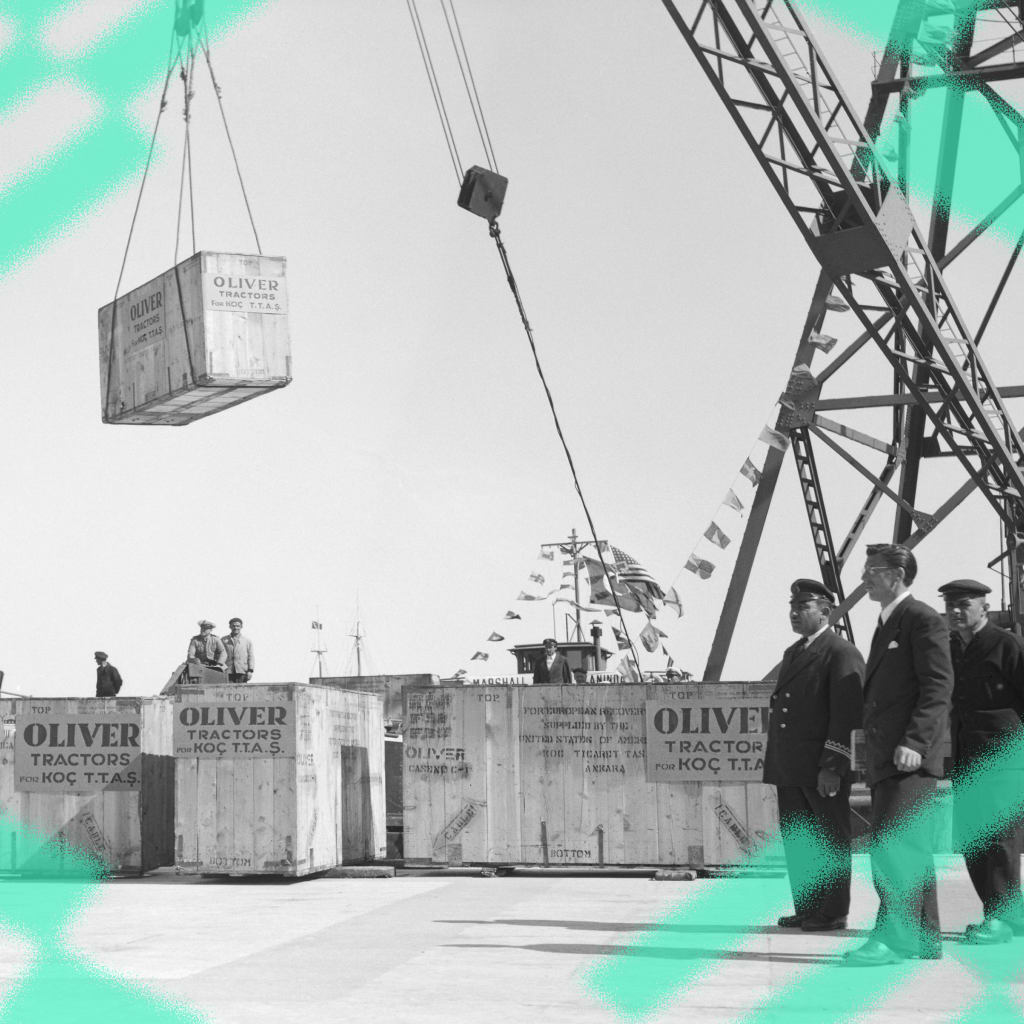
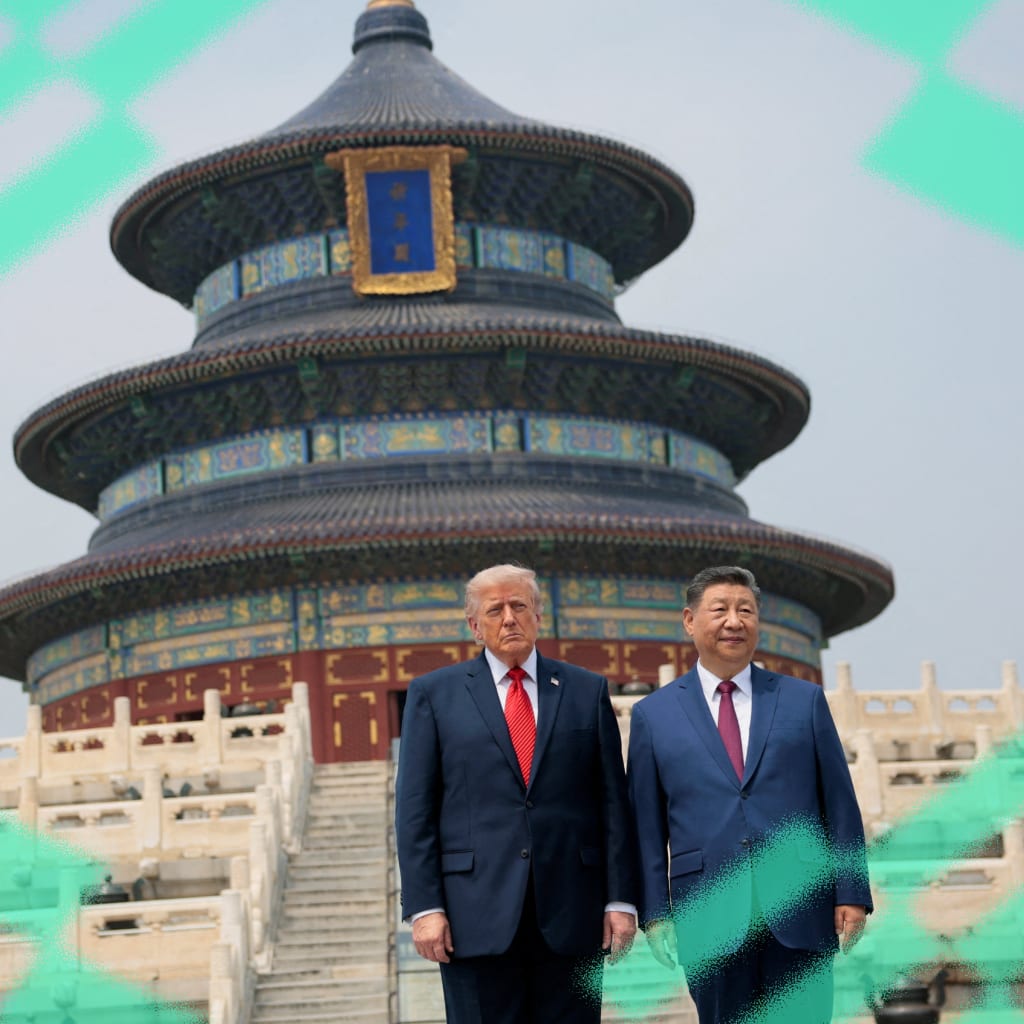
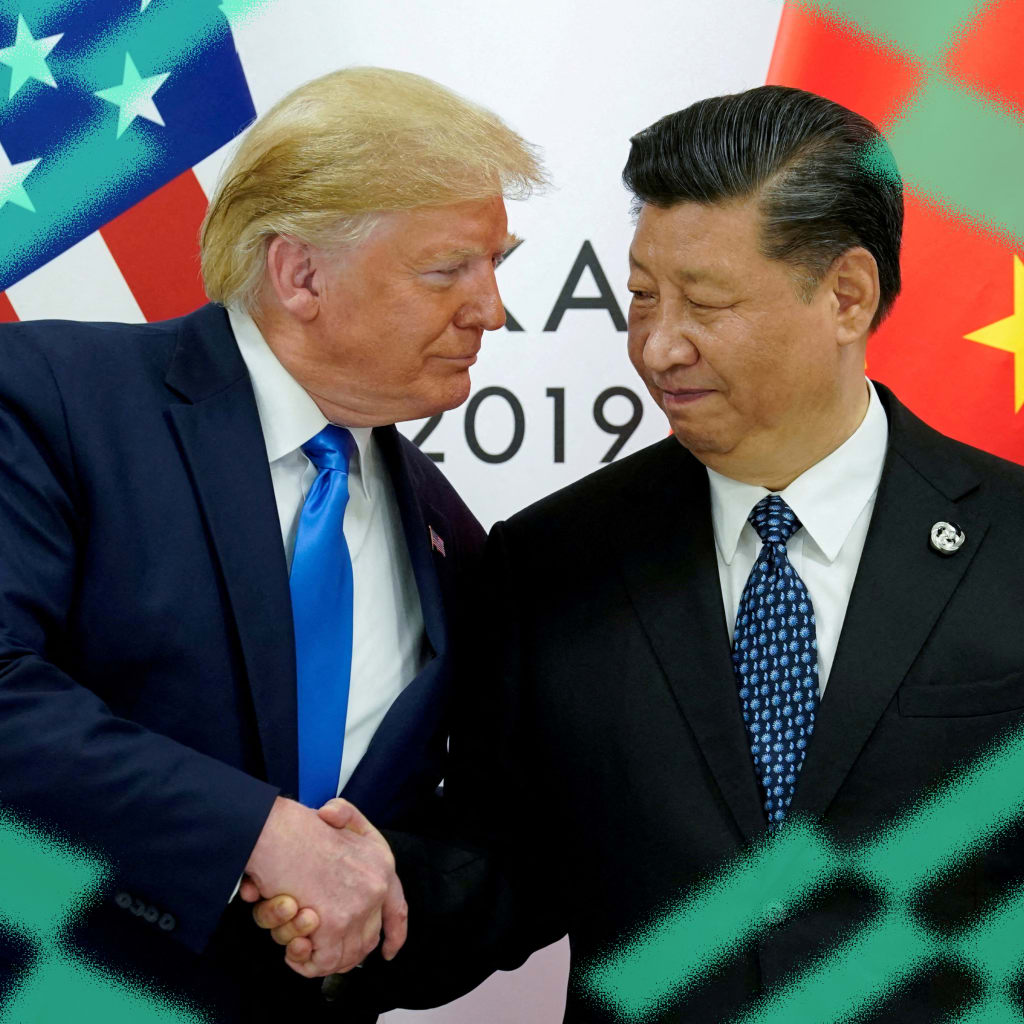
How to Build an American Foreign Policy, With Michael Mandelbaum
This episode unpacks three enduring pillars that have defined U.S. foreign policy from the nation’s founding to today: ideology, economic statecraft, and democratic accountability.
Published
Host
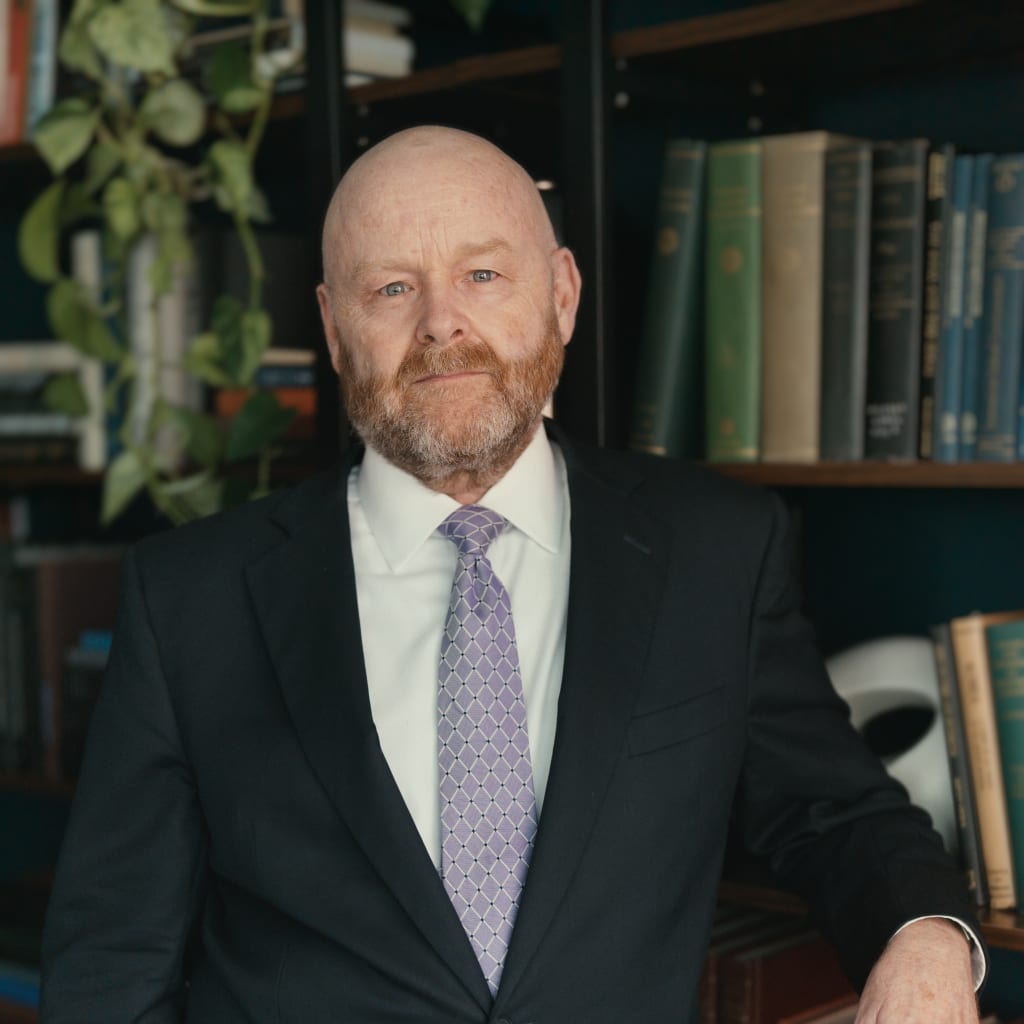 James M. LindsayCFR ExpertMary and David Boies Distinguished Senior Fellow in U.S. Foreign Policy
Guest
- Michael MandelbaumProfessor Emeritus, Johns Hopkins School of Advanced International Studies
[Video: https://www.youtube.com/watch?v=_8zwO4Ci9ow]
TRANSCRIPT
MANDELBAUM:
Economic considerations are always present in foreign policy of every country, but ideological considerations have been much more important in American foreign policy than in the foreign policies of other countries.
LINDSAY:
The United States has confronted many foreign policy challenges since its founding. Different presidents from different parties have made different choices in how to engage the world.
Ronald REAGAN:
All Americans long for a safer world in which individual rights are respected and precious values flourish.
Donald TRUMP:
We’re also imposing strict sanctions on the dictatorships of Nicaragua and Venezuela.
LINDSAY:
For all that diversity, are there common threads that run through U.S. history that define a distinctive American approach to foreign policy? If so, what might those threads be? Why do they persist?
And what do they tell us about how U.S. foreign policy is likely to evolve in a new era of geopolitical competition? From the Council on Foreign Relations, welcome to the President’s Inbox. I’m Jim Lindsay.
Today, I’m joined by Michael Mandelbaum, Professor Emeritus of American Foreign Policy at the Johns Hopkins School of Advanced International Studies and author of the new book, The American Way of Foreign Policy, Ideology, Economics, and Democracy. Michael, thank you very much for joining me and congratulations on the publication of your book. I’m glad that you’re following the first rule of authorship, which is to always be selling.
MANDELBAUM:
There’s no room for modesty. All’s fair in love and book selling.
LINDSAY:
Okay, Michael, let’s sort of jump right into it then. I assume from the title, The American Way of Foreign Policy, that you’re arguing is that the United States does in fact have a distinctive approach to foreign policy. What is it?
MANDELBAUM:
That is indeed the premise of the book. There are three distinctive features that have been present in American foreign policy from the 18th century to the present. First, the United States has conducted an unusually ideological foreign policy, by which I mean that ideas have played an unusually large role in American foreign policy compared to the foreign policies of other countries.
Most countries, most of the time in pursuing foreign policy, have concerned themselves with power. That’s known among specialists in international relations as realism. And the United States has certainly concerned itself with power as well.
But more than other countries, America has sought to promote beyond its borders, its political ideas. Second, the United States has pursued a distinctive kind of international economic policy. Most countries, most of the time, have used political instruments for economic gain.
In the 18th century, this was called mercantilism. And the object of political instruments for economic gain was usually empire. Well, more than any other country, the United States has reversed that.
America has used economic instruments for political purposes. Third and finally, the United States has, compared with other countries, conducted an unusually democratic foreign policy. That is, American public opinion has had a greater role in the formation and conduct of American foreign policy than has public opinion in almost any other country.
So this book is, among other things, an essay in American exceptionalism, but exceptionalism in foreign policy.
LINDSAY:
So just so I make sure I understand your argument correctly, Michael, you’re not arguing that other countries don’t at times have foreign policies that are ideological or foreign policies that use economic tools to accomplish political ends or may be open to more than just the ruling clique in making decisions. Your argument is more one of the degree to which this has been true in American foreign policy compared to the foreign policies of others.
MANDELBAUM:
Yes, exactly. I’m glad you added that. And I do say that in the introduction to the American way of foreign policy.
Other countries have pursued these kinds of foreign policies, but not as frequently, not as seriously, not as emphatically as the United States has. So it is indeed a matter of degree.
LINDSAY:
I want to dig into each of those three threads you see sort of spanning American history, Michael. But first, I want to give you a question sort of out of Introduction to International Relations first year sort of class. You know, one of the foundational tenets of our profession is that countries operate amidst anarchy in the sense that there’s no higher power that can impose rules and orders.
And without the presence of an overarching authority, every country is essentially on its own to protect its interests. And countries that ignore that fundamental reality of an anarchical world get punished for doing so. Does your argument that the United States has a foreign policy personality, if I can put it that way, contradict that argument about what drives international politics?
MANDELBAUM:
No. What you have characterized as the main forces of international politics are, in my view, correct. And the United States has been subject to them.
And the United States has often carried out foreign policies to deal with those realities. But it has also, more than other countries, been able to avoid or overcome or go around those realities and conduct a foreign policy of ideas because most countries most of the time have conducted power political foreign policies because they’ve had to. They have faced serious threats, potential or actual to their security.
For geopolitical reasons, the United States has been freer of those threats that impose that kind of foreign policy than almost any other country. And this has been true throughout its history. Through the 19th century and well into the 20th, the United States was protected from potential predators by two oceans.
And when technology made the oceans, in effect, much smaller, the United States was extremely powerful, not a country whose territorial integrity any other power would be disposed to challenge. So the fortunes of geopolitics have enabled the United States to set aside the kinds of foreign policies that other countries routinely practice and emphasize its own political ideas. Although it’s important to add, the United States has conducted these so-called realist policies as well.
In fact, as I say in the book, on those occasions when the demands of power politics and the lure of spreading American ideas have come into conflict, America has almost always behaved like other countries and made concessions to the realities and the needs of power.
LINDSAY:
So Michael, let’s dig into these three consistent themes, as you argue, that appear in U.S. foreign policy. I want to begin with the notion of American foreign policy as being ideological. How exactly has that manifested?
What is the ideology? And is it an ideology in the same sense that Marxism or Marxism-Leninism was ideology of the Soviet Union or a version of Shia Islam is the theology or ideology of the Islamic Republic?
MANDELBAUM:
Well, the American ideology, sometimes I use the phrase the foreign policy of ideas, since ideology has a very negative connotation. But the United States does have an ideology in that it has political and economic ideas that it attempts to spread and has done so since the very beginning. So the form of the American ideology, which I call liberalism because it’s based on liberty, the principle American political value in form is similar to Marxism, Leninism or the Shi’ism of Iran.
But of course, in content, it’s completely different. These two other ideologies are illiberal. They do not value individual liberty or democracy within countries or peace in the world, which are the fundaments of the American ideology.
So while in form, it bears a resemblance to the others in content, it’s the opposite. And we know that it’s the opposite because American ideology, American political ideas are such that it has brought it into conflict with Marxism, Leninism and Shia fundamentalism. They’re completely opposite views of how the world should be organized, how countries should be organized, how individuals should be treated.
And I would go further and say, and I say this in the conclusion to the American way of foreign policy, that the content of American ideology is such that it has proven far more popular and far more successful than its challengers and opponents.
LINDSAY:
So Michael, I have to ask you on this score. You’ve taught for a long time. You’ve been active in the foreign policy debate for a long time.
I’m sure you’ve come across people who argue that ideology doesn’t affect, drive American foreign policy. It’s merely a dressing we put on baser impulses, whether it’s the desire for conquest or to advance economic agendas. Those are ideas at times even Americans have accepted.
Perhaps most famously, Americans went to war in 1917 to make the world safe for democracy. And about 15 years later, they were convinced that they had been hoodwinked and World War I had all been about making armaments companies rich. How do you respond to arguments that the ideology is just window dressing?
MANDELBAUM:
There are two points to make here, I think, Jim. One is that foreign policy, like all other social activities, is multi-determined. There isn’t any single cause, especially for such a complicated matter as foreign policy.
Take, for example, the three major conflicts in which the United States is engaged in the 20th century, the two World Wars and the Cold War. Those were waged for realist power political reasons. The United States was concerned that its adversaries would become too powerful, would capture territory and would threaten the United States.
But those wars were also fought for ideological reasons. The United States was defending democracy against undemocratic adversaries in World War II and in the Cold War, totalitarian adversaries. So, economic considerations are always present in foreign policy of every country.
But ideological considerations have been much more important in American foreign policy than in the foreign policies of other countries. And as an example of that, and this is my second response, I would point to the post-Cold War era, which, as I say, in the American way of foreign policy, was the golden age of the foreign policy of ideas. We see there an effort to promote democracy, important enough that President George W.
Bush made it the subject of his second inaugural address. We see America intervening in foreign countries to protect the citizens of those countries against their governments, something that came to be called humanitarian intervention, for which there was no economic benefit for the United States. And incidentally, humanitarian intervention as a term was new in the 20th and 21st century.
But in American foreign policy, it goes back to the Spanish-American War of 1898, when the United States intervened in Cuba in part to rescue the Cubans from their imperial Spanish overlords. And finally, in the golden age of the foreign policy of ideas, the United States engaged extensively, although not successfully, in what has been called nation building, but is really, I think, more properly, for reasons I explain in the book, called state building, in which the United States tried to install decent, functional, democratic governments in countries that had never had them. This effort turned out to be largely unsuccessful, very expensive in Iraq, for example, and largely thankless.
So there you have three examples of important American foreign policies undertaken for ideological, not at all economic reasons.
LINDSAY:
Mike, I want to pick up now the theme of economics and American foreign policy being unusually economically focused in the sense of using economic tools to accomplish political ends. And perhaps I could get you to sort of start the conversation off by telling people about the Embargo Act of 1807, which is one of my personal least favorite foreign policy moves in the history of the United States.
MANDELBAUM:
I agree with you. I think that probably was the worst foreign policy in the history of the United States. The closest competitor, in my view, is the War of 1812, which was an outgrowth of the failure of that embargo.
In the Jeffersonian presidency, the wars of the French Revolution were underway. Britain and France were the principal protagonists and the British, in order to thwart revolutionary France, interfered with American maritime commerce and the maritime commerce of other countries as well. It blockaded France and this was its way of getting back at the French.
The Americans objected to this. They believed that the British were violating America’s maritime rights. And Jefferson decided that in order to prevent the British from continuing this policy, he would impose an embargo.
But it was an embargo on American exports, all American exports. No American ship carrying goods for trade was allowed to leave any port. Well, this policy was completely unsuccessful.
It had no impact on the British, but it had a powerful impact in the United States. There was a huge backlash against it on the part of Americans who were being penalized economically, especially in the New England states, which depended more heavily on trade than the other states, and which were brought to the point of rebellion until Jefferson finally abandoned this policy when he left office. So this was a clear case of using economic means in an effort to get political ends.
And like other embargoes and sanctions which carried through the 19th century and on into the 20th and even to the 21st, it did not enjoy complete success.
LINDSAY:
So Michael, what accounts for the U.S. interest in wanting to use economic levers to accomplish political ends? Is it something in our political DNA? Is it a function of the fact that we’re a big and powerful economy?
Some other driver of this idea?
MANDELBAUM:
I think it’s all of the above. When the United States was founded, it had political goals beyond its borders like every country, but it was too weak to try to achieve them by the normal method, namely the use of force. This was not an option for the United States.
So it decided to use economic instruments in order to achieve its goals. And these economic instruments did have some initial success. The American Revolution was caused in the first instance by British taxes on the colonists that the colonists regarded as unfair.
And in response, the colonies organized boycotts of British merchants in the colonies as a way of trying to get the British merchants to put pressure on the government in London to rescind the taxes. And the British did rescind a couple of taxes. So at the beginning, the United States was simply too weak to use any other than economic instruments to achieve its political goals.
And of course, America became much more powerful, but in the 20th and 21st centuries, it came to have political goals, which it wanted to try to achieve, but were not important enough to cause the United States to go to war to try to accomplish. So economic instruments became a second best way of pursuing these goals. It was a compromise between going all out with the use of force and doing nothing, neither of which American governments wanted to do.
But there’s a second reason that I think the United States has been prone to employ economic instruments for political goals. And it’s what psychologists call mirror imaging. We tend to think that other people are like us.
And from the very beginning, economic activity and prosperity have been very, very important to the United States. And so we have tended to assume, and we continue to assume that, that others must be like us, and that if economic stakes are involved, the other countries will be swayed to do what the United States prefers that it do. This view, which is a persistent one, has not always been borne out, but nonetheless, it does seem to be a national characteristic embedded, as you nicely put it, in the national DNA.
LINDSAY:
So Michael, I want to ask you about this idea of American foreign policy being unusually democratic. As I was reading the book, what struck me was that a likely rejoinder I could imagine people having is that American decision-making on foreign policy may, let me stress may, be more open to other political actors than the government itself. But it isn’t necessarily democratic.
And as you’re well aware, there are a lot of complaints that American foreign policy has been captured by special interests, whether it’s ethnic lobbies or business interests or ideological groups. So help me understand what you mean by democratic and how you would respond to arguments that American decision-making may be more open, but it isn’t necessarily democratic in the sense of having the people have a say.
MANDELBAUM:
Well, American foreign policy has been more democratic from the beginning because from the beginning, the United States has been more democratic. So everything the American government did was more subject to public wish, public opinion in the 18th and 19th centuries than was true in virtually any other country. That’s less true in the 20th and 21st centuries when more countries are more democratic.
And of course, the United States is not, strictly speaking, a democracy. It’s a republic. So we act through our representatives.
But the public does have channels by which it can and does influence foreign policy that are either unavailable or narrower in other countries. And three in particular are important. One is interest groups that you mentioned.
And these are sanctioned by the First Amendment. The American public has the right to petition its government. It has the right of assembly, and Americans have taken full use of that right.
So we do have interest groups pressing the American government in order to affect its foreign policy, just as they do to affect its domestic politics. A second channel for public opinion affecting American foreign policy is political parties. And that is the case because in the United States, most people don’t have a lot of information about foreign policy, and often they follow the lead of their political parties.
So American political parties are unusually important in transmitting public wishes to the government. And then finally, there are elections. If the government is carrying out policies of which the majority of the public disapproves, it will say so by throwing the existing administration out of office.
And that has happened repeatedly in American foreign policy and in American history. So for those reasons, here we come back to your good point about this being a matter of degree. I would say that relatively speaking, American foreign policy is and has been more democratic than the foreign policies of other countries.
LINDSAY:
So Michael, to this point, we’ve been sort of looking backwards for patterns in American history. I want to sort of bring the conversation up to today. How does President Trump’s approach to foreign policy fit in with these threads, these themes that you’ve seen over the past 250 years?
MANDELBAUM:
It’s a good question. I think that while President Trump is seen as an outlier in many ways, in my opinion, his administration’s foreign policy does fit in with the three major American traditions, with the three continuing features. Take the foreign policy of ideas.
This president seems to be unusually transactional and doesn’t seem to be all that interested in political ideas. However, I would note that the two most significant, most widely noted foreign policy speeches of this administration, given a year apart by the vice president and the secretary of state in Munich, Germany, have centered on political ideas. Both Mr. Vance and Mr. Rubio accused the Europeans of straying from the political ideas that they both said we share with our European friends and allies. Now, whether one agrees with that diagnosis, these speeches certainly show an interest in political ideas beyond America’s borders. I would note another way in which the foreign policy of ideas is present in this administration. Americans have been interested in peace for longer than almost any other country.
As you know, Jim, peace is a relatively recent idea. For most of history, most countries didn’t regard it as feasible or even desirable. One method of peacemaking that became popular with Americans, and especially with American presidents, was mediating disputes between hostile or even warring parties.
President Theodore Roosevelt did that twice, mediating between the Russians and the Japanese after the 1905 war, and also contributing to the mediation between the French and the Germans after a dispute over North Africa. During the two world wars, before the United States got involved, the president at the time, Woodrow Wilson in the first instance and Franklin Roosevelt in the second, sent trusted advisors in Europe to try to mediate between the warring coalitions there. Then, of course, in the 20th and 21st centuries, we’ve had the Arab-Israeli peace process, a long-running American-sponsored show.
President Trump is, at least rhetorically, squarely in that tradition. In fact, he likes to say that he has successfully mediated seven, I think, different international conflicts.
LINDSAY:
I think he’s up to at least nine, maybe in double digits.
MANDELBAUM:
Now, whether or not one agrees with what he says about what he’s done, that certainly shows that he partakes of and is part of an American tradition, which is the tradition of liberal political ideas.
LINDSAY:
Michael, let me ask you a question. It may be unfair, and if you don’t want to answer it on the grounds that it’s unfair, fair enough. I was thinking of your discussion of the United States having essentially a foreign policy personality, a style, the way it approaches and thinks about foreign policy.
I would say right now in Washington, DC, there is a consensus that China is really job one for the United States because China poses a multidimensional threat to US interests, but also to US values. The supposition is that if China, quote, wins, end quote, that it will rewrite the rules in a way that is unfavorable to us. I’m left wondering if that assessment may not be, at least to some degree, a projection of how we think about foreign policy.
Again, your notion that the American way of foreign policy is unusually ideological. Is it possible that the Chinese see things fundamentally differently? Their style would be different in that, in essence, we’re doing battle with the wrong adversary?
MANDELBAUM:
Well, the Chinese Communist Party certainly sees things differently than does the United States. The Chinese Communist Party is a communist party and therefore it believes in the concentration of power in the hands of the party and does not recognize individual rights. But I think that the American concern with China has at least as much to do with considerations of power as with considerations of ideology.
I think that the American concern is underpinned or at least aggravated by the fact that almost every country in Asia has the same concern. Virtually every non-Chinese country in Asia, whether it’s willing to say so or not, is afraid of the growth of Chinese power and what the Chinese might do with it. So they are very anxious for the United States to remain engaged in East Asia and to serve as an offset to Chinese power.
The American tradition of foreign policy, I think, does predispose the United States to look askance at the Chinese political system and also, I think, has a lot to do with the American willingness to defend Taiwan, which is a democracy. And were the Chinese Communist to take it over, it would cease to be a democracy. But I think there are also power political considerations here, which, as I say, have never been absent from American foreign policy.
And also, I think, the wishes of countries with which the United States has had over now many decades, close economic, political, and military ties.
LINDSAY:
On that note, I’ll close up the president’s inbox for this week. My guest has been Michael Mandelbaum, Professor Emeritus of American Foreign Policy at the Johns Hopkins School of Advanced International Studies and author of, get ready to raise the cover, Michael, The American Way of Foreign Policy, Ideology, Economics, and Democracy. Michael, thank you very much for joining me today.
MANDELBAUM:
Thank you, Jim. It’s been a pleasure.
LINDSAY:
Today’s episode was produced by Justin Schuster with director of video, Jeremy Sherlick, senior video producer, Grace Raver, and director of podcasting, Gabrielle Sierra. Production assistance was provided by Oscar Berry and Kaleah Haddock.
This transcript was generated using AI and may contain errors or inaccuracies.
We Discuss:
- Whether the United States can be said to have a coherent foreign policy “personality”.
- How geographic and geopolitical advantages have historically enabled a more ideological U.S. foreign policy than most countries can afford.
- Whether ideology in U.S. foreign policy represents genuine conviction or merely a veneer for self-interest.
- What the post-Cold War era reveals as the “golden age of foreign policy of ideas”.
- What drives the persistent American tendency toward economic statecraft, sanctions, and “mirror imaging”.
- How public opinion, interest groups, political parties, and elections influence foreign policy decisionmaking.
- Whether President Trump’s foreign policy fits within—or represents a departure from—the three enduring American traditions in U.S. foreign policy.
Mentioned on the Episode:
The American Way of Foreign Policy: Ideology, Economics, Democracy by Michael Mandelbaum (Oxford University Press, 2025)
George W. Bush, Second Inaugural Address, January 20, 2005
Vice President JD Vance, Remarks at the Munich Security Conference, February 14, 2025
Secretary of State Marco Rubio, Remarks at the Munich Security Conference, February 14, 2026
Opinions expressed on The President’s Inbox are solely those of the host or guests, not of CFR, which takes no institutional positions on matters of policy.
Associate Producer, Video and Audio
- Associate Producer, Video and Audio
Editorial Director and Producer
- Director, Podcasting
Director of Video
- Director of Video
More Episodes
Ukraine Turns the Tide, With Liana Fix