A Conversation With Rahm Emanuel
Event date
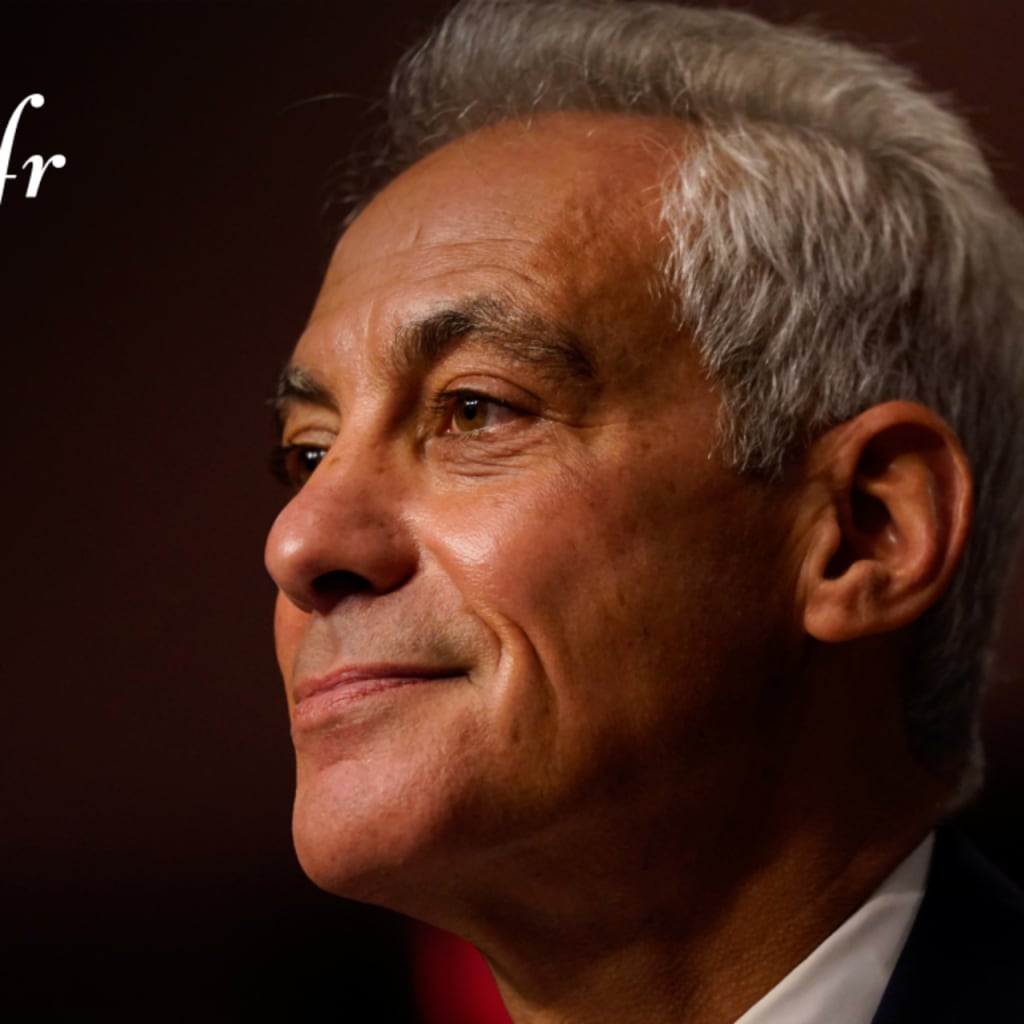
Rahm Emanuel discusses the current U.S. foreign policy landscape and the future of U.S. diplomacy as the international order status quo continues to evolve.
GOLODRYGA: Good afternoon, late afternoon. Good to see you, Ambassador. Welcome everyone to today’s Council on Foreign Relations meeting with Ambassador Rahm Emanuel, the former U.S. ambassador to Japan under President Biden, former mayor of Chicago, former chief of staff to President Barack Obama, among many other postings. I am Bianna Golodryga, anchor and senior global affairs analyst at CNN. I will be presiding over today’s discussion.
We are joined now by CFR members in person here in the room, and a few hundred are on Zoom as well. So we’re going to speak for about thirty minutes. We’ll open it up for questions, both in person and virtually.
Good to see everyone. Shall we?
EMANUEL: Let’s go.
GOLODRYGA: Ready? OK. Let’s do it.
EMANUEL: Let’s go.
GOLODRYGA: OK.
EMANUEL: Or, as Henry Kissinger used to say, does anybody have questions for my answers? And we can go from there. He was obviously serious. I’m joking.
GOLODRYGA: OK. Well, I’m going to go back to being serious.
EMANUEL: OK.
GOLODRYGA: We’ve just now experienced what I believe was the third assassination attempt on President Trump this past weekend. The political temperature in this country, as we know, is at a boiling point. And so my question to you is, beyond the immediate security failures, what worries you most about the political rhetoric in this country right now?
EMANUEL: Well, look, I mean, my take—this is mine—is that the divisions in America preexist the president. I happen to think he’s exacerbated them. We’ve had other divisions. As somebody that reads pretty regularly about the Civil War, the turn of the century, World War II, there was always divisions. We’ve never had a president who’s made political opportunity out of those divisions and exacerbate them. The divisions preexist him. They’ve been exacerbated by him.
Second, I will just say, when I was ambassador I learned a tremendous amount about Japan. Had a wonderful experience, learned a tremendous amount. Learned a great deal about the Indo-Pacific, China. I’m sure we’ll get into it. Probably the one country I learned the most about was the United States of America, being 8,000 miles away and twelve hours away. Or, as I used to say to my kids, ah, don’t get up. Thursday’s not that great. I’m ahead of you. Stay in bed. It’s not that great a day. But on a serious point—and, you know, Xi’s advisor—key political advisor makes this point. America’s divisions will stop America. Nothing China does really frightens me as much as what America does not do.
And what I mean by that is 50 percent of our kids today don’t read at grade level. That’s not China’s fault. That’s our fault. And we, as a country, basically shrug our shoulders at this. You know more about the president’s position on windmills than you do about—he’s never commented on the NAEP scores. We decide whether we’re going to cut the National Institute of Health, the National Science Foundation, in the middle of a technological, scientific—I wouldn’t call it cold war—but challenge with China. We decide that, not them. He’s doubling down. We’re cutting. So when I look at the divisions, and I have my own view of why that is, I kind of think that we, our divisions, is what we—is one of the biggest economic, political, and strategic challenges we have.
Now, in the first twenty-five years I think there are four key moments that tell you where we are politically. One, we had a war in Iraq that was built on a lie. There is no yellow powder in Niger. We spent a trillion dollars, 50,000 fellow citizens lost their lives or are maimed for life, and nobody responsible for the lie ever held accountable. Four years later, you had this thing called the financial meltdown, built on liar loans. Seven million Americans lost their homes, their life savings. And bankers were saying, where’s my bonus, and demanded their bonus. Nobody paid a price. Four years later, Xi comes to head as China, and basically Battle Creek, Michigan was told to fight Beijing all by themselves, and nobody came to their defense. And then basically four to six years later you have COVID.
To me, those are the four big moments—forget this election, that election—that defined the political disruption and economic disruption. Donald Trump runs for president. He says, I’m the instrument of your anger. And when you go back in retrospect and you look through the rearview mirror, those four moments—at least me, those are the peak moments that define this political anger and disruption, there are other moments that you could have cured it, but that really define the politics of today. So when you talk about the violence, we’ve had violence before in American history, political violence. But this is the first time with those kind of big moments that describe the disruption, the anger, the frustration, and the division between the American establishment, all of us represented in this room, I mean all of us, and the rest of America, because they felt like we turned our back on them. Which is why Donald Trump decided to run in 2024 and in 2016. I will be the instrument of your anger.
GOLODRYGA: Let’s turn to the war in Iran, because you’ve called this—
EMANUEL: I kind of was liking the first train of questions. Now we have to go to the second? (Laughs.)
GOLODRYGA: Let’s go. Yeah, let’s do it. We only have twenty-five minutes. You’ve called this conflict a war of choice, and Tehran’s veto over the Strait of Hormuz “unacceptable.” Iran is now floating potentially a two-phase deal, that the president is expected to reject, opening the strait in phase one and then dealing with the nuclear issue in phase two. I know how you feel about what got us into this war, but if you inherit it right now, what would you do? Would you take a deal on the table right now? And how would you reopen the Strait of Hormuz at this point, without sparking even broader conflict?
EMANUEL: Yeah. So I do consider this a war choice. And to finish my thought, a bad choice. Two, it’s impossible to un-ring the bell. Three, we went in to deal with their nuclear capacity, and they discovered they have a nuclear option. It’s called the Strait of Hormuz. And the first part of this is all about the Strait of Hormuz. It’s not about their nuclear capacity, et cetera, that they said we want to use in the next six months. So first, I do believe, and I’ve said this publicly, either all boats in and out or no boats in and out. But that’s step one.
Step two, if you wanted to—which I’m not for—but if you wanted to, as a way to resolve the negotiation, the United Nations, with a United Nations force, should oversee the Strait of Hormuz. Charge a toll that goes to all countries in the region for rebuilding, not an Iran toll for Iran rebuilding. That’s medium. Third, long term, use and redefine the Abraham Accords to be a financing vehicle for pipelines that circumvent the Strait of Hormuz. Either go to the Oman, go out through the Red Sea, but don’t allow the Strait of Hormuz ever again to be a stranglehold not only on oil and energy, but more importantly on—as equally valuable—on the world economy.
And the reason also, to underscore the last point, since 1979 Iranian Revolution the number-one goal for the Iranian regime has been to get America out of the region. Out of Bahrain, out of Qatar, out of Kuwait, out of Saudi Arabia—out. If you redefine the Abraham Accords, which we’re party to, as a vehicle not just for UAE recognition of Israel and Israel recognition of Bahrain and UAE, but as a financing vehicle, and also for other political and economic purposes, you alter fundamentally, and you communicate to Iran, we are going nowhere. And we reassure our allies, who at this very moment have a lot of doubt about the United States, that we are by your side.
So to me, short term, all boats in, all boats out. Medium term, if you want to figure out a way to get resources to rebuild, but it has to go to Bahrain, Kuwait Oman, as well as to Iran, the U.N. international maritime. And long term, redefine the Abraham Accords as a financing vehicle and infrastructure vehicle that also sends a political message that the United States is a partner and investor in the future of our allies in the gulf.
GOLODRYGA: So you support the blockade. If I can follow up on—
EMANUEL: No, wait a second, as a part of—I know this would come as a shock to the administration—but part of a plan.
GOLODRYGA: Yes.
EMANUEL: OK? I don’t know if you heard that word called “plan.” It has four letters. I have a lot of other four letters. But in this case, it’s a plan that you don’t make up every day, that you actually execute based on a vision short, medium, and long term.
GOLODRYGA: I understand. So step one of your plan. Step two, I believe you said, was bringing the U.N. in as—
EMANUEL: With an international maritime authority, yeah.
GOLODRYGA: How effective would—how realistic would that be, having the U.N. police the region?
EMANUEL: You’re asking me to un-ring a bell that wasn’t—I would not have rung. And given that we’re now negotiating about the Strait of Hormuz, which allows Iran a nuclear option which didn’t exist before this. Now, if Iran demands some control over the Strait of Hormuz, you say, no. You don’t get control. We don’t get control. It either goes back to the international waterway that it always is, or, B, the U.N. will monitor and police it with an international force and the legitimacy of the United Nations. And if you want to charge a fee to rebuild, then split it among all countries were affected not just you.
You can’t allow Iran to have a veto over the Strait of Hormuz. I’m giving it as a solution to a problem that’s part of Iran’s demands. So you take it out. And that’s—like every negotiation—and, just if I can, for one second. When I was mayor I used to say every time we had big negotiations with the union, before it starts you give me five goals for this negotiations. I’m going to give you five. You’re going to come back a week later and tell me what you can live with, what you can’t live with, and what you can compromise. And I’m going to do that to you. So one of the disparities between the United States and Iran is who has control. And they need resources for rebuilding. It’s an idea to solve a problem. I wouldn’t have it if it wasn’t for the fact that Iran has a demand on the table.
GOLODRYGA: Would you agree that over these past—what are we—seven, eight weeks now that Iran has been significantly degraded? Economically, militarily, leadership wise? And I’m asking that because I’m wondering if you agree with the assessment that Chancellor Merz of Germany gave, which was that the U.S. is being humiliated by the Iranian regime.
EMANUEL: So I’m going to take your question—I’m going to deal with your question, but I’m going to take it to a slightly different place first, OK? Keep me honest, because I may never answer the real question.
GOLODRYGA: (Laughs.) OK.
EMANUEL: The first part—and this is about a new piece I’m going to write—we’ve always had a national security policy as a country that America be able to fight two-front wars, two wars simultaneously. It is clear to me that we have to get to a place where our military can fight two different types of war simultaneously, not just two wars. And what I mean by that, neither Iran or Ukraine have a navy. Both control their waterways. We’re set up—you know, we just fired the head of the Navy because president doesn’t like the way he’s building the Trump ship. You got to have ships. You got to have a navy. You got to have submarines. You got to have an aircraft carrier. And you better figure out the drone and the production. You better figure out everything else about speedboats.
We have to get to a place that we can fight two types of war, different types of war, not just one, A. B, when the president, and you asked me that question, and the president says, oh, we knocked out their navy. OK, then why are we talking about the Strait of Hormuz? We even count conventionally; we don’t count unconventionally. I have in a paragraph said this two years—a year-and-a-half ago, we should be asking Ukraine to partner with us on an entire drone technology. Third, their economy is suffering. Second, yes, we militarily/strategically degraded them. Third, there’s no doubt there’s political divisions. One, I kind of divide it in my head. There’s a leadership that’s more attuned to the country, the economy. and what it’s going to take to rebuild. And there’s a(n) other part of the leadership more attuned to their strategic posture and position they have. That’s where the divisions, just generally, seem to be forking in the road.
And the part that’s more responsive to the civilian side has understood both military economic degradation. But you got to draw a line in the sand. There’s a before. Before, to stay in power, they killed 40,000 of their own civilians. If you go back, use Dr. Google or Dr. Claude, over the last twelve years they’ve had a civil disruption every two-and-a-half years. And every year, every time the disruption goes, the amount of people they kill to stay in power rises. Now, whether it was 20,000 or 40,000 the last time, the one rule I know about politics, when your other guys in the middle of a knife fight with themselves don’t get in the middle of it. And we decided to get in the middle of it.
Number two, they were on their back heels because of the what happened in June. Number three, they lost Syria, and Hezbollah was massively degraded, and the Houthis were degraded. Number four, now the disruption was because they were running and inflation rate above 100 percent, and the government had lost legitimacy with the people. Number five, their eight-nine-year-old leader had terminal cancer. They had never had a succession since 1989. We decided to involve ourselves in an effort for regime change, stated by the president of the United States, the commander in chief. We solidified the regime. Maybe short term, but we did.
So when you look at me, did we do all these things? At what cost? You know, the one thing I know, having been in and out of the Oval Office and in and out of the mayor’s office for sixteen years, the only decision that gets in that office is bad and worse. You want good and bad? You give it to the chief of staff. Bad and worse goes into the Oval Office. Bad and worse goes into the mayor’s office. And to me—I’m sorry, I’m going to answer your third question here—to me, the reason this was a bad choice is in the tradeoffs they acquired something they never had before, the nuclear option called the Strait of Hormuz.
So, yes, they don’t have a navy, they don’t have an air force. They’ve lost 75 percent of the missile capacity production and delivery. And they’ve now figured out they have something better than uranium. It’s called the Strait of Hormuz.
GOLODRYGA: So do you agree with Chancellor Merz that the U.S. has been humiliated?
EMANUEL: I don’t—I think this, that the United—I think Donald Trump wrote a book called The Art of the Deal, or at least he had somebody else write a book that has his name on it. The Iranians, a country that has a culture built on the bazaar and the merchants, also wrote a book, the art of the negotiation. And I think the president of the United States is getting schooled by the Iranians.
GOLODRYGA: So in a JCPOA—
EMANUEL: And his infamous, capable real estate team that he sent there to negotiate.
GOLODRYGA: You did mention the Abraham—
EMANUEL: I mean, you just laugh.
GOLODRYGA: But you did mention the Abraham Accords. Is that not something that’s—
EMANUEL: No, wait a second, I’m serious about this. Has anybody in this room, a show of hands, ever negotiated a nuclear deal? I’m sorry, these are really, really detailed. You have Jim Baker, had multiple meetings negotiating with the old Soviet—the Russian empire. These are not things you just wing as kind of saying, oh, the State Department’s old school. OK. You have that arrogance? Good luck. They got handed in Vienna—the U.K. intelligence officer was in the room—they got handed an offer. They didn’t know what they got handed. I’m sorry, the art of the negotiations is now competing with the art of the deal, and right now we’re finding out the art of the negotiations knows a few things about negotiating.
GOLODRYGA: Do you know what they were handed?
EMANUEL: Well, I know what the U.K. minister of intelligence put out. And I know what the other sources also put out in Israel. They got handed a pretty good deal, as it relates to the nuclear weapons.
GOLODRYGA: So the president has been criticized by critics and his supporters in terms of how he did and didn’t sell this war effectively to the public. And he has argued that his administration is doing, quote, “what other presidents should have done a long time ago during a forty-seven-year period.” How exactly is he wrong?
EMANUEL: Well, there are two paradigms that I think sit—that if you’re in the Situation Room—would it sit. You had the decision, or the lack, in 1994 as it relates to North Korea. There was an option. And then you have the decision around Libya. And the Persian empire is different, but those are—when you look at the United States involvement. One you got involved, and you have a failed state. The other one you didn’t get involved, ends up becoming a nuclear capacity. I can say this with confidence, and it’s not just confidence. It’s firsthand, because it’s also been in published papers. This plan about a joint effort by the United States and Israel has been offered to four different presidents. George Bush rejected it. Barack Obama rejected it. Joe Biden rejected it. And, if I’m not mistaken, Donald Trump rejected it in his first term. This is not the first time this idea of shopping around dealing militarily with Iran has ever been basically offered.
And when you—if you believe what I believe, which is the options in front of the president are bad and worse, and you have to have the judgment to know that difference. We were given an option. And four presidents prior decided against this because the equities and the losses didn’t weigh out. And one piece of history to drive my point. In the 1960s, JFK had the Bay of Pigs. And then he had the Cuban missile crisis. Just imagine for a second if the Cuban missile crisis happened first. He learned in the Bay of Pigs who to trust, who not to trust. He learned something about himself. And he got judgment.
I do not think when it came to this decision critical questions were asked about, well, what happens if this happens? How does this play out? This is not a pop quiz that the Strait of Hormuz could be closed. This is not a pop quiz that a more radical faction—if you kill the head of state, a more radical faction could take control. If they were, I will pay your subscription to either the Wall Street Journal or the New York Times. You can watch it being written. This was known for twenty years in every war game played out, not only in the Situation Room, in publications. There wasn’t critical thinking in asking the tough questions about how the ball bounces when you make a decision.
GOLODRYGA: To be fair, the radicals—you know, it’s all relative, because the pragmatists were the ones who were also behind the assassination and murder of 40,000 protesters earlier this year.
EMANUEL: I’m not—I’m not an apologist for the Iranian regime. But you make a decision knowing that there’s going there’s going to be tradeoffs here, and you have to decide is this worth the price? If you think it’s worth the price, you can defend that position. I don’t.
GOLODRYGA: OK.
EMANUEL: I’ve laid out my case of why I think this was a big mistake.
GOLODRYGA: Let’s move on. You mentioned Israel. You recently—(laughs)—to a lighter subject. You recently declared—
EMANUEL: Oh, let’s get right to the point here.
GOLODRYGA: (Laughs.) You recently declared that the days of taxpayers subsidizing Israel militarily are over. Now, is that a stance truly rooted in the belief that a wealthy Israel no longer needs money? Or—that’s a point that even Prime Minister Netanyahu, I think, made and proposed to President Trump over a ten-year period. Or is this simply a political calculation to appease a growing anti-Israel faction within the Democratic Party ahead of 2028?
EMANUEL: Well, since you asked it in that light, unlike some people not only in this room, on camera, (and elsewhere ?), I went toe-to-toe with the prime minister in 2009.
GOLODRYGA: He called you a self-hating Jew.
EMANUEL: Yes. My rabbi might agree with him sometimes. (Laughter.) I did not need this moment to know that going down the road that he was going down would lead Israel to both be the most strategically secure it is and the most politically isolated it has ever been in the seventy-eight-year history. Scientists can’t go to international conferences. Cultural institutions cannot go perform. Israel, under the prime minister, has lost not only the European public and governments, they’ve lost the American public and government, and they picked up Somaliland. You laugh. That is the only diplomatic endeavor in the last three years.
My position on this was because, one, the days of you getting taxpayer support, having been in the room with President Obama when we did the Iron Dome and the largest military package, you have had thirty to forty years of taxpayer support, is over. Your economy is strong. You are an ally. You can buy all the weapons you want at full price, like every ally, with all the same restrictions. But that’s not all. I have said this before. I’m also for what I call a twenty-three-state solution. No longer just two states. You agree to work with the Palestinian entity. Stand up a state and recognition. And twenty-one Arab League nations will recognize Israel. You will be a nation among nations, just like Ben Gurion called in 1948. So we have to expand the second. All the Arab countries will stand up and help the Palestinian Authority become a real authority and a real governing party.
The head of the IDF said that the Israeli security forces is 30,000 soldiers short. You have soldiers on the West Bank policing second-class citizens. Now, I understand the cynicism of the view that if you do the Oslo Accord and there’s bombs blowing up on Dizengoff Street, Ben Yehuda Street in Jerusalem, you can get pretty cynical. I understand that you were offering in Camp David in 2000—Ehud Barak offered 98 percent, and you still said no. Olmert in 2006 and you still said no. I can understand why not only the Israeli public but elected officials are cynical. And we condemn the Palestinian authorities for turning around and walking away from an offer.
But when you decide—they have a theory of the river to the sea, will never happen. But let me break the news, there will never be a Greater Israel. The United States government’s position is for a two-state solution. And so while I say your weapon purchase will not be subsidized by the taxpayers, it’s a piece of a larger strategy that peace for Israel is in Israel’s national security interest. It’s not something imposed. Second, if you go over forty years—or, third, rather—Israel’s tried three tactics: Working with Jordan, working with Egypt, working with the UAE, Bahrain, and Sudan, states. And you’ve gotten peace, security that stood the test of time. Second, you unilaterally acted in Lebanon and in Gaza, and you got Hezbollah and Hamas. And third, you’ve tried to divorce with the West Bank.
Only one of the three tactics Israel’s adopted over forty years to make peace is working with established entities. And I’m recommending that on the twenty-three states, you will get exactly what has worked for Israel’s security, and not only it’s security, it’s economic integration, it’s cultural and political vitality. I believe in the state of Israel. I do not believe it’s going back to 2009. Unlike other people, I wasn’t lip-syncing what the prime minister was selling. I said, then—hold on. I’m getting warmed up. I said then that your housing strategy on the West Bank will lead to nonstop war. And, unlike others, I said it to his face. Others didn’t say it. Didn’t have the courage to say it. Said it.
GOLODRYGA: So Bernie Sanders said in an interview, I think today with Politico, that it is he not Chuck Schumer who is leading Democrats on Israel policy. All of that constructive criticism that you just laid out, you said, came in the form of allyship. You view Israel as an ally.
EMANUEL: They are our ally.
GOLODRYGA: I don’t know that Bernie Sanders views Israel as an ally. So is he leading the Democratic Party’s Israel policy something you’re comfortable with?
EMANUEL: Look, I’ve laid out my case. He’ll lay out his case. I didn’t say I was leading the Democratic Party. I don’t know that Bernie’s leading the Democratic Party.
GOLODRYGA: He got forty senators to vote to withhold aid.
EMANUEL: I wouldn’t say—now, I’m a House member, but no disrespect to that deliberative body called the U.S. Senate. I’m not call—I wouldn’t call forty-seven senators voting for something as leading the party. We’re going to have a—and the good news is the people that will be making that decision in about a year from now will be having that debate. We’ll have an honest debate. I’ve said—but the difference is, if I decide to jump into the deep end without my water wings, unlike the rest of them I said it to the prime minister’s face. And I said it twenty years before everybody else figured out where this was.
GOLODRYGA: You think he’ll be the prime minister you’ll be facing if you run for office again?
EMANUEL: Well, let me just deal with American politics for a second.
GOLODRYGA: (Laughs.) OK. OK, let’s get to China, because I’m looking—we’re tight on time.
EMANUEL: Although I would like to comment that—no, go ahead. Let’s get to China.
GOLODRYGA: Well, we can pick up on that later. OK, President Trump is—
EMANUEL: Let’s cut the livestream right about now. Put your phones down.
GOLODRYGA: President Trump is headed to China next month. And you recently wrote that his cuts to research funding quote, “play into China’s hands.” What exactly should he be demanding from Xi Jinping regarding—let’s start with Beijing’s support for Iran right now, with the war and whatever he said—the gift that Beijing was delivering to Iran, that he said the U.S. intercepted.
EMANUEL: Well, let me say, well, two things I want to—I’ll get to Iran. But we have a president that does not know the difference between friend and foe. Ukraine offers to help us on drones, and we say no. Russian technology kills American soldiers and the commander-in-chief says, oh, well, we give technology to them. Just shrugs his shoulders. As somebody who has a son that was in the Navy full time, a daughter—he’s now a Navy reservist. I have a daughter who also is a Navy reservist. The commander-in-chief says, well, we give Ukraine radar, satellite. Not exactly the inspiring voice of the commander in chief who is responsible for the men and women you serve and direct in the service of America’s national security interests.
China is doing the same. Now, number two, what I said in that piece was President Xi, and I take him at his word. We’ve already made a mistake once on Xi’s words. We’ve made a mistake on Putin’s word once in Munich in 2007. He believes, in science and technology we are in a competitive race against the United States. Each year, he has 8 percent of their funding for science and technology. Each year, the president cuts the NIH, National Institute of Health, the National Science Foundation, DARPA. As recently as two days ago, we fired the National Science Board. Now, I’d like to win quantum computing. Can I have a show of hands, who would like to win? Yeah, thank you for that. You have the courage back there to stand in the breach. I’d like to win fusion. I’d like to win cancer. Now, if you think you can do it on cuts, raise your hand.
So what I proposed was a 10 percent tax on the prediction markets and online sport gambling. And it goes into a locked fund to double—not replace—double the money for the National Institute, double the money for the National Science Foundation, and double the money for DARPA, and don’t fire the board. This is unilateral disarmament. Now, third, I would go into that meeting, and I do think it relates to Iran, because if it’s not settled, Iran, the president will have a different view. If it is settled—and we don’t know, we only know what we read—my guess is Beijing, given their economy, is playing some role in the background. What they did on the weapons, et cetera, they are playing some role.
GOLODRYGA: They’re feeling it.
EMANUEL: They’re feeling the economic, and they may be playing something with the Pakistanis and the Egyptians and the Turkish—some constructive role in trying to figure out something. We don’t know, but we know what we read. I happen to think the policy of isolating the isolator—which was our policy to China—building on the Quad, doing as an ambassador what we did between Japan, Korea, the United States, Japan, Philippines, and the United States, AUKUS, built a strategy in the region that put China on the back heels. Second, their economy is suffering. Their youth unemployment today is next to 20 percent. Third, not only short term their economy hit, but they have a massive problem as it relates to deflation. And they have a massive problem as it relates to overbuilding of housing, the inverse of our short on housing. They have real economic challenges.
And so to me, not conceding the technological, using our allies, specifically Japan being the long pole in the Indo-Pacific for American policy, we—by doubling down not just on the alliances but doubling down on the economic statecraft, the military deterrence, the political power, and the cultural attraction—we reinforce the point that we are a permanent Pacific power and presence that you can bet long on. My worry about this meeting is the president is so solicitous of a deal or of an agreement that he will undersell the United States for his own sense that this is a success. And in every negotiation—not the deal—you got to make sure the other side knows that you can live with a “no.” Otherwise, you have no leverage. And my worry is the president is going to go in there with a desire to get to a “yes.” And that’s not how I would approach this meeting.
And they’re going to play up to his ego, his narcissism. They know what they’re dealing with. And he’s going to get the whole pomp and circumstances, but he has to have a capacity to articulate his goals beforehand. He owes the country that so we can measure his negotiating ability—not just his ability, but what the end result is. Not what he says it is. What is it?
GOLODRYGA: One more question before we open it up to the audience. It’s looking increasingly like the Democrats will take back the House this midterm election in November. You never know what will happen between now and then, but increasingly, that looks like that will be the case. Perhaps even the Senate. If the House gets the gavel back, what is the first thing you want to see them to do? What do you want to see them do? And what should they avoid doing at all costs?
EMANUEL: OK, one thing I would also add. Yes, you’re right about the House. I agree. Senate’s fifty/fifty, but increasing. Third, which nobody talks about, at least in D.C. or New York, you know, there’s a bunch of state capitals. There’s gubernatorial, the state capitals. And if you wanted another benchmark, I guarantee you the Democrats could pick up a number of state houses, a number of state senate—not seats. Majorities. And they’re going to pick up a number of gubernatorial. So there’s a third bucket, doesn’t deal with Trump, but it will have the consequences of Trump’s presidency. So I’d add that third bucket. That’s A.
B, one piece of history that I think is relevant to 2027, which is what your question is. In 1990, George Mitchell forces Bush 41 to break his, “read my lips, no new taxes.” As part of the budget deal, or as George Bush and Darman called it, revenue enhancers. Not only does he sign it, but it forced—and only seventeen Republicans go with him in the Senate. He creates a Pat Buchanan primary challenge to a sitting president and sets up Bill Clinton in 1992. In 2007, and since I was part of this, we chose to send President Bush 43 the children’s health insurance policy. Sixty Republicans voted with the Democrats. President Bush 43 vetoes it, and vetoes an override. The divisions there—and there’s other factors in both elections. So, yes, there was a recession in 1992, and in 2008 you had the longest war, Iraq, et cetera. There’s a lot of other factors.
But both of those moments in the preceding years create the thematic structure for the 2020—what would be the 2020. If I were the Democrats, then I would do jiu jitsu, I’d drill hard on the corruption. And I’ve said this as having done when I was Democratic Congressional Campaign Committee chairman, the house that Tom DeLay built, and did all the corruption. If you look at—if you look at Hungary, Poland, and the French elections, corruption is a big deal. I’m from Chicago and that’s a hard thing for me to say. Although, I would just say to all you guys in New York, you do a lot of competition for that. But it’s never good. And it’s even worse when there is a recession or economic stagnation. I’d go hard after—I want to know who got the contract for those planes. I’d go hard after, what are the Lutnick kids, Witkoff kids, and the Trump kids—what deals are they—
GOLODRYGA: Does that bring down gas prices? Does that—
EMANUEL: No, no, that’s—there’s only one of the two of us that’s actually run in an office.
Number two, I’d go hard there, and then I would go also on the proactive side. I would send a predictive markets legislation that is highly restrictive and ban all federal employees from participation. I don’t know if you know this, but there’s two young men in Palm Beach who are big investors in the predictive markets. I would then also send a ban on all sixteen-year-olds from social media apps. And the reason—well, thank you. That’s a mother.
GOLODRYGA: That’s all of us. (Laughs.)
EMANUEL: Well, I say that because, one other thing, just pure politics. It divides the other side. Having advocated for both of these, I believe it’s good policy. But the other side is divided. And the president of the United States has to pick between the children of America or his friends in Silicon Valley. You do predictive markets, the president of the United States has to choose between what’s, I think, corrupting this country, or your kid’s investment. And I would put those bills on his desk. You want to be a congressman or a senator and vote against it, why should I get it in your way?
Second, I would hold an extensive House and Senate, not vindictive, not retribution, what happened to the taxpayers’ money? Where’d it go? Who made it? There’s not a day that goes—look, I just can tell you, when I was mayor, I had a blind trust. When I was chief of staff, I had a blind trust. When I was a congressman, I had a blind trust. He’s walking out of office $4 ½ billion richer. Boy, am I a schmuck. You laugh. You have a president of the United States whose primary goal is to use his office to get wealthy, and his kids are getting wealthy, and the Cabinet is getting wealthy. He got a plane from Qatar. You got six bucks a gallon. How’s it working for you? He’s going to get an arch. He’s going to get a ballroom. And the rest of the world is dealing with ballistic missiles. You laugh. This corruption is costing America, and it’s costing people. And I’d go right at the corruption. And I would send him two bills. And I would set up 2028.
GOLODRYGA: Quickly, what shouldn’t they do?
EMANUEL: Look, the one thing I can tell you, having been from Hattiesburg, Mississippi to Howell, Michigan, don’t do vindictive, retributional politics. Let me tell you one thing while I’m in this august, wood-paneled building, The American people are very anxious about the future, with every right to be. And they’re more anxious not only about the future. They’re more anxious that those responsible are not taking care of it. If they see us not take care of business but return to try to score points, we’re going to make a major, major strategic blunder.
Now, I want to do one caveat in what I told you about the examples in 1992 and 2007. In both of those cases—and it’s a very important caveat—in both of those examples, the Democrats had the House and the Senate. If you don’t have the Senate, and I feel comfortable about the House, that strategy has to be altered for the dynamic. You can’t—it impacts the execution of that strategy.
GOLODRYGA: Sorry we went over. Let’s open it up for questions. Yeah, right here.
Q: Hi. My name is Hall Wang. I work for a venture capital fund.
I like to ask you about something fun, the Chicago Cubs. Your fellow Chicago Cubs fan, known as the pope, if you got elected in 2028 how would you manage the relationship with the pope, and what strategic alignments would you like to pursue?
EMANUEL: Well, first of all—
Q: I ask this because my mom is an undecided Ohio voter from Riverdale.
EMANUEL: Yeah. Well, her son’s got a—really does a great job for his mother. Well, there’s a lot of Jewish mothers saying, I wish I had a son like that. (Laughter.) Number two, he’s a Chicago White Sox fan. Number three, his mother is a Chicago Cubs fan. And, number four, after the last four weeks, while I’m not a fan of Jews for Jesus, I am a fan of Jews for Pope Leo. I’m setting up a not-for-profit. And thank God—I say this—thank God for the moral clarity of his voice in a time which is a pretty dark desert out there. And I think the Vatican, and specifically this pope—and since you have an archbishop here who comes from the Chicago area, who’s a great archbishop, a great human being. I worked with him when he was in Chicago.
The relationship with the church should be one to not—they have a—they work in the spiritual world, in the in the world in which we try to build sense of community. They don’t live in the political world, although the church can be pretty political if you read the history. But to have their voice without being disparaged is an important time in which America looks for friends in a period of time we don’t have a lot of friends. And so I would not treat the pope like he’s being treated right now. Not because of Chicago. Not because—I will get him season tickets to the Cubs if he wants. And if he doesn’t want to use them, he can give them to his mother, who loves the Cubs.
But on a serious note, this is a person in a time that is speaking to something larger. I mean this. Obviously, I’m Jewish. Proud of my faith. Proud of the Judeo-Christian tradition that embodies a lot of how we think. To disparage the pope when there’s no sense of moral clarity in a period of darkness really is beneath, not only the president, it’s beneath the country. We’ll deal with baseball later.
GOLODRYGA: I’m still not used to a pope with an American accent either. I think we have a virtual call.
OPERATOR: We’ll take the next question from Fred Hochberg
Q: Hello, Rahm.
EMANUEL: Hello, Fred.
Q: How are you? Quick question. In the Iran situation, is this basically whether we or Iran can basically endure pain longer, and that’s what will break this thing, who buckles first? Is that really how it’s going to end up?
EMANUEL: Well, at one level, yeah. Not totally, but, I mean, I said this a week ago on your—on CNN. There are two to three clocks here. And the three clocks I count are the world economy, Iran’s economy, and our strategic posture. And what I mean by that, just take the region I’m familiar with. You have an aircraft carrier in Japan. That’s the only country in the world that we have an aircraft carrier permanently based. It’s in the region. We have 4,000 Marines that left to Japan, are in the region. South Korea’s THAAD missile defense system is in the region. There’s only so much you can do to move that much deterrence out of the region where you’re facing China into the Middle East.
And the consumers in America are facing six bucks a gallon. So there is not just economic, there’s political, there’s pain. And there are three clocks ticking away. And the question is, which one—and then I would—I suppose the other one for the president, which is different than the country, he has a Beijing state visit coming. He does not want this unanswered in some capacity. So those clocks are moving. And the job at this point is—if you are trying to—is trying to align those clocks in a way that are most advantageous to America.
GOLODRYGA: And he’s already postponed one Beijing—
EMANUEL: Yeah. You’re not postponing the second one.
GOLODRYGA: Yeah. Patricia.
Q: Patricia Duff.
I want to go back to the first question about political violence and division. You stated that division is a really huge challenge. And I agree with you. How would you go about mitigating it in this time? I mean, I thought that Obama could have done it, and even someone like Obama, who came in on a feeling of unity, ended up being rather divisive to some people in this nation. How would you go about mitigating and perhaps alleviating our desperately bad partisanship and division?
EMANUEL: Well, you know, one thing, it’s not an election. It’s a temperament. And more than a temperament, but a couple things. So let me just try to—don’t tell Amy, my wife, I said this, because she’s going to use it against me. But, you know, the truth is we all have to work on a little empathy. It’s a human thing. I can disagree with somebody. I’m not saying not be disagreeable. But you can hear—even when you disagree, you can hear them. I’ll give you one example, if I could. It’s from the day after I’m mayor. I’ve always wanted to do this. I take a bike trip around Lake Michigan, 984 miles, thirteen days. So I’m all the way on the upper part of Michigan, not the UP, but upper part, north Traverse City.
And there’s this guy looking at—over at the bar. Keeps looking. I just rode sixty miles. I’m kind of beat. And he’s wearing an NRA hat. And I’m like, oy.
GOLODRYGA: And he starts?
EMANUEL: You know, this is what WGN does to you for eight years. You’re on TV everywhere. So he starts to walk over. And he pulls up a chair. And he goes, do you mind if I sit? I go, no. I’m OK. Not a problem. And he goes, I want to talk to you about gun control. I said, I know. You’re wearing the hat. Now I said, let me buy your beer. We bought—we talked for forty-five minutes. Breaking news, I did not convince him of the right of the assault weapon ban that I led for President Obama to get passed. And he didn’t convince me that gun control was wrong. After forty-five minutes we got up, said it was a really great conversation, and we parted ways. We all got to work on it. And the president sets an example.
Number two, let me tell you one other thing I would do. If I ever decide to run and was fortunate enough to get the confidence of the American people, no bill comes to the desk that doesn’t have bipartisan support, specifically on social legislation. Force the members to work across the aisle together. If it’s done—look, I saw health care through for President Obama. I saw the Recovery Act, although we had three Republican senators for that. Force the system to work together. And the president can do that. You can do it with bipartisan meetings. You can do it with other things. But you actually have to force that piece of the political puzzle that sets the tone and tenor for the rest of the country.
And then, and I say this looking back, and I look at my politics, you know, I was by President Clinton’s side when Oklahoma happened. 1995. I went back—and I’m not saying Google is my thorough—I’m not submitting this paper for peer review. Nobody in the newspaper business ever referred to Oklahoma as a red state. He didn’t win it. When George Bush came here in 9/11, nobody said, you’re going to a blue city. We’ve all adopted these artificial demarcations. And moi included, guilty as charged. We all do it. And so we had to work at breaking it. You do certain individual things, like you send me a bill on social media apps, it better be bipartisan.
I endorsed, the only person running—thinking of running for office—I endorse the Dignity Act. It’s an immigration reform bill. Why? And it’s legal and illegal. Why? It has twenty-three Rs, twenty-three Ds. Now, is it the bill I would write? No. It’s not the bill I would write. It’s not the bill you would write. It’s not the bill Stan would write. It’s not the bill Michael would write. We’d all write different bills. But guess what? If you want to finally put immigration behind you and actually move it forward as a country, you’re going to have to have twenty-three Ds and twenty-three Rs. And so you got to—that’s how I think you can work on it. And the other thing is, you’re not going to poll test this the next day. We are in a bad place. It’s going to take us a generation. And it’s going to take us all working at it together.
Lastly, which I have called for before going back to 2005, I’m an absolute believer in the final six months of a child’s high school education in universal national service. Our generation, forget about it. Except for your mother. I’m serious about it. Forget about it. You know, when my kid—my son graduated UCLA, he went to the Navy Academy in Rhode Island, became an office. Twelve months—twelve weeks, rather, of boot camp, and he became an officer, a Navy intelligence officer. He went to UCLA. There were kids from MIT, kids from Southern Methodist, kids from X college, Y college, state colleges, all over. And they had a mission and a purpose. Was it diverse? Yes. Diversity is not a strength by itself. It’s only a strength when the foundation is agreed to.
I believe six months of universal—I know what I was doing the final six months of my high school senior year. I could have used a little cleaning up a river, OK? I’m not joking. Six months universal national service. Go work with kids from another high school in the neighborhood, go work with kids from another part of the state, and do something together. Give something back. And start another generation remembering what it means, because every one of us—and I mean every one of us—won the lottery ticket of life. We’re an American.
GOLODRYGA: You protested antisemites with your father when you were in high school. So that is pretty commendable. And I want to—
EMANUEL: Well, since you brought this up, what happened was it was the first time I decided to do something political on my own at sixteen. The court decided that the Nazis would not—could not march in Skokie. Skokie had the largest concentration of survivors of the Holocaust. They went to Marquette Park. And if you know the history of Marquette Park, going back to Dr. King’s march in Chicago. And I said, just because they’re thirty miles away doesn’t mean their hate stops, because they’re not three miles away. And my father, angry at me, called me a schmuck, but picked up the car keys and went with me.
GOLODRYGA: That’s love.
EMANUEL: That is what you’re supposed to do.
GOLODRYGA: Let’s go to Mike here.
Q: Rahm, thank you for being here.
Several—
EMANUEL: As president, do you get to stand when you ask a question, all that?
Q: Absolutely. Absolutely. (Laughter.)
EMANUEL: What is this, a synagogue? As the president of a synagogue—
Q: (Inaudible)—I’m blocking the camera.
EMANUEL: OK. Yeah, OK. Go ahead.
Q: Look, several presidents have urged the Europeans to spend more on defense and take more responsibility for NATO. President Trump threatens to pull out, and they do it. Several presidents beat their head against the wall trying to get countries to deal with various trade issues. The president imposes lots of tariffs, he gets their attention. What are the lessons to be learned from this administration for the use of American power by a future U.S. administration?
EMANUEL: Well, I’m going to dispute at 50 percent, not 100 percent. I think President Putin may have had more to do with NATO countries increasing their defense than President Trump. But they can split it evenly, fifty/fifty. Second, as a kind of an assumption in my head, you have to fully hear what Mark Carney said. There’s a rupture. You don’t walk around with super glue. Third, as the old saying goes, even paranoid people have enemies. And the Europeans have every right to be paranoid about Putin, especially given what’s happened in Ukraine. Losing can make him more dangerous than the other way around, or equally dangerous. Predicate, parentheses, there are four tools in your strategic toolbox—military power, economic statecraft, political persuasion, cultural attraction. In every region, you have to assemble those four in different orders.
In Europe, number one, everything west of the Rhine, including at NATO headquarters, if it ain’t nailed down, it doesn’t have a purpose, move it to Poland, move it to Romania, move it to the Czech Republic, move it to Lithuania, move it to Estonia, move it to every one of those countries. And challenge U.K., Spain, Portugal, Germany, France, the Dutch. Get them on a bus. Come on. We’ll even pay the—we’ll pay the gas. And I’d go through Belgium NATO headquarters and cut it by 10 percent and move it, as an active, real deterrent. Second, to modernize I would establish a new protocol that—not new, it would be new—on gray zone attacks against European allies, from cyber to blowing up rail stations, et cetera, because Russia needs to know here are the red lines. They’ve never been articulated.
Third, rather than do tariffs as economic agreement with the Europeans, take critical minerals, other pieces of the critical supply chain and new technologies, and do an economic agreement and partnership with Europe around those. They face the same critical minerals shortage, the magnet shortage, other pieces of the supply chain, semiconductor industry. I put wine, cheese—I’m being—textiles to the side, and I will put emerging technologies and supply chain critical—not just critical minerals, but the whole piece, at the corner. So I’d have a military, an economic piece, and then an active engagement on the political front. I think the cultural attraction would kind of get rejuvenated by its own.
I don’t think treating—you know, look, this is a president who punches down and kisses up. He punches down on what he thinks are lower countries, from a power position. And when it comes to Putin and Xi, he kisses up. There’s nothing over the last six years that told me differently. I don’t think that’s how you treat not just allies, that’s not how you treat people when—because there will be a moment, like we’re in now, where you need them. You don’t treat them as allies because they’re allies. You treat them because you have common interests. And I don’t think I would spend six years belittling people. One of the great benefits for the United States is that our border to the north is not really a border that you have to worry about.
And so I don’t think Democrats who say, oh, we’re going to go back to alliances, trust, rules of law—there’s no reset button on the Resolute Desk. It doesn’t exist. And it tells me when you say that you don’t understand what “rupture” means. So you have to have a reform and modernization agenda that wins back the hearts and minds of the political leadership and the public. I would add to the list, but at the top of my head those are the top three things I would do right now. And by saying to Europe, we know the threat, here’s how we’re going to actively deter in Estonia, in Latvia, in Lithuania, in Poland, et cetera, and everything west of the Rhine River.
And I’d go through the headquarters, 10 percent cut and move that 10 percent east. And articulate to Putin and lead the effort as America, when you have gray zone attacks this is where you cross, and this is where Article 5 gets kicked in, and modernize it. And I would also—I would—pre-tariffs, I advocated, as much to the chagrin of some people at 1600 Pennsylvania, there should be an economic Article 5 when it comes to coercion, which is what China practices. We should have an Article 5 for allies as it relates to economic coercion deployed by China, for China. Remember, their economic strategy is everybody is dependent on us and we are sovereign and independent of you.
GOLODRYGA: They tried to do it with critical minerals. We have one more question, I think, we can take virtually.
OPERATOR: We’ll take the next question from Daniel Martin.
Q: Yes. Daniel Martin, Accion International. Can you hear me?
EMANUEL: Yeah.
Q: Good. How close are Japan and Korea to putting behind them—their World War II history behind them, and being able to work together militarily?
EMANUEL: Militarily, or work together?
Q: Both.
EMANUEL: Well, look, I mean, I thought it was a—I thought the day in which at Camp David in August that Joe Biden, President Biden, hosted Prime Minister Kishida and the president of South Korea was a great day for America and a really rotten day for China and Xi. Because the worst thing that can happen for China is that all three of us get on the same page. Two, I don’t think it should be lost on you that the new president of South Korea, one of the first phone calls and one of the first overseas trips was to Japan. His guitar—his drum-playing means a little work, but he did it. But I say that because if you know his political history and you know the prime minister’s history the idea that both of them saw the need together to work together is a telling sign of self-interest, and national interest, of collaboration, and working together.
The idea that they would collaborate militarily without the glue of the United States is hard for me to see happen. Having worked hard as ambassador with my colleague in South Korea, there were many military exercises we did together—not just three countries, but multinational exercises, that were precedent breaking. That only continues if the United States is a trusted ally that brings everybody together. You know, we have an old system called the hubs and spokes, and there’s a new system that we were building, and stopped, on integrated web in that area. So can it happen? Yeah. Same way that when we did the embargo on microchips or related to what I call the national security we had Taiwan, Japan, South Korea, the United States, and the Dutch all on the same page. The reason other countries were willing to stand with us and deal with micro—semiconductors and chips vis-à-vis China was because the United States was there as the leader. Korea and Japan can’t do it alone. You need the trust and the leadership and the heft of the United States to pull that together.
GOLODRYGA: OK. On that note, Ambassador Rahm Emanuel, thank you for the time. I commend you—I commend you for raising children who are serving in the U.S. armed forces. For that, maybe Amy takes more of the credit. (Laughter.) But thank you. Thank you all. Good to be with you.
(END)
This is an uncorrected transcript.
Speaker
- Former U.S. Ambassador to Japan (2022–25); Former Mayor, City of Chicago (2011–19); Former Chief of Staff to President Barack Obama (2009–10)
Presider
- Anchor and Senior Global Affairs Analyst, CNN; CFR Member