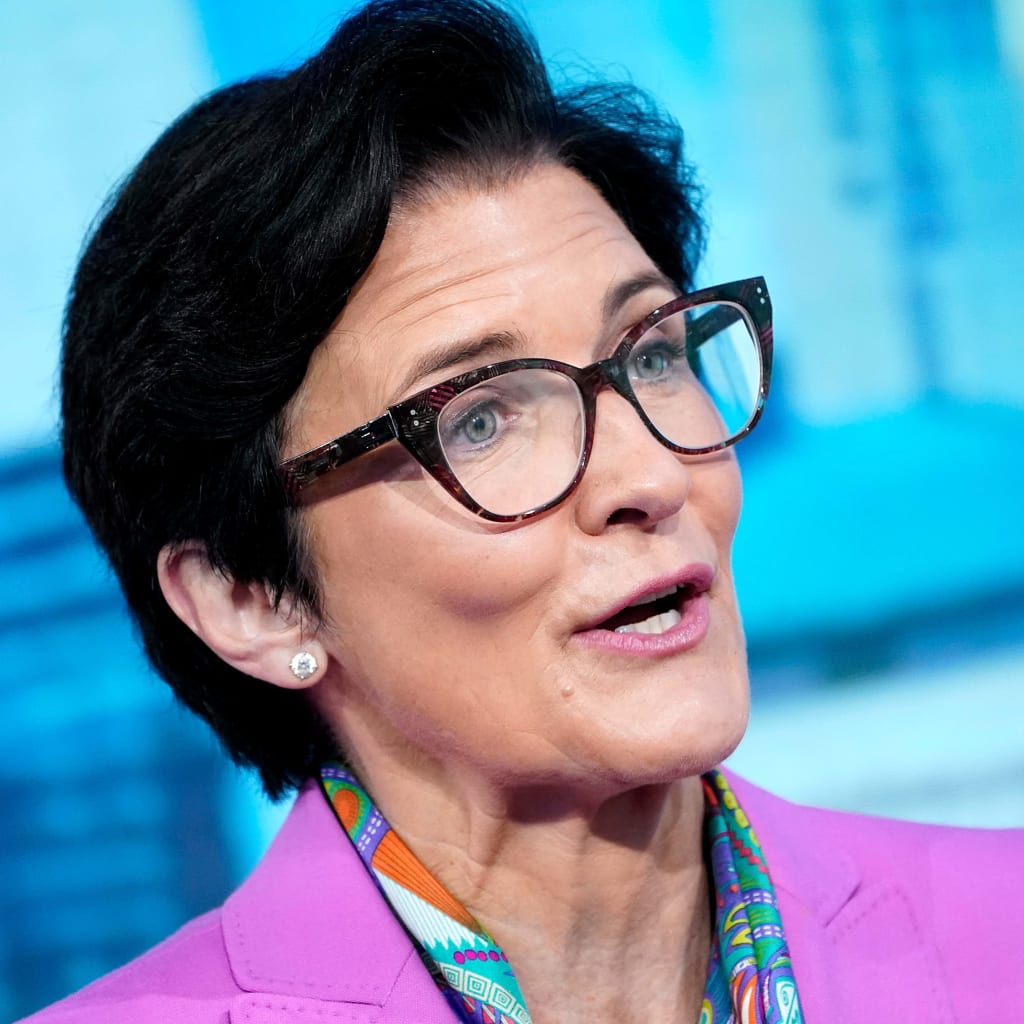
CEO Speaker Series With Jane Fraser
Event date
Speaker
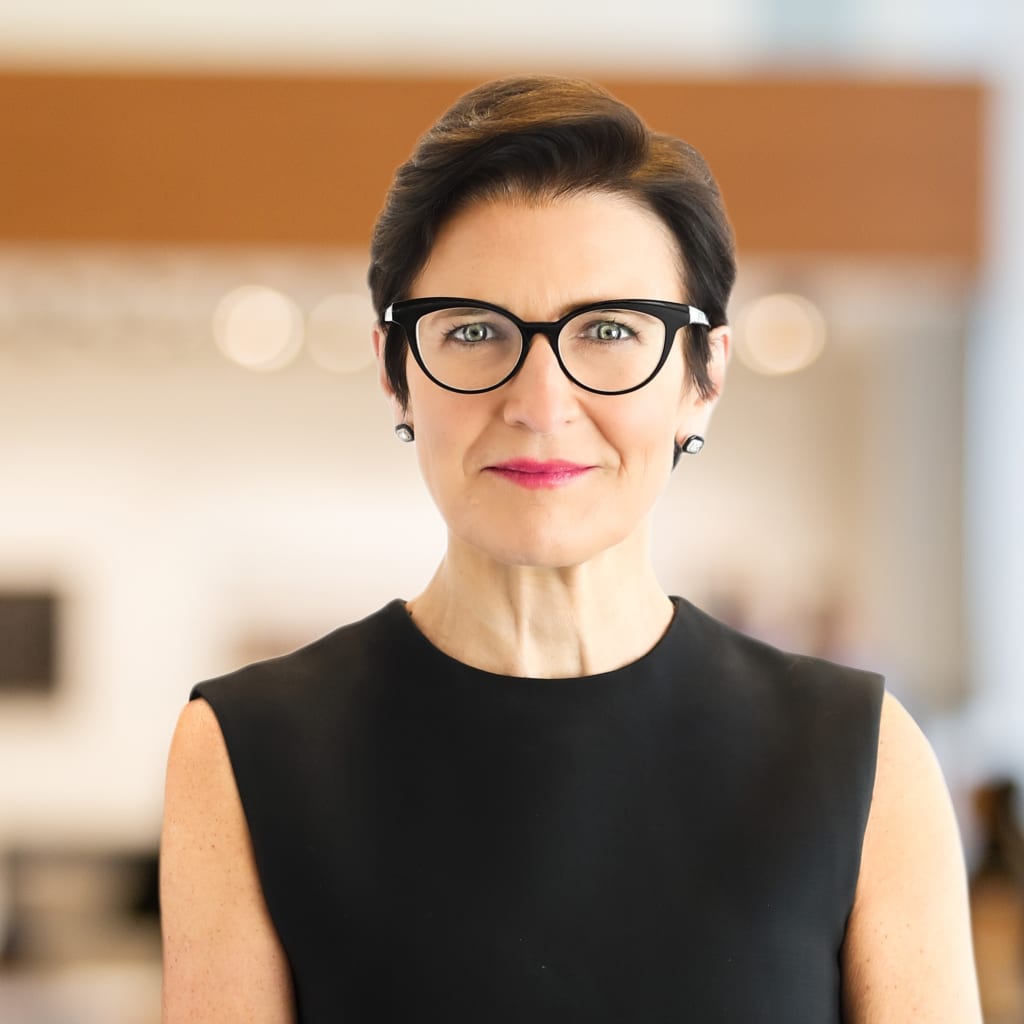 Chief Executive Officer, Citi; Member, Board of Directors, Council on Foreign Relations
Presider
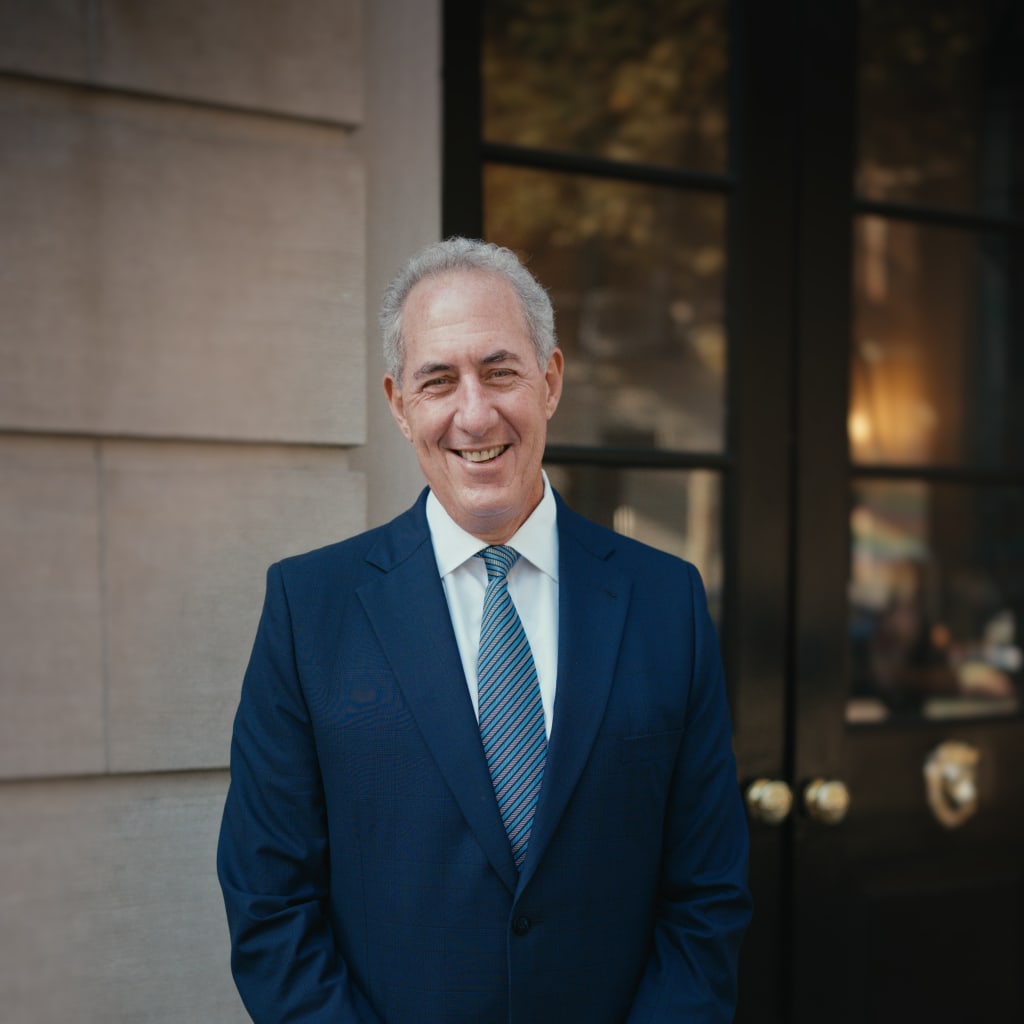 Michael FromanCFR ExpertPresident, Council on Foreign Relations
Introductory Remarks
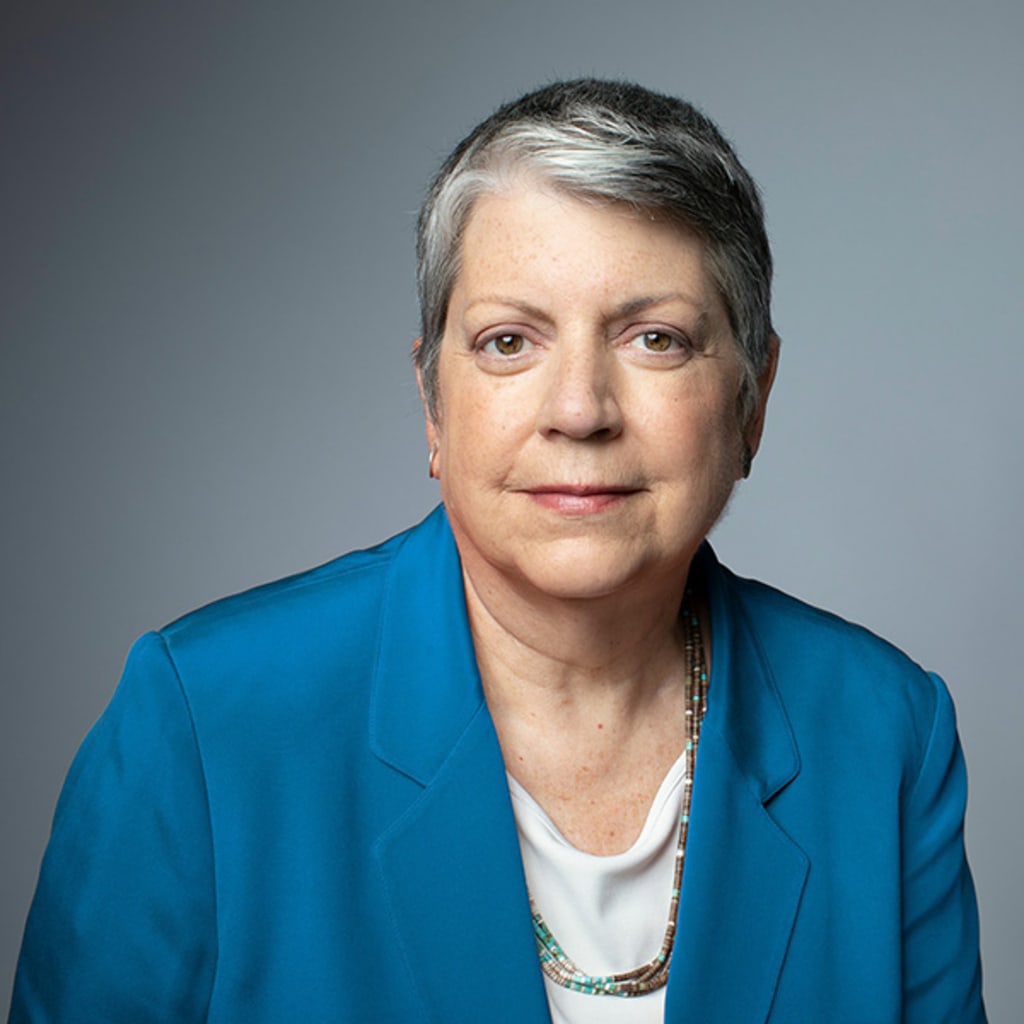 Professor of Public Policy, Goldman School of Public Policy, University of California, Berkeley; Member, Board of Directors, and Chair, Committee on the National Program, Council on Foreign Relations
From CEO Speakers.
The CEO Speaker series is a unique forum for leading global CEOs to share their insights on issues at the center of commerce and foreign policy, and to discuss the changing role of business globally.
FASKIANOS: If everybody could take their seats. If everybody could take their seats. If everybody could take their seats, we are going to get started. So there are—there are seats up front—maybe not anymore, but seats here. Welcome, everybody. It’s so great to have you here in New York at the thirty-first National Conference. We are going to get started. All right, everybody. Time. Yeah, it’s on. All right, everybody, we are going to get started now.
This session’s on the record. It is the only session of the conference that is on the record. We are zooming it. And so please mute your phones, silence your phones, and we will take questions from the audience and from those listening online. And I’m going to turn it over now to Janet.
NAPOLITANO: Thank you, Irina, and welcome you all to the thirty-first annual National Conference. It’s a delight to see everybody here today.
My name’s Janet Napolitano. I am a member of the CFR Board of Directors and the National Program Committee chair.
So, first of all, I want to thank those of you who traveled to get here for traveling to get here for the next two-and-a-half days, where we will be delving into some of the most pressing issues facing the United States and the world—from trade, tariffs, shifting transatlantic relationships, the war in Iran and its effect on global energy markets, and a debate on the future of AI to changing dynamics in the Western Hemisphere and the U.S.-China competition, not to mention the additional twenty small group breakouts that will allow you to dive deeply into topics with your fellow members from across the country and, indeed, from around the world.
At this conference we expect 430 participants hailing from thirty-seven states and fourteen countries. All of you will be joining us in New York over the course of the conference. Moreover, all CFR members have the chance to join us tonight via Zoom. And we are thrilled to have my fellow CFR board director and Citi CEO Jane Fraser with us, who will be addressing the Council membership as part of the CEO Speaker Series. The discussion will also be posted to CFR.org for those who miss it or would like to revisit it.
As we kick things off, I want to just take a moment and recognize Mimi Haas for underwriting the National Conference and supporting CFR’s National Program more broadly in memory of her late husband, Peter. While she can’t be with us in person this year, we send our thanks to Mimi for making this important event possible.
As this is my last National Conference as the outgoing chair of the National Programs Committee, I want to share a few thoughts on the importance of CFR’s national presence in my time leading the committee. Forty-three percent—43 percent—of the Council’s membership now reside outside of New York and Washington, a number that has been steadily increasing. A decade ago, it was 36 percent. And it was 39 percent when I became the committee chair in 2018.
This programming year, the National Program will have convened nearly one hundred on-the-ground sessions for local CFR communities across the country and around the world, a 38.5 percent increase from last year. We plan to build upon this momentum going forward to bring you additional opportunities to connect with the Council and contribute to CFR’s research and publications.
We’re also working to deepen CFR’s reach nationally by expanding into new cities. To that end, this past March we inaugurated the initial National Retreat, a third annual event for national members as well as local civic members—civic leaders, excuse me, designed to spotlight the industries and issues shaping America’s future in different regions of the United States. We launched in Nashville; and we will gather in a different location each year beyond New York, D.C., and California to discuss topics of relevance both locally and globally.
I’d like to close with just a few thoughts. First, I want to thank Irina Faskianos and the incredible staff at CFR for all the work they do in organizing the National Program. Let’s give it up. (Applause.)
And, second, one may ask: Why does CFR have a National Program Committee? After all, everything related to foreign policy, national defense, and whatever, those are decisions made in the nation’s capital and the world’s financial capital in New York. But that is just so wrong. The United States is a very large, diverse country. People in all fifty states and our territories have a direct interest in how the United States conducts its foreign affairs. California itself, where I now live, is the world’s fourth-largest economy. You know, many states have either Mexico or Canada as their number-one trading partner, as I did when I was the governor of Arizona, and so a direct interest in the review of the USMCA that will happen in 2026. And all Americans have a direct and vital interest, a common interest, in how the United States relates to the world and how the world relates to the United States. And all of this is bettered by analysis that is undergirded by smart, fact-based people who are really focused on the issues and how they play out over time.
Now, I have to admit, I suspect at this conference there will be a lot of, shall I say, doom and gloom. We—(laughter)—I mean, come on. (Laughter.) You know, we’ve got the war in Iran. We seem to be not winning our competition with China. We have stresses all over the globe. We have doubts about how decisions are being made and policies are being implemented. But we’re in New York City, right? We were down twenty-nine points last night. (Laughter, cheers, applause.) So just as we go through our conversations over the next few days, just remember we can all be the Knicks.
Thank you much. (Laughter, applause.)
FRASER: Good evening.
FROMAN: All right, so that’s the theme of this.
FRASER: Yes.
FROMAN: We’re all Knicks now, right? (Laughter.) OK.
It’s great to see everybody. I’m Mike Froman, president of the Council. It’s great to see you from all over the country and from other countries. Delighted that you’re all here. And it’s a great pleasure to open up our National Conference with this conversation.
First, I wanted to thank Janet once again. As she said, she’s actually rotating off the board after serving her two full five-year terms. And we’re going to miss you greatly, Janet, both as a board member, and as chair of the National Program Committee, and just as a good friend and former colleague in government. We’re going to really miss you, and want to thank you for everything you’ve done for the Council. (Applause.)
So, Jane Fraser, chair and CEO—recently combined chair, right?
FRASER: Yes.
FROMAN: They combined the chair and CEO again of Citi. Held many different roles at Citi—had consumer bank, private bank. I remember when she joined as head of strategy—
FRASER: Yeah.
FROMAN: —from McKinsey. And has done nothing short of a(n) incredible transformation of the bank, along with the rest of the financial sector. It’s great to have you here. But I would be remiss if I didn’t mention one of her most recent accolades, which is as being chosen as number one on Fortune’s Most Powerful Women in Business. And I think that’s deserving of applause. (Applause.)
So thank you for doing this. And as a member of the CFR board as well, which is a great privilege for us—by the way, we had a board meeting this afternoon.
FRASER: Oh, it’s a joy—it’s a joy for me, so.
FROMAN: We had—we had a board meeting this afternoon. Our chairman is here, David Rubenstein. Thank you, David, for all you do. (Applause.)
FRASER: Yeah.
FROMAN: And I have to say, when I—when I got this job three years ago David said to me: We have these board meetings. Keep the business of the Council short, less than forty-five minutes, because the board members really just want to come and talk to Jane Fraser, and James Gorman—(laughter)—and Bob Rubin about what’s going on in the global economy, and you know, Fareed and others about what’s going on in foreign policy. And they’re absolutely, absolutely right. So we’re privileged to have such a great—a great board, and we learn so much from them.
Let’s start with the big picture. The world’s a bit of a messy place, right? We’ve got inflation. We’ve got wars going on. We have energy prices spiking. We have economic cycles, which I think continue to exist. And yet, the U.S. economy continues to grow. The global economy, while a bit slower than it’s been, we’re not in crisis. Why is there so much resilience in the global economy, and very much in the U.S.? Are you surprised by how resilient the U.S. and the global economy are?
FRASER: Oh, I think we’re all surprised and relieved at how resilient the U.S. economy is. I think part of it comes down to you never want to bet against the American entrepreneur. The adaptability and resiliency that many of America’s great companies and also smaller entrepreneurs have demonstrated—COVID, rate surprises, tariff and trade wars, and challenges around, and yet they adapt, and innovate, and have been an incredible source of resiliency. Their balance sheets at the moment are probably the strongest that we’ve ever seen them, and I think that’s been terrific for seeing the American companies also on the front foot, innovating. I’ve just come from traveling around Europe and parts of Asia, and there’s just such a difference. Here, you just—you see the embracing of AI—which has got its puts and takes, but that, I think, has been one of the sources of resiliency despite some of the politics that have been going on.
And the consumer has also been resilient. We sometimes forget how strong America is because of that, the affluent consumer base that is here in comparison to other countries, and that consumer has also been resilient. They’ve had two legs to their income, which other countries—my former one does not have; because it’s not only got wages, but for so many the savings and investments they’ve made has given a second leg to their—to their financial well-being, but also to their prosperity.
So, you look at Europe, which has—was roughly the same size of an economy as the U.S. coming out of the great financial crisis, and it is half the size of America now. So I think we sometimes forget we have—we sell ourselves short sometimes in the States.
FROMAN: On the consumer side, are you seeing that resilience continue, or with inflation? It’s now been a long time. I mean, there was a lot, and wages have gone up but they haven’t gone up necessarily as fast as inflation. How worried are you that the consumer of last resort, which is really what the U.S. has been—
FRASER: Yeah, yeah.
FROMAN: —for the global economy—how worried are you that that’s a little wobbly?
FRASER: So they—there is a huge difference between sentiment and spending. So the hard and soft data have had this big divergence. How we’ve seen it play out is that the consumers have tended to be more fiscally responsible. I’d love to see them saving a bit more than they are in the lower-income levels. And I think that’s why we all keep a very close watch on the job market, because if the labor market really gets hit then that’s going to have a material impact, you know, on everything. But at the moment it’s a—it’s a low-churn market, so not a huge amount of job creation but not a huge amount of job loss either. So we’re kind of treading water. It’s fragile, but it’s still working. And everyone in my bank every time it comes out, the unemployment number, you know, that’s a number we’re looking at in particular as a source of potential fragility in the economy. But so far it’s—so far it’s been performing pretty well.
FROMAN: You know, one of the things the U.S. has had going for it is the centrality of the dollar to the global system, the exorbitant privilege of us being the reserve currency of the world and therefore other countries being willing to lend us money at really quite modest rates for us to run big deficits, or to borrow and keep that spending going. You know, back about ten-plus years ago we started using that centrality of the dollar as a global chokepoint, so to speak. We recognized that every country was reliant on it, and every terrorist organization, and every international criminal gang, and therefore we could cut things off by imposing sanctions—the weaponization of the dollar. We now see countries—not just potential adversaries like China or Russia, but even friendly countries; Europe, Canada, others, India—saying they don’t want to be so reliant on a dollar-based payments system or a dollar-based financial system. How is that affecting the role of the U.S.? And how worried are you about the continuing centrality of the dollar as the reserve currency of the world?
FRASER: So at the moment it’s wishful thinking to be able to move onto a different system. You know, think of it: The U.S. is probably after the SpaceX IPO even higher, but it’s—typically, about 70, 75 percent of the—of all market capitalization in the world is in the U.S. So the dominance of the financial flows and the financial power of the—of the U.S. shouldn’t be underestimated.
There aren’t a lot of other alternatives. The renminbi, the Saudi finance minister one time said—we were talking about different flows and he said: You know, we’re going to be accepting renminbi for the—for our oil. And he said: That’s interesting. How are you going to hedge it? And he says: Well, maybe in five, ten years we will be. And I think that’s a bit of the reality.
You know, Europe has been disappointing in terms of the strength of the euro and the development of their capital market. There’s $20 trillion worth of savings in Europe that could be deployed into investment, and they’re just sitting in deposit accounts.
So there’s a lot of different things that the world has to do to develop more of the depth of—and liquidity in different currencies. There’s an inevitability of it will happen. It’s not happening for a while. But we are starting—we’re certainly seeing a lot of desire to build out alternatives in this sort of world. You want diversity. You know, we often say there’s no—the only free lunch in investing is diversification. But at the moment the roads lead to the U.S.
And so while there was a lot of anger—I’m sure anyone who’s been traveling abroad occasionally mumbled that you’re American in certain geographies around the place. I occasionally introduce myself as a Scotswoman running a global bank. (Laughter.) Accent helps. (Laughter.) But what we’ve seen is no one was dumping the dollar; they were hedging it. And we’ve seen that. We have the largest foreign exchange business of any of the banks globally, so we see a lot of that flow. And eventually it will happen, and it will happen. We will lose that privilege that the dollar has because different consumers will grow around the world, capital markets will develop. For the moment it’s ours, but we’ve got to—we’ve got to recognize that the clock is ticking and that exorbitant privilege will go one day. But at the moment no alternatives and we’re the best place.
FROMAN: And yet, economists will say the trajectory we’re on is unsustainable.
FRASER: Absolutely. I agree with it. Yeah.
FROMAN: The debt, deficit. We’re heading towards 130 percent of GDP as a deficit. But of course, they can’t tell you when or what’s going to trigger it, but they feel at some point it’s too much.
FRASER: And this is what—when we’re talking to different governments around the world, different central bank heads, finance ministers, and they all have their declarations, you say: What are you doing about it? And I think at the moment much of the world is still in a protect what you have not built what you—what you need mindset. And the build what you need requires a lot of disruption, and at the moment a lot of what they’re putting their deficits towards is protecting what they’ve got, whereas some countries are putting more of the spending towards building what they need for the future even if it’s disruptive. And that’s something China does. It’s something that the States does. It’s not what Europe does. It’s not where many—many other countries don’t do that.
So eventually it will happen. But we do need the others to start getting their act together and building the alternatives more effectively than they have done. I think the bottom line, Michael: No one’s getting style points at the moment. Yeah.
FROMAN: And when you—when you look at the two—these two factors, the weaponization of the dollar and our fiscal trajectory, in terms of the future of the dollar which worries you more, when you go to policymakers and say, you got to solve this problem?
FRASER: Eventually, the—I’m Scottish, so eventually it’s the debt—
FROMAN: You don’t like to borrow, yes.
FRASER: You don’t like to borrow what you—(laughs)—what you can’t afford. So I—it is worrying around the world, you know, the debt levels. Yeah.
FROMAN: You were one of the CEOs on President Trump’s recent trip to China.
FRASER: Yeah.
FROMAN: You made quite an impression on him. (Laughter.) Donald J. Trump, from Truth Social: “Wow! CITI was ranked Number 1 in topping M&A Advisory Market by Value in Q1. Congratulations to Jane F and ALL of her great people. They’ve worked really hard! BIG comeback for CITI!!! President Donald J. Trump.” (Laughter.) Now, he didn’t say thank you for your attention to this matter, which is—(laughter)—so I can’t tell whether this is a bona fide Truth Social post or not a bona fide. But, well, first of all, congratulations.
FRASER: Well, first of all, sadly, we are not number one in M&A.
FROMAN: He got—(laughs)—
FRASER: We’re getting there, but we’re not there yet. But—(laughter)—
FROMAN: If the president decrees it, you will be number one. (Laughter.)
FRASER: Yes. Yeah, yeah. We fully intend to be, but I have to give David Solomon his due there. Yes.
FROMAN: Yeah. So you made quite an impression. Tell us a little bit about that trip. How much fun was it? (Laughter.)
FRASER: Well, it’s one of those ones where I grew up in a small town in northern Scotland, and never in my wildest dreams do you ever imagine that you’ll be standing there at Tiananmen Square as part of the American delegation when the American president arrives and is greeted by President Xi with all the Cabinet—the two Cabinets standing in front of you. That is to say, you’re pinching yourself. I think we all were, everyone there. That was a remarkable moment to be part of.
I think it demonstrates that the president certainly likes having some of his—the CEOs of the big American companies there and to use it as part of the soft power of America. And at one moment he pulled all the CEOs into the room, we stood behind the U.S. Cabinet facing President Xi and his Cabinet, and he had us explain what were our businesses, what did we do in China, what would we like from the trip, and what we’d do to strengthen the ties between our company and China, and have that conversation. Equally, I never thought that would ever happen.
So, no, it was certainly very helpful for all of the CEOs there to be, you know, playing a role, because China is a very important partner of the U.S. from a trading point of view. And while there are areas of being completely decoupled, there’s a huge amount of areas that there’s enormous mutual dependency on. And so that was—certainly made it helpful for us to have an endorsement of it was OK to do some business with China, and vice versa from the Chinese.
FROMAN: The president and the administration seems very focused on maintaining stability in the bilateral relationship. It’s a very important relationship. They’ve talked about détente, a decent peace. What’s your view on what the most—the best-case scenario is for U.S.-China relations? Is a decent peace the best we can do? Do you think we can try and resolve some of these underlying economic-imbalance issues that are driving a lot of the tensions? Is it about soybeans, and airplanes, and the like?
FRASER: I think that’s what the agenda at the G-7 is going to be in Paris, on exactly that question. I don’t think you’re going to get much better than a—and let’s hope for—a peaceful coexistence in certain spaces and in other spaces that there is cooperation between the two. And that’s what the rhetoric was. Neither side came in expecting anything other than: Can we strengthen engagement? Can we get more stability? But both sides were being pretty muscular. No one wanted to give in on anything. But a lot of the dialogue—I felt the media gave a—you know, didn’t really show what was happening underneath. You know, Scott Bessent and Jamieson Greer were doing incredibly hard work and making sure that there is strong productive engagement, that there is—where there are areas of disagreement they’re being straightforward about it. But not a lot gets achieved, but engagement and uneasy détente is certainly better than the alternative.
I just—I think in an AI world there’s some focus, say, with AI, we’re all going to get together and come to global harmonization and agreement because it could be the death of all of us. Well, I don’t think that’s the case, but I certainly don’t see anything other than two distinct spheres for a number of different areas.
FROMAN: And you’ve been traveling elsewhere. You were in France and in India as well.
FRASER: Yeah. Germany, yeah.
FROMAN: In Germany. How are these countries—how are they trying to navigate the U.S.-China relationship? And how do you, as a—as a Scottish CEO of a global bank that happens to be based in the United States, how do you deal with the American nature of Citi when America is maybe not as popular as it once was?
FRASER: So what—I mean, I think what we see is Europe’s in a, I think best described, a bit of a pickle—you know, Germany in particular—because they put a lot of their bets on the Chinese market for their manufactured goods; energy to Russia; and outsource defense and a lot of technology, it turns out, to America. And now, when you look at it, think of Germany is the—sorry, China is the manufacturing juggernaut of the world, and they’ve also put an incredible amount of money into physical AI. We don’t talk much about physical AI in the States, but there it’s all they talk about. And it’s extraordinary what they do. Over 50 percent of all the world’s robotic firms are in China. You know, just think about that. You know, we—no one can compete with that, with their scale. And you’ve got tremendous competition within the Chinese market, and all those firms have massive overcapacity. They’ve been subsidized, but they’re going to dump all of their products on the rest of the world, and they are better products than most of the rest of the world produced, and they’re a lot cheaper.
So this is a real problem for the manufacturing countries in Southeast Asia, but particularly for Germany and large parts of Europe. And so, ironically, we may end up seeing the Europeans actually aligning with the U.S. on their trade and tariff policy. We should ask you that question. (Laughter.) And—because I think that’s the only way they’re going to be able to defend against the onslaught. And Germany at the moment is losing 10,000 jobs a month because of the Chinese imports that are coming in. So they are really, really worried about it, not just the car industry—which is at the forefront—but everything else. But you can have the similar conversation in much of Southeast Asia as well.
So I think that’s where some of the challenges really do lie, separate to the worries about, you know, hacking, and cyber, and other threats. There’s a real threat to these economies, and they’re very worried about it in Europe. They just seem to be struggling into how they get to a coherent plan to tackle it. I felt there was a real loss of confidence in their ability to get this done even at the senior government ranks in many of these countries.
FROMAN: You know, I find it—totally unintentionally, but I find that our conversations about Europe on this stage almost always end up being quite pessimistic indeed.
FRASER: Yeah.
FROMAN: Is there anything in Europe that gives you hope?
FRASER: The food’s wonderful. (Laughter.)
FROMAN: The museums, the sites.
FRASER: Well, they’ve got—so let’s take a France. So I was with President Macron, because he has a big gathering of different business leaders earlier in the previous week, and you know, they’ve got more energy sufficiency in terms of nuclear capabilities than others, so that they don’t have that issue so much; an incredible technical talent that’s there; and many abroad because the tax rates and various other things are less attractive in France; and you know, some—quite a strong entrepreneurial, fintech and other tech, base that’s being that’s been—that’s building up. So you’ve got a—and you’ve also got some great—you know, good values, alignment of values across Europe, et cetera. They just can’t get out of the way to take the bigger, tougher structural decisions. And so no one is willing to place the vote for the better of the whole and diminish the individual countries.
And it’s even in defense, which is somewhat mindboggling given everything that’s happened in Ukraine and Russia. You can’t see alignment about trying to get to single big defense players in Europe, let alone bank mergers, let alone other pieces.
So I think that’s where the pessimism comes. And it starts with a mindset of protect what I have, death by disclosure and documentation by the bureaucracy, but this mindset I have to protect. But in today’s world, you do that and you diminish what you have as opposed to if you take the tough calls, build what you need, if that means disrupt handle that disruption but then move forward. And I think that’s two very different models between China and the U.S. I’m glad we’re in this one, but you know, it’s just night and day as to who will prosper and who won’t.
FROMAN: Right.
Let’s talk about disruption in technology. AI and quantum, incredible developments. Affects so much—so much of the economy, but very much the financial services sector. How do you think about AI and quantum, the impact on cryptography, protecting your consumer/your customers, how you use AI? What do you—some of the more interesting use cases you’re finding at Citi for this?
FRASER: Yeah. Yeah, yeah. So there are—there are sort of two races on in AI. One is to apply it to business models so that you can drive growth, you can drive more efficiency, you can reduce costs, you can improve the service to customers, much more personalized. And then there is the race for defense, which Mythos and the new OpenAI model which is even more powerful is demonstrating enormous vulnerabilities in all of the tech stacks that we’ve got. So you’ve got two races going on simultaneously. One gives you a bit more joy, but needs to be handled carefully. And the other one there’s no joy in it whatsoever; it’s a race for defense. At the end of it, we might be in a better place. But that’s very much in the to-be-determined category.
So when we first started applying AI, it was mainly to our coders in the tech space. And what we found is our coders have just become incredibly more profitable and more productive. They can do an awful lot more than they ever did before. And what struck me, we have a wonderful tech center in Tel Aviv with these incredible Israeli experts—all young, a lot of them women, which is fabulous. And one of them showed me—she’s one of our top coders—she’d been working with her team on something for three weeks. They came up with the answer. And then they gave it to Claude, and in three minutes that we went to go and get—make a cup of coffee and bring it back Claude had come up with the solution on this, and it was better than her team had done in three weeks. And that’s a level of improvement, it just—it’s staggering. It’s coming up, the same—the new models that are out on the cyber front are finding vulnerabilities no human could find.
So the job at hand is, therefore: How do we make sure that we’re driving economic growth with these models and finding new ways of doing things? So I’ll give you an example. In Italy, the eyeglass firm is called EssilorLuxottica. And their market has been flat for ten years at a particular size, so they kind of grow with GDP. And they make very stylish glasses, as you imagine the Italians would. Their addressable market went from 10 billion (dollars) to $100 billion because you could put smart glass into the lens and you can—you know, they’re working on putting hearing aids and capabilities into the frames, so better than what you put in your ear, et cetera—more comfortable, more useful. And their potential and their growth potential suddenly went from this to that.
And you’re starting to see different areas of opportunities from AI. In India, talking with Prime Minister Modi, we were talking about the rural populations. They’ve got a digital payment network now. They’ve now got solar into much of the rural communities, so they’re not—their power isn’t coming from cooking oil, which is awful for health and various other pieces. But they’re now looking at how can they then enable a lot more of the rural communities and the entrepreneurs there to be selling goods, to be using AI as a way to generate a lot more growth, and better health, and better opportunities in that. So these technologies have got the ability not just to make the uber-wealthy even more wealthy but actually to do a lot of good, particularly in many of these emerging markets, deeper into the populations if we can harness that way and drive growth. I’m seeing a lot of growth that we’re developing from new services, new features, new capabilities from AI.
Then there’s the other piece, which is also driving operational efficiency. So you look at our—we’ve taken our top hundred processes, a lot of them quite—still quite manual in nature, and we’ve been applying AI to them. And I draw the analogy think of how you wash a dish by hand as opposed to how a dishwasher washes a dish. Completely different. And so what AI is doing is instead of making it more efficient to wash a dish by hand, it came up with an entirely new way of washing a dish, the same way a dishwasher does. You end up with a better-washed dish off the dishwasher.
But that’s going to mean quite a bit of dislocation, particularly in larger companies, because you’re going to be replacing a lot of the manual labor and manual work with automation and with AI. And so I think the question’s going to be: How much of the—how quickly will the new jobs come in, as opposed to taking out the old ones which will be replaced with technology? And then you’ve got all the other jobs which are going to get changed by technology but there’s still a job. So we’re going through a lot of work trying to train as many of our people as possible with the view that many—some of them—some of them are going to lose their jobs; how do we try and make sure we can redeploy them in other jobs within the company, or at least make sure they’re skilled so that they’re in a better position to be able to operate going forward? We just don’t know the timing of the puts and takes, and I suspect it won’t be the timing that would be the utterly desirable one. So that’s going to require quite a bit of work. So that’s how we’re looking at it and thinking about it, if that’s helpful.
FROMAN: Before we open it up to everybody for questions, let me just ask you a question as CEO—
FRASER: Yeah.
FROMAN: —how you think about your role. How do you think about navigating the demands on a CEO to be a societal leader, to comment on one set of issues or another versus sticking to the knitting of shareholder return?
FRASER: Yeah. I think it’s different if you’re a founder CEO than if you’re an employee CEO. My job is to be the custodian of our company. It’s a 220-year-old bank, almost. I want to make sure that we’re setting it up for the future. So my job’s not to make comments on society and other pieces; my job is to make sure that I’m satisfying all of our stakeholders.
That said, I’ve got to make sure what is—what we’re doing and what’s going on is in the interest of our customers, of our people, and the different communities we serve. So if we see things that is particularly problematic on certain fronts that we think needs to get changed or addressed because it’s in the interests of our customers, or of our people, or of other critical stakeholders, our investors, then we’ll speak up. But I find I try not to share my opinion, my personal opinion, as opposed to do my job as a CEO, and stay in that swim lane, and not go beyond.
FROMAN: All right. Last, rapid-fire question.
FRASER: Yes. (Laughs.)
FROMAN: Biggest accomplishment, biggest surprise, biggest piece of unfinished business.
FRASER: (Laughs.) It’s wonderful to be—you know, to have the privilege of running a large American global company, and so to have had the honor of that and be given that honor. It was one of the—one of the prouder days of my professional career. I’ll stick to the professional side because my husband’s sitting in the audience. (Laughter.)
FROMAN: Yeah, we’ll give—we’ll give him time for rebuttal.
FRASER: If I don’t say the day that I married him and we had our children, we’ll have an issue. (Laughter.) It’ll be a conversation at home later. (Laughter.)
But that was an incredible privilege. The unfinished business is our bank had to go—we’ve taken the bank through a lot of turnaround, restructuring, and positioning it for the future. I’m glad to say we’re in that position where I feel like we’re now—I’m in the position to run the new—the new bank, but we’ve got a lot of unfinished business to make sure that our peers cower in terror when they see us turning up. (Laughter.)
FROMAN: And then the president will send another Truth Social post out. (Laughter.)
FRASER: Yeah, that was—I have to say, that was rather unexpected. So, yes, a lot of unfinished business do. A lot of upside to be gained. And I think all of my team, myself, we feel we’re on a mission in a world where there’s tremendous complexity. Imagine, Citi moves $6 trillion every day around the world. That’s bigger than the GDP of Germany every day. Foreign exchange, in trade, some of the what used to be the deeply unsexy side of banking. But now, it’s become a source of resiliency. So our job is in a—in a somewhat, as you say, crazy world, is to make sure that we’re a source of operational resiliency for companies and our customers, so they don’t worry about their wellbeing and financial health from operational issues, as well as financially, and to help finance investment and all that’s needed to capture opportunities and growth. And it’s a privilege to do it. But we’re not done yet. (Laughs.)
FROMAN: Terrific.
FRASER: Thank you.
FROMAN: All right, we’ll have questions from the room and also from the online audience. This is on the record. I should have said that on the—up front, but now you’re all been warned. And when you’re called on, please stand, briefly ask a question. That’s one of those things where it ends with—it goes up at the end of the sentence. (Laughter.) There is actually a question, so we get as many in as possible. Let’s see the woman right there. There you go. Wait for the microphone.
Q: I think you said woman, right? Rickey Bevington, president of the World Affairs Council of Atlanta. Thank you so much for this conversation.
If I can pick up on the point of Americans being the consumers of last resort. We are living in—we are told that we’re living in an era of great income inequality in the United States. So this is a question about the American consumer. I love the concept that the financial health of American consumers rests on two legs, wages as well as savings and investment. But we’re told, by the media at least, that wages are not keeping up with inflation, and that a small percentage of the American consumer is even in the stock market. So how bullish are you on American consumers, whose wages are not keeping up and who are not in the stock market? Thank you.
FRASER: Yeah. So there are still a large number of American consumers who are—who are, in comparison to other countries—so when we look at it on a relative basis—there’s a lot. And think about pension programs, think about the other elements that we almost take for granted that are in place. So that, I think, is one of the strengths of longevity in the U.S. side. Unquestionably affordability is a worry. You hear it everywhere around the world. You hear about housing affordability. It is an issue here. We don’t have a big enough stock of housing in the U.S. So over and above where the interest rate is for mortgages, which makes it hard, you’ve then, with a—with too small a supply of housing, you’ve then got an ability to afford housing problem in the States. I don’t—that one is not in a good place. And I think affordability—certainly having another round of inflation, where the second- and third-order effects of the Middle East crisis are really only just now beginning to have an impact and filter through all the value chains, getting passed down to the consumer. Again, we’re going to have another round where it’s going to be tough for people. I think, as employers, many of us are talking about how do we make sure that we’re ensuring our people have a wage that they can live off and have a quality of life they expect, otherwise we’re all going to have a problem.
FROMAN: Yes, this gentleman right here.
Q: Randy Stone, political science, University of Rochester.
FRASER: Oh, hello, Randy.
Q: Hi.
So I wanted to ask you about bank deregulation. It seems to be the theme of the day in Washington. That, you know, after the global financial crisis we tightened these things up, and then under the first Trump administration they were loosened, and then under Biden they were tightened, and now we’re scrapping the regulations again. Which presumably is good for bank short-term profits, but very risky, maybe, for the global financial system. So I just wanted to ask your perspective on this.
FROMAN: Yeah. It’s a really—it’s a really great question. You know, as a banker, I want to have good regulation. Good regulation protects investors and consumers, and it enables innovation. When you don’t have it, it’s not—it’s not great. We saw that in crypto, where a lot of money was lost because it was not looked after responsibly. But I think the change that we’ve seen in the banking side has been not so much a deregulation, but actually a refocus on what matters much more. So we’ve had—the last fifteen years have been—they’ve certainly not been banal, but they’ve been quite benign, from a credit environment. And it really struck me when Jay Powell was talking the other day, and he said he’s only had three months of recession in all his time, as the—and that was during the COVID period—during all of his time as chair. And since the great financial crisis it’s really not had a deep recession, although COVID was a—I’m not quite sure how you describe that period. Very stressful for people.
So what the regulation at the moment—what our supervisors have been told to do is to focus on the material financial risks. So what I’ve seen is I have the same number of examinations. I have a very similar number to what we had before. But now they’re focused much more on the financial health of the bank. They’re looking at private credit, making sure that—what are we thinking about software and our own software stack, and will that be redundant soon? How are we thinking about software in our credit decisions? If AI is going to replace software, have we made the right credit decisions in other areas? So what I’ve—what have given me enormous comfort is it’s not been so much a pivot from the banking side to removing regulation, as opposed to a focus on where the risks actually are, because they’re material and they’re a lot less benign than the last fifteen years have been.
So that’s what I—that’s what I experience. And I think some of the deregulation in other industries, we were getting a bit more like Europe where it was too much focused on governance and documentation rather than actually getting solutions put in place. I think we see that with permitting in getting a plant built. It takes America two to three times longer to build a factory than China. It costs us twice as much, at least. You know, we can’t compete on that. That’s not good for the country. So how do we find things that keep the protections for consumers and investors in place, but help get rid of some of the bureaucracy so that everyone can focus on a solution rather than stopping things that need to happen, but at the same time make sure that the safety nets and responsibilities for everyone. So that’s—I’m not as worried about things getting removed, as opposed to focus actually turning where it should.
FROMAN: Yes, on the aisle here. There goes the microphone.
Q: I’m Fernande Raine with the History Co:Lab.
I have the privilege of working with young people all over the world a lot of the time. And one of the beautiful things about talking with young people is that they have a very clear idea of what the economy and the democracy of the future is that they wish would be. And a lot of what they focus on is things about managing the commons. It’s actually quite fascinating, if you map the things they say about how they wish the future would be, in Elinor Ostrom’s work, it almost matches one to one about the principles that they wish were in place for an economy of the future. My question to you is, to what extent do these voices of the next generation, particularly Gen Alpha and Gen Z, even come up when you’re having meetings? Probably not in Tiananmen Square in China, or with Donald Trump. But where do they show up? Do they show up? And in what way can you integrate them into the work that you do?
FROMAN: So our workforce is young. I feel like a grandmother sometimes speaking to a lot of our folk. And they’re—as you say, youth around the world who have—they want to seize the day. They’re very different from different generations. So we look at our different cohorts of our workers and our employees around the world. And if you’re not on top of what they’re telling you, they’re not hanging around for a long time. So I think all of us are very attuned to where their concerns lie, how they look at opportunities, what they’re expecting from their job. And we can certainly see from the data the generation that have been coming in since COVID is very different to the generation that came in pre-COVID, that’s very different from the generation many decades ago, alas, when I joined.
And the data is fantastic now at telling you. I think it’s much easier to be a leader because you’ve got so much information and content coming to you. And the best advice I ever got is from one of our—one of our board directors, who was the dean at Stern University. He said, Jane, you need two things as a leader. You need big ears and you need thick skin. (Laughter.) And he said, those big ears, because every year people are going to be telling you what you want to hear, or they think you want to hear, and not what you need to hear. So your ears better get bigger each year. And that’s one of the things we’re hearing from our customers, really listening to them, where are their fears, where are their—and what are they—what matters to them? And the same from our people. And if you don’t, you’re kind of doomed.
FROMAN: Hmm. This gentleman in the front row.
Q: Fred Hochberg.
Jane, you mentioned, and others have, that our economy is twice the size of the EU. Many Americans don’t feel rich. They don’t feel well off. So do we need to raise corporate taxes? What are we going to do to deal with the debt and to deal with our tax rate?
FROMAN: Maybe a financial transaction tax, in particular? (Laughter.)
Q: That could be one.
FRASER: So you’ve got to—when we think about—well, let’s look at the debt. You’ve got a—you’ve got to solve it in a couple of ways. One is paying it off, or the other is growing a lot so it becomes less of an issue. And that’s where we want to see, and where America has done a better job than Europe but not a good enough job, is growing. Because growth does solve a lot of different issues for people. And it’s where those two legs is helpful.
But you’re right. When you look at—look at all the sentiment, we look at the sentiment towards AI in a lot of different communities, and people see a very big datacenter, it doesn’t look so great, their power bills are going up, they’re worried about job loss, and they see the money going to someone who they don’t have much affinity with, let’s put it like that. That’s not a great formula and equation going on there. So I think it’s contingent on all of us to make sure that we find some ways for everyone to benefit in what’s going on. And some of that I worry about with where AI technology goes, because it’s going to concentrate wealth even more, if we don’t—we see it in Europe. I mean, the European elections are coming up. A lot of them are probably going to go to the far-right. And this is because the governments are failing to do what they need to do. I’d say the companies are growing, but they’re not growing in Europe. They tend to be growing their operations in the States or Asia. So we’ve got to keep working out how do we keep the U.S. growing in a way that doesn’t have an untenable debt situation. We may be a bit past the point of no return on that one, though. Yeah.
FROMAN: Hmm. Yes, this gentleman here on the second row. Yeah, here comes the mic.
Q: Roger Parkinson, a retired newspaper publisher.
You mentioned that Europe is resisting taking structural decisions that they need to take. What are the structural decisions that you think they need to take?
FRASER: Yeah. So someone much, much brighter and wiser than me put a—Mario Draghi—put a report together. And he essentially said, you need to create a common savings union, so—and capital market. Instead of just lending, having banks do all the lending, you also want to develop the bond market, securitization market, et cetera, so you can get cheaper funding for companies, you can get more of the savings into generating a yield rather than just in a bank account, and get all those mechanisms to work, which should then also be helping promote growth. Unsurprising, as a banker, I think that’s a really important one.
But we also need to see, you know, for them, they’re very dependent on a lot of U.S. companies. Think of the pharma industry, thinking of technology, and for a lot of the innovation that’s occurred. And they’ve got to find a way of building a stronger technology capability. They need more European champions, as opposed to national champions. It’s very fragmented. So a lot of their decisions have to come around of how do they realize the actual scale of Europe, rather than a fragmented—the dangers and disadvantages of fragmentation, which is what they have. They also have some pretty tough labor laws. And it’s difficult to be an entrepreneur. There’s a huge amount of bureaucracy. We think we’ve got bureaucracy here. They’ve taken it to a new art form there. So those are some of the things.
And I’ll give you a number that really staggered me. Germany’s working week is currently twenty-six hours. (Laughter.) Germany, right? They have the most number of sick days taken by workers of any country, you know, per worker in Europe, and the most number of part-time. If that’s—you know, it’s not what you—it’s not what Germany used to be. Scotland, where I’ve come from, I think is even worse. So these are some of the things of—I think, while the States is far from perfect, we have a much better equation of being able to operate somewhat independently of the politics of the day. And the economy does continue on more strongly. It’s far from perfect. And the wealth distribution mechanism is certainly not perfect. But it’s much better than you see elsewhere.
FROMAN: The woman near the back. There you are. Yes, waving.
FRASER: Good evening.
Q: Good evening. Juliette Passer, Stony Brook University, and many other jobs. Thank you for your presentation.
So, given the global presence of the bank, can you share with us some thoughts? What is the intersectionality between cyber security and AI? Has AI provided safeguards or created more crises?
FRASER: Definitely the latter. Unquestionably the latter. (Laughter.) The biggest risk and the biggest thing that sends me to the hairdresser every two weeks to get my gray hairs dyed—(laughter)—is the cyber threat. So right now the models, as I mentioned before, are uncovering vulnerabilities in every technology stack that none of us were aware of and knew of before. And if those models get into bad actors’ hands, then they can then attack and cause significant disruption to infrastructure, or payment systems, or other areas. So I think all the companies at the moment are in a race. We have our tech teams all lined up, because as all the different technology firms are coming up with the vulnerabilities, they issue what’s called patches, which is solutions to the vulnerability. And then all of our tech teams have to implement those into our technology stacks. And they have to do it damn fast. And luckily, AI is providing some of the tools to help you do that faster, but it’s going to put a lot of instability into the stacks. And it is a race to try and get as much of these vulnerabilities shored up before a bad actor starts attacking. So that’s, I think, one of the biggest threats at the moment that we’re all worried about, but doing something about quickly,
FROMAN: Yes. Joe. Right here, third row.
Q: Joe Hurd on the board of Lloyds of London. Good to see you, Jane.
FRASER: Oh, yeah, good to see you.
Q: So just to follow up on your previous answer. So it’s one thing to be concerned about the AI risk within your own stock. How concerned are you about your counterparty risk and the people that you do business, and all the other actors? And that goes for quantum as well, where you don’t directly control.
FRASER: Yes. Quantum scares me to death, because we’re—and even just when we look at the AI models, we were talking about this actually at the board today, just how exponential the capability development is. And you do sometimes scratch your head and say, does humanity really need this? But we’ve got it, so we have to deal with it now. But the ecosystems is where a lot of us spend a lot of time. So, for example, the banks—the big bank CEOs, we get together on a pretty regular basis. And, you know, we have a principle. You don’t compete on cyber. This isn’t a competitive piece. This is about protecting the system, protecting our clients. But also them making sure that the broader ecosystem around—and that includes power, and telecoms, and then water, and the like, it’s not just the direct piece—is also as resilient as possible. And that’s where a lot of work is going on at the moment. So I’m far less worried about my own institution; I’m much more worried about the broader piece, because it would be much more disruptive. And it’s much easier to control and recover within your own house, as it were, than trying to tackle the whole neighborhood. But we are tackling the whole neighborhood. Yeah.
FROMAN: Yeah.
We’ll take right here in the second row, then one more, and that’ll be it.
Q: (Off mic)—a bit more light for this group on a couple of aspects? Who have been the big winners in crypto so far? Who are the losers? And does it play a role in foreign policy we don’t really understand, like in North Korea and other places? And finally, like, five years from now, it’s going to be bigger, larger, a blip? What do you see?
FRASER: Yeah, yeah. So if we take a step back and just say, what’s happening, let’s say, in the—in the payment space, we’re moving to a world where it’s when you move money around it will be instant. It will be always on, so twenty-four/seven, three-sixty-five days a year. So instant, always on. And that there’ll be interoperability, so you can move from cash in different currencies to digital assets to different securities, different forms. And you want that to be as efficient and as seamless and as easy as possible. And you want it to be safe and secure. And that’s really the rails that are being built today, so that money can move around on traditional rails in bank, it can move around on blockchain, and all of this, if you’re the customer at the end of the day, should be as seamless and as easy for you as possible. That’s where the world is headed.
And we’re not there right now. So if you’re moving from cash to stablecoin—I mean, if you think about the airport, and you’re paying four bucks to get $100 out of the cash machine, you’re paying seven bucks to move—for that $100 between coin and cash right now. That will eventually get brought down. We’re all working to get the on and off ramps. But that the world, that’s the target state we’re trying to get to. Which all sounds jolly sensible. And, again, another on these ones if you’re a banker and you don’t get on to recognizing that’s what your customers want and need, then you’re going to get left behind as a dinosaur. So, I think we’re all embracing the new technologies and trying to get to that place.
What’s happening in the world at the moment? So if you think about an Argentina, or a Venezuela, or Nigeria, a lot of folk there in their local currency have had outrageous inflation. And they want to have a—you know, they want to get paid in something that is stable. And so a lot of them are using—they had been asking to get paid in dollar. Many of them now just getting paid in a stablecoin. And that makes a lot of sense for those countries, in a way that it doesn’t make as much sense in—it doesn’t make, I don’t think, a lot of sense in the States. The other piece is we haven’t had regulation.
And what we’ve seen with a lot of countries is they’ve bypassed—all bad actors have bypassed using banks, but instead have been using crypto for illicit finance. And that means drug dealers, a lot of the trade in Latin America and activity is on crypto, has been, the narcos. You’ve also seen it from terrorist financing and other pieces. And this gets back the point of the regulation that we need. You need to have regulation in place to make sure things are secure, they’re safe, that they are legal, and not illegal, and that you get good regulation in place to put it there. So that’s what there is pushing the government to try and put in good regulation, to put protections in from all these new forms of moving money around that’s coming. The simplest way I can try and explain it, but yeah.
FROMAN: Last question. There you go.
Q: Thank you. Christopher Smart. The Arbroath Group.
I just wanted to ask you, just quickly, back to Europe, you were joking about pretending that you were not an American representing an American bank, but there is a—
FRASER: (Laughs.) For the record, I’m a very proud American, because I actively chose to become one. So that makes us the biggest—that makes us the biggest zealot.
FROMAN: Just so she could be a member of the Council on Foreign Relations, by the way. (Laughter.)
Q: Many of us choose to become Americans so we can become Council members.
But the question is, there is a real rift in Europe right now that may be permanent, may—but it’s going to last for a long time. Do you see that at all in business—in your business. Do you see that in terms of financial flows? Are European companies looking more to invest in one another rather than an American alternative? Or is that going to just blow over because the money is all here and the best ideas are here?
FRASER: Yeah, there’s a lot of emotion. There’s a lot of questioning how dependable America can be on many fronts. And when you’re vulnerable because you don’t have self-sufficiency, then that makes you particularly emotional and anxious. So one can understand why one gets the reaction from Europe one does, because I think they’re there in a position of vulnerability. All of that said, when you go—all of the meetings I had in France, every single one of them was about investing or buying in America, or investing in Asia. Without exception. Now it’s probably a little bit biased because we’re a very global company, we operate in 180 countries. And so—and the European banks don’t. So there’s probably a bit of bias in that base. And even after some of them were giving it to you in the neck on America, they then immediately turned to, well, I want to go and buy a company in America, and I want to invest in America. So that’s a little bit of the dilemma that’s being faced there. Yeah. And—
FROMAN: Well—I’m sorry.
FRASER: And if—I’m sure we’ll see quite a few folk that will overcome some of their dislike to be over here for the World Cup. (Laughter.)
FROMAN: I hope you’ll all join us upstairs for dinner. I hope you’ll join us tomorrow night at the Mandarin Oriental when David Rubenstein will interview Mike Waltz, our U.S. Ambassador to the United Nations. And I hope you’ll join me in thanking a remarkable American business leader for being with us tonight. (Applause.)
(END)
This is an uncorrected transcript.