2026 International Affairs Fellowship Keynote With Ambassador Richard Verma: Geopolitical Challenges and the Path Forward
Event date
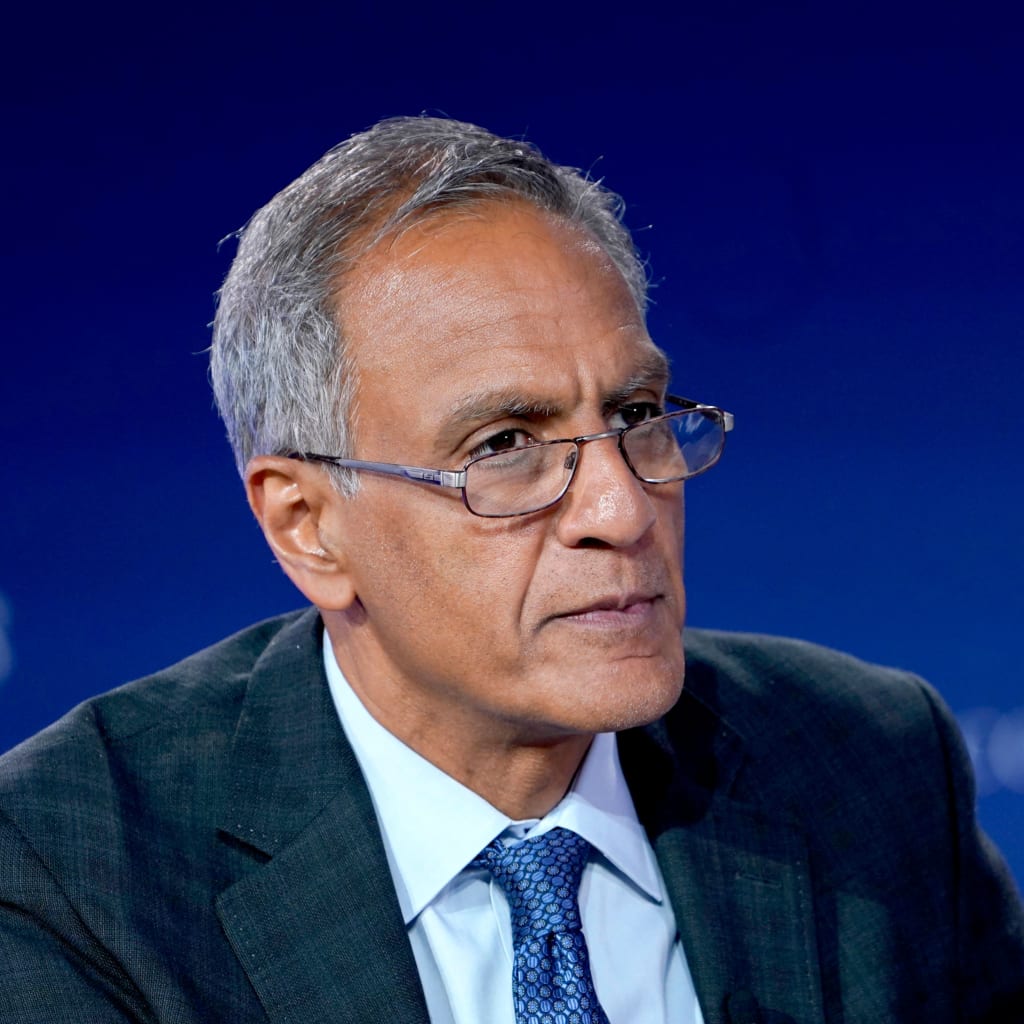
Drawing on a distinguished career spanning military service, diplomacy, law, and the private sector, Ambassador Richard Verma discusses the defining challenges facing U.S. foreign policy.
A special series of summer meetings will follow this session, featuring a selection of CFR’s recent IAFs, IAFs in Canada, IAFs in India, IAFs in Indonesia, IAFs in Japan, IAFs for Tenured International Relations Scholars, and IAFs in European Security. Information about the summer sessions will be announced at a later date.
The International Affairs Fellowship (IAF) Keynote is made possible through a generous gift from Janine and J. Tomilson Hill in support of CFR’s flagship International Affairs Fellowship (IAF) program. For more information, please visit CFR’s Fellowship Affairs Page.
BRIDGETT-JONES: Thank you. Well, good evening, everyone, and welcome to today’s 2026 International Affairs Fellowship keynote session titled “Geopolitical Challenges and the Path Forward: A Conversation with Ambassador Richard Verma.” I’m Sundaa Bridgett-Jones, principal at Nichiyobi Advisory and former international affairs fellow, and I’ll preside over this evening’s discussion.
When the International Affairs Fellowship was launched in 1967, the goal was straightforward: Build the next generation of foreign policy leaders by bridging the worlds of government, academia, and the private sector. Nearly six decades later, that mission is just as urgent, the program is just as vital. And since the nineties, the Council has expanded the IAF program to include fellowships in Japan, Canada, India, and Indonesia, the IAF for Tenured International Relations Scholars, and the Robert A. Belfer International Affairs Fellowship in European Security. And this year the Council will launch its newest program in South Korea, the Chung Mong-Koo International Affairs Fellowship in the Republic of Korea.
Certainly, the IAF program has more than lived up to its mission. Since its establishment, the program has produced more than 650 international affairs fellows with alumni who have gone on to some of the most senior positions across the U.S. foreign policy community. And a special series of summer meetings will follow this session, following a—featuring a selection of CFR recent IAFs. And more information about those summer sessions will be announced at a later date. This keynote is made possible through the generous support of Janine and J. Tomilson Hill. And we are deeply grateful for their commitment to this program.
But for this evening and this discussion, we have perhaps one of the clearest examples of what this fellowship is designed to make possible. Ambassador Richard Verma is a statesman who has moved across worlds and spaces—this program asks fellows to inhabit armed forces, U.S. Senate, State Department, embassy, boardroom—and who has brought the full weight of each to the others. He carries the Air Force Meritorious Service Medal, State Department’s Distinguished Service Award, and the Council’s own international affairs fellowship. He is, in the most concrete sense, what the IAF aims to achieve. You have his bio, full bio, but I thought I’d just run off a few things.
So Senate national security advisor, assistant secretary for legislative affairs, United States ambassador to India—the first person of Indian descent to hold that position—deputy secretary of state for management and resources, serving as the chief operating officer of the department. And today, he is the chief administrative officer at Mastercard, where global payments, economic security, and foreign policy now meet. Rich, thank you so much for being here.
VERMA: Thank you. It’s a great privilege and an honor to be here, to be here with all of you, to be here with my friend Ambassador Froman. And CFR really has been a big part of my life for twenty-five years. And it is true, I would not be sitting here today without the IAF fellowship. And I’m happy to get into that story, and how lucky I was to get that. But there are some places where you feel at home when you show up. And it’s at CFR. I’ve been coming to events here twenty-five years now. And it’s the best place. So thank you.
BRIDGETT-JONES: Well, that’s so terrific. Let’s get into it. So you’re the youngest of five.
VERMA: I am.
BRIDGETT-JONES: You were raised in Johnstown, PA by two Punjabi immigrants who lived through partition. Your father taught English at the University of Pittsburgh, Johnstown for forty years. Your mother taught special education. That house had a particular set of values, it seems to me, belonging and service. What I would love to know, and I think it’ll be great for us here to hear a little bit more from you, is how to get from that house to a room like this? Perhaps—(laughter)—
VERMA: Great question. (Laughs.)
BRIDGETT-JONES: Not your resume, of course. But did you know earlier on that you—know you, did you understand that foreign affairs would be the work of your life? Can you talk about how the international affairs fellowship played into where you are now?
VERMA: Yeah. Thank you for asking the question, because I do like to talk about my parents whenever I can. My dad, like millions of other people, tells a great immigrant story about showing up in New York City with $14 and a bus ticket. Now we must have heard that story 10,000 times growing up. (Laughter.) Sometimes he had $14. Sometimes he had $22. (Laughter.) But, you just—you understood, he was starting over from next to nothing. And they had lived through a very difficult time, through the partition of India. My mother was essentially a refugee. My dad was also a freedom fighter, protesting British independence. So they had their kind of very difficult experience. And here they are, starting over in New York City with next to nothing.
To make a super long story short, here we end up in Johnstown, Pennsylvania, where my dad gets his first teaching opportunity. He actually showed up in New York not only with a bus ticket, but with a letter from the Ford Foundation, because he had a fellowship to get his master’s. Which led to a Ph.D. Which led to his first teaching assignment at the University of Pittsburgh, at Johnstown. But I think my parents were so focused on us keeping our heads down, assimilating, not being involved in foreign policy, national security, public service. And it was only years later that I really understood more of their background, and why that—why that was.
But when I told my dad that I wanted to serve in the U.S. military, that I wanted to have this career, it was just not something he was expecting because, if you think about it, we had been in Pennsylvania for fourteen or fifteen years. We had been in this country for fourteen or fifteen years. And here, his kid is going into the U.S. military. I will tell you, that is what I saw when I was ambassador in India, though. And there’s at least one person who served at our embassy there in the audience, our Treasury attaché. And what I remember about the Marine security guard detachment is that they came from all over the world. And here they were, these eighteen-, nineteen-, twenty-year-old kids who wanted to dedicate their lives to serving and protecting the United States.
So I only—it was only later that I would really figure out, why was I so interested in this? And it was when I went back to India as ambassador. And I went back to these towns where my mother and father were from. And I realized that they were actually quite involved in politics and social movements. And my mother was a social worker. She trained young women, you know, to up uphold their rights. And my dad, as I mentioned, was very involved in in the independence struggle for India. And that kind of became clear to me, why this kid—why they were trying to, you know, not have the same thing they did. They didn’t want me to do that, because they knew it’d be difficult. But that’s where it came from.
And I will say, probably the most moving experience I had in my career to date was going back and seeing where my mother and grandmother taught school in an impoverished area of Punjab, where that school was still there. And seventy-five-, eighty-year-old women came out to greet me. They squeezed my cheeks. And they said, without your mother we would not be here today. She taught us to stay in school. She taught us the importance of education. And it just was a great reminder of how to have impact in one’s life, what it means, you know, to serve and to give back. And so my parents are really, I think, the reason that I’m here. And it led to this interest in national security and foreign policy. And I got super lucky to work in these jobs.
I worked on Capitol Hill when I was in college, served in the military for five years in the U.S. Air Force. Came out practicing law. And my dad said, why would you want to leave this good-paying job at a law firm? Have you been fired? (Laughter.) And I said, no. I have not been fired. But I’ve applied for this fellowship from the Council on Foreign Relations. And I want to go work in the Senate. Hardest interview of my life was the IAF interview. It was with Ivo Daalder. And, Ivo, if you’re watching or somewhere, I’m still traumatized by the interview. (Laughter.) Hardest questions to date.
And I remember coming home and telling my wife, I said, this thing is never going to happen. And I ended up getting selected. And, again, just luck of luck, two weeks later I’m speaking at a conference a lot like this. Senator Harry Reid’s chief of staff is in the audience. And she comes up to me afterwards, and she said, have you ever thought about working on Capitol Hill? And I said, it just so happens I have this fellowship from the Council on Foreign Relations. And she said, wait, we don’t have to pay you? And I said, no, you don’t have to pay me. (Laughter.) And it turns out I was there for six years. It was really the best experience. It was 2002 to 2008. It was post-9/11. It was, you know, all the challenging situations. It was watching America kind of find itself embroiled in Afghanistan and Iraq, the building of the Department of Homeland Security, with all the domestic surveillance issues.
So it was a great experience. And my desk was fifty feet from the Senate floor, which was also a great experience. So super lucky. So that’s a long answer question—
BRIDGETT-JONES: No, it’s terrific. I think we all—
VERMA: —about how the IAF fits in and how the Council fits in.
BRIDGETT-JONES: That’s so wonderful, Rich. Thank you so much for sharing that. And I know over those years you took in a lot around the American foreign policy doctrine to be. And let’s talk about the 2026 edition of that, if we could. One year into Trump 2.0, two years out of State. Most foreign policy professionals may not recognize the department now. But help us understand, if you will, what American foreign policy is actually for in 2026.
VERMA: Yeah. Well, maybe let me take a step back and say, over the last ten or twelve years I’ve had the really good fortune of I went to seventy-seven of our embassies and consulates. And when I was deputy secretary I went to every state in India, traveled widely. And you come back with a certain impression and sense of what’s going on in the world. And obviously we have great-power competition playing out in front of us, you have war in Ukraine, you have the president on a very important visit to China. You have threats of terrorism, which we saw play out tragically on October 7. We had the humanitarian situation afterwards. You have malign state actors, which are still very much present.
But what I came away with was a sense of challenges that we’re not necessarily organized to deal with. And our Director of Central Intelligence Bill Burns used to refer to these as problems without passports. The problems that no army could deter, that you could not intimidate into submission. So when you think about what we’re facing today, obviously, some of these include biological threats. I think if you just think back a few years, did any of us predict the kind of damage that a pandemic could have created? You know, in a thirty-day period that single virus spreads to 135 countries, and over three years kills twenty million people and impacts the global economy the tune of $13 trillion. And I think if you were to ask, were we prepared for that? We’d say, no. And if you were to grade our international cooperation, you would not give it a very high grade. We had different standards for testing, different standards for travel, different standards for how we shared vaccines. Now, we’ve gotten better.
Another category, climate disruption. 2024 was the hottest year ever recorded. The previous ten years were the hottest ever recorded. They say that the highest concentration of greenhouse gasses is the highest now than it has been in hundreds of thousands of years. 2026 is shaping up to be the second-hottest year ever recorded. So we talked about the threat of climate change, I think we’re now living through the disruption that it’s causing. And then another of these transnational challenges, technology. And technology, from a corporate perspective, is—we see it as lifting people up and empowering people. The technology, as we see, in the wrong hands is being used—can be used to harass, to steal, to surveil, to spread disinformation. And then if you throw in, you know, economic inequality, democratic retrenchment, you realize, you know, democracies today are under great strain.
And I mention all these problems not to depress you or the audience, but just to say these are problems that are solved, again, not by any one power. They’re not solved through military means. They’re solved through international cooperation. So when I think about your question and kind of why foreign policy matters, why diplomacy matters, why development matters, it is because the foreign policy challenges we are facing today require diplomatic tradecraft. They require development experts. They require norms and standards and international institutions. And, unfortunately, we’re undervaluing that, and underinvesting in that, and we’re moving away from the kinds of skills that are required.
When I think about the current landscape, I see a challenging landscape. I also could make a positive story if we get this right. I think about, you know, the country where I served, in India. The India of 2030, just a few years away, is going to have the largest middle class, the most college graduates, the most internet users, most industrialization, the biggest movement of rural populations into cities. If you think about Africa, it’ll have six of the twenty fastest-growing economies, will have a quarter of the world’s population in just a few years. People are living longer. More people are being educated. So there is a good news story to tell as well. But I think people are also waiting to see and hoping that American leadership on the diplomatic and development side remains what it has been for seventy-five years.
BRIDGETT-JONES: Well, I’d love for us to get to India, but just before doing so I was reading Philip Zelikow’s piece, which he calls “The Atrophy of American Statecraft” in Foreign Affairs most recently. And he, if I’m quoting him, says, “the ability to mount complex diplomatic operations is a fading art.” And I’m wondering if you agree with that. And I’m also thinking in particular about what happened to USAID. I started my own career at USAID. And that generation of Foreign Service officers and professionals at AID, you know, built their careers around a particular American engagement. Is Philip right?
VERMA: Let me tackle your USAID question, and then talk about the kind of diplomatic tradecraft. I think we have an incredible Foreign Service population. I think they’re doing an amazing job. I was really sad, frankly, to see what happened to USAID. Every administration comes in and—comes in with reforms, and comes in and changes programs and funding priorities. And that’s why you have elections. But I just, honestly, can’t recall any part of the campaign that said, we’re going to shut down USAID.
And in fact, when I think about—not only have I traveled internationally, but I’ve traveled across the United States a lot, spoken in a lot of different cities over the last twenty years about our foreign policy. You know, when we would bring someone from USAID, or when we would bring a Foreign Service officer, when we would bring a Peace Corps worker, there were generally lines after the event to talk to that person. There were standing ovations in the high school auditorium or the Rotary Club dinner for that person, or group of people we were bringing. There is an American virtue of service, and empathy, and support.
Now, could we have done a better job of explaining what we’re doing around the world and why it matters? And I think about the people in Johnstown who I grew up with who feel that globalization did not work for them. And I don’t disagree with that, right? And I saw the difference between Johnstown of the seventies versus Johnstown of the mid-eighties and nineties. Those jobs vanished. And I think they became very skeptical of foreign incursions. And I think we have to be able to explain why what we’re doing around the world either makes our lives better, safer, more secure, more affordable. But, frankly, there’s some work that I think is—just they want us to do, and that is the humanitarian work. And that comes from that American virtue of service. And we’ve led in that category for so long.
The other thing I would say, Secretary Clinton used to talk about this a lot, is that if you think about U.S. national security and you think of a three-legged stool of defense, diplomacy, and development—the three Ds—they’re very intersected, right? When you go and you go to a country team meeting in an embassy, the team around the table is working together. They’re integrated in a way that I think the American people would be really proud. And sometimes, yes, it is in war zones and post-conflict situations. And sometimes it is just doing the day-to-day work of serving the American people, responding to situations that come up, opening markets. But we’re integrated. We sit around the country table—country team table and work together. It is only back in Washington that one member of that team gets a 20 or 25 percent increase and others get cut 10, 12, 15 percent, or eliminated. So when I think about the national security that’s that three-legged stool, we’re missing one leg of the stool. And the other leg, the diplomatic leg, has also been cut by about a third.
You know, when you’re—again, when I was there, we had a budget of $62-63 billion. And we were arguing to Congress that we were underfunded and overworked. The budget request that came in for fiscal year ’26 is around 30 billion (dollars). So a 50 percent cut. Now, Congress increased that, but the problems in the world haven’t changed that much that you would kind of eliminate an entire agency. So I just wonder if this is a model that is sustainable. Especially if you look at our adversaries or our competitors. The Chinese now have more diplomatic missions than we do. They’ve been spending 8 to 9 percent on foreign assistance and diplomatic tradecraft over the years. You look at what they’re doing with Belt and Road. And it is—you know, they are outpacing us now.
And that’s—I think it is a question, I think, the American people and I think Congress have to look at really carefully. Is this how you want to be positioned? I would also say, our military colleagues don’t want this job of diplomacy and development. And it—and I’m not trying to take anything away from them. Again, I wouldn’t be here without the military and the Council. But it is—there is a reason why Secretary Mattis testified to the Congress, and said, if you don’t fully fund the State Department and USAID then you need to buy me more ammunition. It’s when I was working, again, as assistant secretary for legislative affairs, Admiral Mullen, Secretary Gates, working in the House thirty years ago it was Congressman Murtha, give the State Department and USAID more money to do the conflict prevention work.
Really final point I will say, when you ask the American people how much we spend on foreign aid—and this is a widely, kind of, cited Pew poll, I think—they say, oh, 20 percent of the federal budget goes to foreign assistance. And when you ask them what they think it should be, they say, oh, probably around 10 percent. And when you tell them the real number, which is less than one percent, they’re pretty shocked by that. And so I continue to think it’s a really good investment. And we ought to be investing in these institutions and, frankly, maintaining really good talent. And unfortunately, we’ve lost centuries of service and experience just through the rifts at the State Department recently.
BRIDGETT-JONES: Let’s move on to India. You were certainly the architect in the Obama administration of the modern U.S.-India partnership. Last year, in 2025, that took its hardest hit since the 2008 civil nuclear deal. When you read the tariffs, and the India-Pakistan crisis, the SCO and BRICS deepening, and the February ’26 reset with Ambassador Gor, where do you think that relationship is now?
VERMA: Yeah. So, again, the honor of a lifetime to serve as ambassador to India. It’s now our second-largest embassy in the world. It’s an amazing group of people. We’ve been in this relationship with India for about eighty years. Their independence came in 1947. So it’s—we haven’t had 200 years-plus of a relationship. Eighty years. And, you know, we started out strong, with President Eisenhower and President Kennedy. In fact, when President Eisenhower came to India to commemorate the embassy or do the ribbon cutting with the grounds where the embassy would be, he actually predicted that if the U.S. and India were the closest to friends and partners the world would be a safer place. That logic still holds true today. In fact, President Kennedy actually said the hinge of fate in Asia rests with India. You think of those two presidents, what they said decades and decades ago, that logic still holds true.
The problem is we then went into this kind of downward spiral. We both ended up on different sides the Cold War. And things got very—pretty dark, pretty desperate. And it wasn’t until the mid- to late-nineties that we really were able to break out of this. And I give President Clinton really credit for directing the national security team and economic team that I want a new policy with India. I don’t want to hyphen between India and Pakistan. We’re not going to balance these two countries off of each other. And he went to India in the year 2000 and laid out the architecture of four pathways of cooperation—people to people ties, economic and trade, security, and, believe it or not, clean energy, twenty-five years ago.
And, largely, those are the pathways that have remained in place for twenty-five years. And if you were to look at any other relationship over the last twenty-five years, you’d be hard pressed to find one that has grown as fast, as quickly as the U.S.-Indian relationship. We went from $0 in defense trade in 2000 to $20 billion. We went from $20 billion in two-way trade over 200 billion (dollars). We went from a few hundred thousand visitors to over a million. We went from, maybe, a few—tens of thousands of students, to Indian students in 2024 being the highest number of Indian students. I could go on and on through category after category. But I think it’s also safe to say, eventually periods have to come to a close.
What comes next I think remains to be seen. And people say, well, why are you arguing that we’re not going to have another twenty-five years? We might. And I hope we do. And I think the team there is working exceptionally hard. But when I look at those four pathways, India and Brazil were the only two countries that had 50 percent tariffs. It was kind of unexplainable. And still scratch your head about 50 percent tariffs. Immigration is down. Student visa issuance is down. Clean energy cooperation is down, if not eliminated. And so we’re having a reset. Which is good. Let’s see what comes of it. But I think the architecture and the importance of the relationship continues to be of a paramount U.S. national security interest. And I continue to believe, as President Obama used to say, this is the defining partnership for the United States in this century.
BRIDGETT-JONES: We’re going to go to questions from our members shortly, but I wanted to ask you, in that context now—let’s think about it from where you sit at Mastercard—there are some who argue that governments are asking to do more. Do more—play the role that you know governments play in diplomacy, et cetera. And maybe if you can say, just briefly, a few words about where the public-private partnerships are at the moment in this political context, and particularly what you see as an interesting connective tissue across—(inaudible).
VERMAN: Yeah. Look, I think we use that term, public-private partnership, a lot. And it kind of has a bit of a cliché to it. But, honestly, it’s more important today than ever before. I’m a big fan of government service and military service, but I also see the limitations of what governments can do. And so when I look at how fast companies can move, when I look at the research and the innovation and the ability to deliver on last-mile kind of needs of people, the private sector can really fill an incredible gap. And I’ve been really blessed to be at a company like Mastercard, where there has been this incredible commitment to financial inclusion, and bringing a billion people into the digital economy. Again, under Mike’s leadership, and others, and so many others. It’s been a great journey. That’s something the private sector can do, and do it in a secure way.
And I look at the investments we’ve made. Eleven billion dollars in seven years just on cybersecurity. That’s more than most countries spend on cybersecurity. But that’s a—that is a good investment, that protects people, that brings people into the digital economy. And what we have found, that if you’re not part of the modern economy, and you’ve got third of the world not connected to the internet still, you’ve got—
BRIDGETT-JONES: the work you’re doing on digital inclusion.
VERMA: We’ve got two billion people who are underbanked or without account. And so the new commitment we’ve made is really focused on financial health and protection, and making sure people have the skills to succeed. And when I look at the range of programs we have to train small businesses, to train entrepreneurs, to train people in rural parts of the world, including here in the United States, bring them in, give them the skills, and open up markets that would not have been possible before. That’s not something government would do, right? But that’s something a private company can do. And it’s that partnership where I think it really works out incredibly well.
BRIDGETT-JONES: Well, let’s open it up to our members here. And I’d like to invite you all, both in-person on Zoom, to join our conversation. Just a reminder that the meeting is on the record. And also, when the mic is passed to you, please identify yourselves and ask a brief question. Yes, right here. Thank you.
Q: Mark Kennedy with NYU’s Development Research Institute.
I’m thinking about your three Ds—defense, diplomacy, and development—and I’m also thinking about AI. And when you think of AI will do to countries around the world, we and China will probably benefit most, having the most robust AI cultures. But the bottom will have lost pathways to upward development because low-income skills may be less needed in a world of AI. How much turbulence could that cause? It’s going to cause the military a whole lot more trouble if we don’t figure out a way to have development and diplomacy for the most needy parts of the world.
VERMA: Yeah. So, really, it’s a great question. And it’s the question I think so people are wrestling with today. Will there be job displacement? There will be. But will there be incredible innovation and enhancement? There will. I think we’re all trying to get our arms wrapped around it. There’s a few things I would say. One, because we are living in this more fractured world, we need kind of a global approach to AI. We need norms and standards. And, you know, now coming up with a solution in the United States doesn’t necessarily help our allies and partners. And so we’ve really got to think about how do we share information, and how do we share threat information? And so standards really matter. But I also—your point on job disruption, I think, is really important.
And, again, I think back to my story and my upbringing in western Pennsylvania, when all these jobs were lost in the eighties and early nineties, we were told, it’s a—don’t worry. People who lost their job will become computer programmers and data scientists. And that didn’t happen. Was there incredible growth in other parts of the country? Absolutely. Were those folks left behind? They were. So I think we have to do—and even—we have to do a very kind of concerted, organized effort to make sure that our workforce is fully trained up. And for those that are impacted and displaced, that they actually have a landing spot and a safety net. And that—so this is going to be a work in progress, I think, over the next few years, for sure.
And it’s moving at a speed that our policymakers really need to kind of catch up to the technology that’s out there. But I think this is something we all should be working on and thinking about. So a combination of guardrails and the support system. And, again, I’m optimistic. I saw a McKinsey study that said $13 trillion by 2030 and new GDP growth across the world just from AI tools as they’re rolled out. At the State Department, when we talk about modernizing the State Department, you wouldn’t often say the State Department was leading in that category. I remember a famous speech by Colin Powell about how we’re going to make sure everyone an internet connection at the State Department. So we weren’t always out in front.
Fast forward to 2023 and 2024, we were the first agency to really come forward with an AI strategy for the workforce, a workforce that was feeling the burden of too many tasks, too many reports, just an overwhelming volume of work, too few people. AI tools actually becoming super helpful. So I know a lot of people worry about will this kind of efficiency lead to job loss? It can. But can it also lead to greater productivity, greater point of life, greater work experience for people? It can, if managed properly.
BRIDGETT-JONES: Jonathan Brewer, and then—sorry, I can read your name, so great.
VERMA: You have a microphone right here.
Q: Oh, thank you very much. Ambassador, I wondered if you could comment on India’s claim to be a permanent member of the Security Council please.
VERMA: (Laughs.) Did they claim that? (Laughter.)
Look, let me say that it was—it was actually something that we supported in the prior administrations, was to make—to give India a seat on the Security Council. I think if you’re sitting in India, you’re sitting in the so-called Global South, and you look at international institutions you say, these were created largely by the victors of World War II and the dominant powers of the twentieth century. And you get to the turn of the century and you see this incredible growth, this incredible excitement across India, South Africa, Brazil, I could go on and on. And they say, why are we not also equally represented in the big institutions that matter? And they are right as well.
And so these are institutions that are in desperate need of reform. And so I don’t know if you were referring to a news report or an actual claim, but we need to figure out how to make not only the Security Council—but the Security Council has become a place where things go to basically perish, right? Because of the structure itself. We need to get the U.N. back to an institution that is really delivering and moving faster. I have a lot of respect for people that work in the U.N. system and the international institutions, and the World Health Organization, people working on climate, people who work UNICEF and UNHCR. I could go down the list of people who are working around the world, much like our Foreign Service and development colleagues. They are not on the front pages of the newspaper. They are doing the hard work of serving people who need help and serving society. So I would argue investment in international institutions, making them more efficient, and, frankly, making them more representative for where the global population is, is where we need to head.
BRIDGETT-JONES: Thank you. The gentleman with the burnt orange shirt.
Q: Thank you.
Ambassador, given your knowledge of India and the long history of Bangalore, and Hyderabad, and other places in the country that now a long history of supporting software development, you know, the high-tech companies, including Mastercard, for sure, how could you characterize the future for partnerships with—between American and maybe Chinese, but other companies, in the AI sector? Which, frankly, I think, I think is probably a—you know, something that will—as John Kennedy said, will be a rising tide that lifts all boats.
VERMA: Yeah, the—you know, for those of you that have spent time in India, and you go to a place like Bangalore, or Hyderabad, or I could go through the list of Indian cities that have incredible kind of U.S. connections and tech connections. When I think about—you know, if I look at spots in the India relationship where we’ve had challenges, and you could argue maybe that’s today, at the same time, you see incredible innovation, incredible partnership, new discovery, new research. I think about what we did, frankly, in vaccine development during COVID and post-COVID. It was very transformative. And I’ll never forget what Prime Minister Modi said to us. He said it to President Obama. He said, you know, the real value of this partnership is not what we do for each other. It’s what we can do for the rest of the world. And he’s right. If you think about bringing these incredible research scientists together, whether it’s in space, or the seabeds, or on AI, or on medicine, it’s really powerful.
Now, at the same time, we got to make sure that the partnership has some balance to it. Back to my point about the American people want to see a net plus. And, again, my embassy colleagues will remember that I wouldn’t go to a grand opening of a U.S. company in India unless they could tell me the net positive for American workers, American shareholders. And they could do that, because we are now so integrated. And that is a good thing. So I think you’re right on the money to be talking about AI is a place where India can really take the relationship. And it’s not only just AI. It’s obviously makes AI go, right? It is the semiconductors, and the chips, and the raw materials, and the critical minerals that go into powering that industry. That is also an important part of our cooperation going forward.
BRIDGETT-JONES: We have a member on Zoom who would like to ask a question. Please.
OPERATOR: We will take our next question from Allan Goodman.
Q: Thank you very much. And, Ambassador, good to see you again. I’m at the Institute of International Education.
You hosted a delegation some years ago of presidents who were concerned about higher education and visa denials of visas for Indian students. That problem is back again. Do you have any advice for universities as to how we can call attention to the need to—the benefits we gain from international students, and how important it is for the visas to continue?
VERMA: Yeah. Thanks, Allan. And really good question. And, again, just my own family story. When I look at the opportunity that was given to my father, and what he was able to bring with my mother to the United States, I would hope people would argue was a net positive. And that their kid could go back as U.S. ambassador fifty years later. That is a very American story. And I think that’s a story we should embrace. I think about my wife’s grandparents, survived Armenian Genocide. Came to New York City. Built a big business, successful, thriving. This is the story of America. We ought to be looking for these kind of success stories and these bright and energetic and eager people from across the country.
And unfortunately, what we’re seeing on campus now is a great deal of uncertainty, because students would also, if they had a job opportunity upon graduation, might get the opportunity to stay. And now this F-1 visa which they would typically apply for, I think the rates, at least on Indian students, were down 60-70 percent, which, again, creates this incredible uncertainty. And it decreases the number of students who actually want to come to the United States. Now, do you think other countries want those students? You bet. The Australians, the New Zealanders, the Japanese, the South Koreans, the Brits, the French, the Germans, the Canadians. They want these students desperately because they know what they can add to American society. And I don’t need to tell this audience or any other audience about what—again, what immigrants have brought to the United States. They don’t have to be college educated to add value.
But why would we not be out looking for more of this great talent? And we have a shortage in key sectors. And I think if we did this in a smart way, we could address some of the shortages. We could maintain our dominance in research, innovation, continue to attract the best and the brightest from across the world. And so, Allan, all I would say is continue to make the case to policymakers. I think they—I think they get it. And hopefully we’ll be able to navigate this period. But really the final thing I would say, and it’s this is a word of thanks to the State Department. When I think about the story my dad tells about showing up at the embassy in 1963 for his interview to get a visa. And how they had driven a couple hundred miles and his parents had bought him a new suit. They practiced the questions over and over again. And he said he was so nervous. And the consular officer that greeted him that day greeted him with respect, asked him a few questions, saw his admission letter, stamped his passport, and that was the moment that opened up this new chapter.
There was a reason why I also went out to the visa line on a pretty regular basis, because you could see the hundreds of people each day, also in new suits, new dresses, they had driven hundreds of miles, they were super nervous. The story just keeps repeating itself. And I saw the incredible way that our team greets people around the world. That is a great—that is a great story. I’ll tell you, one of the scarier moments as deputy secretary is they actually had me do the consular interview of someone who came up to the desk. This was in our consulate in Mexico—one of our consulates in Mexico. And I said, please just tell me this is going to be an easy case and I can stamp his passport. (Laughter.) It all worked out.
BRIDGETT-JONES: But those are stories of excellence in leadership, Rich. Yes, here.
Q: Thank you.
Quick question. You commented about the challenges facing foreign policy and the State Department, and whether it’s the current State Department and everyone that’s been RIF-ed and let go. So that’s also an opportunity. So for the next administration, if it happens to be the Democrats, the party you supported, if they come in what should State look like in 2030? With all these challenges, you talked about, you know, challenges without a passport, you know, do we need regional bureaus anymore? Do we need—I mean, this is an opportunity to not rebuild, but to build for the future. So what should it look like?
VERMA: Yeah. Totally agree. And I—you know, maybe I’ll just take the Democrat versus Republican out of it. I think whoever comes in I think got to figure out to address the challenges. And so I just think it requires a really hard look at do we have the right tools today? And if you’re going to put all the burden on the U.S. military, this doesn’t seem like the right approach. And that’s—again, that’s not a partisan view. That is a view, you know, shared by—and I could go back to Eisenhower and President Reagan and President Bush and forth.
You know, I think again, when you talk about those challenges, there was a reason we put up a new Cyber Bureau at the State Department. There was a reason we stood up a new Global Health Bureau at the State Department. There was a reason why we had climate officers deployed to the embassies around the world for the first time. There was a reason why we changed up the curriculum at the Foreign Service Institute to train people on AI, on topics that were coming across the inbox. If you don’t modernize then you’re dealing with yesterday’s problems, yesterday’s challenges. And I think they really did a good job of catching up.
Now, five years from now those problem sets are going to be even more challenging and different. So I think you just need an agile body that is able to respond to the global challenges, that has the buy-in and support of the American people. And I think they—again. I think they’re really—they would be really proud to support this kind of function in the U.S. government in a really strong way.
BRIDGETT-JONES: Mmm hmm. Gentleman over here.
Q: Ambassador Verma, like you, a proud alum of Lehigh University. Reflecting on your career, you moved between diplomacy, law, and now corporate leadership at scale. What did each sector require you to unlearn or relearn to be effective in each sector?
VERMA: Oh, it’s a great question. You know, and I—speaking of Lehigh, thank you to Lehigh. I get that question a lot, especially from younger folks. Like, oh, I want to go do what you did and be able to, you know, work in the private sector. And I wish I could sit here today and say I had this great plan and it all worked out perfectly. But, of course, that’s not true at all. I had good mentors. I had good teachers. And when I think about mentors and teachers, it’s not just my parents. Literally it’s my fourth-grade teacher, my little league coach, my high school hockey coach. It’s members of my own family, and my kids, and my spouse. So I’ve been super lucky. And then, obviously, people who gave a chance—Harry Reid, Hillary Clinton, Jack Murtha, the U.S. Air Force, I could go through the list.
BRIDGETT-JONES: And unlearning?
VERMA: And unlearning. (Laughs.) I think, look, the sectors, thankfully, are complementary to each other. You know, we talked about public-private partnership. And you have to really humble. And you have to know that you’re going to trip and fall. And hopefully you have that environment where you’re supported and get back up. But there’s so much to learn. I have a team here from Mastercard. And I learn more from them each day, honestly. So it’s about reverse mentoring, and learning from people, and continuing to be on that journey together. But it’s been—you know, I think the institutions are somewhat—whether it’s Congress or the military or the private sector—they do sync up in key ways.
BRIDGETT-JONES: A couple more questions. Maryum.
Q: Yeah. Maryum Saifee. I am also an International Affairs Fellow alum. And I can attest the interview is still quite rigorous and scary. (Laughter.) I also was at the State Department up until a week ago, Foreign Service officer. I was a survivor of the purge, I guess, of the 1,300 that were RIF-ed, and then we had it executed last week.
My question—and I work in the Cyber Bureau that you mentioned and helped build this float of tech diplomacy fellows that was sort of gutted right before I was fired. So my question is on the hollowing out of our institution, what it means for our national security. And also, you—you know, as someone who is an attorney who sort of has served in service in many different manifestations, you know, what—this moment that we’re in is not a normal moment, I would say. I mean, I’m in the midst of, kind of reflecting on it myself. How do we sort of—what does the future look like, not just for diplomacy but our country in 250 years? Like, what have we learned? What would you have maybe done differently when you were at the department as DMR? So my question is sort of more reflective of the moment we’re in.
VERMA: Yeah. It’s a great question. And thank you for your service. Really. It means a lot.
You know, again, I just go back to the kind of American virtues of service, of having an impact. And I don’t think that’s changed. And I think people want us to take a leadership role in the world. Secretary Blinken used to say, the world doesn’t organize itself. And we do have to be out there. And I think there will be kind of this recommitment to it. And to the other question, you know, the department shouldn’t have to go through this every four years. There should be—you know, obviously there’s transition, and there’s different, as I said, policy and funding challenges. But really, I think there should—we have to figure out how to insulate, I think, the institution, and protect it in a better way. And I don’t have a great answer for that just yet, but I think there are a lot of great people serving. And we’re just going to have to figure out a way to support them. And—
BRIDGETT-JONES: And there’s some great universities that are trying to do that, you know, Pivot for Purpose at Georgetown and a few others that are looking at that. But I think the pathways aren’t the same.
VERMA: Yeah. And, again, back to—back to telling the story to the people, this notion of foreign policy beginning at home and connecting the dots, I think we have to do a better job.
BRIDGETT-JONES: Last question. Steve.
Q: Thank you very much for your remarks. My name is Steve Buffone. I’m a retired partner at Gibson Dunn, and currently an entrepreneur.
I’d like to ask you an easy question.
VERMA: (Laughs.) Thank you.
Q: So the title of—the title of the program tonight was, Geopolitical Challenges and the Path Forward. So I’d like you maybe just in ninety seconds to focus on the path forward, maybe just with a handful—three of the top issues. And if you were king of the world, what would—(laughter)—what would you—what would you change? And what would be your first steps on maybe three or four top priority issues?
VERMA: You said this one’s going to be an easy question. (Laughter.)
Q: Sarcasm.
BRIDGETT-JONES: That was a sign, yes.
VERMA: Yeah. Look, let me—let me just say that it is a privilege and an honor to grow up in this country and to serve in the capacities that I’ve been able to serve. And that challenge—and if you think about the challenges this country has faced over its—since its founding, the American people have this incredible ability to navigate those challenges. So as—you know, we use the word “unprecedented” all the time. These are unprecedented challenges. I think you could go back in periods of time and say we’ve had plenty of unprecedented challenges. So I am actually pretty optimistic about the road ahead.
And why do I say that? I say that because of the spirit of the country. Think of the innovation in the country. I think of the goodness of the American people, those people that welcomed us as the first Indian American family to settle in in Johnstown, Pennsylvania. Those are great people. And I think we have a great spirit. Yes, we have challenges. We have challenges with misinformation. We have challenges with money in politics. And we have challenges with inequality. And we’ve got to solve these problems. And we have global challenges. But I think of one day in high school when my mother came home from work. And she said she was wanting to become a U.S. citizen. And I said, OK. Great. And studied for the test. Made me practice with her and ask her questions. And I remember the day she went down and took her test. And, of course, she passed with flying colors. And had her swearing in ceremony a few weeks later.
And she came home and she had a little American flag. And she put it in our kitchen, right next to her bowl of Indian spices. (Laughter.) And it just made me think, here is—here is my mother, who wears a sari, who speaks with an accent, who cooks Indian food, of a different religion than her neighbors. And my mother is a great American. And she pays her taxes. She’s a special needs teacher. Gives back in her community. Works sixty hours a week. Raised children. Goes to the school events. And I also think we have to remember that, what it means to be American at this time, in this place. And I think of those Marines standing guard outside the embassy. I think of my Mother. And I think we just also have to remember our roots, what actually makes the country great. It’s not because I get to serve as deputy secretary. It’s because of people like my mom and those Marines who work so hard to put so much into the country.
BRIDGETT-JONES: Well, it’s only here at the Council does someone give you a proposition of being king of the world—(laughter)—
VERMAN: Yeah. But I turned that down. (Laughter.)
BRIDGETT-JONES: Rich, thank you so much for sharing such wonderful stories. And particularly of, as I mentioned before, excellence in leadership. And thank you for your service to the United States.
VERMA: Thank you. Thanks for doing it. Thank you. (Applause.)
(END)
This is an uncorrected transcript.
Speaker
- Chief Administrative Officer, Mastercard; Former Deputy Secretary of State; Former U.S. Ambassador to India; CFR Member; Former IAF (2002-03)
Presider
- Principal, Nichiyobi Advisory; CFR Member; Former IAF (2008-09)