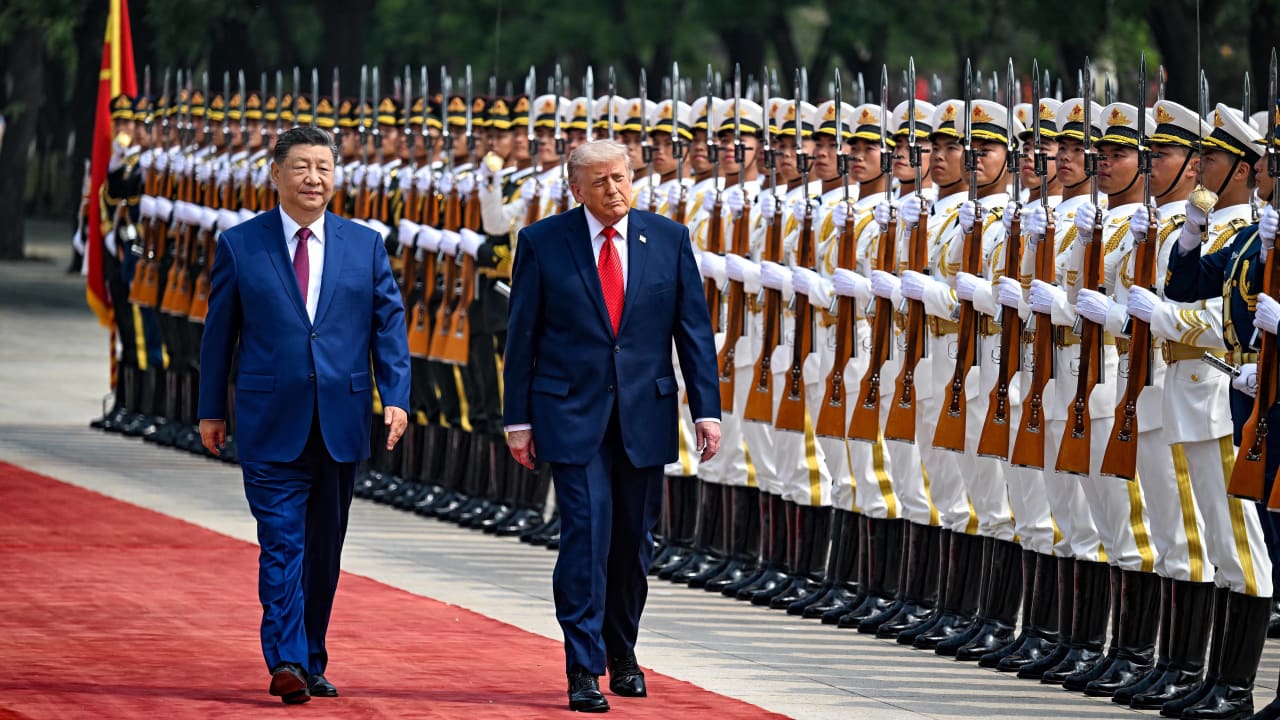
Media Briefing: Making Sense of the Trump-Xi Summit
Event date
Speakers
 David SacksCFR ExpertFellow, Council on Foreign Relations
 Zongyuan Zoe LiuCFR ExpertMaurice R. Greenberg Senior Fellow for China Studies, Council on Foreign Relations
 Heidi E. Crebo-RedikerCFR ExpertSenior Fellow, Center for Geoeconomic Studies, Council on Foreign Relations
 Chris McGuireCFR ExpertSenior Fellow for China and Emerging Technologies, Council on Foreign Relations
Presider
 Rush DoshiCFR ExpertC.V. Starr Senior Fellow for Asia Studies and Director of the China Strategy Initiative, Council on Foreign Relations
From Media Briefings.
CHANG: Good morning, everyone, I know folks are filing into our virtual session right now, so we’ll have a running introduction here. My name is Ben Chang. I’m the vice president of global communications here at the Council on Foreign Relations. Welcome to today’s briefing on the outcomes of the Trump-Xi Summit, featuring five of CFR’s experts who will break down a range of aspects of the summit. Thank you for joining us and continuing to turn to the Council as a resource.
The contents of this discussion and Q&A will be on the record and a recording of this will be posted online at the conclusion of the briefing. This briefing is part of the Council’s ongoing mission to inform U.S. engagement in the world, work that also includes the analysis and resources posted across our channels including on ForeignAffairs.com and CFR.org.
Thanks very much to the experts who are joining us this morning, to all of you for joining us, and for your questions at the end. And now I’d like to hand off to Rush Doshi, the C.V. Starr senior fellow for Asia studies and the director of CFR’s China Strategy Initiative.
DOSHI: I wanted to start by saying thank you, everyone, for joining, for taking some time this morning to be with us. Thanks to Ben, to Lilly, and the entire team at CFR for organizing this.
(Background noise.) Say again? OK.
Thanks, everyone, for joining us. We have several great colleagues with us today covering, I think, the four issue sets that matter most coming out of day one. We’ll go through those in a moment.
But I’m joined by Heidi Crebo-Rediker, who’s going to talk about critical minerals and how we got to where we are in the summit; Zoe Liu, who’s going to talk about the economic readout and deliverables; Chris McGuire will cover some of the technology and AI; and then we’ll round it out with David Sacks on Taiwan and some of the cross-strait questions.
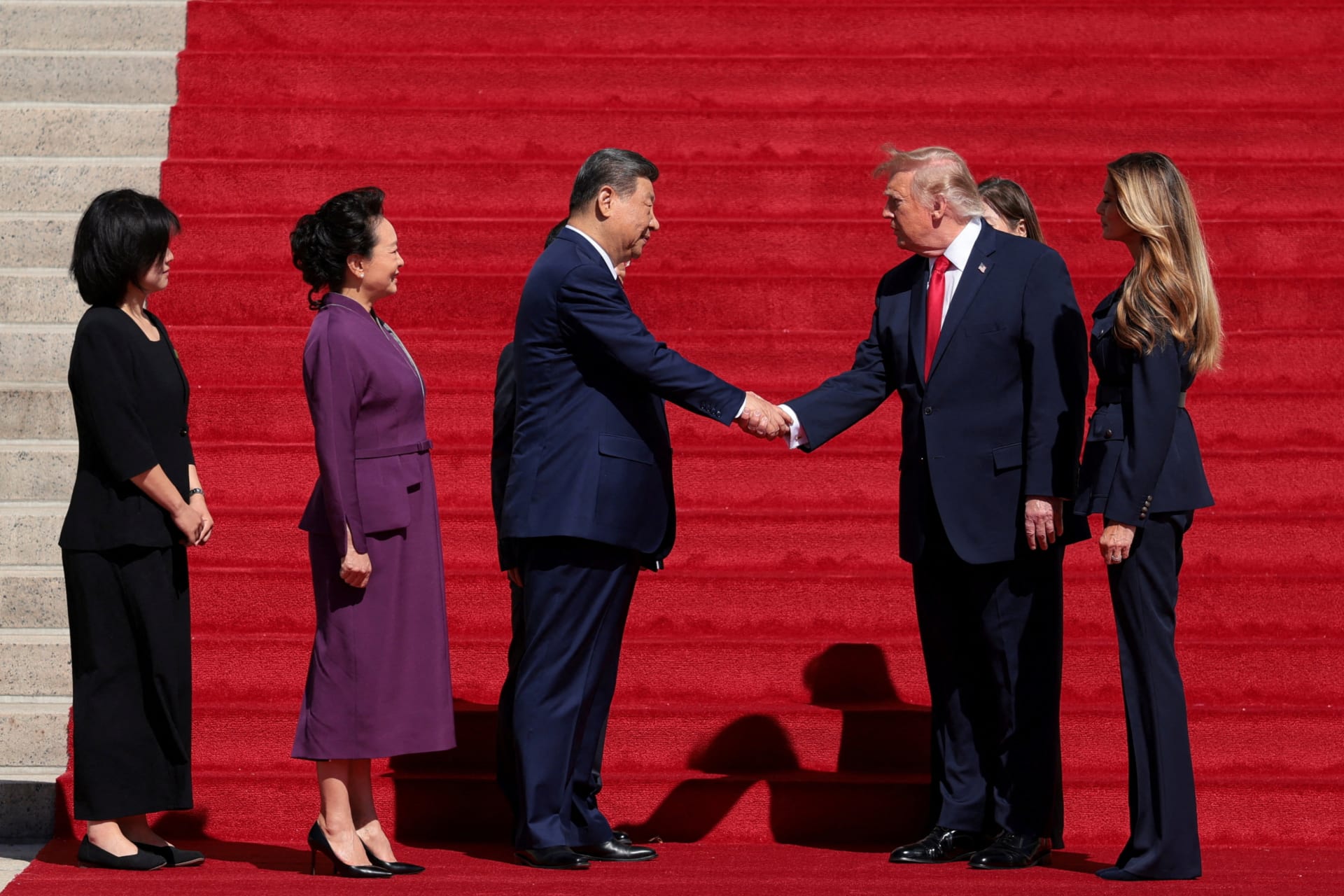
Before we get to that, just a few quick remarks from me. This is a summit that I think is significant in that it’s the first time an American president has been in Beijing in nine years for a summit. But at the same time, it was heavier on symbolism than it was on substance. After day one, we had a sense of what the two leaders discussed. We had readouts from both sides. And we’ll talk a little bit about what was in those day one readouts. But here we are now at day two and we don’t really have a readout that’s come out of either side. In fact, what we really have is interviews from Secretary Bessent, Secretary Rubio before—and Jamieson Greer—before today’s discussion. And then, of course, a very important set of comments from President Trump after, as well as some questions that were asked of the Chinese side too.
Let me, just before I turn it over to our participants, note what I thought was the most important sort of interesting line about the summit. And that was actually yesterday. Yesterday, President Xi described a new vision of building a, quote, “constructive China-U.S. relationship of strategic stability,” anchored to sort of the next three years and beyond. It looked to me like Beijing was trying to lock in a truce on terms that were favorable to it for the next several years and extend the détente past where we are now, maybe set a baseline against which future competitive steps on issues like the economic competition or Taiwan could be framed as violations.
They still acknowledge that competition matters. They’ve done that for a long time. But it’s clear they want to set a marker that it should be kept within acceptable limits. So to the extent there’s a big revelation from this summit, it’s that the fragile détente that began last year after the United States and China suspended their trade war—largely because the Chinese side was able to exploit its control of the rare earth minerals supply chain—that fragile détente is really still in place. And so far, there’s not been as much substantive progress, including after these last two days.
But there’s much more to discuss on all these fronts. And we’d like to walk through some of that with all of you. So to get us started I want to my colleague Heidi to give us a sense of how we got here. And probably the most important factor in the background is the fact that the U.S. and China fought a trade war last year that ended largely because of China’s escalation on the supply chain side. So maybe I’ll ask Heidi to tell us a little bit about the supply chain question related to rare earth minerals. And I just want to flag for those of you who are joining us that Heidi published a really important report on this topic called “Leapfrogging China’s Critical Minerals Dominance.” It’s a must-read that explains not just how we got here, but also how we can get out. But I think this is a good place to start. It sets the scene.
So perhaps, Heidi, over to you.
CREBO-REDIKER: Sure. Thank you so much, Rush. And thanks for joining us today.
So this was—this was the issue that did not make a public showing during this summit. And it really was looming over the meetings. It was the question of whether China would agree to extend a very fragile truce, the trade truce from last October 25, which is due to expire in November. And this paused—this truce paused the imposition of a very extreme Chinese export control licensing regime that limited the sales of rare earth elements, and magnets, and related technology, and knowhow. And they were structured very—in a very similar way to the way the U.S. structures its export control so it had a great deal of extraterritoriality.
So China at that—you know, at that point, when it ramped up the export regime—export control regime—really turned off the critical minerals taps on companies and all of their related supply chain companies no matter where they were in the world. It was pretty invasive, and it proved to be a far more potent tool than, I think, the United States or many of our allies actually expected.
So we were in a ramping up phase with tariffs and export controls out of the U.S., and China basically now has the Sword of Damocles over the global advanced industrial economies of the world.
And why are rare earths and magnets so important? They go in everything. So they’re in our energy infrastructure, our MRI machines, ear buds, semiconductors, autos, and, importantly, in defense system.
And so last spring when the Chinese shut these off, we almost saw the U.S. and European auto manufacturing came to a halt. But I would say—and this is an important point—the U.S. also went into this summit facing a very uncomfortable reality that we have run through a great deal of our advanced weapon systems in the Middle East.
So it’s sort of we’ve compounded these vulnerabilities, because in our need to replenish these missile systems we are going to have even greater vulnerability in needing to access what is a complete chokehold on some of the most important rare earths—heavy rare earths and magnets.
So I think that’s—that was—it didn’t come up. It’s hard to imagine it did not come up behind closed doors. I do think that the fact that there was important consensus on maintaining stable economic and trade relations alluded to the fact that we’re probably going to see an extension of this.
But I think we’re really—we are—this vulnerability is not going away anytime soon.
DOSHI: Well, thanks, Heidi.
And I think that sets the scene. I mean, it’s impossible to divorce this existing—the current summit we just saw from the fact that last year this tool was used against the United States in a way that ended the trade war. That is the background condition to all the good feelings, the stability, the discussion of, you know, symbolism over substance. It’s all tied to this critical minerals issue. So I commend to you all Heidi’s report.
And I want to turn now to Zoe, who has also written recently—you may have seen on our website—a piece on the summit, “Different Objectives, Same Photo Op: How Trump and Xi will Approach the Beijing Summit,” which I think was prescient in predicting the fact that there would be significant gaps between the two sides that simply wouldn’t be bridged at the summit.
So, Zoe, over to you in a minute. But there’s a lot to unpack here on the soybeans, on the Boeing purchases, the so-called Board of Trade, the Board of Investment. We don’t have much in terms of readouts from either side, but we’ve got some interviews from our cabinet officials, and then some kind of awkward interactions, I think, with China’s ministry of commerce.
So if you could tell us a little bit more what was at stake on the economic side, what did we see on day one, and what, if anything, have we seen sort of on day two on the economic and trade-related discussion? Zoe, over to you.
LIU: Yeah. Thank you, Rush. And—(audio break)—for joining us today.
I’d like to describe the—(audio break)—necessarily a reset of the relationship. It’s certainly not as what President Trump describes, that the relationship will be better, although I think he did say the right thing almost perfectly.
I’d say, you know, so far my readout is that a lot of these vague Chinese purchase commitment and all that, these are—sounds like risk management to me—this risk management with flags, with banquets, and with purchasing orders that are vague. And, by the way, we all know what happened to the phase one trade deal; $200 billion commitment didn’t really materialize.
So I think that from the economic side and the—(audio break)—the key takeaway is quite simple. I think the summit reduced near-term escalation risk, but it doesn’t really remove the structural risks that matter most to companies and investors—you know, like tariffs, export controls, technology restrictions, and Heidi talked about rare earths. And the issue of Taiwan, energy security, these are still there. And more importantly, I’d say we still have the uncertainty with regard to market access and, more importantly, the recent rally on renminbi to a three-year high goes—also goes to show there remains to be currency volatility there. So I’d say the relationship, at least on the economic and broader economic security perspective, is being stabilized, at least temporarily. It’s not being repaired.
And I think that actually matter(s) a lot economically, because companies and investors, they do need U.S.-China relationship to be at least calm. So they need them to become more predictable in a lot of ways, and the summit helps—(audio break)—that sense. But it helps only at the—(audio break)—the risk of sudden tariff escalations or diplomatic rupture. But that doesn’t—so far, we do not really have any clarity for a durable repairing or rewriting of the relationship, or rewriting of China—(audio break)—supply chains, and reducing the vulnerabilities of U.S. multinationals being exposed to China.
So, in a way, I’d just say—I’ll just—(audio break)—Rush. I think Washington definitely got the headlines—(audio break)—and the architecture. I mean, President Trump—President Xi Jinping talk about 2026 being a new year—being a—(audio break)—remarkable year for—or the opening for U.S.-China relationship in a new era. But it’s very clear this U.S.-China relationship in a new era, it doesn’t mean the relationship is going to get any better. (Audio break)—the best outcome probably would be the two sides get to the framework that guarantee long-term strategic competition for an indefinite period of time, and with some guardrails so that the two sides do not sleepwalk into a militarized conflict.
Back to you, Rush.
DOSHI: OK. Thanks, Zoe. That’s very helpful.
Let me just maybe pull on a few threads there. It seems like the president and Jamieson Greer suggested that we were going to have agricultural purchases. I think Jamieson Greer indicated, you know, tens of billions of dollars over multiple years, not just soybeans. Secretary Bessent, this is yesterday, indicated we were going to see some discussion at the Board of Investment about trade—about investment in non-sensitive U.S. sectors. But there’s been nothing further on that that we’ve seen on day two. So that’s just hanging kind of in the balance.
And then on the Boeing aircraft, you know, the president has suggested that the number that he wanted to sell was 150, but he got 200. But I think the number that many were expecting was probably closer to 300, and so we’re below that, which was the Airbus order that most recently occurred. And on that foundation, you know, it’s not clear we’ve got a huge set of wins on the economic side, or deliverables. The Chinese side, I think, Zoe, has not yet confirmed the purchase of those Boeing aircraft, is that right? I thought the Ministry of Commerce got the question and then basically didn’t provide a direct answer.
LIU: That’s my understanding as well, Rush. And so far I think market reaction to the purchasing commitment is quite vague. And the way—it’s not just Boeing aircraft; it’s the commitment with regard to soybeans was also potentially committing to it. So on the—on the purchasing part, especially with regard to soybeans, the timeline that I will be watching is to what extent China—(audio break)—or at least started buying, around the time of September and October. And that is—it has something to do with a potential visit by President Xi Jinping to Washington, D.C. But more importantly, I think September is where U.S. soybeans start to get harvested, and market purchase oftentimes peak around the period of October to January. If China is not buying during this period of time, then we know China will shift purchasing to Latin America, especially Brazil. And this is exactly the playbook that they did last year.
Back to you, Rush.
DOSHI: OK, perfect. Perfect. Thanks, Zoe. That’s very helpful.
Let me turn now from economic, trade, and investment issues to sort of the technology competition in AI with our senior fellow Chris McGuire for China and technology. Chris, you know, yesterday there was not a lot in the readouts on artificial intelligence or on semiconductors. We heard subsequently that, you know, there were some discussions of those themes. There was some news as well about additional sales of U.S. chips to China, which you wrote about yesterday as well. And you have a report out too for those who are kind of tracking that issue, which is basically on the question of how Trump should approach AI talks with China more broadly, as well as a separate report on sort of the export of AI chips to China. So for those on the call, our team can put that in the chat for you but it might be useful to take a look at some of that. Chris, what did we see on AI and on semiconductor exports? Were those big topics in the summit, as far as we know?
MCGUIRE: Yeah. I think I’d flag three different things. So the first is whether there would be a continued freeze in technology restrictions. Second is whether there’s any movement on export controls, AI chip exports. And the third is anything on a kind of AI dialogue with China. So on the first front, obviously, as we’ve gone through, no specific announcements. I think we can generally anticipate that there will be a freeze, at least through September. And just to reiterate, this is—this is—Beijing massively benefits from this. The administration has not imposed any new technology controls. It has not updated the export controls on semiconductor manufacturing equipment, which are updated yearly, on AI chips that were also updated yearly, since coming into office.
You know, Beijing, as Heidi noted, has the significant license requirements in place on rare earths and magnets. They’re using it to squeeze the United States. And the United States does not actually have a commensurate licensing requirement in place on technology, and also has frozen these controls. But—so I think that we’ll probably see the continuation of the freeze. And it’s just important to note the asymmetries here. There is a reason that Beijing is looking to continue the freeze. I think they see it as very much in their interest.
On AI chip export controls, so obviously this was top of mind for people when Jensen Huang joined the trip at the last minute, President Trump said today on Air Force One that it did come up and that President Xi responded and said he wants to make his own chips. That’s a significant statement. The administration has issued licenses for 750,000 H200 chips, but those licenses are still stalled on the Chinese side. To give you an idea, that is probably twice as much—that would probably be twice as much AI computing power as China can make this year alone. It would triple China’s AI computing power capacity, if those were to go through. Because China’s production of chips is massively—
DOSHI: Sorry, Chris, can I interrupt you just for a second?
MCGUIRE: Yeah.
DOSHI: You’re saying that the sale of the H200 that was discussed, and that the report—and that has been reported about, would triple China’s compute capacity over its current baseline?
MCGUIRE: Yes. Yes. That they can bring online this year, yes. China’s compute capacity is very, very constrained. Their chips are about one-eighth as good as U.S. chips and they make about one-tenth as many. So we make fifty to a hundred times as much AI computing power. This is why this is such a significant issue and why there’s so many people, bipartisan, on the U.S. side, that are concerned about it. It’s also why Jensen Huang is flying over there. It’s a very significant purchase.
It’s an unusual situation, where, in some ways, both sides are acting against, at least their immediate, technology interests. But President Xi is kind of convinced they can indigenize. I think there’s many people on the U.S. side that are skeptical of that. Ultimately, I think it’s not clear if the Chinese are going to approve licenses. I also am not sure the administration is going to offer a better deal than this, especially given the concern about AI and Mythos that I think is now changing the conversation in Washington a bit, coupled with the congressional pressure that we’ve seen on export controls. So whether China takes the deal that’s up here, I think, is up in the air.
The last thing I’d say is on the AI dialogue. President Trump said today that we are considering establishing some kind of mechanism on guardrails with Beijing. Secretary Bessent echoed yesterday that they’re considering establishing some kind of protocol on AI safety. And he noted, correctly, that it’s because—we can do this, because the United States has a lead over China in AI. Moving forward, I think it’s likely that we do seek some conversations talking about shared risks. The Biden administration did this. We had a dialogue on shared risk. I think the important thing to learn from that is that the Chinese in those dialogues indicated that they weren’t really interested in negotiating in good faith on shared risks. Their number-one priority is catching up to the United States in AI. And that’s understandable. They’re eight months behind, but they’re not two years behind.
As a result, you know, we sent technical experts who talked about, you know, the areas where we could see—we both—you know, both had interests and could cooperate. They sent diplomats who complained about export controls and asked for access to U.S. technology. So if the administration establishes some kind of dialogue or mechanism, I think they could probably anticipate that the same pattern would repeat itself. And as long as they’re going to separate the two completely and say, export controls are off the table, tech is off the table. We’re going to go kind of our own ways in development but we should both cooperate to make sure AI is not going to create a biological weapon that will kill people in both countries, that very much makes sense and is something the United States should pursue. You just have to watch out for the Chinese trap, because they’re going to, obviously, use it in order to extract technology, which is not what the U.S. is seeking to obtain. So we’ll see where this goes. I would imagine that there will be something set up. And I think the administration is generally seeing it fairly clear eyed.
DOSHI: Yeah, I think that one of the most important takeaways from day two of the summit is that President Trump basically reported that President Xi said, I want to make my own chips. And that is a really important fact. I mean, the discussion on AI from those who are selling chips to China is that we can get them addicted to our AI stack. And President Xi is outright telling President Trump, who he has every incentive not to tell this, that, in fact, I aim to indigenize these chips. And I’ll just say that is very consistent—when I served in the Biden administration and staffed President Biden for these summits, that’s pretty consistent with what President Xi told us as well. He was always determined to indigenize.
On the AI dialogue which we negotiated in 2023, I will note for Chris that there wasn’t serious Chinese substantive participation in 2024. We had a lot of diplomats and not a lot of technical experts, and I think they didn’t take the dialogue as seriously as we would have liked. That being said, we are in a different moment, as Chris mentioned, post-Mythos. The power of that model means everybody is thinking differently about this technology. Maybe this time can be different, and ideally it should be different.
So those are really interesting insights, Chris. And I think the other thing I took away from what you said is that if the sales of those chips go forward it would triple China’s computing power. So that is a really powerful thing for China, which is hoping to catch up in AI, to be able to have its computing power tripled after the summit—this may not be related specifically to the summit, but as far as deliverables go we heard from Zoe. We didn’t get much on the U.S. side, but on the other side perhaps there’s something here that’s quite useful for China.
I want to turn now to Taiwan and to David Sacks, you know, our Taiwan expert here at the Council on Foreign Relations. David has written extensively and recently about sort of what we would expect to see on—at the summit on Taiwan as part of a CFR roundup which we’ll put in the chat. David also was recently in Taiwan, including the very first person to meet the chairwoman of the KMT, Cheng Li-wun, after she met with President Xi Jinping, and so he had a very set of interesting interactions with one of the top people who is driving the political story in Taiwan. So, David, a few questions to you that I think we’re all interested in.
One, to what degree did Taiwan come up? We’ve seen some discussion of that by President Trump, by Secretary Rubio. They talked a little bit about what the Chinese said, so if you could go into more detail on that.
And then, second, the view from Taipei. How does Taiwan feel about the summit—and in particular the president’s comments, perhaps, and Secretary Rubio’s? I will note, as an amusing anecdote to get us started, if those of you who are tuning in checked what the president said on Air Force One three hours ago on his way to Anchorage he indicated that he would call the president of Taiwan, William Lai—which, as we all know, is an unprecedented diplomatic thing; you know, presidents don’t normally do that; they’ve done it once, that was President Trump accidentally nine years ago—to talk about the arms sale, because President Xi doesn’t want the arms sale to go forward and President Trump has indicated he will consider that request. He’ll also consider selling, and the next step for him is to talk to the Taiwan president. So whether that was a misspeak or a new policy, that’s also one of the more significant things to emerge from an otherwise somewhat rather quiet summit.
But maybe, David, over to you to go into that and all the other elements that count here.
SACKS: Great. Thanks so much, Rush. It’s great to be here.
So, just to kind of set the scene a little bit, in the months leading up to the summit Chinese interlocutors, both officials and scholars, were messaging very heavily that Taiwan would be a top priority for Beijing. They also laid out what their potential asks would be. This centered primarily on rhetorical adjustments to U.S. policy for the United States to explicitly oppose Taiwan independence, whereas U.S. policy has traditionally been that it does not support Taiwan independence, and to even go as far as endorsing the so-called one China principle or endorsing unification at some point in the future. And there was also speculation that China was unhappy with the $11 billion arms package announced in late 2025, it was aware of the pending 14-billion-dollar arms sales, and that it wanted to either halt that, cancel it, or break it up into more manageable pieces.
So, Rush, you asked about how Taiwan was viewing the summit, and I was recently in Taipei and had the chance to discuss this. I think from Taiwan’s perspective nothing good could come from the summit; it was all just managing the downside risk. You had a senior Taiwanese official say publicly that Taiwan was worried about being, quote, “on the menu” in Beijing. And so I think that if U.S. policy remained unchanged, that would be seen as a victory in Taiwan. And Secretary Rubio, as you mentioned, in his interview with NBC News, said that U.S. policy remains unchanged. Taiwan’s Ministry of Foreign Affairs thanked him for that statement. And so no major changes to U.S. declaratory policy on Taiwan is seen as a good thing in Taipei—and I would argue, you know, again, from my perspective, it’s also a good thing from the U.S. perspective.
Now, at the same time, to go back to how you kind of framed our initial discussion today around strategic stability, there I think it’s very interesting because, in Beijing’s eyes, Taiwan is central to the overall strategic stability of the relationship as they define it. And so in the Chinese readout that was issued yesterday, Xi Jinping said that if Taiwan is, quote, “handled properly,” the bilateral relationship will enjoy overall stability. Otherwise, the two countries will have clashes and even conflicts, putting the entire relationship in great jeopardy. And then, he concluded, the U.S. side must exercise extra caution in handling the Taiwan question. So, in other words, from China’s perspective the U.S. handling of Taiwan is an—is an essential ingredient for stability in U.S.-China relations, and Xi Jinping wants to make clear that any stability or progress in the relationship in areas that President Trump cares about—from economics, to fentanyl, or rare earths—will be linked to how he handles the Taiwan question.
I also think that clearly Xi Jinping is messaging to an audience in Taipei, and he wants to create doubts in Taiwan about the extent to which it can rely on the United States. He is not only thinking about how to manage the United States and its approach to Taiwan but also how to influence Taiwan politics, and he’s already thinking about the 2028 presidential election.
So I’ll end my initial remarks by just addressing the arms sales because I think this is the critical point that we’re going to reach fairly soon. President Trump noted earlier this week, right before leaving for Beijing, that he would discuss arms sales with Xi Jinping. As you said, on Air Force One just now he said that Xi, quote, “talked a lot” about Taiwan, and that while President Trump made no commitments they did discuss arms sales, which would be a departure from U.S. policy towards Taiwan. And he also said that he would make a decision soon on U.S. arms sales to Taiwan.
So the major question going forward is: Does the Trump administration hold this $14 billion in arms sales through September? And we know that the Chinese will message in the months between now and then that a U.S. arms sale to Taiwan of $14 billion or thereabouts would not be conducive to a reciprocal visit from Xi Jinping to the United States. So I think the Chinese want to push the U.S. arms sale into next year, which would have actual tangible implications for Taiwan’s security and its military preparations. And I think that from Taipei’s perspective it would want the Trump administration to approve the arms sale relatively soon, in the next few weeks or even a few months.
I’ll just end by talking about President Trump’s seemingly offhanded remark that he would have to consult now with President Lai. President Trump did—
DOSHI: Wait. How do you think—how do you think Beijing is reacting to that?
SACKS: Right.
DOSHI: They just had this big summit. They invited President Trump to this private garden in Zhongnanhai. And now on Air Force One there’s video footage of him saying he’ll call the president of Taiwan. So is that going to overshadow some of the progress of the summit?
SACKS: Well, I think now there’s going to be a lot of speculation, of course, about whether President Trump will actually call President Lai. As you noted, you know, President Trump spoke to President Tsai, but that was when he was president-elect. It was before his inauguration on January 20. So, actually, since 1979 when the United States abrogated its defense treaty with Taiwan and withdrew diplomatic recognition, no sitting U.S. president has spoken to his Taiwanese counterpart. So it would be precedent-breaking. It’s something that, clearly, China does not want to see because it does not want to set that as a kind of normal way that the United States and Taiwan can conduct business. And I think, frankly, from Taiwan’s perspective, if it has to pay a little bit in terms of a delay in arms sale but it gets a call with the president of the United States in return, it’s very happy with the way the summit went, and that is a net positive and a victory for Taiwan.
And as you alluded to, Rush, I think that that would overshadow the summit. I highly doubt that President Trump is actually going to have a call with President Lai. I think that was just an offhanded remark. But there’s clearly going to be a lot of, I think, damage control in Beijing and pressure to make sure that that doesn’t occur.
DOSHI: Yes, I agree. I think it’s very unlikely that the president will in any kind of public way call President Lai. There may be forms of informal communication, letters and so on to intermediaries, but it’s unlikely he’s going to call President Lai. But the very fact that he said it on video on the way back from Beijing after a summit where symbolism outweighed substance is important, when symbolism is all you have. And I think a president that makes a statement like this, which is symbolically very much against precedent, on the most sensitive issue for China, there are risks that come from that for the relationship. So I think that is why this is interesting news, and I haven’t seen it covered that way just yet. For those of us kind of watching what’s happening, this is one of the more notable stories of the day, I think, that the president even offhandedly said this.
Thanks, David. That was great.
I think at this point we can turn it over to others on our team to kind of moderate questions from the group. But before I do that, I want to go down the list and just say: Overall, did you feel like the summit sort of met your expectations, exceeded your expectations, or fell below your expectations on each of the areas you’re focused on? So maybe starting with you, Heidi, I mean, critical minerals were the key issue that brought us in some ways to this summit, brought us to this détente, and yet they weren’t really discussed in any meaningful way in the summit itself. So how do you feel about the summit? Has it sort of—where does it fall on your list of expectations?
CREBO-REDIKER: I think there were likely conversations that were not made public. I can’t imagine that in conversations around the new Board of Trade and what was going to be part of that that they did not come up at all because they are, in fact, the Sword of Damocles hanging over, you know, any decisions that are strategic that the U.S. wants to make to counter China.
DOSHI: Yeah.
CREBO-REDIKER: And so I think that, you know, the fact that there is a statement from both sides saying that there is going to be stability in the trade and economic relationship was a good signal. But I think the proof is sort of in the pudding and we have to see if there are any increases or decreases in the export of either rare—heavy rare earths or—(audio break).
DOSHI: Yeah. Thanks, Heidi. I think that’s right. There’s almost certainly working-level conversation on this but, interestingly, not at the leader level.
Zoe, on the economic story, did things meet your expectations, fall above them or below them? And sort of what do you expect coming—you know, going forward, over the next year?
LIU: Yeah. Rush, I’d just say the summit—the fact that the summit, after, I guess, two delays in the last year—it was supposed to happen in March—the fact that after two delays and third time charm, I think that is already the achievement. I didn’t have any higher expectation than that. So the fact that it happened was good, at least from the economic point of view.
But then again, there is nothing changed structurally. What is clear for us, and I think we should interpret in a very sobering way, which is China is ready for a long-term indefinite competition with the United States.
DOSHI: I think that’s right.
All right. Maybe over to you, Chris, for—on the tech side where things fell based on your expectations and what we’ll see over the next year.
MCGUIRE: Yeah. I think I’ll echo the same sentiments and, largely, not surprising because I think the structural impediments here are so significant.
Ultimately, the sides are moving in such different directions that I think no one—I don’t think anyone was anticipating any kind of big moves. I remain a little surprised that the Chinese are not accepting the H200 exports from the United States. I think that is just very clearly in their interest to do so.
I think the Chinese are overestimating their own production capacity, which is very constrained, and the Chinese companies are clamoring for these chips. So the fact that the Chinese government is resisting them is—continues to be surprising to me. But I don’t know if that will hold forever.
I do think that we will see some progress on—in AI dialogue. I think we’ll get—there will be something set up. I think they laid the foundation for that. I think the president made that pretty clear.
You know, the big questions there are where it goes, and if the administration kind of couples that with a more competitive approach on China in order to gain leverage to make those negotiations work in good faith or if it just kind of takes China at their word and operates there, I think the former would be a very advantageous approach that could really strengthen the U.S. position and also posture it to work with the Chinese on the global security issues that are important.
I think the latter is probably a bit of a fool’s errand and would result in both giving away technology and actually not addressing the global security risks that we’re so afraid about. So we will have to see where that goes in the future. But I imagine we will see some kind of mechanism.
DOSHI: OK. Thanks.
And then, David, finally, with you on Taiwan.
SACKS: Yeah, I think that it went basically as we anticipated. We knew that the Chinese were going to really emphasize Taiwan, and they did emphasize Taiwan in their readout. President Trump said that they had an extensive conversation on Taiwan.
But in the U.S. readout there was nothing on Taiwan, which is a good thing, because I think the fear was that President Trump would formally oppose Taiwan independence or make other adjustments to U.S. declaratory policy in exchange for something from China in the economic realm or elsewhere.
So that’s a good thing, and I actually want to also say that I thought the president was fairly disciplined on Taiwan except for that loose comment on Air Force One about calling President Lai.
I thought it was quite interesting that when he was at the Temple of Heaven with Xi Jinping a reporter really asked repeatedly about Taiwan, and the president did not acknowledge the question and turned around and walked away, which is really out of character because he really does love to engage with the media in those kind of scrums.
And so I think that the president understood the significance of what he said about Taiwan and just how much focus was on this question, and so I think that actually he handled it, you know, all things considered, fairly well.
DOSHI: Great. Well, thanks, and I think that brings us to a close here.
We’re going to turn now to Hannah on our team to help moderate a conversation with all of you who may have questions for our panelists and for me. I will end with just a quick moderator’s prerogative, my kind of final point on the summit, and you heard it basically echoed across everybody on the panel.
This is a summit, again, that was heavier on symbolism than it was on substance. There was a focus on managing problems, not on solving the problems that exist between the U.S. and China, and when you look at what China’s objectives are, the objectives were to buy time and stability to consolidate their position strategically, and I think they’ve met that objective, by and large.
And the U.S. objectives, which were a bit more unfocused—get help on Iran, sell more to China, maybe get progress on an AI dialogue, perhaps find some kind of—not an accommodation but find some kind of path of stability on some of the regional hot spots.
Those objectives, I think, haven’t, largely, been met and certainly haven’t been confirmed by the Chinese side. So, again, a lot of pomp, a lot of pageantry, a lot of symbolism, but not quite a lot of substance and not a lot of deliverables.
And with that, Hannah, if you’ll take us through the next portion with moderated questions. For those who are on the line, just a reminder—if you could use your “raise hand” function in Zoom, she will be able to see you and then select you to ask your question to the panel.
Thanks very much.
OPERATOR: We will take our first question from Mara Lee.
Q: Hi. This is Mara Lee from International Trade Today.
My question is related to Treasury Secretary Bessent’s comments about the Board of Trade and how the U.S. would be prepared to reduce or eliminate tariffs on $30 billion worth of goods that are, as he described them, low-end consumer goods that we have no interest in reshoring.
And I thought that was interesting when you think about the scope of the 301 action in the first Trump administration. Just the segment that has 7.5 percent tariff is hundreds of billions or—well, 120 billion (dollars) for that segment alone.
So I wondered what kind of sectors you think this could be in. Do you think it will come to fruition and do you think it could grow beyond 30 billion (dollars)?
DOSHI: OK. I think maybe we’ll direct that question to Zoe, if you’d like to jump in on that.
LIU: Yeah, sure. I think so far we really do not have any clarity on the proposed Board of Trade and Board of Investment. You know, similar mechanisms existed up until 2016 in the Strategic Economic Dialogue, right?
And in terms of specific sectors, ideally, I’d hope that pharmaceutical, especially API, could be included to provide additional stability, but I’m not sure we are seeing any indication there yet.
The emphasis on non-sensitivity sector, considering the fact that there is still the uncertainty with regard to tariffs, I think the best thing that we can hope for is the mechanism could allow for the conversation about tariff and to manage tariff, to manage trade, despite any other strategic issues in the background.
I wouldn’t—so far I wouldn’t see—I do not think that we have enough clarity on sectors, and could this go beyond 300 (billion dollars). I’m personally very not optimistic about it to even reach half of the number.
DOSHI: Thanks.
Hannah, back to you for the next question.
OPERATOR: We’ll take the next question from Christopher Buckley.
DOSHI: Hey, Chris.
Q. Thanks for doing this.
First of all, a question, perhaps, for David and Rush. Drawing on an observation that somebody in Taiwan made to me about Xi Jinping’s comments about Taiwan, and they made the argument that in some ways it could be quite dangerous for the next year or so because now Xi Jinping has so publicly tied his prestige and his standing to standing tough on these Taiwan-related issues.
And that means whether it comes to arms sales, for example, or transit visits by the Taiwanese president through the United States, it’s more likely then that it’s going to call for a tougher reaction from the United States simply because Xi Jinping himself has now so publicly placed his prestige on the line on this.
I’m wondering if that makes sense to you, and also just a smaller question for David, I think. Just assuming that we can take President Trump on his word that he and Xi Jinping did discuss arms sales in the past two days, how much of a departure is that from previous presidents? I have to assume that in the past it has come up in some way. So I’m just wondering just how much of a difference it would make this time if the two of them did indeed discuss it.
DOSHI: Thanks, Chris. And maybe I’ll start us off and turn to David for more detail. But on your first question about whether or not this backs President Xi into a corner where now he has to react more aggressively to any Taiwan provocation, I think the marginal difference that comes from the language in the summit readout versus what he’s already said publicly over the last several years is not that large. In other words, I’m not sure he’s set a true line in the sand that is markedly different from what he has previously said. The statement is elevated rhetoric at a time of good feeling. You know, you don’t necessarily want to threaten that, if it’s mishandled it’ll lead to conflict. But those sentiments are out there already. And President Xi has, not just to the U.S. audience but to the domestic audience, made several highly public statements on Taiwan already that lead to elevated expectations among people in China. So I don’t know that this will be that much—that this will create the necessity for him politically to respond more harshly than he already would have.
Now, the question of Taiwan being discussed in past summits, there’s an important point to be made here. China has certainly brought up arms sales in past meetings, including leader-level meetings going back many, many decades. The question is always, do we negotiate the quantity, the quality, or the composition of those sales and those formats? And the answer is, no. They may bring them up. We may explain them. But that’s quite different from, I think, the spirit of the six assurances, which would basically be that we won’t consult—and I think “consult” is a discussion about the parameters of those sales. So if President Trump did any kind of consultation on the sales—and it doesn’t look, based on his readout, that he did—that would be against the six assurances. But for now, both what he said and what Secretary Rubio said, indicates that the issue came up but that it only just came up, and it was referenced but not, perhaps, deeply discussed.
David, over to you for refinement and further detail on anything I just said, too.
SACKS: No, Rush is exactly right. It looks as though President Trump was actually asked about the six assurances on Air Force One recently. And I’m just processing it now, but I think his response was that 1982 is a long way away. So, so much for the six assurances. But even the six assurances, I think, is not as strong as we often think it is on this question. Of course, they were classified for many decades. And President Trump actually declassified them in his first term. And the sixth assurance on arms sales, the one on arms sales, is that the United States has not agreed to consult with the PRC on arms sales to Taiwan.
So a technical reading of that is not that it is a guarantee of what would happen in the future, but just what had actually happened while negotiating the third communique, the arms sales communique. So but Rush is also right that, you know, it has come up before in these types of meetings. The Chinese do register their displeasure with U.S. arms sales to Taiwan. But an actual kind of haggling or horse trading on arms sales, or a consultation on what we would or would not sell, does not happen. And that would be a break with precedent, if that is something that the Chinese asked for and something that the president is willing to grant.
And I think, though, that if we could just zoom out a little bit, the Chinese were very perturbed at the headlines around the arms sale at the end of 2025, when it was described as the largest arms sale in history, that it was all packaged together as the $11 billion. And, of course, $14 billion, if it was announced altogether now, would surpass that and be the largest in history. So I think at a bare minimum the Chinese want this to be parsed, to be divided up and, you know, announced with kind of a drip-drab of arms sales to Taiwan, as we, frankly, did in the first Trump administration.
So they would rather have, in my view, a billion dollars here, a billion dollars there, and not really get those headlines because, as Rush knows very well and has spoken about, you know, the Chinese react when there is a big headline on Taiwan that is thrown in their face. So they feel compelled to react to that. But there is a lot of things that we do with Taiwan, that the Chinese know we’re doing with Taiwan, but is not necessarily in the press and in the media and announced by the administration, that they don’t feel as compelled to react to. So I think that what they fear right now, as you alluded to, Chris, is that there is this kind of new strategic stability that they’ve introduced, and Xi Jinping has put a lot of his prestige out there, and then they get hit with a record-setting U.S.-Taiwan arms sale. And so I think that is what they’re trying they’re trying to manage at this point.
OPERATOR: We will take the next question from Alex Raufoglu.
Q: Hi. Thank you so much for doing this. Alex Raufoglu from Radio Free Europe.
I’m trying to better understand the strategic implications of the summit for Iran, if possible, especially, you know, beyond the headline rhetoric about preventing Iran from obtaining nuclear weapons and reopening the Strait of Hormuz. What concretely did China appear willing to commit to regarding Iran? And, as importantly, what did Beijing not simply avoid committing to? Thanks so much.
DOSHI: I’m happy to start on Iran, unless anyone else wants to jump in? OK. Very quickly, you know, the president spoke about Iran on Air Force One just a few hours ago as well. It looks like there—this is a bit of speculation, but it looks like the president suggested that he might actually lift the sanctions on the teapot refineries that are processing Iranian crude oil in China. That was a pretty big statement. I’m sure President Xi asked for it. The question is, is President Trump going to do that unsolicited or in exchange for something else, or as part of a bigger deal? The Chinese side has suggested that if, you know, according to President Trump, they might be willing to buy some more American crude given their shortages from Hormuz, that’d be very interesting. And you could see the parameters of a deal, although no one’s put it this way, where perhaps the U.S. lifts some sanctions on Iranian refineries and sort of China buys more American crude. That would be interesting.
The other parts of this, of course, are what happens in the strait itself. And here Iran has been pretty—and the United States—have not been pretty successful in negotiating any kind of enduring solution. The Chinese side has suggested that the U.S. terms, perhaps, of that ceasefire are not appropriate. And the U.S. side has basically said the following to China. One, we want you to buy less Iranian oil. Two, we want you to sell fewer dual-use goods to China that could be used against our military. And, three, we don’t want you to provide any meaningful military or intelligence support to Iran that could be used against our service members. You’ll remember, of course, the administration sanctioned several satellite imagery providers in China because of the belief that they were supporting operations against the United States and its military forces in the region. So you combine all that, that’s a powerful package.
The administration went in saying, we also would like you to basically put pressure on Iran to come to the table and agree to our terms. Here, on all of these items, there doesn’t seem to have been much progress. The administration has sort of put some words in China’s mouth. It’s highly unusual in a readout, we saw this yesterday, for the U.S. side to characterize what President Xi says. We usually let the other side speak for itself. But in this case, President Trump in his readout said that President Xi essentially disagreed with the idea of tolls being charged for Hormuz, wanted the Strait of Hormuz open, and, of course, opposed Iran ever having a nuclear weapon. That latter precept is not exactly a new one, although it was framed as a new one. The other two the Chinese have not openly reaffirmed, but it’s consistent with their longstanding positions. None of that, though, is progress on resolving this really challenging issue.
And I’ll end with this. I think the Chinese side largely thinks the U.S. military may have been effective operationally, but they think strategically this has been a mistake for the United States. After the Iraq war, they said there was a launch of a twenty-year period of strategic opportunity for China to consolidate its rise. They haven’t said the same thing about the Iran war, but internally we can tell that they think that this is a major quagmire and disaster for the U.S., given the expenditure of munitions, the strain with allies, and the fact that now Hormuz may be a subject of negotiation rather than something we take for granted.
Chris, back to you for, I think, a follow-on comment.
MCGUIRE: Yeah. Just one other thing I’d note is just before the summit, there was a leak that U.S. intelligence had information that the Chinese were planning to sell weapons to Iran. That Chinese companies were planning to do that. And this would be on top of what we know about Chinese intelligence support and also Chinese sales of dual-use items to Iran, which are enabling their military capabilities. So this would be a really significant escalation. President Trump did say that President Xi committed to him not to sell weapons to Iran. At the same time, President Xi had repeatedly committed not to sell weapons to Russia, and, obviously, we saw, you know, significant transfers of goods. Whether it was, you know, actual weapons themselves, up for debate. But significantly, dual-use goods to support the Russian military in Ukraine over the past many years.
So this is a—this is a playbook that we’ve seen play out in other places, in other areas. And I don’t think the U.S. has traditionally been very successful in really preventing the Chinese from providing these shipments to their proxy actors around the world. Just because President Xi declared that he would do so—according to President Trump that he wouldn’t do so in this case, I wouldn’t necessarily take him at his word. But we’ll have to watch that very closely, because that would be a significant escalation.
DOSHI: Yeah.
I’m really eager to bring in Zoe to hear her thoughts as well. I’ll just say one last thing, building on what Chris said. We had an internal discussion here at the Council on the significance of that news story about perhaps the sale of weapons from Iran—from China to Iran, through third parties. This would be very different in many ways. I mean, these weapons would be used against American servicemembers. They’d be used to fight the United States. And I’ll just note that there is an interesting conundrum. David, we all talked about, on the one hand China is drawing a firm line in the sand. No U.S. sales to Taiwan, certainly not around the time of the summit. Meanwhile, intelligence suggest they are privately considering arming Iran in a war with the United States. So that is a major takeaway for me from this summit. We’re dialing back, perhaps, our ams sales with Taiwan. They may be dialing up their arms sales to Iran.
But, Zoe, please, over to you.
LIU: Just very quickly, to direct answer the question about Iran, I’d say Chinese language so far has been vague but useful with regard to deescalation. China wanted to show that the message is clear, keep the oil flowing, keep the strait open. But they haven’t really made any commitment to police stability or provide stability. But I’d just say, in fact, other than vague language, so far before the summit Beijing has moved in the opposite direction on sanctions. You know, the Chinese commerce ministry issued an injunction blocking U.S. sanctions on the five Chinese refineries accused of buying Iranian oil. And I haven’t read anything saying that China or the United States, they had any resolution with regard to these sanctions, anti-sanction blocking order. But, more importantly, I would say it’s important to understand it’s not that China doesn’t—it’s not that China wants the teapot refineries. It’s the independent provinces, especially in Shandong, they want the teapot refineries to stay open.
If the teapot refineries, they didn’t get oil on time and, you know, their facilities had to be shut down, that’s not necessarily a bad news for China’s major state-owned oil companies anyway. So from that point of view, I would say, yes, China moved to the opposite direction with regards to Iran—supporting this deescalation in Iran, but a lot of this stuff there is no compliance—there is no implementation. It’s very much about China showing that it wants to show it has the strength and mechanism to fight back.
DOSHI: Zoe, that’s such an important point. Maybe I can ask for just one, and then we’ll go to the next question, one question for you. Would you say that the reason that China invoked the anti-sanctions law over the teapot refiners wasn’t because they care about the refiners, but because they care about the perception of being bullied? Was it more about politics than about economics, in other words?
LIU: I think it’s—Rush, I think it is—on the practical side, I guess, what it matters more than rhetoric is that this gives them an opportunity to try to practice what are the other domestic levers that they can pull. So, for example, for the very first time, Beijing issued a law targeting companies that are complying with the foreign sanctions that China rejects. And it ordered the firms that you just cannot be in compliance with U.S. sanctions against those refiners. I guess the broader point is that we all—we have long known that the regulatory framework inside China is making compliance almost impossible. And this is a clear example that companies simply cannot be in compliance with the U.S. and the Chinese regulations.
DOSHI: OK. Excellent. Thank you. I don’t know if we have time for one more question. I’m going to defer to Lilly and Hannah to let us know. But if we do, over to them.
OPERATOR: We will take the last question from Noah Berman.
DOSHI: Thank you.
Q: Hey, all. Noah Berman from The Wire China. Thank you all for doing this.
First, what concessions do you think the U.S. may have made to get these purchase commitments on soybeans and planes? Do you see something changing on the prospects of Chinese investment in the United States, for example? And then, zooming out, do you view the Trump administration as continuing to be unwilling to take actions that might upset this trade truce until it has a China-proof rare earths supply chain? And how long would that be?
DOSHI: Great. Well, I’d like to turn to Heidi and to Zoe on these questions. Maybe Heidi as well on the investment questions, since I know it’s an issue you’ve been tracking closely, along with the trade picture. And then, Zoe, if you’d like to just kind of offer final thoughts here. I think we’ll close out after that. Heidi over to you.
CREBO-REDIKER: So I think the—I mean, the investment question is an important one. And while we can talk about what constitutes non-security-related, non-dual-use investments in the United States, you also have to contend with the fact that state and local governments are not necessarily going to be entirely welcoming to Chinese investment. So it is not so straightforward. It’s not straightforward in how you define what is a security and non-security risk, especially with IoT, Internet of Things. And you have a lot of connectivity and challenges in the cyber space, with a lot of technology that that China would claim is not national security related.
On the rare earths question, we—even with our friends and allies, with a huge amount of industrial policy, we are years away from resilience. And I think, you know, it’s a challenge to define what resilience and derisking from China’s dominance in critical minerals and rare earths and the whole supply chain would mean. But we’re years away in the traditional mining sense. So from extraction processing, where they dominate, and then where they are—they’re doubling down on their strategy for increasing reliance of the rest of the world on China specifically in this—in this area, it’s going to be very challenging to get there without years of investment. The whole concept of that leapfrogging strategy that—Rush pointed to the report that we did last year at CFR—there is a whole secondary part of this, which could be through innovation. And we do have different ways, whether it’s material engineering or, you know, rare-earth-free, rare-earth-reduced magnets; whether it’s through using waste and tailings more effectively to actually help derisk; and do that with allies and partners; you know, we need to come up with a strategy to get there fast. I think personally, my conversations with my Chinese interlocutors is that China believes it will get to the semiconductor advanced stage they would like to get much faster than we’ll get to our resilience on critical minerals and rare earths, and they’re going out of their way on the pricing side to make sure that they crush any, you know, capitalist, market-dependent financing of any projects that the U.S. might be investing in. So it’s going to be—it’s going to be tough to actually get to that resilience anytime soon.
DOSHI: Thanks, Heidi.
And, Zoe?
LIU: I’d agree with everything Heidi said, Rush. But I’d just say the U.S. overall concession, seemingly, is status recognition for China, which is what President Xi Jinping and the Chinese government wanted anyway, so it is the subtle recognition that China is a(n) important partner rather than a problem to be solved. But we haven’t really get anything beyond that. Possibly there might be sanction flexibility on Iranian-oil-related Chinese refineries. There might—there seemingly have been some rhetorical restraint on Taiwan, but nothing concrete there yet. And there is also no visible insistence on some sort of operational trade and investment mechanism. So, overall, I’d say the United States haven’t—we haven’t really seen any signs of our concrete concessions, but perhaps the fact that we showed that we at least made a rhetorical framing that we—Trump went there, showed that China is a—President Xi Jinping is a—is a respectful leader, I think that’s probably the best thing the Chinese side has got so far.
And that actually is meaningful from their point of view. Nobody expected that this summit is going to resolve anything tangible. And if it means that this summit is going to pick up series of other working-level, more meaningful dialogs, that’s great.
But we also have a clock ticking—not just the political clock, but also the November last year tariff truce clock. So far, we bought time from now to November. But again, we haven’t seen any clear signs that the truce will be extended. Maybe that’s another issue to be resolved by September.
Back to you, Rush.
DOSHI: Yeah. Thanks, Zoe. And I’ll just note that the president said on Air Force One that tariffs were not a subject of the discussion; that, in other words, they didn’t talk about tariffs in any meaningful detail.
I think if I had to summarize what our panelists said today, the meeting was the deliverable. The meeting was the deliverable. The whole purpose of the meeting was to show stability. I think you’re right, Zoe; President Trump gave President Xi respect. But in many ways, if you look at the White House Twitter account, it’s clear President Xi also showed President Trump respect, and that was useful to both of them domestically. I think leaders often find the U.S.-China superpower diplomacy track to be something that makes them look and feel truly like world leaders and not, you know, just as leaders handling domestic petty problems at home.
So, with that, I want to thank all of you for joining us and spending part of your morning with us. I want to thank our panelists Heidi, David, Chris, Zoe, for their comments. And as Hannah has indicated in the chat, if you have any further questions for our panelists they’re available by email. Their publications are also there in the chat for you.
With that, have a wonderful rest of the day. Thank you.
(END)
This is an uncorrected transcript.