Delivering at the Frontlines: Innovating and Scaling Support for Fragile and Conflict-Affected States
Event date
At a time when the international community is facing record levels of crises and shrinking levels of support to address them, panelists examine how multilateral partnerships, innovative approaches, and strengthened financing can scale recovery and humanitarian efforts, enhance inclusion, and deliver durable outcomes for crisis-affected communities.
O’NEIL: Great. Well, good afternoon. Welcome. I’m Shannon O’Neil. I’m the senior vice president of Studies and the Maurice R. Greenberg chair here at the Council on Foreign Relations. And it’s my great pleasure to welcome you here for this meeting, titled “Delivering at the Frontlines: Innovating and Scaling Support for Fragile and Conflict-Affected States.”
You know, and this is one of three events that we are holding this week that focuses on thinking about, imagining, reimagining the future of foreign assistance, of the issues that are on the table. And in particular, work that we have been doing here on food security. In these we’ve been bringing together, you know, members of governments across continents, of the civil society organizations, the business sector, and the like. And this one in particular we’re going to be focused on fragile and conflict-affected states.
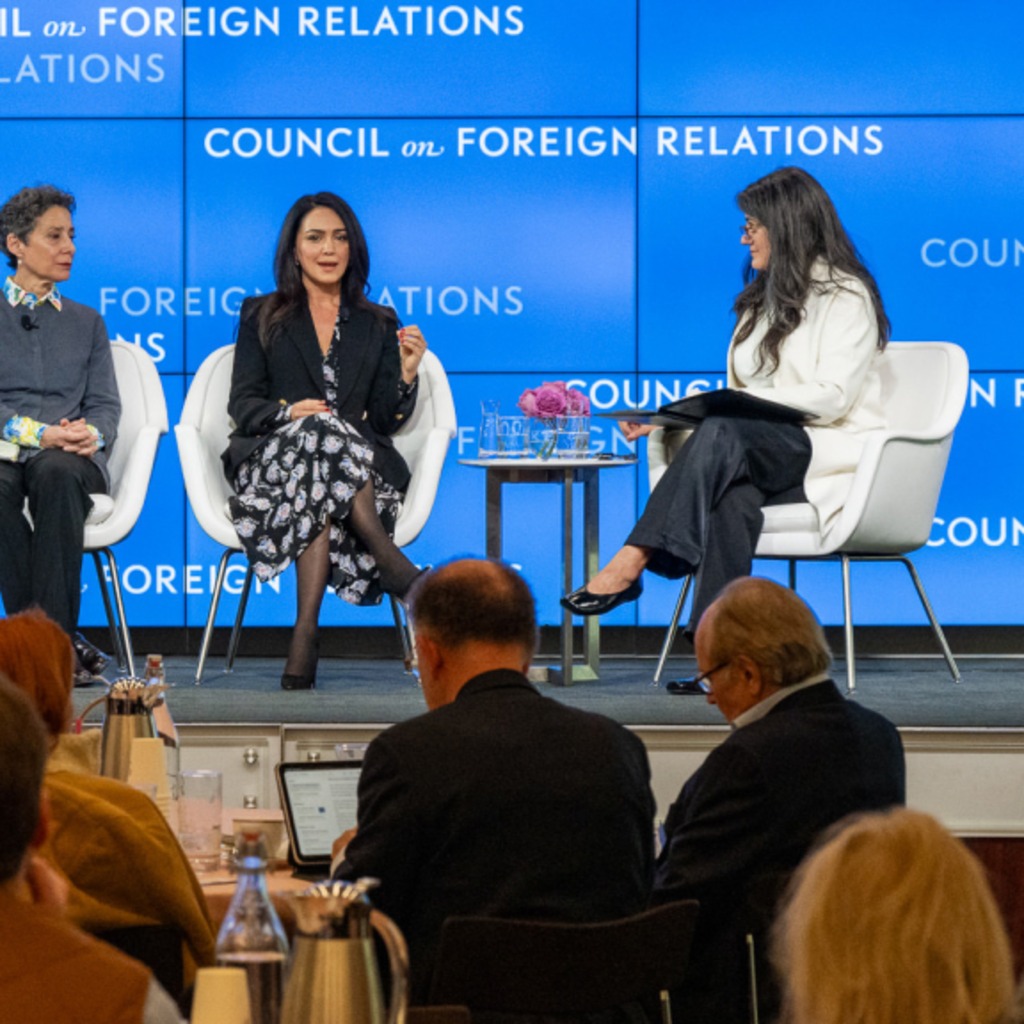
For this conversation we have really a wonderful set of speakers who are dedicated to and have been working on these issues for many years. You all have their bios, so I’ll just do a very quick introduction, and then we will get straight into the conversation. So here, right to my right, I have Minister Reem Radovan, who is the German federal minister of economic cooperation and development. Then I have Minister Haneen Sayed, from Lebanon. She’s the Lebanon minister of social affairs. Next, I have David Miliband, who is president and CEO of the International Rescue Committee. And then, finally, I have Raj Shah, who is the president of the Rockefeller Foundation.
This meeting is on the record. And we will have a conversation up here for about half an hour, and then I will open it up to your questions. So please be ready. We have the audience here in the room, a packed house, and then we also have many CFR members online who we will also turn to.
So with that, you know, let me turn to you, Minister. And let me start with how you, and really how Germany, has been thinking about, sort of, productive, sustainable, and influential roles when you’re thinking about these fragile state contexts. And as I understand it, when you have been talking about these issues you have been talking a lot about investing in resilience. And so could you define a bit what that means to you and how you and Germany are thinking about it?
RADOVAN: Well, thank you. Thank you very much for organizing this meeting and the opportunity to speak about those very important points. So we are meeting right now in very, very difficult times. We haven’t faced so many crises in the world since World War II. At this moment we are looking at the situation in the Middle East. We are looking at the situation in Sudan. Actually, in Berlin we’re having—we couldn’t go because we are here—but we invited—Germany invited to the Conference on Sudan right now. We’re looking at many, many different difficult contexts right now.
So, of course, now we need to talk about the effects of the crisis, but we also need to talk about prevention. And resilience is one key factor of security. I’m very convinced of that, that we need to support and we need to work on resilience in our partner countries. And this is what we are doing. We don’t see resilience and development cooperation, especially, as something nice to have. We see it as something that we need to do right now. And it is smart security policy. I’m convinced of that. And this is the policy that I’m pushing for also in the German government and with my ministry.
And I think we’re seeing right now the effects of not having resilient societies and countries. And let me take an example. In the Middle East, Jordan. I visited Jordan two weeks ago, in this difficult times. I also wanted to come to Lebanon. It was not possible, but you will talk about Lebanon in a bit. But Jordan is a country with—they are facing lack of resources. For example, water. They don’t have water. They really lack water, for their infrastructure, for their people. At the same time, they are taking in a lot of refugees since the ’90s and—since the ’80s, actually, from the neighboring countries and the name neighboring regions. Now, with the war in Iran going on, this lack of resources is really putting countries like Jordan under a lot of pressure, even though they are not affected by the war directly, thank God. But they are facing—still facing this situation.
So what we do is we support in our bilateral and multilateral cooperation with Jordan—for example, we support their water system. So when I was in Jordan, I announced a support of their desalination plant, which is very important for the people there, for the Jordanians but also for all of the refugees, so they can have a life and dignity there. At the same time, we’re seeing that water is a geostrategic factor. Desalination plants are being targeted by military operations from Iran, for example, in the region. So that shows that we really need to invest in resilience. And this is what we’re doing. And just one last point on that, I think we really need to work on combining humanitarian aid and development cooperation, and link it together so that we, of course, can help in crisis at the moment, but also help that—help to prevent crisis before it happens.
O’NEIL: Thank you. Let me move on from that resilience side, and let me turn to you, Minister Sayed, because you are dealing with this right now. And when we were organizing this panel and talking about it last week, you were facing some of these strikes. As we were talking about, they were all over Beirut. And let me just express the empathy that I know I feel, and I know those here in the audience also feel, for what you and the people in Lebanon are facing. Talk about, if you would—I mean, you have seen a displacement of a million or over a million people. And talk a bit about how you, as leading in the government, what you’re able to do, what you are doing, and sort of what you need in this situation.
SAYED: Thank you very much. And let me say it’s a great pleasure and honor for me to be here in this esteemed group and this Council on Foreign Relations. So thank you very much for the kind invitation.
As you mentioned that I actually was not going to be here this week, because since March 2, when hostilities broke out again—triggered by, initially, the launching of Hezbollah, six missiles, into Israel, and then that, of course, brought a major counterattack, which hasn’t stopped—and bombardment hadn’t stopped since then. It’s very hard to be away even one day, because every day trying to manage a humanitarian crisis, an emergency of this scale, requires to be there every day. But I’m glad I came because I’m having an opportunity to also, first, kind of see how the world is looking at it. Second, of course, to advocate for Lebanon. Ultimately, this is what I’m here for this week in Washington. Earlier in the week I was in New York with U.N. and other partners.
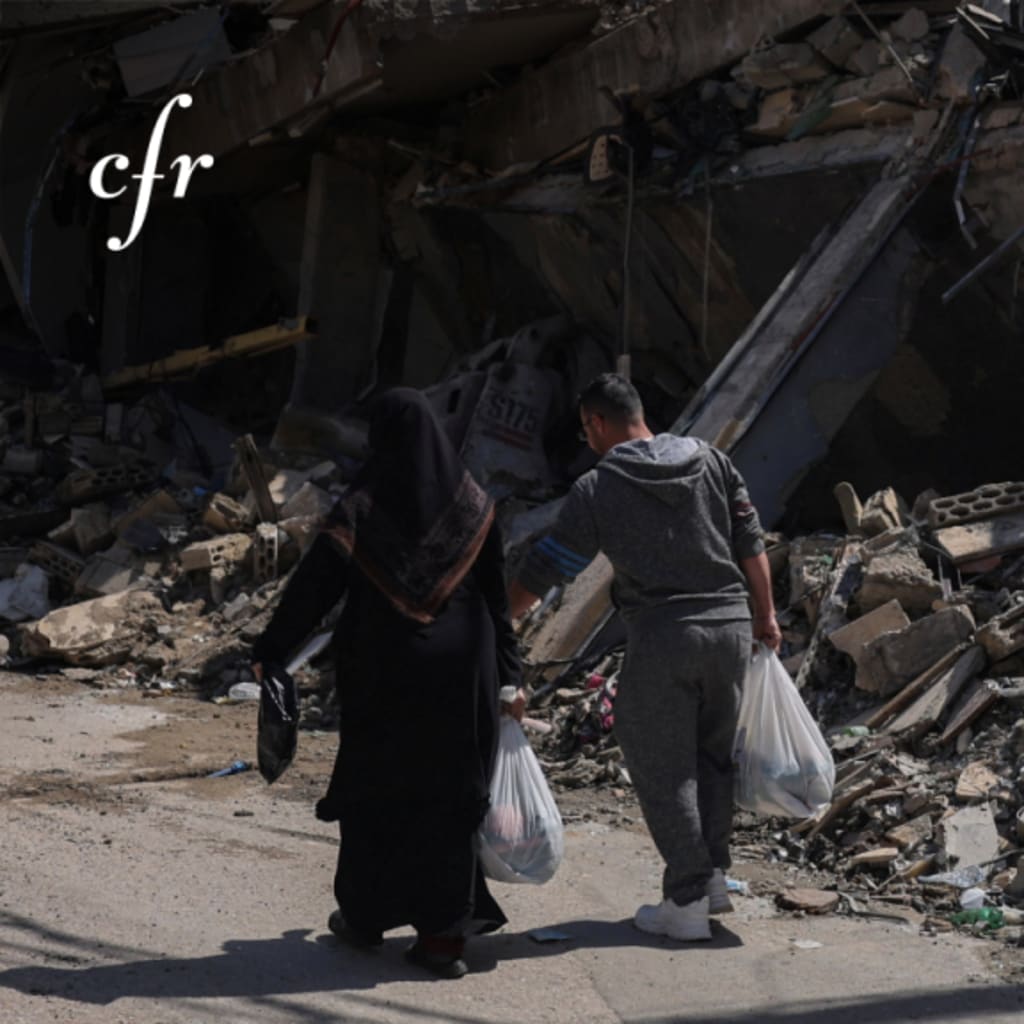
So within forty-eight hours, 20 percent of the population in Lebanon was on the move. They were displaced. One million people basically had to leave their homes from the southern part of Lebanon, from the southern suburb of Beirut, and from other parts of the country. And this is—for any country is massive. It can stretch any systems that any country, even the best country—most organized and so on countries it would be a stretch. Let alone a country like Lebanon, which is, in a way, kind of a classic FCV, fragility, conflict, violence. We have been, unfortunately, for many years going through a polycrisis. The more recent few years started in 2019 when we had an economic financial collapse, the banking system collapsed, and the economy also collapsed. Then came COVID very quickly after that. Then came the port of Beirut explosion, which, again, you all know about. Which was like the—almost like a nuclear bomb, that destroyed half of Beirut. And then came the previous war to this, in ’23-’24.
And then we barely had a year since early 2025, when our government—new government came in, of supposed peace and a ceasefire. Which was a good year last year, in many ways. And we as a government came in to do reform. And each of us ministers in their own Cabinet were—in our ministry were embarking on major reform efforts and the like. But unfortunately, on March 2, that all ended. And we’re back to square one, or negative square. And to me, this is really—you know, it’s not a good situation to be in. So one million people displaced, more than 700 shelters that have been opened up to accommodate them. Having said that, only 15 percent of this one million are in shelters. The rest are with family, with friends, or using up their savings to rent, to live somewhere. Of course, we know that those kind of savings will run out very soon because their jobs have been destroyed, and the like. So the pressure to actually open shelters is going to even be increased.
Now from literally the hours, the wee hours of March 2, I was at home. It was, like, at 2:00 in the morning when Hezbollah lobbed their missiles, and then the Israelis counterattacked. So we know right away that something big is going to happen. We’re kind of used to that kind of scenario, unfortunately. So the prime minister called us immediately to the prime ministry. And we opened what’s called the Disaster Risk Management Unit. That’s our operation team. I mean, it’s been open, but, you know, now going to red alert. All the relevant ministries were called, summoned to start what we know is going to—expecting a large displacement. And this basically need, very quickly, open shelters, provide everything that humanitarian needs to be provided—in terms of mattresses and pillows, wash facilities, food, of course, water, and so on. And prime minister appointed me to manage and lead this operation. And since then, it’s been twenty-four/seven. And that’s why I actually—is the first trip I take out since then. And, as I said, it costs to be away, because every day something is happening.
Now, in one sense, we were kind of ready. I mean, no one can ever be ready for something like this, but a few months ago the prime minister asked us each to work within their ministry and develop an emergency plan, which we did. And also we commissioned the purchase, procurement of some basic foods and so on to stock them up, all of which were depleted within the first forty-eight hours. We opened 300 shelters within the first day. The next day we’re to, you know, 500 shelters and so on, as the number of displacement was increasing very rapidly. The somewhat unique thing about this response, compared to the one of 2024, the previous war, was that this was very much about government leadership.
The government really taking the lead in being there, coordinating, providing, and for the Lebanese citizens to see that. And this is very important. I mean, those who don’t know Lebanon, the state has not been playing a very active role for years and years. It’s been a weak state. Too many nonstate players have been much stronger. So—but there’s a very clear need for the state, for the government to play their role, obviously, in security, in justice, in sort of all the things that government should be doing. So that’s kind of a unique feature of this particular response now,
Now, however, having said that, we work with partners. And I think this is important also for this audience. We have very good partnership, first, with the U.N., because the U.N. agencies are already on the ground. They have been in big way for the past thirteen years because of the hosting of refugees. Like Jordan, Lebanon actually hosts the largest per capita number of refugees—of Syrian refugees, or refugees, in the world. And so we’ve had a large U.N. presence, and also very—a lot of partners, of course, like IRC and other partners, who are helping on the ground. And this is very, very important because we know, as a government, we can’t do it alone. So with our partners implementing on the ground, of course, helping us attract resources, filling in capacity where we don’t have it. And that’s essentially how this whole process is being—moving forward.
It’s a massive operation. We’re using data in a very big way. I mean myself, from my background as a former World Banker, very much believe in policymaking that is—and decisions that are made based on data. So we have dashboards. We know every single shelter, what are their needs. Daily there is a needs assessment survey that is done by the local players in each shelter that feeds up into the system. And basically we know overall what the kind of aid we have, where it’s going to be distributed. And we use kind of a decentralized method where we work with the governorates and the mayors and municipality to actually do distribution. A lot of signing off, accountability, where the aid is going. In fact, I’m quite proud that when Tom Fletcher, the head of OCHA, was in Lebanon two weeks ago, three weeks ago, and he saw the operation, he actually said this was really one of the most spectacular, professionally run humanitarian response.
So that’s all good. However we are—my last point here, and I can come to it later—is that funding. Funding is a huge challenge. This already was a country that has, you know, no economic—has not recovered economically. Our budget is still being reconstituted. And I’ll speak more about that, but that’s actually where the cookie crumbles. Let’s put it that way.
O’NEIL: Excellent. David, let me bring you in. One, because you were just in Lebanon. And you’re no stranger to many of these—being in fragile and conflict-affected states. Maybe you could talk a little bit about what you saw, but also sort of this role. I mean, the minister brought up partnerships, and talk a little bit of IRC and others, and what you saw on the ground. And what—you know, as you evaluate it, what you see as the path forward.
MILIBAND: Well, thanks very much, Shannon. It’s absolutely humbling to be here with both ministers, but I think I especially want to call out if any of us think we’ve got a hard job, think about the job that’s just been described by Minister Sayed. And it was an absolute privilege to go and visit her in Beirut. I have a very clear view. If it’s safe enough for our teams to be working, it’s safe enough for me to go. And it’s very important that I go and be with our teams and meet our clients, which I was able to do. It wasn’t in the least bit heroic compared to what they’re doing, but I do think the ground-level perspective matters.
Just a couple of points on Lebanon, and then go broader. The clients I met in shelters and out of shelters told me, we learned from previous crises. We didn’t stick around in our homes. That’s why a million people moved within twenty-four, forty-eight hours. So this is a different kind of crisis. Secondly, a lot of these people think they’re never going back home. And they don’t know where they’re going. So the phrase “displacement crisis” can almost soften what this is about. This is an existential question for the country, for its balance, for the way in which different communities are respected.
Thirdly, the position of the 85 percent who are not in government shelters—and, by the way, a government shelter is a sports stadium, a government shelter is a school, so kids can’t go to school, so all of the knock-on effects are real. That 85 percent is obviously a massive issue, remembering that this is a country that’s still hosting 500,000-700,000 Syrian refugees. It’s still hosting—there’s still 150,000 people who were displaced from the previous crisis. So this cycle of fragility and crisis is really important.
What I’d say to this audience is there are three types of partnership that I think are important in the kind of states that—in the kind of places that Haneen has described, remembering 60 percent of the world’s extreme poor live in fragile and conflict states. So the main driver of extreme poverty today is conflict. Now, number one, there are situations where the government’s in the lead, and the role of international local NGOs is to align behind what the government is doing and make sure we’re supporting it. So we can reach—with a cash program that you’ve established—we can reach Syrian refugees who aren’t covered by the Lebanese system. We’re supplementing and carrying forward what the government is doing. On something like early childhood development, I was meant to be in Beirut on the 31st of March for the launch of the minister’s early childhood development program. We can be a source of innovation and expertise.
Second situation, where the government is, let’s say, weaker than in this situation—where the government is weak, and it needs us to supplement what they’re doing, excuse me, in the core of the activities. And there, it’s local hiring, local diligence systems, very, very assured and impactful delivery. Third element, a billion people live in fragile and conflict states. Two hundred million live under nonstate actors. In other words, the government’s writ does not run. And there, if you don’t empower the civil society, you’re disempowering the civilians and clients who live there.
And I’m here in Washington this week because it’s the World Bank spring meeting. And the old model, where development cooperation meant government to government cooperation, isn’t sufficient for the modern world, where you have so many places where there isn’t the government as a partner. And that’s an absolutely vital space as we try and reinvent development cooperation. And final point. Development cooperation and the crisis of development cooperation is obviously a subset of a broader crisis of cooperation. And we’re not political, but we’re the victims of failed politics. And I think we should be really clear about that.
O’NEIL: Thank you. Raj, let me turn to you. I know you’re also in a civil society actor, a foundation, now. But if you don’t mind with this first question I’m going to take you back to when you were in government, right? So from 2010 to 2015 you were the head of USAID, which is—you know, and just listening to, you know, Minister Sayed talking about funding is a huge issue. And obviously that was—USAID was a big funder. You know, talking about the—sort of the old model not being there, that David just brought up. So perhaps you could just reflect a little bit, as you think of, you know, these last—you know, from when you were there to today—just how much the landscape has changed, and then what it means for—you know, for Lebanon, for some of the resilience that the minister is talking about. You know, kind of those longer-term plans. How do you see it now that, you know, the U.S. government, at least, has really changed the way it’s approaching these?
SHAH: Well, you know, first, let me just thank both ministers for their extraordinary leadership at a difficult time. In particular, Minister Sayed for showing the courage that it takes to take on the assignment you take on, on behalf of so many people.
Look USAID was, of course, founded by John F. Kennedy with an unbelievably simple idea, that grew out of the Atlantic Charter. Which was, we are going to be safer and more secure if we reach more people with the basic idea that dignity is a human right, that we recognize that. And that American idea enshrined in many of our founding documents, never fully realized but always our ambition, would inspire others and allow us to have friends and trading partners and prosperous counterparties that adopted our worldview about rights and self-determination. And so it didn’t grow out of nowhere. And it wasn’t a charitable endeavor. It was a part of our foreign policy and our statecraft.
And last week, the OECD announced its verdict on the numbers from last year, that aid has gone down by about 23 percent. Of course, the United States of America led the charge, I think down about 47 percent. But others followed suit for a variety of reasons that David was talking about, a crisis of cooperation more broadly. And the net impact of that is we’ve effectively taken $40 billion from the world’s sick, the world’s poor, the world’s vulnerable, and the world’s displaced. And just in the last few months, I’ve had a chance to really see what that looks like. In the Kakuma refugee camp we know that fifty-four children died because they were not able to access the ready-to-use therapeutic foods that so many of you in this room worked to make a part of our food security programming over the last two decades, that could have saved those lives.
I visited a community in Western Kenya where 1,200 kids proudly received U.S.-sponsored school meals programs. And the principals of the schools described how they shut those programs down because one day they just stopped having the resources to execute. I was with Michelle Nunn, one of our great NGO leaders of CARE, visiting western Kenya, where she articulated how they had to take down the program they had that was keeping young children out of the cocoa supply chain in West Africa—a model effort. So, you know, we now know that these cuts have actual extraordinary human impacts. And we know that the estimates are that if these cuts persist that over the next five years we could see as many as nine million lost lives as a result.
So to pretend this has no consequence, and to think that this is about whatever you’re reading—efficiency or fraud—misses the point of what this is. It’s a stepping away from the Kennedy-era concept that the idea of human dignity is a powerful thing that can bring this together. So in that context David is absolutely right, and has been such a powerful voice—not just speaking, but visiting and doing this in practice with the IRC—that we need to have a new model of development and humanitarian cooperation. That new model in countries that are—have more state capacity and more domestic resources should be public-private. You know, a lot of commercial investment. Should focus on developing inclusive growth. And I could rattle off program after program that is a model of that new model, that is how we could rebuild that architecture.
But for countries that are fragile and conflict-affected, that’s not going to work. No amount of U.S. DFC financing is going to allow the four million kids who are living in deep food insecurity in Somalia to have any kind of meaningful optimism and hope about their future. And that’s why we have to support partners like IRC and the collection of civil society organizations that can be more innovative and effective in that context. We’ve been proud to support a multiyear effort with David through his Airbel Innovation Lab to say, look, even in humanitarian settings we can adopt technology, use AI, build predictive models, and be more efficient. Take away every excuse for not supporting this.
But at the end of the day, I believe we have to respond to our politics. We did a poll in thirty-six countries across 32,000 people and found that the vast majority want more humanitarian cooperation, not less, especially if you can show them it delivers results. Throw in words like food and water, and you get over 90 percent on the response rates. And that’s true in the United States, true across Europe, it’s true in countries across the world. And so the mission should be reconstituting the politics of understanding, that respecting and lifting up the dignity of everyone on this planet is actually a national security strategy that’s served us fairly well for a long time. And that if we let go of that as a part of global statecraft, we are all putting ourselves at risk.
O’NEIL: OK. Let me—we’re coming up on the time when I’m going to open it up to all of you, but I just want to ask a few more questions, and ask you all just to reflect briefly.
But, Minister Radovan, let me ask you a bit, as you think about from the point of view of German government. We’ve been talking about, sort of, you know, civil society, and business, and partnerships, and the like. You know, as you look at where is the German government best placed to sort of fulfill a task or do something, and where do you think others are? As you sort of think about the division of labor, where are the distinctive advantages as you go forward? How do you work with those kind of actors?
RADOVAN: Yes. Well, the challenge we have right now, as you just mentioned the new numbers for ODA. We are now the biggest provider of development cooperation worldwide. And it is not because we raised our budget. It’s because the United States went down so dramatically, and others too. So we now have the biggest budget, with 10 billion (dollars) for development cooperation. In Germany, we have a division between development cooperation and humanitarian aid. So we have that separate. Of course, we link it with the ministries, but it’s not part of development cooperation.
So and at the same time, I agree that we need to reform development cooperation. So this is what I did right away. We reformed German development cooperation. It is also part of—now I’m implementing it as a key part also of national security—German national security. At the same time, what David said is something that we are, of course, seeing with our cooperation. We have those different type of crisis, different type of cooperation. So what we’re doing, even though we also have budget cuts, we are working on bilateral cooperation with the governments where we can work with the governments. I just said Jordan, of course Lebanon also. We have a big bilateral cooperation with Lebanon.
At the same time, we have countries like Sudan, the biggest humanitarian crisis in the world right now. We cannot work with any governmental part there. So we are working, of course, with NGOs, with IRC, with United Nations, with others, which are getting more and more important in this fragile context. And it is an important way for Germany to also still be part of the cooperation in the region. A good example is also the Sahel region, where we have a difficult security cooperation. We have countries where we don’t even have an embassy open, but still through NGOs, through United Nations, through GIZ, through others, we’re still on the ground.
The question is, and I just—I really need to stress that out, because we just talked about USAID—still we need to link that together. We need to reform development cooperation. We’re all doing that. Everyone is reforming. World Bank is reforming. United Nations reforming. We are reforming. But at the end of the day, we need the public and we need people to see why it is important to invest in development cooperation, why it is not a moral luxury, why it is not just aid, that it is also part of our future, of our security, of our economy. And I think this is where we really, really need to work the most, because what we’re facing here, what the United States are facing also in public polls, we’re having it too. We have public political parties who are saying, just go the American way. So do Germany first, just cancel development cooperation. We’re facing this too.
And we really need to work to show people why it is effective, what is the outcome of it, and why it really works on the ground. And I think there have been also things not going well in the past. And we really need to address that too. But clearly show the benefit of development cooperation for the people in our partner countries, but also for our public.
O’NEIL: Great. Minister Sayed, as you mentioned, you know, you were in New York. Now you’re in Washington. And that it’s costly for you to be gone. But I hope, in some sense, your meetings have also been fruitful too. So perhaps you could talk a little bit about—you know, we’re here for IMF/World Bank meetings. There’s a lot of people from those organizations, from others here. And what is it that you and Lebanon needs from some of these organizations?
SAYED: Right. Thank you very much, again, for this chance to talk about this. As I mentioned at the end of my first comments, yes, there’s great need for additional funding. I mean, just to give you an idea, to be able to service one million people, we’re talking about something like $88 million a month. So over six months, that’s close to 500 million (dollars), over a year that’s one billion (dollars). And it’s a huge number. And, of course, we’re realistic. We’re not going to be expecting to get that. But today what we have, already now one and a half months into the conflict, we have barely 100 million (dollars). So and it doesn’t seem that it’s—you know, we hope. I mean, obviously my main objective here is to try to convince the United States, and also some of the bilaterals that we’re meeting on the sidelines of the meeting—of the spring meetings, is that helping Lebanon on the humanitarian side is very critical for stability.
Stability not just for Lebanon and Lebanese people, but also for the region. I mean, our region is very easily spillover. I mean, we’ve seen the more than a decade of civil war in Syria, what impact it had on the region, on other countries—Lebanon, on Iraq, on Jordan, what have you. And similarly, if Lebanon falls apart, if Lebanon collapses—and I want to stress to this audience that we are in a very critical stage in terms of our stability. This is already a country which is multi-confessional. And that’s, of course, the good part. But also when it can come to a point of competition for resources, then things easily break apart. And we obviously don’t want to get to that stage. And I think this is really—even Europe would, I’m sure, not, you know, wanted Lebanon to get to that stage. So funding is absolutely going to—you know, critical. This is my message.
And I think the difference here—we know the international scene has changed. First, our gulf country friends would normally come to aid Lebanon and other countries. Obviously have their own issues now still to deal with, and don’t know where things are going. And then globally, as already mentioned, the funding for humanitarian has gone down from 50 billion (dollars) to 20 or 25 billion (dollars). So that’s impacting us. Nevertheless, we want to sort of put Lebanon on the map and say that, you know, do you want another humanitarian calamity in the world, something that will be spilling over? In the end, also Lebanon is a small country. It can come back together very quickly, once we get some sense of stability.
The minister was in Jordan. And I always like to give this example, also because I know Jordan quite well. And I used to work on it. Jordan gets annually, from the United States alone, $1.4 billion. And this has been very good to keep the stability. As anyone knows the region, Jordan is really one of the anchors of stability, despite—and, you know the resilience you talked about. Despite the environment, but it’s been able to—and I attribute that hugely to this 1.4 billion (dollars) that’s coming only from the U.S. And that’s been kind of assistance that they know they’re going to get year after year. So that kind of predictability. So this is kind of what we want to get. The armed forces—that means the army needs to be also reinforced and strengthened. If we’re going to be able to implement what our government has committed to, which is to, you know, expand the sovereignty of the state all over. So, i.e., any arms outside of the government are illegal. But for us to be able to implement that, obviously our army needs a lot more support. So.
O’NEIL: Thank you. I know that Raj actually has to run and grab a plane. Would you have time for one question, or do you need to go?
SHAH: Of course, I’d be happy to.
O’NEIL: OK. I am actually going to cede the floor and I’m going to let if anybody here has a question for Raj. (Laughter.) I would like to—I’m opening up. Otherwise, I’m going to have my own question. So any hands? Right here, please. I’ll let you have the—yes, go ahead. And then we’ll go back to the line, so.
MILIBAND: Make it really difficult.
O’NEIL: Yes. (Laughter.)
Q: Thank you for the opportunity. And it’s a question for everyone, but I’ll direct it at you specifically. My name is Pooja Yerramilli. I’m a physician at Johns Hopkins. I work in global health and have worked across multilateral organizations.
My question is, it’s a little bit challenging to have a conversation about the evolving landscape for FCVs without mentioning the elephant in the room, which is the Board of Peace. And so I’m curious, from each of your perspectives, how do you foresee this impacting the humanitarian and development sector in Gaza, the wider region, and FCVs at large? As well as, how do you think that your institutions or governments will be or will not be interacting with the Board of Peace? Thank you.
SHAH: You asked for a tough question. (Laughter.) I don’t know if you want to go first? I’ll take it.
MILIBAND: I have total faith in you.
SHAH: Well, look, let me just step back. I will answer that. But I just want to say, on the global health piece, there’s an important process I’m sure you’re aware of called the Accra Reset. And so we have the luxury of connecting with and supporting nine African countries as they’re trying to redesign their health systems. But to just put in perspective what they’re actually trying to do, they are trying to take ownership over product supply chains that have been run previously by NGOs and third partners—Gavi, The Global Fund, U.S. partners. And simply having the fiscal capacity to actually take ownership of a supply chain and buy enough pharmaceutical product or vaccines for your population is an extraordinary fiscal challenge, in an environment where most of those nine countries are at their absolute peak indebtedness relative to the size of their economy and relative to their fiscal space. And so they’re all spending far more on debt service than they are on health and education. And that impedes the reality, of countries should just be able to pay for everything on their own. So that’s a thought on global health, because we’ll have to overcome that by figuring out fiscal solutions that are smart and targeted.
On the Board of Peace, the Rockefeller Foundation doesn’t have a collaboration with the Board of Peace, that I’m aware of. But I would say this, as I look at the organizational structure and some of the bylaws, it looks more like—or a legal analysis we had done informed me that it looks more like a real estate holding enterprise than a multilateral vehicle for delivering results. And there are actually some very specific reasons why that’s the case. And so I would not believe that that is a vehicle for doing the type of work that, you know, from the HIPC Initiative onward, around 1999 onward, has become the definition of results-oriented global development and global health work. PEPFAR was an extraordinary success, because we could demonstrate we got thirty-seven million people on antiretrovirals, and saved entire economies in doing so, over a decade, with tremendous bipartisan support. There’s nothing in the construct of the Board of Peace that implies it would do anything like that. It’s more of an asset ownership enterprise. And so I’ll leave it at that.
O’NEIL: Great. I’m going to go to—and if you need to exit, we understand. I’m going to go to a question right here.
Q: It’s an easy question for Raj. (Laughter.)
O’NEIL: Wait for the microphone. And if you would introduce yourselves, yes.
Q: Well, thank you so much. It’s easy question for you, Raj, here. Mohamed Elsanousi is my name. I am the executive director of the Global Peacemakers Network, as well as I serve as a commissioner in the United States Commission on International Religious Freedom.
The question is, all of you emphasized the critical role of civil society. And you clearly called for reform of the development cooperation. So then the question would be, what would be the mechanism to actually create that meaningful engagement with civil society in terms of they’re on the ground, they’re not going anywhere, they’re more stable in terms of delivering humanitarian aid or advancing peace. So any suggestion what to do? Because here the meetings in Washington now, David said, you know, still people looking into the old models, right? So then we need to create a new model that meaningfully involve civil society group, and being at the table in terms of, you know, using and utilizing their unutilized expertise and influence.
SHAH: Well, I suspect each of us could speak very meaningfully to how civil society plays an integral role in the endeavors we take responsibility for. And perhaps the minister, who’s, you know, dealing with this on the ground should be the primary respondent. But I would say this, you know, if you look at what are the biggest projects in our landscape that define this new model of development? David’s Airtel Innovation Lab—or, Airbel Innovation Lab—sorry, and hopefully you’ll get a chance to talk more about it—shows how you can work with civil society on the ground to bring top-tier innovations and make this enterprise more cost effective.
We’ve been a part of an effort with the World Bank called Mission 300 to reach 300 million people in sub-Saharan Africa with electrification, forty-four million have already been reached. But that project works because it works through and with civil society and smaller-scale, private entrepreneurs providing most of the energy for success, to use that term. Or the minister from Germany and Rockefeller cooperate on a global school meals effort that’s already gotten thirty million additional kids into school meals this past year, during all of these tragic aid cuts. But it’s been in countries like Indonesia and the Philippines. Philippines was able to put $230 million of its own resources in, with our collective technical support. And a lot of the implementation is through local civil society, food and agriculture organizations throughout the Philippines. So I think you’re describing something hugely important, but I think the best examples will come from the panel.
O’NEIL: David, you want to describe the lab that you have?
MILIBAND: Very briefly. I mean, I think we should listen to the ministers. First of all, unless you’re clear about outcomes, it’s impossible to have pluralism and innovation in delivery. And this is the central challenge. There’s too much confusion about outcomes. There’s a profusion of outputs. There’s lack of clarity about outcomes. If you’re clear about outcomes, you can then be disciplined in your innovation about how to deliver. And that’s the kind of transparency and accountability that’s missing. But the root cause is a lack of clarity about outcomes.
Secondly, just in terms of the work we’re doing, I’m very, very committed the idea that our Airbel Innovation Lab, it’s a safe house for new ideas. We’re proud that in our innovation fund, which is a part of that, $6 million out of $28 million, or something, we have a 40 percent failure rate. If I was in government, I’d struggle to go to the House of Commons and boast about a 40 percent failure rate. But all of us know, if you want to innovate you’ve got to be willing to push the boundaries, so that otherwise you’re not taking enough risk. And from our point of view, it’s about pushing the boundaries wherever we can do that—in service delivery methods that are out of date, in products that don’t work, in systems of accountability that are just not getting bite. And that’s what we’re driving.
The new frontier is actually for the Airbel Impact Lab to become an innovation and investment hub. We’re going to start investing—we have started investing in private innovation, that we’re then going to bring into the humanitarian sector. So that’s a very brief—but, by the way, Airbel was the name of the safe house in Marseille that was set up by my organization in 1940 to forge passports to get people like Mark Chagall out of Nazi-occupied Europe. And that’s where the idea of a safe house for new ideas came from.
O’NEIL: Great. Do you want to comment? Do you want to talk about—I mean, you have such a scale of need, where is civil society playing a role?
SAYED: No, absolutely. Absolutely. I mean, I’m proud to say that in Lebanon the role of civil society is very, very strong, very active—maybe hyperactive, some people would say. (Laughs.) And this is kind of historical in the way how Lebanon, the state, came to be from the time of the French and the like. Whether it be in education. Most of our education is private, actually, health care, you name it. So actually, the issue in Lebanon is not the lack of a role of civil society. And the whole chain, if you will, of development or humanitarian provision starts from the beginning all the way—you know, to sort of conceptualizing, to implementing, delivery, many of them are sort of watchdogs, you know, transparency organizations. So we don’t suffer from that.
If anything, it needs a bit more coordination—a word that is, you know, a wonderful word. It means nothing. It can be like that. It’s really about coordinating so they can get the best of them—of the ideas, the innovations, you know, there on the ground. So, yeah, that’s less of our issue, but it’s more about how to coordinate it. And then, in the context of resource constraint, what is the best use? Because there can be also a lot of fragmentation if you have many, many partners delivering the same thing. When I took office a year and some ago, there were something like a hundred entities delivering cash, doing cash transfers, in a small country like Lebanon. Now that didn’t make any sense, you know, because obviously the overhead cost of that you don’t need. So actually, we developed the national system which provide—you know, which, first of all, can go to scale, and does go to scale.
We reach 20 percent of the population through this social safety net program. Very efficient, very effective. There’s no need for a hundred local partners do that. They should be doing other things which are more, you know. So this is the kind of things. But basically they’re absolutely key partners. More coordination is needed. With resource constraint, you need to find the best place for different civil society groups, but.
O’NEIL: Go ahead, Jane.
Q: I’m Jane Harman, former member of Congress, president emerita of the Wilson Center. Hello David.
MILIBAND: Hello, Jane.
Q: I was just at the Rockefeller Center in Bellagio, Italy. Everyone should go there—(laughter)—now—
MILIBAND: Not a fragile and conflict state. (Laughter.)
Q: At a fascinating conference on AI. And that’s my question. As you’re talking about innovation and technology and results, how are you, or are you, using AI? And do you think—I hope the answer is yes—that it can be used in a way that is really a force for good and helps you get to the scale you’re talking about?
O’NEIL: Do you want to speak to AI or technology?
RADOVAN: I could start. Of course, it will and it should be a huge part of development cooperation. But let me be very blunt. I mean, I’m from Germany. We’re not really good on digitalization. So we are very slow on that, honestly. And so what we’re facing right now is that our partner countries, especially on the African continent, are way faster with AI and AI solutions than we’re even talking about. But we should use that. And this is why I’m also changing German development cooperation on win-win situations. It’s not only about us going into countries and assisting. It’s for me—and I am I—have another background. My family is from Iraq. So I know the context. And I know the expertise that people have. I want to also bring in that expertise from our partner countries to develop development cooperation.
But on AI, at the same side, we also have to talk about the question of regulations and question of how far can AI, and should AI, go? Especially when it comes to personal data. And just to make the link to civil society, for example, we work with civil society organizations. It is our priority, especially in fragile contexts or in countries where they are also prosecuted. So it is also a question of security. We’re not ready. We’re not there yet. But I totally agree. And I’m very open to ideas, if you want to discuss that with me, or bring in into German development cooperation, that we really need to discuss that.
I don’t know if you are using AI, maybe already in—
SAYED: Of course. No, of course we do. We do even now, in some of the humanitarian response to predict, for example, where people may go. You know, this place may move. We’re using and sort of predicting poverty, estimating. So we are. We do use it. But, you know, as you said, it’s kind of work in progress. There’s the whole, you know, the wider enabling environment for it that still—like in Lebanon, we still don’t have cybersecurity law, I mean, and a framework, and this is critical to—generally. Even before AI, it’s needed. So the basic infrastructure in many of our countries still need to develop, let alone issues of privacy and so on. But we do use it in everyday, cloud. Claude, ChatGPT. We use it. (Laughter.)
O’NEIL: Other questions? Right back there, please.
Q: Melanne Verveer, Georgetown Institute for Women, Peace, and Security. And thank you, ministers. Thank you, David, for all that you do.
I wanted to ask how you see the significance of the announcement this morning by the World Bank of the Water Security Initiative for a billion people, what that might mean, what it represents for potential partnerships, and just, given the crisis, both of you, I think, mentioned—both ministers mentioned water. And it’s a crisis not just in the Middle East, but in so many places.
O’NEIL: Who would like to talk about water?
MILIBAND: Melanne, you are my teacher in so many ways. (Laughter.) You’re a hard taskmaster though. I don’t know anything about the World Bank’s Initiative on water. (Laughter.)
O’NEIL: It just launched today.
MILIBAND: With a launch today. You’re at the cutting edge faster than I am. So you’ll have to tell me all about it, or tell me what to think all about it. But I’ve learned from you, never pretend to know something when you don’t know something. (Laughter.) So I can’t—I need prior notice of that. Do you know anything about it? You’re probably funding it.
RADOVAN: Yes, we are part of it.
MILIBAND: You’re funding it. So there you go. (Laughter.)
RADOVAN: We are funding part of—part of it. And I was also part of the launch today in the morning. I think it is really, really important that the World Bank is raising that issue. I mean, we have the world water year, the United Nations world water year. And we have the conference in Abu Dhabi in December, hopefully. And I think it is very important to talk about water, but also have those instruments. Because I really do think that it is one—it is the strategic resource of the twenty-first century. And we will see conflicts on water. And water is part of food security. Water is part of global health. Water is part of economy. It is, as I said, part of geostrategy. So we—part of climate change. So we really need to focus on water.
And just looking—zooming into the Middle East just shows you how important it is, despite all things going on right now, humanitarian crisis, war, conflicts, to at the same time now to take the resources, even if we have shrinking budgets, to invest in water security. Because if we won’t do that, we will face a dramatic situation in five, ten, or twenty years. And we are already seeing it in some parts of sub-Saharan Africa, in also Central Asia. So I really, really, really think that it is—it was a great launch today, and very important to raise this issue right now. And we are—we are, happily, part of that.
O’NEIL: Great. We have time for one more question right here in the middle, please.
Q: Thank you. Mohammed Khaishgi from The Resource Group.
My question is for—I’d love to get David’s thoughts, in particular, given your broad-based background. And the question relates to the delivery of the donor model. Now, undoubtedly, much of the objections that we have seen in the current U.S. administration are driven, possibly, by nativism and disingenuity, but at the same time you do have sort of statistics which, at least if you look at them on a broader basis, that suggests that up to 50 percent of donor dollars go into administrative expenses or into expenses at the level of the donor countries themselves. So do you have any thoughts on any reforms that can be done to the donor delivery model, so as at least to preempt these forms of objections and to, I guess, secure that the world that we—that existed, at least in the past, in terms of quantum of donor dollars? Thank you.
MILIBAND: Yeah. I mean transparency. Insist on transparency. We run a cross-NGO coalition on cost effectiveness and cost efficiency. We’ve done 400 cost efficiency and cost effectiveness studies. It’s called DIOPTRA, D-I-O-P-T-R-A. It’s on the website. I wish a U.N. agency had joined us. No U.N. agency has been willing to join us. Now I’m a big supporter of the multilateral system, but it has to be accountable through transparency. And these nine NGOs, we’ve put our own data in there. We’ve established benchmarks for cost effectiveness and cost efficiency for different projects. And we use them. I think that’s absolutely essential.
In terms of our own organization, we spend 89 percent of our budget on fundraising. That’s an essential part of our work. We spend 5 to 6 percent on what’s called management in general. Now that can be dismissed as bureaucracy. That’s our IT budget. We spend 3 percent of our total budget on IT. And I’m proud of that. We’ve raised it from 0.5 percent to 3 percent—0.5 percent of a $500 million budget became 3 percent of a $1 1/2 billion budget. I don’t want to be in a world where I get penalized for spending on IT, that allows me to blow through the COVID crisis and continue to deliver, that allows me to use the AI for anticipatory action, that allows me to use the AI today to diagnose Mpox and other rare diseases in Africa, using AI. So there’s a lot going on here. But transparency is the way to do it.
O’NEIL: I’ll let you each have a last word.
RADOVAN: Yes, just to add on that, because I think that is very important question. I think the next secretary-general of the United Nations—which will be a woman, I hope—but I think that she, whoever she might be, this should be the priority for the next secretary-general, because, as now, one of the biggest donors of the United Nations system but also one of the biggest political supporters of the multilateral system, we really need to see that help gets to the people on the ground. And I really don’t like to see people losing hope in those region of crisis, because when they see the United Nations this is the sign of hope, a light in very difficult times. But when they don’t feel like help gets on the ground that reaches them, then they lose all the trust, not only in the states, which they are losing already, in governments, but also in this multilateral system. And then there’s no hope at all.
So I really think that this should be the agenda of the next secretary-general. And I really believe also that we, as donor countries, need to push the United Nations more and more for reforms in that matter. Not because we don’t believe in them, because we really believe in them. But we really need to see that the budget that we’re giving is helping people on the ground. And then our people in Germany, for example, will see that it really reaches and it really makes the difference. But we have a long way to go there.
SAYED: So this is one of my pet peeves. And I complain about this all the time to the U.N. agencies. So you asked just the right question. I mean, as someone who’s a recipient of this, it’s unacceptable that for every dollar that comes, 60 percent gets to the final beneficiary. I fully agree that system has to change. I mean, like, right now, though, we’re kind of stuck because, you know, we really need the money. So I haven’t been—when I was in New York two days ago and I met with, you know, senior U.N. officials, we talked about it. But that wasn’t the main thing, because right now we need the money. But absolutely, reform of this, because it’s not acceptable. I mean, in terms of, I think, the efficiency of the funding.
Now, the alternative to this, or something complementary, is to use government systems. Donors directly give to government. Which in Lebanon we have—very rarely this is done. And there’s a reason for that, because donors don’t trust the government system. There’s been corruption, all that. Fully understand. This is what we’re working on. So, you know, the reform of the government systems, so that they are transparent, as David said. I mean, transparency has to apply to every phase of the whole humanitarian development nexus. So as we get our systems better, to be more trusted, then I think—it’s not that we will ever get rid of U.N. need. We definitely need. But then it becomes a different kind of partnership, or, you know. But absolutely. So I think two things. Basically, yes, U.N. system reform and overheads and so on, absolutely urgent. Second, work through—help support and strengthen government systems so that there can be a more direct and efficient use of donor funding.
O’NEIL: Well, as you can tell, we had four people here who are at the forefront of, you know, implementing foreign assistance, of championing foreign assistance, and also reimagining and rethinking it. So please join me in thanking them for their insights. (Applause.)
RADOVAN: Thank you.
(END)
This is an uncorrected transcript.
Speakers
- David MilibandPresident and Chief Executive Officer, International Rescue Committee; Former Secretary of State for Foreign Affairs, United Kingdom
- Rajiv J. ShahPresident, The Rockefeller Foundation; Former Administrator, U.S. Agency for International Development; CFR Member
- Reem Alabali RadovanFederal Minister for Economic Cooperation and Development, Germany
- Haneen SayedMinister of Social Affairs, Lebanon
Presider
- Shannon K. O'NeilSenior Vice President of Studies and Maurice R. Greenberg Chair, Council on Foreign Relations