Ukraine’s Critical Minerals: Aligning Capital, Security, and Reconstruction
Event date
Speakers
- Deputy Minister, Ukraine Ministry of Economy, Environment, and Agriculture
- Director, Critical Minerals Security Program, Center for Strategic and International Studies
- Associate General Counsel, Private Equity & Investment Funds, U.S. International Development Finance Corporation
Presider
- Heidi E. Crebo-RedikerCFR ExpertSenior Fellow, Center for Geoeconomics, Council on Foreign Relations
Panelists examine the strategic, diplomatic, and investment frameworks needed to develop Ukraine’s critical minerals sector and how it can help fund the country’s reconstruction.
This event is part of the Wachenheim Center for Peace and Security which is made possible by the generous support of the Sue and Edgar Wachenheim Foundation. This meeting is presented by the Greenberg Center for Geoeconomics.
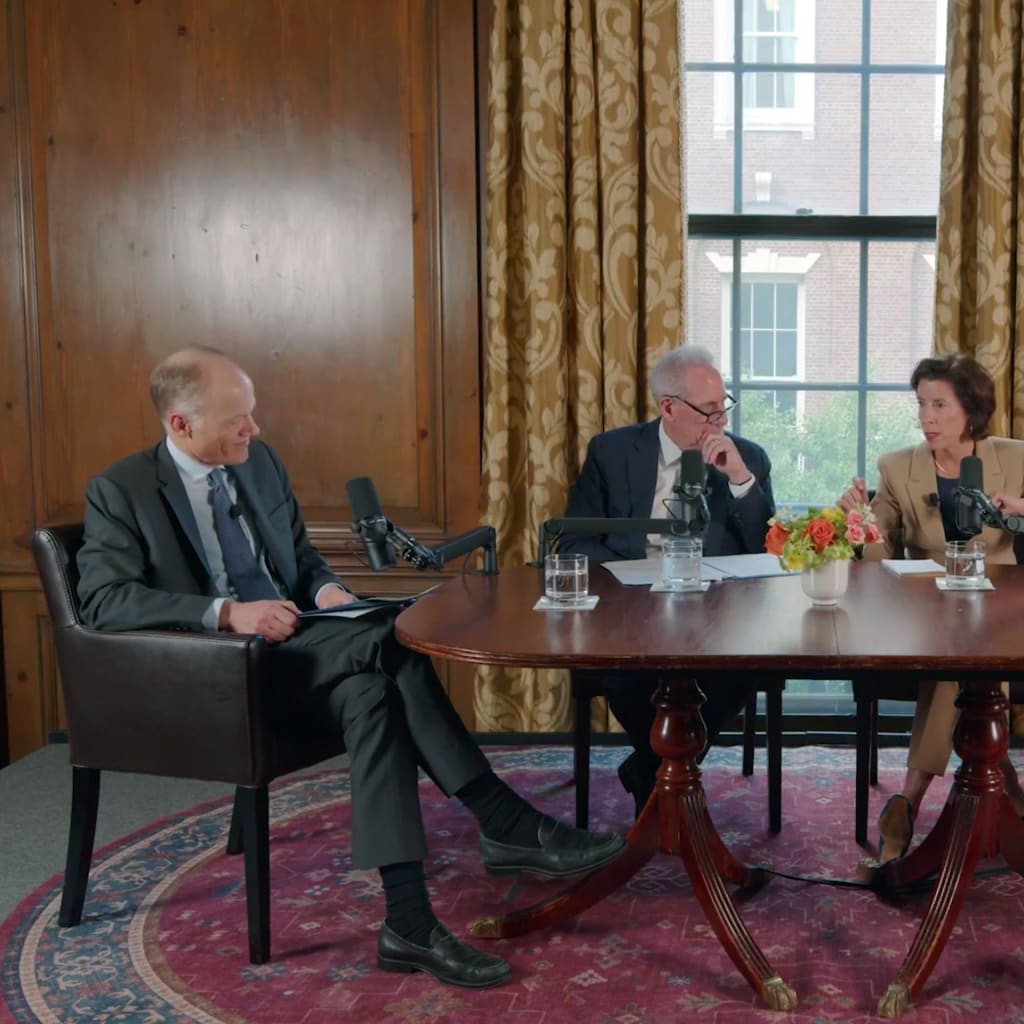
CREBO-REDIKER: So, hello. And thank you so much for joining us today at the Council on Foreign Relations. We’re really excited to have a panel in town, particularly, you know, Minister Yegor Perelygin, who’s in town from Ukraine. So this is the Council on Foreign Relations hybrid meeting on “Ukraine’s Critical Minerals: Aligning Capital, Security, and Reconstruction.”
This is on the record. We have a very large virtual audience as well. It’s also being livestreamed by Fox News. This event is part of the Wachenheim Center for Peace and Security. And it was made possible by the generous support of Sue and Edgar Wachenheim Foundation. They support our Securing Ukraine’s Future Program here.
And so we’re going to run this as a traditional CFR panel meeting. So I’ll introduce the speakers. We’ll talk for about thirty minutes. And then afterwards we’ll ask you to join in and ask your question. So as you’re listening to the to the conversation, please start figuring out how you—how you would like to engage with us as we move on to the Q&A part.
So immediately to my right I have Jonathan Taylor, who is with the Development Finance Corporation. He is the associate general counsel and is the point person for the U.S.-Ukraine Reconstruction Investment Fund, which is really, you know, one of the core engagements that we have with Ukraine right now on investment and also sort of that security element of how we look at a shared economic security with Ukraine. To his right, we have Deputy Minister Yegor Perelygin, who is not only the counterpart for the U.S. on the fund, but is also responsible for a growing list of responsibilities having to do with natural resources, but particularly critical minerals. And that plays very well to his background in the mining industry. And then to his right, we have Gracelin Baskaran, who is one of the greatest experts in town on critical minerals. And we’re really delighted to have her join today to share some of her—some of her thoughts.
So this is—I think this is an interesting moment in how the U.S. is looking at our mineral security. This is—you know, we had 2025 as an eye-opening year between the U.S. and China, where China really implemented its—and put to work its new export licensing regime, and accelerated not only the cutoff of very important critical minerals and rare earths to the U.S., but to most of our major allies and most advanced manufacturing countries around the world. So it’s become a much hotter topic. And the economic, security, and resilience impact of being able to invest in friendly countries is really that the top of the priority list for the long-term resilience strategy for the United States.
Ukraine in particular—we’re going to hear a lot more about this—but Ukraine has vast amounts of reserves in in critical minerals and rare earths. And even though they are in the midst of a very heated conflict after Russia’s brutal invasion, its destruction of its energy resources, and it’s really, you know, struggling for—it’s fighting for its survival right now. But it also has a very long history in the mining industry. And so it has not only the resources in the ground, but also a history and the human resources on the processing and refining side. And I think in terms of which resources they have, they have some of the largest titanium and lithium reserves in Europe. And they also have rare earths. Many of them fall in that conflicted zone right now, which is really hard to develop because of—because of the battle going on. But it’s actually—it’s the fifth-largest gallium producer in the world. This is one of the key inputs to many of the defense industrial base products that we require in the U.S. It’s key to semiconductors. And its exports have been restricted by China.
I’m going to start with asking the minister if he can walk through what is Ukraine’s mineral opportunity. And really, this is, I think, a crowd that’s very interested in hearing about the resources that you have, and how you’re looking at developing those with the United States. And then also some of the challenges that you find right now, in addition to being at war. What are the challenges with the industry, with the mining industry, with the processing. And then we can take it from there.
PERELYGIN: Thank you, Heidi. Thank you. It’s a pleasure to be here. And, everybody, thank you for making the time. I will start with the one very, very important fact. It’s not—it’s not so important how many tons of one type of resource you have, as to how well you can extract it, how well economically you can build your financial model, and be on your—basically be located or placed on your cost curve. And most importantly, it’s about how you can actually process the material that you’re extracting, and getting it into a final product or an intermediary product stage.
Now, in terms of—this is a very important narrative line, because this is what underpins a lot of the decisions and a lot of the strategic kind of thinking that we are doing all the time. And basically, this underpins the reality of what Ukraine really is. Ukraine has started out—actually, originally, after World War II, Ukraine was the home of the Soviet hydrometallurgical complex. And it was also the home of uranium extraction and titanium mining—titanium ore—basically titanium ore concentrate production. And it also was one of the most productive grounds for providing the Soviet Union with silicon concentrate, zirconium concentrates, hafnium extraction, and many of the more, I would say, exotic and rare metals that we hear of today. And indeed, Ukraine was also—until the full-scale invasion—was also major player in gallium production. And this has also underpinned Ukrainian reality.
Now what is—what is vastly and I would say most important in all of this discussion is the fact that Ukraine sits upon a very particular geological formation, that we call the crystalline shield. It basically allows Ukraine to be the number-one titanium ore, I would say, source—potential source. Let’s not say the word “source.” Potential source in Europe, and one of the top ten in the world. The problem sits at the question of, can a country, a Western country, compete in the world of today in a very, very, I would say, basic concentrate market? So the market for concentrates, for metallurgical concentrates or for ore concentrates, is underpinned by, what? It’s underpinned by a number of very small, I would say, well, easy to understand, predicaments. It’s underpinned by the fact of how much can you actually produce in terms of volumes? How can you be economically feasible? And can you remain on the cost curve when you’re being undercut on the global markets?
Now, these are very, very simple economic predicaments that you face every single day. And this is what basically makes or breaks a good project. Now this is not something that you—that is only true for Ukraine. This is an issue for most Western and civilized world countries. So when actually looking at the opportunities that Ukraine has today, you have to think in terms of who are your benchmarks, or what are your benchmarks, and who would you be comparing them to? Now, if we go back to the idea of what the portfolio of things to offer for Ukraine is actually made up of, you will see that Ukraine has a very, very strong history and a very kind of well-concentrated beginning in its uranium capabilities, in its titanium capabilities, in its graphite capabilities, but also, because of the very, very rich history in hydrometallurgical processes and in the extractive industry, especially the later, I would say, processing stages, especially those involving either chlorine—the chlorine process routes or the sulfide process routes, this is—this is basically a very, very productive ground for looking at the at the classical critical minerals, and then looking at the byproducts that follow them.
So Ukraine, in the end, can offer fifteen to twenty interesting potential positions to investors and to operators, as long as the economics of the business can be right. The problem is, and I always like to underline that, who are we judging the economics against? Are we going to be judging the economics against Chinese extractive industries and processing? Then, of course, it would be very, very difficult to get, well, you know, a sensible competitive model. And it would be difficult for almost any country in the world right now, because of a lot of the inherent structural techniques used by such dominant players as China. You know, I’m not—I don’t think I will need to quote and tell you about the numbers and about the geographical concentration of some of the key materials used in the aerospace industry, used in the energy sphere, et cetera, et cetera. We all know that out of the, I would say, fifteen, twenty most strategic metals and materials that we can imagine, like nineteen—if we take the number twenty—nineteen would be absolutely dominated by Chinese players and operators. That’s not a secret.
So the question is, what do we need to do to actually—not only to display and market the opportunities, but what do we actually need to do to actually get the clustering right in order to have these projects developed, and actually for them to attract the investor? So our opportunities are set in a very, very simple approach. First of all, let’s get the story out there. The story is easily confirmed by the Soviet history. Let’s get the modern story out there, which is easily confirmed by the fact that Ukraine, until end of 2021, was actually a full time exporter of titanium sponge, for example. And that I do not need to be a magician to explain the wonderful possibilities that that offers, especially if you can get the standards and the if you can get the aerospace certification. Then, of course, you have the fact that Ukraine is a full-fledged country with an existing nuclear capacity and with an existing uranium mining industry. And then, of course, the hydrometallurgical story and part of it.
So when we discuss all of this, I would be very, very happy to talk to all of you and have an opportunity to, you know, exchange contact details, and basically if you have some of the more concrete questions. But in general, look, it’s very simple. Right now it’s all about positioning ourselves in the capability to create clusters. If Ukraine can create processing clusters built around the older deposits and the older facilities, and finish—and, you know, get through its homework in getting the geological standards upgraded and get them right, and get them to the level that you would be expecting, that will set a lot of things right. Because these are the things that make or break a good project. And, of course, the inputs. So thank you. I believe we can continue this conversation.
CREBO-REDIKER: So and we’ll get to challenges as well later, but I just want to hear, you know, in terms of the DFC, I mean, this is a—this is a really—this is one of the biggest, you know, investments that the U.S. is making in terms of its—in terms of its aligning of its economic security along with Ukraine. And so can you tell me a little bit about not only what the status is? You probably can’t talk about what projects specifically are in the pipeline, but just sort of what that pipeline looks like? And how important it is to have a pipeline moving forward where you have some execution that is visible.
TAYLOR: Mmm hmm. Absolutely. So, first of all, thank you so much to CFR for having me here and for the invitation. First of all, you know, the DFC is a fairly new organization. It’s part of the U.S. government. And we were just reauthorized December of this past year. And we’re very proud of us being reauthorized on a bipartisan basis. Shows a lot of confidence from the U.S. government, and the Senate and the House, for our abilities and our ability to really drive economic statecraft in the United States. And we’re really proud of that. And I think that the U.S.-Ukraine Reconstruction Investment Fund really is an excellent example of what we can do on an innovative basis for the United States and for our partner countries.
So the fund itself, you know, it was a really fascinating challenge. And I’m really proud to have been part of the team that was asked to operationalize a vision of our political leadership. So as I think a lot of people know that sort of broad strokes, you know, the presidential level, there was this conversation about minerals to sort of see, how can we, you know, get the United States and Ukraine sort of working together for a long-term, durable partnership. And there’s a sort of conversation about minerals. And then, you know, Secretary Bessent from Treasury and now Prime Minister Svyrydenko, sort of, were tasked with leading this initiative. And then it came down to sort of the operational level, you know, how do you—how do you make this a reality?
And frankly, the task, when it came to my level, was, you know, we had to think about creating something that had never been done before. This has never been done before. This is a first-of-its-kind project. And so we need to think of how do you essentially bring these two countries together in a durable, long-term way, sort of tying our economic security together—our economic futures and our security together in this sort of unique way?
CREBO-REDIKER: Because it’s essentially a joint venture.
TAYLOR: It is essentially a joint venture. Well, so what we—so I’m a private equity funds lawyer by training, so I—sort of, right place, right time. And they said, we need to create a private equity fund. I said, OK, I can do that. So, you know, I was asked to sort of create a private equity fund. But it really it’s unique because it’s just two limited partners, the U.S. government and Ukrainian government. So that’s sort of the unique innovation of this project. And then there’s this other piece, which is sort of the distinct minerals piece, which is the offtake piece, right? Which is essentially bringing the U.S. government into the Ukrainian offtake for critical minerals and for other minerals sort of long term, sort of giving us a role in Ukraine’s critical minerals story sort of going forward.
But then we said, OK, we have to create this fund. And so, you know, how are we going to do that? And it was really a very interesting challenge. And, frankly, I love sort of having to think through, you know, how do you put the puzzle pieces together? And when we were working with the Ukrainian partners to come together with that idea, you know, I knew from the beginning—and I think a lot of our partners knew—look, minerals is necessary but not sufficient for the story. Ukraine has a lot of minerals. It’s a great part of the puzzle. But we also need to bring in other pieces. If we’re going to make investments in Ukraine and sort of tie our futures together, there’s other parts of the story that are really important. And that’s where we thought about hydrocarbons. Ukraine has a second-largest natural gas reserves in Europe. They have the second-largest storage—third largest storage capacity in the world, after the U.S. and Russia, for natural gas, specifically—deep underground.
This is a unique opportunity for America’s long-term security, for, you know, the security of Europe. So this is—these are things that we’ve been thinking about and talking about. The sort of emerging tech sector that I’ll talk a little bit about in a second. This sort of true innovation coming out of Ukraine right now do the current conflict is very interesting from a sort of long-term investment perspective. So we, you know, sat down and we thought about this. And where do we—you know, how do we sort of create something that ties us together for the long term? So that’s where we came up this idea of, you know, we have the—sort of, the main task, which is bringing the revenues from the hydrocarbons and the mining projects, the sort of, you know, licensing fees and the royalties that were sort of the key part of the agreement. They flow into this fund, and then we reinvest them jointly.
And it’s a joint project. Yegor and I talk on a daily basis. And we, you know, come up with our joint ideas about where we want to invest, and, you know, what kind of projects we’re looking at. We’ve hired Alvarez & Marsal to support us in this effort. And we came up with, you know, a pipeline, and our strategic sectors, and what we think makes sense for investing in. And it’s not just minerals. Obviously, mining and processing is a huge part of it, but it’s not the only part of it.
CREBO-REDIKER: Your first investment, I believe, was just a couple of weeks ago. It was defense tech.
TAYLOR: It was. Our first approved investment was—well, we call it an emerging technology company. So it’s in Sine Engineering, which is a very interesting company based in Lviv. And they make, essentially, radios. They do GPS-denied navigation. And currently it’s all going into drones, primarily counter-UAS, counter-drone technology to defend civilian infrastructure and commercial infrastructure. Obviously, if you’ve been watching the news, is a particularly relevant topic. So, you know, we were kind of interested in it, frankly, before it became such a relevant news story, because those of us paying close attention to the sector saw that this, you know, was going to be a relevant investment area.
And particularly interesting the United States and our allies. You know, we knew this was coming, in a way that. You could see this sort of evolving from the Ukrainian story, right? I mean, you can see this was happening already. And sort of it’s happening, whether we like it or not, so best for the United States to get ahead of it and sort of bring ourselves and our allies closer together with this technology and these stories. So that’s how kind of we got interested in this technology. And we really, kind of, you know, brought ourselves to that place.
But I want to sort of pause for a second and say, to get to that place where we could make that investment two weeks—or, make that approval two weeks ago, it was an enormous effort both in Ukrainian and the U.S. government. Because we had to set up this fund and get it ready to invest and make a seed capital—sort of a commitment from both sides. And we did that all in about eight months, which was, frankly, extremely fast. Even coming from the private sector. You know, I was at BlackRock for a long time. And I was like, man, I don’t think I could have done this at BlackRock this fast. It was just a very quick, very efficient, really team effort.
And, you know, since they’re here, I’m going to call—first of all, of course, my friend Yegor, was a key part of that. But also, Will Thompson and Roman Shemakov are here in the audience. I’m going to call them out too, because they were just absolutely key parts of this effort. Because we just had a huge amount of work to get ourselves to that place. And it was really just, you know, everybody realizing how politically important it was for the United States and for Ukraine to kind of get this right. As you pointed out, this is a first of its kind. And if it didn’t work, if it didn’t sort of produce results in a, you know, fairly efficient timeframe, it was going to sort of raise questions about whether this sort of economic statecraft was really viable. So we felt the real pressure to get it right, and get it right, you know, as quickly as possible.
CREBO-REDIKER: So I’m going to turn to Gracelin and sort of zoom out a little bit. I mean, DFC as an economic tool always looks to catalyze private investment. And it’s not—it’s not meant to be—you know, so the fund is making direct investments, but traditionally it’s been a catalyzing—catalyzing for private sector investment. Given the current investment opportunities in the minerals space in Ukraine, what do you think are the constraints to private investment? Are you seeing it go into Ukraine right now? And, you know, what are—if you have any anecdotes, what are some stories that you can tell, both positive or cautionary, specific to the Ukraine situation?
BASKARAN: Thanks, Heidi. Thank you for convening this important discussion. And to CFR, to all of you for coming, and to my fantastic co-panelists. It’s always good to be among friends.
You know, when we take a step back and we set the table, the real significance of Ukraine, from a larger mineral security narrative, is that it was the first time that we shifted our foreign policy around our mineral security. And we’ve seen it replicated time and time again, right, from Australia to Saudi Arabia to Argentina. We have seen that minerals security has reshaped it. And that all started with Ukraine. So successfully mobilizing private capital, because at the end of the day, remember, governments don’t mine. We should let miners mine. It’s what they’re good at. Government struggle to permit. We shouldn’t give them too much there. And so when we take that step back, all the government can do here is create the enabling environment for the miners to go in. And that’s really the question, and maybe a litmus test for, can we do that?
Now, when we look at Ukraine, there’s a distinct set of challenges. And we’ve talked about this. We were talking about this just before this panel. Is, you know, when you look at the first challenge, OK, so the mapping is outdated, right? It was generally done about what we know to be thirty to sixty years ago by what was the Soviet Union. And at that time, not all of the minerals that we—they thought were critical, or we think are critical today, were critical back then. You know, if you look at a country like Ukraine, they have 300- to 400,000 tons of uranium tailings, because they were a big uranium miner. And those tailings have all kinds of minerals in that, but sometimes you got to go back and find out what’s there.
So I remember last year, about six months after the agreement was signed, we had a conversation of, OK, how do we get that geological mapping to be done, to get updated using new technologies? Acknowledging, you know, that some of the minerals that we like—rare earths that are super critical now—may not have been back then. And we had had the conversation about LIDAR mapping technologies, which we know is particularly good for conflict zones. But the reality is, is that with the amount of conflict it’s kind of hard to get a drone up in the air right now, right? The drone may not stay in the air for long, in fact. And so that remains one of those challenges that, you know, security remains a big barrier in terms of getting the new data that we need to then push in exploration investment and production investment.
On the other hand, we know that going in and reprocessing tailings, because those are already out, can be both economically much more viable, right, and in a way that maybe it wasn’t forty years ago but we have a lot more technology to do it now. But also it can be very environmentally friendly, right? Generally you remediate the earth and the water when you go in and do that. So that remains an area of a lot of potential. The reality is, though, is when you think about developing the critical mineral sector—again, because, again, as the minister pointed out, very deep minerals history, deeply embedded in the industrial backbone and economic story of Ukraine, right, dating way back, if there’s a whole ecosystem of private capital that we have to get to move in, right? It’s not just about the mine. I mean, as Heidi mentioned, the energy infrastructure is going to be really key. And a significant amount of energy has been bombed out.
At the end of the day, there’s a reason that when there are wars people go for the energy. It is the easiest way to cripple an economy, right? And mining and processing are extremely energy intensive. It is going to be rebuilding a lot of the transportation infrastructure that has been knocked out, because you’ve got to go from the pit to the port. That would be a second area. Ukraine, you’ve obviously seen private capital move, TechMet and the lithium project was a good—was, I think, a pretty good indicator. But at the end of the day—
CREBO-REDIKER: Do you want to just take, like, a quick aside and talk about TechMet and their lithium investment?
BASKARAN: Yeah. So TechMet is a company partially owned by the U.S. government. It was actually—and, you know, people think that government equity in mining companies is brand new, effective last year. It’s not. Equity investments were made by both the Trump and Biden administrations into TechMet, which is a really critical company. And last year they won a bid for a lithium project. And, again, you can go anywhere for lithium. Lithium is all over the world. So the sign that they wanted to go to Ukraine, I think, was a very powerful signal of a company, backed by the U.S. government, going in. And TechMe, again, they’ve got investments all over the world—South Africa, Brazil, here in the U.S., in Europe. So it’s a company that really knows how to identify and pursue good projects. And that’s the highest level of signal you can get. Is not just a government signature, but when the private capital wants to go in.
But at the end of the day, you’re starting to see these incremental moves. But security is still really, really important to realize its full potential. Building a mine can cost anywhere from 500 million (dollars), on a very low, generous estimate, into the many billions of dollars. And you want to feel some degree of confidence that the investment you’re making has that long-term stability, because it can take decades to build a project. So ultimately, while you know, the U.S. government has made incredible progress in partnership with the Ukrainian government, it’s also going to be, in the long term, important to get stability into the region, to get that mapping, exploration, and project development up and running.
CREBO-REDIKER: So I’m going to—I’m going to take just the last—the last comment from the Deputy Minister Yegor, if I may. And ask just what is the most important thing that the U.S. can contribute right now to this partnership? I mean, we’ve talked about what kind of—you know, how do you—how do you get to commercial viability? What technology? Gracelin just mentioned that there are new technologies. We spend a lot of time at the Council looking at innovations that are cleaner, faster, and safer, particularly with tailings. But, you know, what are—and political risk insurance and other types of insurance are clearly, you know, important components to private investment in Ukraine. What is the—what are the key components of a U.S. support, other than the finance coming from DFC?
PERELYGIN: I would say that number-one priority—I’ll split it into a number of bullet points. Number-one priority would definitely be getting the standards and the foundational basis right. So the data, the standards, and the operational side of the local, of the Ukrainian Geological Survey, that’s one thing. So basically, reorganize everything and get it into a streamlined kind of process, starting with the UNFC standards and then moving into the harder, more difficult, more expensive, JORC or National Instruments-level standards. So that’s one story—or, that’s one track. The second track, most important, is your first loss equity. Is basically, like you have said, it’s the money, the liquidity that can be pumped in. Basically going in first as a kind of a—as a catalytical instrument.
And then, number three is your basically derisking track. And this is a very interesting track, in my opinion. It’s something that has to be talked about a lot. This is where the magic happens. And it’s—basically, it’s built out of a number of subcomponents. This is where you have your potentially. This is where you have your potential price floor. This is where you have your potential construction or property risk insurance. So part of the war risk insurance story. This is where you can have your formula-based offtake contracts with, for example, 25, 30, 35 percent of the volumes guaranteed on a certain timeframe, at a certain price, at certain conditions, et cetera, et cetera. So this is—in my opinion, I would say, the derisking track and the facilitation track, that is actually not built only around the first loss equity component, but that is actually built around a very, very comprehensive financial infrastructure, that’s what can make or break a project in reality.
Because one of the key indicators that you can see in Europe today, for example, if we take Europe, Northvolt battery manufacturing in Sweden. You can take a look at that example and see what went wrong, what was right at the beginning, what went wrong in the end. And you will probably find a lot of the answers that—you know, the lessons that we can learn and basically the tools that we need to use to actually make all of this happen. And last but not least, it’s definitely the story of actually simply integrating Ukrainian feedstock into the value chains. So that’s basically a situation where there is a need to push a certain level of either mining upstream products or the potential—or the feedstock that is used into higher-level processing. So basically not—basically, we do not need to have a final product in Ukraine right away, but at least we need to upgrade to have a product with a defensible margin in terms of the cost curve. That is very important.
So the U.S. can, having so many end users, and so many technological companies, and having such a vast infrastructure, they can basically help us get that spot on the value chain and on the supply chain.
CREBO-REDIKER: So we are at that point where we’d love to take some questions up here from you. Both everyone in the room as well as the online audience. So please, if you’re interested with the question, raise your hand. Online?
OPERATOR: We’ll take the first question from James Clinton Francis.
Q: Hi. Thank you so much for this timely conversation today.
One of the reasons why the West is so behind in the development of critical minerals is that our capital is not patient and projects aren’t often viewed as bankable. So, for example, on average it takes sixteen years for a mineral deposit to go from to extraction, and twelve of which were devoted to determining deposit viability. So given this, I have a question in two parts. First, what lessons could Ukraine domestically take from its development of agricultural export infrastructure in Crimea, when it decided to pivot away from Russia? And second, what support is needed from multilateral partners like the World Bank, IMF, or even EU? And are there lessons from Poland’s industrialization that could potentially be transferable in Ukraine? Thanks.
CREBO-REDIKER: It’s a great question for the minister, especially given it’s just the beginning of the spring IMF-World Bank meetings here on the multilateral side. But there were many questions embedded in that one question so, please.
PERELYGIN: I would say that actually start with what—you know, start with the basics. Start with what we have already. We are trying to kind of focus on the fact that, OK, one thing is you can go after the tailings. And my good friend Gracelin has very, very, very well said that and identified that moment. Go after the tailings. That’s one story. But it doesn’t get you there, where you actually need the large-scale output of the products. So actually the solution is that, look, although the Soviet-era standards were in geology and in confirming the resource estimates, were not ideal, they still found a very, very, you know, substantial story there. And one of the key ideas that we have is that, OK, when you’re developing a new project, first of all, you think you have specified very well that mining projects take ages to complete, and unfortunately we are seeing timeframes of twelve, thirteen, fourteen, you know, up—we’re seeing projects that are stuck in developmental stages for ages.
So the problem is, go after ore occurrences. Every project, you know, every deposit has various stages. So basically, ore occurrences are the deposits that have been underexplored. So they don’t—they don’t comply with the ideal criteria to be labeled a full-fledged deposit, and have the reserves confirmed. But they are already ore occurrences that can actually say that, first of all, a mineralogy and the chemistry, certain mineralogy and chemistry has been identified. That you can infer a number of theoretical ideas and conclusions. And basically, you know where you need to do your control drilling and additional exploration. So I would say in Ukraine you have more than a hundred of these. And they range from everything from titanium to lithium to zirconium, et cetera, et cetera. So my first answer is, go after these. Go what has already been found, but underdeveloped. That’s one. Well, that’s two, actually.
Number three is you have a number—well, we have a number of greenfields that are actually about ten to twenty greenfields that are kind of in limbo right now, that can actually be pushed forward with just a bit of patience and with just a bit of additional capital.
CREBO-REDIKER: Are these geographically, like, closer to the Donbas? Or are they closer to your eastern—
PERELYGIN: Actually, the good thing is that the crystalline shield has actually—it goes from the north of Ukraine centrally all the way through the center. So most of these projects are actually possible to be developed in the central—in the very central part of Ukraine. So they sit ideally in terms of how protected they are. Of course, the answer will be that western regions are the most protected, but I would say in the center of Ukraine you’re just as good, actually.
CREBO-REDIKER: And the multilateral?
PERELYGIN: And in terms of multilateral, well, the multilateral can—you see the international development—well, the IFIs, the multilaterals, the developmental institutions, we can actually get a lot of help in terms of financing these exact research and, I would say, developmental activities. The problem is we need to move away from the focus on purely working in terms of capacity-building and technical assistance. And we actually need to make one step forward into actually making, what, some, like, actual developmental work. So for example actually getting the mapping. OK, if we cannot do the mapping then getting the central laboratories deployed and built, creating the facilities to process, creating the facilities to actually bring in a well-informed and well-educated judgment on what we have. Because one of the key problems right now in Ukraine is that we are lacking laboratory capacity. So a lot of these interesting materials that all of you need—and all of us need, actually, the civilized world needs—are actually we have to send the concentrate and the—and the material to be studied abroad. And that takes even much more time.
CREBO-REDIKER: Jonathan, you wanted to jump in?
TAYLOR: So, yeah, sorry, if you don’t—if you don’t mind.
So on the DFI or the IFI point, I think it’s actually really important to emphasize that, you know, the U.S.-Ukraine Reconstruction Investment Fund, so we look at ourselves as a derisking mechanism primarily. So to your earlier sort of comment about catalyzing private sector investment, we’re absolutely there to do that still. Obviously, given the war and the kind of context of physical insecurity and a lot of investment in Ukraine, we still, you know, expect to see the DFIs play a, you know, an outsized role going forward for the next few years. But, you know, we are actively working with sort of all the major DFIs, and sort of looking to crowd-in their capital with us, either as co-investors or projects that come to us that don’t quite get our mandate. You know, we kind of share a pipeline. And we have very active conversations with kind of, you know, the sort of DFIs of the world, and just sort of making sure that, you know, we’re forced to bring more investment into Ukraine, sort of one way or another. And that’s something that, you know, we think makes a lot of sense within our mandate.
CREBO-REDIKER: A question right here in the front.
Q: Hi. Matthew Palmer, State Department, for the next seventy-two hours. (Laughter.)
And as excited as I am to be moving, after thirty-four years, into the private sector, I have some concerns about the standard of profitability that we seem to be setting in this space. It’s hard for me to see, given all of the inherent structural advantages that China has in developing critical minerals, particularly rare earths, how it is that business in the strategic West is going to be able to keep pace with that. And so my question would be, is there a way that we can reframe thinking about this such that we were no longer looking at catalyzing private investment, with the idea that at some point this become—in the near future—this becomes profitable? And thinking about this more in terms of this is a strategic imperative for us, and how do we develop these capabilities and these resources in an environment in which profitability is not, in fact, a realistic goal?
TAYLOR: So, I mean, I think, look, from the DFC’s perspective, profitability is something we require. I mean, we don’t make—we’re not an aid agency. We’re an investor. So we look for commercially viable investments. We just—that’s just a flat-out requirement. I mean, there’s a lot of other, sort of, you know, as you, obviously, you in the State Department are aware of this, there’s a lot of sort of broader conversations about how do you solve this problem within the U.S. government, right? So, I mean, you know, the Vault, there’s other conversations that, you know, within State, within Treasury, with all over the place, right? Everyone wants to solve this problem. So you’re hitting on something very important.
You know, we can’t—within DFC, we can’t solve this problem by ourselves, but we are looking to partner with other U.S.—you know, within the U.S. government, but also certainly with our, you know, allied governments to find ways to kind of create mechanisms that make these investments, you know, commercially viable. I’d put it that way. And I think that, you know, I think we’ve made a lot of headway. I think, you know, we’re working on it. So I don’t know, this is also your area, for sure.
BASKARAN: Yeah, I’ll jump in too. You know, it’s interesting, because what sets us apart from China is the fiduciary responsibilities Western companies have to shareholders, which is to return a profit, right? And nobody is going to go deploy as a private company billions of dollars if they don’t think that they’re going to make a profit. But if we actually look back in history, I mean, there have—you know, whenever you have a nascent industry, government has often supported it, right? Japan subsidized Honda for decades before it became a profitable company. I know we don’t use Nokias anymore, but Finland did that once too. At the end of the day, we shouldn’t be supporting the mining industry forever, right, because it should be a profitable industry. At the end of the day, those are going into cars, they’re going into cellphones and computers that turn around and get a profit back.
But we may have to—we will have to—not may. We will have to support them at the nascent stage, right? And that’s where you’re seeing things like guaranteed offtake, subsidized capital, equity, right, to support that nascent industry. But at the end of the day, companies do have to return a profit. We may just have to bridge that for them to get them to take that risk.
TAYLOR: Yeah, Gracelin, maybe I’ll get a slightly—I agree with that completely. Take the Orion Critical Minerals Consortium, which I also worked on, as an example of—so that is—you know, it’s—essentially, we created another private equity fund with a partner, which was Orion Resource Partners, which, you know, is a profitable enterprise, right? They’re an investor in mining. And the partnership there, the idea is, you know, we’re sort of with DFC, working with them, to sort of direct their efforts, right? So together, we’re partnering and that, you know, they get something out of us, which is sort of, you know, the flag and our sort of stamp of approval, and, you know, we get something out of them, which they’re expertise and ability to sort of, you know, find, hopefully, the best deals and underwrite them at their standards. And so that’s a, you know, marriage of capital that is certainly profit seeking, and government sort of directing it, and sort of us being able to leverage that sort of private sector capital without sort of compromising the profit seeking motive of them, but leverage it sort of for, you know, specific strategic objectives.
So that’s, I think, an example of what we’re trying to do, very clearly, sort of not compromising the profit objective, because obviously they’re investors and they want to make a return, right? But we can sort of find a way to marry the sort of strategic objectives and the financing, you know, return objectives. You know, I can’t say—I’m not going to say it’s working in every—it could always work in every single case for every single mineral. But I think in a lot of cases it does work. And right now in the Orion case, it’s working quite well.
CREBO-REDIKER: Can I do one caveat on the on the profitability side? And that’s you’re starting to see, particularly after China ramped up its October export licensing control on the whole world, and you saw almost a shutdown of auto manufacturers that companies are—that the resilience factor is starting to creep really high up in those conversations at the boardroom and in the C-suite, because if you don’t have access to—within your supply chain to some of these critical minerals and rare earths and magnets, then you are—you are completely exposed. So you are starting to see some of the auto OEMs, in particular, semiconductor advanced manufacturing, step up and start to look at becoming a much more flexible offtake mechanism when it comes to price and profitability than we’ve ever seen in the past.
BASKARAN: Heidi, if I can hop in there, I mean, I think it’s a bit—so, first of all, I think mining used to be a very profitable industry in the United States. From the ’50s to the ’80s, we were the top uranium producer in the world. We were the top rare earth producer in the world, right? We ceded a lot of our ability to do these things because we deprioritized them. And I think, building on what Heidi said, which I totally agree with, is companies are now willing to pay a security premium, right? They want a supply chain that is not vulnerable to getting stopped. Ford within six weeks stopped manufacturing last year. So that is going to start to build demand for these alternate sources of materials, which increases their profitability. So I think we’re definitely headed down the right road through that combination of our strategic foreign policy, deals like this, as well as our domestic industrial strategy.
Q: Profitability may come not so much for mining the minerals, as mining government budgets. (Laughter.) And that could be what is necessary for longer than we’re comfortable with, and in a deeper level than we would anticipate. I think we should be ready for that, because the strategic imperative is compelling, but the cost curve’s brutal.
CREBO-REDIKER: We have a question from online? Anyone else in the room that has a has a question?
I would like to ask the minister, in terms of your—you interact not only with the United States, but you interact with the global community of countries that are—that you’ve either done deals with on critical minerals, and are actively pursuing—and because you are sitting in the heart of Europe. I mean, this is a very important part of European security as well, in terms of securing and working with Ukraine on its critical minerals. Could you talk a little bit about that, and how the relationship between what you’re doing with Europe and with the United States work together?
PERELYGIN: Thank you. Thank you. Heidi. Wonderful. It’s actually a very important topic to bring up, because we have to look at it. This is not only a story that we can look on this side of the ocean on. It’s actually, if you just ask yourself about, well, what are we known for, as the Western world, the civilized world, for? Air flight, for example. One of the key elements of progress and technological marvel. So is air flight possible without mining? Of course not. Because when you’re talking about your titanium grade five standards, you’re talking about a titanium aluminum vanadium alloy that is, actually, made only possible with having the right mining and the right metallurgical process. So in that sense, the key unlock to a very, very important strategic industry that underpins the logistical possibilities and that underpins modern business and flight and travel and a lot of other issues, including military, actually, is actually fully dependent on mining and the processing capabilities.
Now, look at Europe, for example. And we, when we’re talking to our counterparts I always outline this moment that there is not a single titanium sponge production facility in Europe today. Many reasons why. But the fact and the importance of it is that there are no titanium sponge manufacturing capabilities in Europe, whatsoever. That’s one problem. Number two problem, we have to basically try to convince our partners and our European partners to look at the situation in a way that this is—you have to calculate the cost of supply disturbance. Or you have to calculate the cost of, for example, not having access to a material for three or four months. And basically, factor that into your economics and into your business model. So basically, suddenly, when you start looking at projects and deposits and mining developments in that kind of—through that kind of lens, you start understanding the fact that maybe it’s actually worth putting in more investment capital, more developmental capital, more quasi-subsidies into the system, in order to get it going, because look at what’s happening.
You can solve—even if you’re for some—like in some very, very optimistic kind of view, solves its upstream predicament and actually gets the mining right, or gets the very, very first level primary material right, there will still be the issue of processing, the midstream. The midstream is actually where the problem is. This is where your capacity and where your, basically, ability to actually deliver a good intermediary product or feedstock stands at. And this is what we are trying to convince Europe that, look, we either need to kickstart development of midstream processing capabilities once again, in kind of a cluster approach. So basically, look at that situation that is happening with sulfur—with sulfuric acid right now, where China is basically squeezing the markets, and where the situation is.
You know, a key unlock—a key processing reagent is becoming an issue because a lot of industries will simply stop because either their cost curves will fly out of the window, or because there will be supply constraints. So basically, the logic is that either let’s build it in on European territory, and let’s go back to the first and fundamental ideas, or let’s use Ukraine to actually kickstart our former manufacturing capacities and capabilities. I did not bring up the word hydrometallurgy by accident at the beginning of this talk, because this is where Ukraine originally stood. And same goes for sulfuric acid manufacturing. We actually have five to eight potential—well, former production facilities that can easily be, I would say, restarted.
CREBO-REDIKER: What is your smelting capacity right now in Ukraine? Because I know you have the know-how, you have the metallurgical background. Unlike many places that are resource rich, you actually have the history and the workforce with the muscle memory of being, you know, a processing and mining giant. So what—so what is the smelting capacity right now, that midstream?
PERELYGIN: Well, if we—if we take a look at the titanium industry, if we just take a look at titanium, we have the Zaporizhzhia plant, which is in eastern—unfortunately—in the eastern part of the country, which is quite close to the front. And it uses a chloride cycle. So you need chlorine to actually get the tetrachloride titanium and then get the titanium sponge. The problem is that it had a nominal capacity of 10,000 tons per year. Then it decreased to 5,000 physical output, 5,000 tons per year. So right now, it’s a facility that would probably be very, very difficult, and pretty much impossible, to kickstart once again. But I advocate, and I propose, not in terms of midstream processing, I actually believe that actually building anew is a better approach, because one of the simple reasons. You can build more effectively. Most of the facilities that I—that I can mention that have some kind of smelting or hydrometallurgical capacity. If you restart them in Ukraine today, or kick start them in Ukraine today, you will be exceptionally ineffective in terms of your energy usage, and you will fly out on the cost curve.
You know, one of the key problems that we are facing, and me as a person who has dealt with this daily in my former capacity, was that if you compare Ukrainian, for example, mining operations in titanium ores and the inclusion, basically, the electricity component in one ton of ore produced in Ukraine, one ton of ore concentrate produced in Ukraine, is the electricity component is twice as big—twice as big than in, for example, Mozambique, where titanium ores are mined openly. So here is—so basically, it’s actually better to start anew, using the technology, the know-how the people, the resource, and perhaps some of the modular aspects of older production sites. But definitely, you don’t want to just go in and just, you know, reignite the flame in the old production sites that have been ineffective for the last thirty, forty years.
CREBO-REDIKER: So do we have—we have a question, Liana, in the back here.
Q: Thanks so much. Liana Fix, a senior fellow at the Council here.
Heidi started outlining the question that was on my mind. So, again, back to you, Minister. There’s sometimes this argument that Europe is increasingly bearing the costs for supporting Ukraine, but the United States is getting the gains of that in terms of minerals and so on. How would you counter that argument?
PERELYGIN: Well, if we—if we consider—you consider your question was in regards to the fund, most likely? Yeah. So, look, the fund—and Jonathan would probably be a very good commentator on this one. But I will say that—I’ll say it this way. Look, the fund is an open—is actually an open mechanism. It’s actually a very modular mechanism. It’s a mechanism that actually allows co-investment and co-partnering in many, many different ways and aspects that one can actually imagine. The fund can actually go as far as being and operating like a regular offtaker. So basically, the fund can be everything from a—from a funding first loss private equity instrument, all the way to an actual offtaker in any kind of deal.
The fund does not have the right of first refusal, you know. So basically there is no component in this right of first refusal—right of first refusal, what they call, you know? So it’s there is no exclusivity, like classical exclusivity. So basically, the fund is absolutely open to having partners, like, regular partners and co-investors with European operators, investors, countries. It’s a question of discussion. So when we set out to build this mechanism, we never set out to do a one-sided story. you know? This was a story to get the catalytics involved, to get the process running. Because we were seeing that we needed somebody, we needed something, and we needed an institution to help us derisk and make the first move. And somebody had to, you know, take responsibility for it. And in that sense, I’m really thankful for everything that the DFC and the whole governmental team, that you guys, have done.
TAYLOR: Thank you. So a couple notes on that. First of all, we absolutely are working with our European partners to crowd-in investment. I mean, it’s a conversation I have all the time with all kinds of different European parties. And we—you know, while the fund itself, just because the complications of the governance structure, doesn’t really make sense for anyone to come in directly, but absolutely in terms of co-investments, we are looking for co-investors. You know, the fund has a lot of sort of special mechanics to it, but they’re not really—like, this is not a true right of first refusal. There’s these kind of mechanics that we said on the offtake, but it’s all commercially based. I mean, it’s not like we’re sort of, you know, just taking things without paying for it. So that’s maybe a misconception.
But that, you know, mechanic that we’re building in is something that we intend to kind of, you know, work with our allied partners to make sure that we’re, you know, working collaboratively. And that’s been the process since we signed the documents a year ago. So it is very much something that we work—you know, we have discussions with the Europeans, you know, working collaboratively with them. But, you know, it is a special—sort of, we created this thing with the Ukrainians, sort of, for specific reasons. But we want to work with our allied partners to make sure that, you know, it’s sort of a collaborative effort. The United States—you know, it’s too big of—reconstructing Ukraine is too big of an effort for us to do it alone, frankly. So we’re very happy for all the, you know, support we can get from our allies.
CREBO-REDIKER: I saw another hand right here.
Q: Nili Gilbert. Thank you for this discussion.
I’m an investor focused on hard assets and infrastructure-adjacent technologies from the private sector. And I wanted to ask whether or how you may be thinking about creating diversified portfolios of investment opportunities for private finance to participate in. When you think about it, you’ve got a range of opportunities across sectors, from energy, to transport, up into mining. You’ve got a diversification of timeframe for returns. And I think one of the things that creates slowness and risk aversion for private finance is that oftentimes a lot of the derisking mechanisms that that you’ve discussed come in at the individual asset level. And so it’s difficult for private finance to benefit from the diversification benefits that actually sit in the portfolio of opportunities that you’re discussing. The DFC itself is benefiting from this in your fund structure, and could even consider syndicating or tranching out portions of that portfolio to attract private capital to be able to grow the pool. Thank you.
TAYLOR: That’s a great question. So I love this idea. And, frankly, that was—I had that exact same idea. (Laughs.) And I pitched it to the Ukrainians. And they said, wait, we just launched a fund. You want to launch another fund? So, yes, it’s—basically, it’s something that is—absolutely we would love to do. It’s just, you know, as a matter of, you know, we just kind of had to do all this work to get the fund set up in the first place. We would love to have a co-investment vehicle. And, frankly, we’d be very interested in having conversations with potential—you know, potential anchor investors. You know, we think the DFIs could be, you know, potentially key to that.
But also, we absolutely want private sector investors to be, you know, anchors on those, whether it’s across the portfolio of URIF or whether it’s a sector specific. I think, you know, we’re interested in having both those conversations. We’ve had the idea of maybe doing, like, a(n) energy sleeve, or, like, an emerging technology sleeve, or, you know, a hard infrastructure sleeve. We’ve had those conversations. I think it’s a great idea, and it’s something that’s kind of been, you know, part of, like, my long-term grand vision is exactly that. It’s just a matter of, you know, we had to sort of get the thing up and running first, before we can launch the next co-investment vehicle. But I think it’s a great idea. So if you want to talk about it afterwards, I’d be—
CREBO-REDIKER: This is not a new idea. Just so you know. I mean, when the U.S., over, you know, many, many years had enterprise funds, we actually—when those funds were successful, and Poland’s a great example of the U.S.-Polish enterprise fund after the fall of the Soviet Union. They had—they were extremely successful with the—with the public U.S. investment. And they had a co—they had basically a co-investment fund that was stood up entirely private, and that did extremely well. So I think that’s—I mean, it’s all—it’s all in how you structure it, but it’s not a new idea. This sort of two-handled enterprise fund model is something we’ve done for a very long time.
TAYLOR: And Horizon Capital was spun out of that.
CREBO-REDIKER: Exactly. So do we have any other—we have one minute left, so I should close the questions and just ask everybody to thank our panelists, who are very generous with their time and expertise today. We want to thank you for coming and joining us today in person, and to everybody online. Reminding that this is on the record. And with that, can you please offer a round of applause to our three speakers today? (Applause.)
(END)
This is an uncorrected transcript.